Morning Adhkar: 7 Authentic Morning and Evening Adhkar
Contents
Two moments frame every day: the morning and the evening. The morning adhkar and evening adhkar are the words the Prophet ﷺ said at these two times, asking Allah for the good of the day, seeking refuge from its harm, and renewing faith before the world rushes in. Here are seven of them, each from an authentic hadith with its Arabic, meaning, source and grade.
At a glance
- Adhkar: 7, all Sahih or Hasan
- Collections: Sahih al-Bukhari, Sahih Muslim, Sunan Abi Dawud
- When: In the morning and in the evening
- Topic: Daily remembrance and protection
- Today: Pick one and say it after Fajr
When to say the morning adhkar and evening adhkar
The hadith below use the words “when he entered the morning” and “when he entered the evening” without naming an exact hour. Scholars differ on the precise window, so many Muslims simply say them after Fajr and after Asr. Ask a qualified local scholar if you want the detail; the important thing is not to let the day begin or end without them.
1. By You we enter the morning
Abu Hurairah (may Allah be pleased with him) reported that in the morning the Prophet ﷺ used to say:
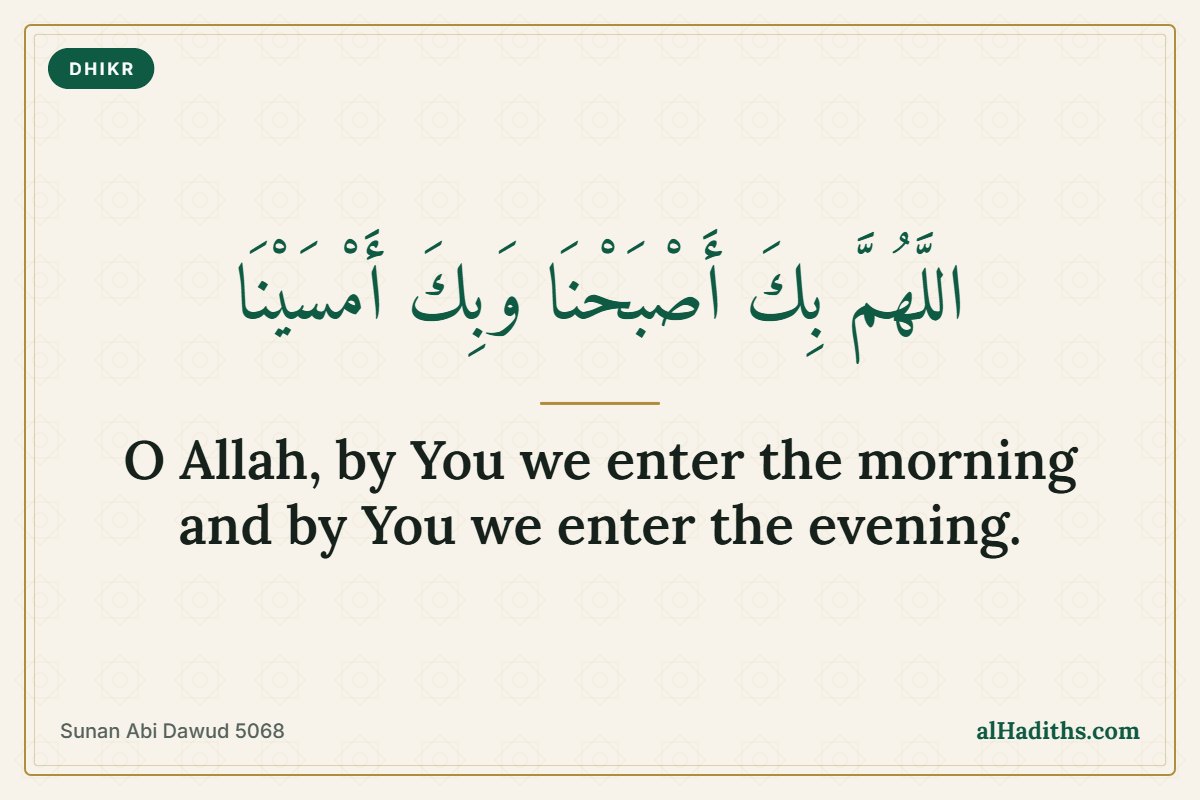
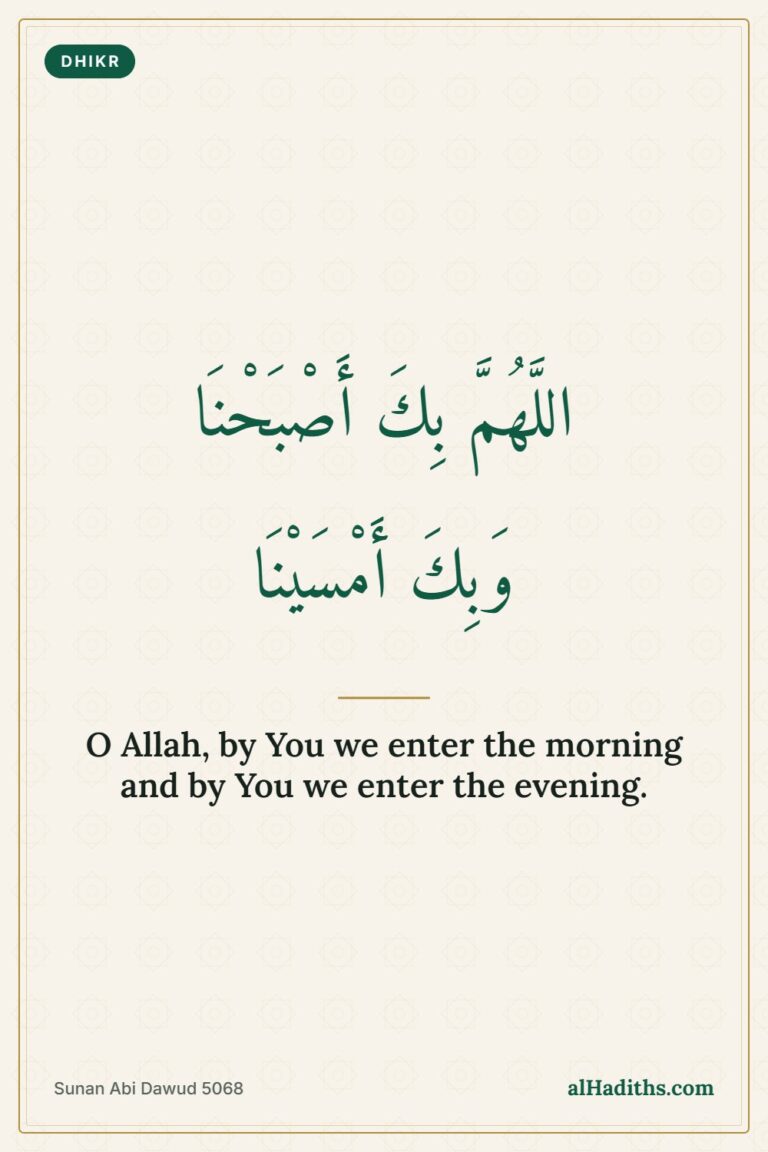
اللَّهُمَّ بِكَ أَصْبَحْنَا وَبِكَ أَمْسَيْنَا وَبِكَ نَحْيَا وَبِكَ نَمُوتُ وَإِلَيْكَ النُّشُورُ
“O Allah, by You we enter the morning, and by You we enter the evening, by You we live and by You we die, and to You is the resurrection.”
Sunan Abi Dawud 5068 · Sahih (al-Albani) · Narrated by Abu Hurairah · Translation adapted from Sunnah.com
In the same hadith, in the evening he said: “O Allah, by You we enter the evening, by You we live and by You we die, and to You is the resurrection.” Every morning and every evening is from Allah, and so is the last one.
Try this: say it before you check your phone in the morning.
2. We have entered the evening and the kingdom is Allah’s
‘Abdullah ibn Mas‘ud (may Allah be pleased with him) reported that when evening came, the Prophet ﷺ used to say:
أَمْسَيْنَا وَأَمْسَى الْمُلْكُ لِلَّهِ وَالْحَمْدُ لِلَّهِ لاَ إِلَهَ إِلاَّ اللَّهُ وَحْدَهُ لاَ شَرِيكَ لَهُ اللَّهُمَّ إِنِّي أَسْأَلُكَ مِنْ خَيْرِ هَذِهِ اللَّيْلَةِ وَخَيْرِ مَا فِيهَا وَأَعُوذُ بِكَ مِنْ شَرِّهَا وَشَرِّ مَا فِيهَا اللَّهُمَّ إِنِّي أَعُوذُ بِكَ مِنَ الْكَسَلِ وَالْهَرَمِ وَسُوءِ الْكِبَرِ وَفِتْنَةِ الدُّنْيَا وَعَذَابِ الْقَبْرِ
“We have entered the evening, and the whole kingdom of Allah has entered the evening. Praise is due to Allah. There is no god but Allah alone, with no partner. O Allah, I ask You for the good of this night and the good of what is in it, and I seek refuge in You from its evil and the evil of what is in it. O Allah, I seek refuge in You from laziness, old age, the evil of pride, the trial of the world and the punishment of the grave.”
Sahih Muslim 2723c · Narrated by ‘Abdullah ibn Mas‘ud · Translation adapted from Sunnah.com
Another narration in Sahih Muslim 2723b says that in the morning he said the same, beginning “Asbahna wa asbahal-mulku lillah” (we have entered the morning, and the kingdom is Allah’s), and asking for the good of this day instead of this night.
Try this: learn the first line this week, then add the rest one line at a time.
3. Sayyidul Istighfar, the master of seeking forgiveness
Shaddad ibn Aws (may Allah be pleased with him) reported that the Prophet ﷺ said the best way to ask forgiveness is to say:
سَيِّدُ الاِسْتِغْفَارِ أَنْ تَقُولَ اللَّهُمَّ أَنْتَ رَبِّي، لاَ إِلَهَ إِلاَّ أَنْتَ، خَلَقْتَنِي وَأَنَا عَبْدُكَ، وَأَنَا عَلَى عَهْدِكَ وَوَعْدِكَ مَا اسْتَطَعْتُ، أَعُوذُ بِكَ مِنْ شَرِّ مَا صَنَعْتُ، أَبُوءُ لَكَ بِنِعْمَتِكَ عَلَىَّ وَأَبُوءُ لَكَ بِذَنْبِي، فَاغْفِرْ لِي، فَإِنَّهُ لاَ يَغْفِرُ الذُّنُوبَ إِلاَّ أَنْتَ
“O Allah, You are my Lord, there is no god but You. You created me and I am Your servant, and I am keeping Your covenant and promise as much as I can. I seek refuge in You from the evil of what I have done. I acknowledge Your favor upon me, and I acknowledge my sin, so forgive me, for none forgives sins except You.”
Sahih al-Bukhari 6306 · Narrated by Shaddad ibn Aws · Translation adapted from Sunnah.com
He ﷺ added that whoever says it during the day with firm faith and dies before evening is among the people of Paradise, and the same for the one who says it at night and dies before morning. We explain it line by line in Sayyidul Istighfar.
Try this: make it the last thing you say in the evening adhkar.
4. The three Quls, three times
‘Abdullah ibn Khubayb (may Allah be pleased with him) reported that on a dark, rainy night the Prophet ﷺ told him:
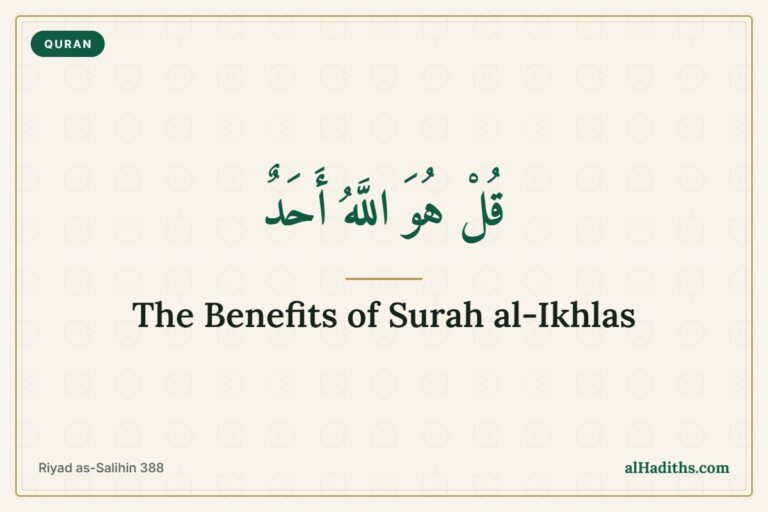
قُلْ هُوَ اللَّهُ أَحَدٌ وَالْمُعَوِّذَتَيْنِ حِينَ تُمْسِي وَحِينَ تُصْبِحُ ثَلاَثَ مَرَّاتٍ تَكْفِيكَ مِنْ كُلِّ شَىْءٍ
“Say: ‘Say, He is Allah, One,’ and the two surahs of refuge (al-Falaq and an-Nas) in the evening and in the morning, three times; they will suffice you against everything.”
Sunan Abi Dawud 5082 · Hasan (al-Albani) · Narrated by ‘Abdullah ibn Khubayb · Translation adapted from Sunnah.com
Three of the shortest surahs, three times each, morning and evening. Most of us know them already, so this is the easiest place to start.
Try this: recite them on your way out of the house.
5. In the name of Allah, with whose name nothing harms
‘Uthman ibn ‘Affan (may Allah be pleased with him) reported that the Messenger of Allah ﷺ said:
مَنْ قَالَ بِسْمِ اللَّهِ الَّذِي لاَ يَضُرُّ مَعَ اسْمِهِ شَىْءٌ فِي الأَرْضِ وَلاَ فِي السَّمَاءِ وَهُوَ السَّمِيعُ الْعَلِيمُ ثَلاَثَ مَرَّاتٍ لَمْ تُصِبْهُ فَجْأَةُ بَلاَءٍ حَتَّى يُصْبِحَ وَمَنْ قَالَهَا حِينَ يُصْبِحُ ثَلاَثَ مَرَّاتٍ لَمْ تُصِبْهُ فَجْأَةُ بَلاَءٍ حَتَّى يُمْسِيَ
“Whoever says three times: ‘In the name of Allah, with whose name nothing on earth or in heaven can cause harm, and He is the All-Hearing, the All-Knowing,’ no sudden affliction will strike him until the morning, and whoever says it three times in the morning, no sudden affliction will strike him until the evening.”
Sunan Abi Dawud 5088 · Sahih (al-Albani) · Narrated by ‘Uthman ibn ‘Affan · Translation adapted from Sunnah.com
His son Aban, who narrated it, was later struck by paralysis and said that on that day he had been angry and forgot to say it. More in Bismillahilladhi La Yadurru.
Try this: say it three times before you leave home and three times at sunset.
6. The dua Abu Bakr was taught
Abu Hurairah (may Allah be pleased with him) reported that Abu Bakr as-Siddiq (may Allah be pleased with him) asked the Prophet ﷺ for something to say in the morning and evening. He told him to say:
اللَّهُمَّ فَاطِرَ السَّمَوَاتِ وَالأَرْضِ عَالِمَ الْغَيْبِ وَالشَّهَادَةِ رَبَّ كُلِّ شَىْءٍ وَمَلِيكَهُ أَشْهَدُ أَنْ لاَ إِلَهَ إِلاَّ أَنْتَ أَعُوذُ بِكَ مِنْ شَرِّ نَفْسِي وَشَرِّ الشَّيْطَانِ وَشِرْكِهِ
“O Allah, Creator of the heavens and the earth, Knower of the unseen and the seen, Lord and Owner of everything, I bear witness that there is no god but You. I seek refuge in You from the evil of my own self, and from the evil of Shaytan and his call to shirk.”
Sunan Abi Dawud 5067 · Sahih (al-Albani) · Narrated by Abu Hurairah · Translation adapted from Sunnah.com
In the Arabic, the Prophet ﷺ then said: say it when you enter the morning, when you enter the evening, and when you lie down to sleep. (The Sunnah.com English mentions only the morning.)
Try this: add it to your bedtime routine too.
7. SubhanAllahi wa bihamdihi, one hundred times
Abu Hurairah (may Allah be pleased with him) reported that the Messenger of Allah ﷺ said:
مَنْ قَالَ حِينَ يُصْبِحُ وَحِينَ يُمْسِي سُبْحَانَ اللَّهِ وَبِحَمْدِهِ مِائَةَ مَرَّةٍ. لَمْ يَأْتِ أَحَدٌ يَوْمَ الْقِيَامَةِ بِأَفْضَلَ مِمَّا جَاءَ بِهِ إِلاَّ أَحَدٌ قَالَ مِثْلَ مَا قَالَ أَوْ زَادَ عَلَيْهِ
“Whoever says in the morning and in the evening, ‘Glory be to Allah and praise be to Him’ one hundred times, no one will bring on the Day of Resurrection anything better than what he brings, except one who said the same or more.”
Sahih Muslim 2692 · Narrated by Abu Hurairah · Translation adapted from Sunnah.com
One hundred sounds like a lot, yet it takes about two minutes. See also SubhanAllahi wa Bihamdihi 100 Times.
Try this: count on your fingers on the commute or while the kettle boils.
Bringing it together
Allah tells us in the Quran:
يَـٰٓأَيُّهَا ٱلَّذِينَ ءَامَنُوا۟ ٱذْكُرُوا۟ ٱللَّهَ ذِكْرًا كَثِيرًا وَسَبِّحُوهُ بُكْرَةً وَأَصِيلًا
“O you who have believed, remember Allah with much remembrance, and exalt Him morning and afternoon.”
Surah al-Ahzab 33:41–42 · Translation: Saheeh International, from Quran.com
Reflection: these adhkar are not a long ritual. Most take under a minute, and together they ask for everything we need: protection, forgiveness, the good of the day and refuge from its harm. Begin with one or two you already know, like the three Quls, and add one more each week. For one more morning and evening dua, see Morning and Evening Dua for Protection.
Questions people ask
When should I say the morning adhkar?
The hadith say “in the morning” and “in the evening” without fixing an hour. Scholars differ on the exact window, and many Muslims say the morning adhkar after Fajr and the evening adhkar after Asr. Ask a qualified local scholar for the detail.
Do I have to say all the morning and evening adhkar?
No. These are voluntary dhikr from the Sunnah, and each hadith names its own reward. Start with one or two you can keep up every day, then add more over time.
How many times should I say each one?
Where the hadith gives a number, follow it: the three Quls and Bismillahilladhi three times each, and SubhanAllahi wa bihamdihi one hundred times. Where no number is given, saying it once is enough.
Key lessons
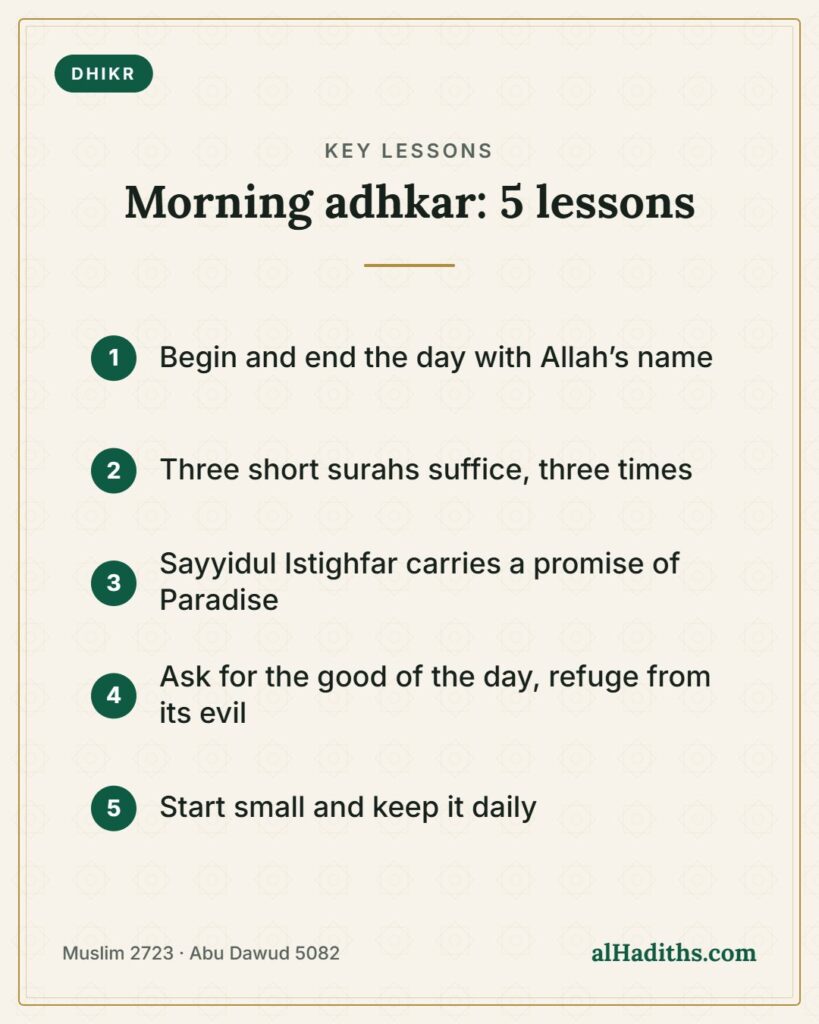
- Begin and end each day with words the Prophet ﷺ taught.
- The three Quls, three times, suffice against everything.
- Sayyidul Istighfar carries a promise of Paradise for the one who dies that day or night.
- Ask Allah for the good of each day and night, and refuge from its evil.
- Start small and stay consistent.
Part of our Dhikr series: see all our dhikr articles in one place.
May Allah make our mornings and evenings full of His remembrance.
Save this to Pinterest so you can say the morning and evening adhkar every day
Share the reward. Send this article to someone who needs it today — teaching a hadith or dua can become a lasting good deed for you, in shaa Allah.