Honesty in Islam: The Jar of Gold Hadith and Its Lessons
Contents
Imagine buying a house and finding a jar of gold buried in the garden. Most people would see a lucky day. The Prophet ﷺ told a story about two men who each saw a problem: the gold did not feel like theirs. It is one of the clearest pictures of honesty in Islam in the whole Sunnah, and it ends with a solution that made everyone richer, including the poor.
At a glance
- Source: Sahih al-Bukhari 3472 (also Sahih Muslim 1721)
- Narrated by: Abu Hurairah
- Grade: Sahih (Bukhari and Muslim)
- Topic: Honesty, fair dealing and charity
- Practise it: Give back one thing today that you were given by mistake, however small
The jar of gold hadith
Abu Hurairah (may Allah be pleased with him) reported that the Prophet ﷺ said:
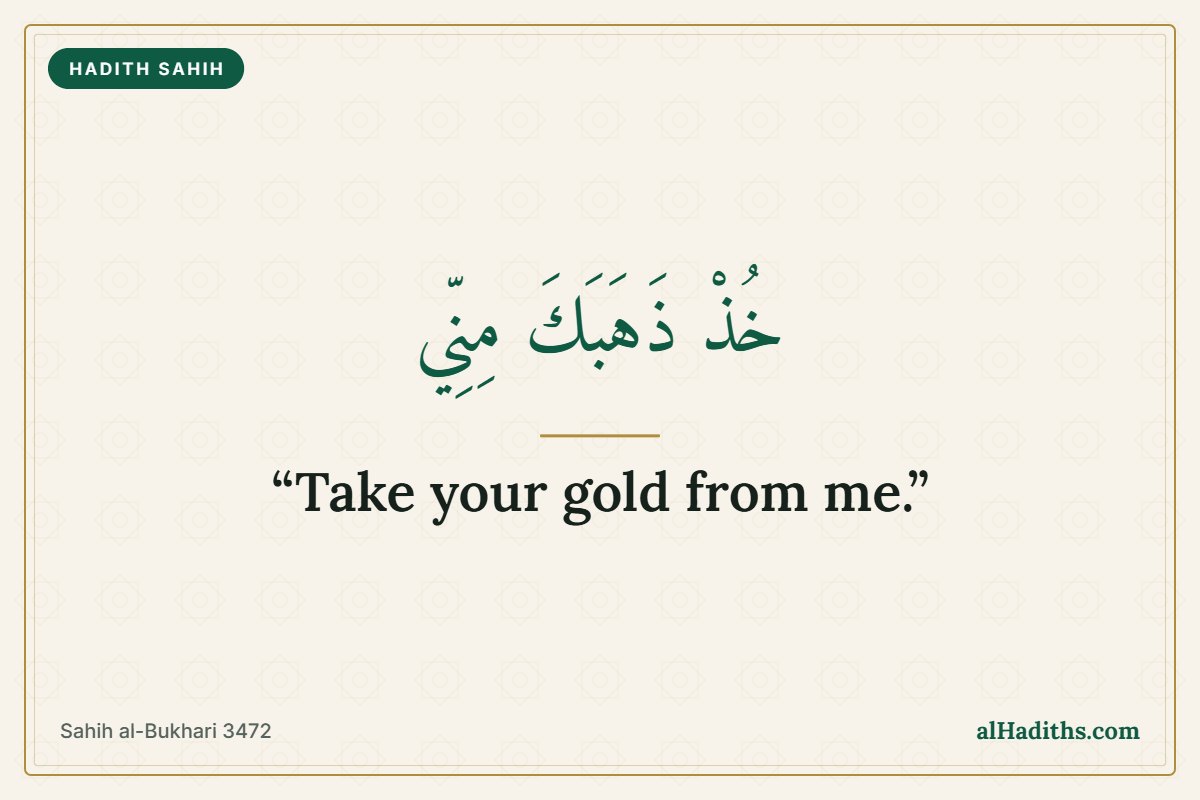
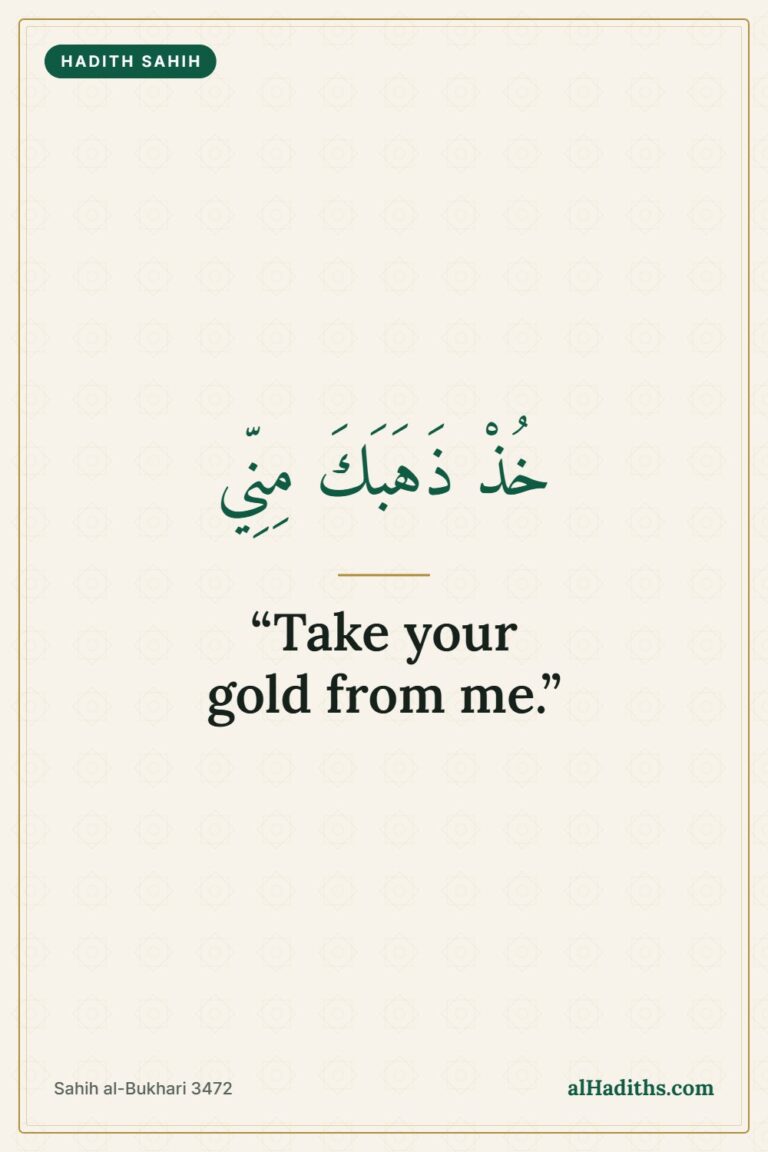
اشْتَرَى رَجُلٌ مِنْ رَجُلٍ عَقَارًا لَهُ، فَوَجَدَ الرَّجُلُ الَّذِي اشْتَرَى الْعَقَارَ فِي عَقَارِهِ جَرَّةً فِيهَا ذَهَبٌ، فَقَالَ لَهُ الَّذِي اشْتَرَى الْعَقَارَ خُذْ ذَهَبَكَ مِنِّي، إِنَّمَا اشْتَرَيْتُ مِنْكَ الأَرْضَ، وَلَمْ أَبْتَعْ مِنْكَ الذَّهَبَ
“A man bought a piece of land from another man, and the man who bought the land found in it an earthenware jar with gold in it. The buyer said to him, ‘Take your gold from me. I only bought the land from you; I did not buy the gold.’”
Sahih al-Bukhari 3472 · Narrated by Abu Hurairah · Translation adapted from Sunnah.com
The buyer had every chance to keep quiet. Instead, he went straight back to the seller. But the seller was just as careful:
وَقَالَ الَّذِي لَهُ الأَرْضُ إِنَّمَا بِعْتُكَ الأَرْضَ وَمَا فِيهَا، فَتَحَاكَمَا إِلَى رَجُلٍ، فَقَالَ الَّذِي تَحَاكَمَا إِلَيْهِ أَلَكُمَا وَلَدٌ قَالَ أَحَدُهُمَا لِي غُلاَمٌ. وَقَالَ الآخَرُ لِي جَارِيَةٌ
“The man who owned the land said, ‘I sold you the land and everything in it.’ So they took their case to a man. The man they went to for judgement asked, ‘Do you have children?’ One of them said, ‘I have a boy.’ The other said, ‘I have a girl.’”
Sahih al-Bukhari 3472 · Narrated by Abu Hurairah · Translation adapted from Sunnah.com
Neither man would take the gold. So the judge looked for a way that both could accept:
قَالَ أَنْكِحُوا الْغُلاَمَ الْجَارِيَةَ، وَأَنْفِقُوا عَلَى أَنْفُسِهِمَا مِنْهُ، وَتَصَدَّقَا
“He said, ‘Marry the boy to the girl, spend on the two of them from it, and give charity.’”
Sahih al-Bukhari 3472 · Narrated by Abu Hurairah · Translation adapted from Sunnah.com
Sahih Muslim reports the same story through the same Companion (Sahih Muslim 1721), and Imam al-Bukhari placed it in his Book of the Prophets, among the stories of earlier peoples.
What the story means
HadeethEnc (3119) explains that the buyer returned the gold out of strong religious caution because he had bought the land and not the gold, and the seller refused it for the same reason, since he had sold the land with everything in it. When they went for judgement, the judge suggested marrying the young man to the girl, using some of the gold for their living, and giving some in charity.
Notice what the judge did not do. He did not declare one man the winner. He found a ruling that kept the gold in both families, started a new marriage and fed the poor at the same time. The story does not name the men, the town or the judge, and it does not need to.
Honesty in Islam: what this story teaches
Honesty here is not only “not lying”. Both men told the truth, but they went further: each was afraid of taking something that might not be his. The Prophet ﷺ tied this kind of honesty to blessing in trade. He said that if the buyer and seller speak the truth and make things clear, their deal is blessed, and if they lie and hide things, the blessing is wiped out (Sahih al-Bukhari 2079).
Reflection: we often think of honesty as a cost: the sale we lose, the money we hand back. In this story, the two honest men lost nothing. Their children married, their families shared the gold, and the poor received their part. Allah put the blessing exactly where the honesty was.
How to practise it
- When you receive too much change, a double refund or a wrong transfer, return it the same day.
- When you sell something, mention its faults before the buyer finds them.
- If you and someone else both want to be fair but disagree, ask a wise third person, as these two men did.
- When you gain something unexpected, set part of it aside for charity.
- Teach this story to your children: it is short enough to tell at the dinner table.
Questions people ask
Who were the two men in the jar of gold story?
The hadith does not name them, the place or the judge. The Prophet ﷺ told it as a story about people before us, so that we take its lesson rather than its details.
Can I keep money or treasure I find?
The rules on lost property and buried treasure are detailed, and scholars differ on parts of them. This story shows the spirit of honesty, but for a real case, ask a qualified scholar where you live.
What does Islam say about honesty in business?
The Prophet ﷺ said that when the buyer and seller are truthful and make things clear, their deal is blessed, and when they lie and hide faults, its blessing is wiped out (Sahih al-Bukhari 2079). The jar of gold story shows that honesty on both sides.
Key lessons
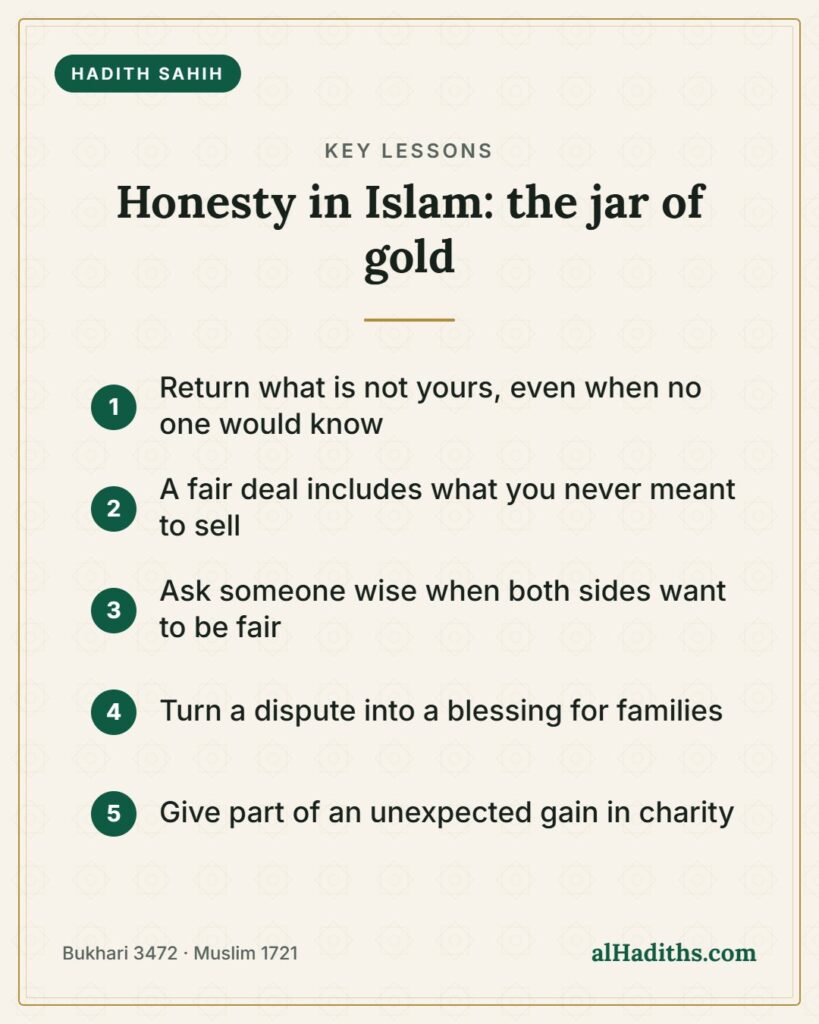
- Honest people return what is not theirs even when no one would ever know.
- Fair dealing means caring about the other side’s right, not only your own.
- When both sides want to be fair, a wise person can turn a dispute into a blessing.
- Part of an unexpected gain belongs to the poor.
Is there something small in your life right now, a borrowed book, a wrong refund, an unpaid favor, that you could hand back today?
Save this to Pinterest so you can remember the two honest men and their jar of gold
Share the reward. Send this article to someone who needs it today — teaching a hadith or dua can become a lasting good deed for you, in shaa Allah.