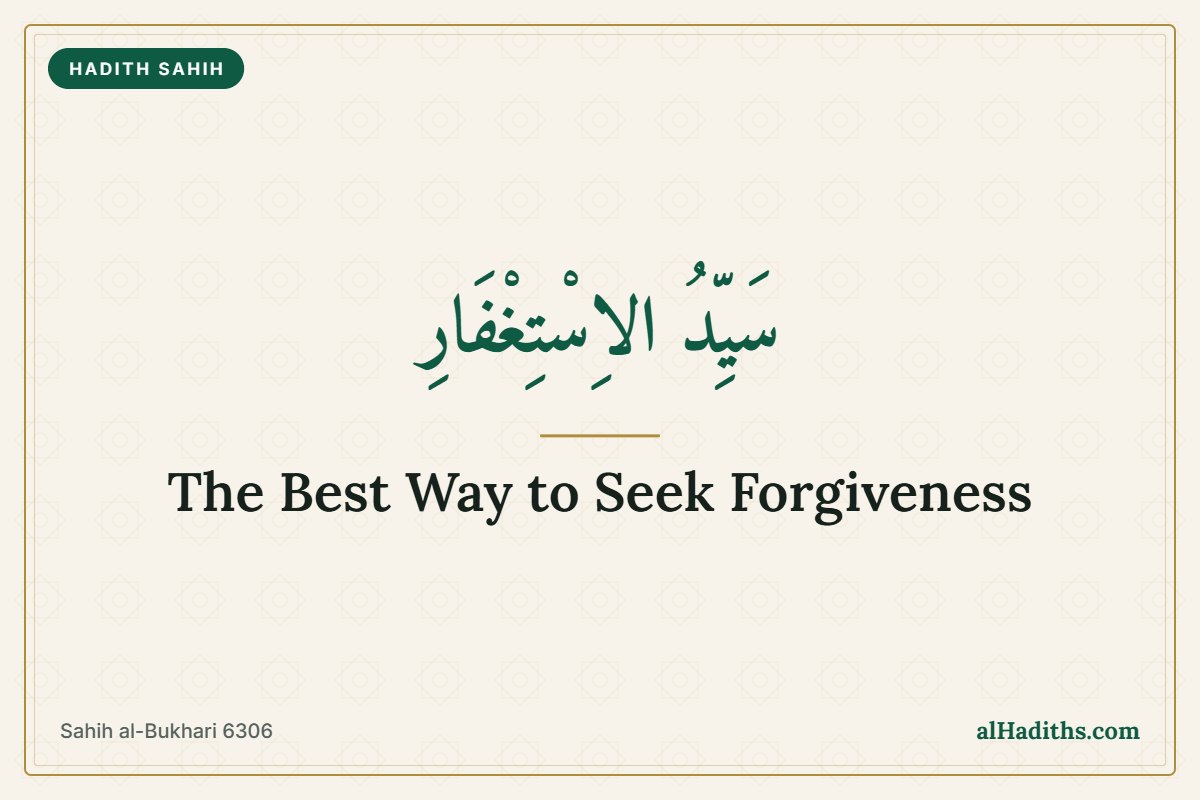
Sayyidul Istighfar – Istighfar of The Highest Form
We as humans cannot run away from committing sins. It is either we realize it or not. Some sins are light and some are heavy. But do always remember that Allah is the most merciful and the most forgiving towards His slaves. So recite the Sayyidul Istighfar and hope for Allah’s forgiveness.
At a glance
- Source: Sahih al-Bukhari 6306
- Narrated by: Shaddad bin Aus (may Allah be pleased with him)
- Grade: Sahih (Sahih al-Bukhari)
- Topic: Seeking forgiveness, morning and evening remembrance
- Practise it: Once in the day and once at night, with firm faith
In this post, I would like to share a hadith about the highest form of Istighfar which is known as the Sayyidul Istighfar.
Hadith Sahih About the Sayyidul Istighfar
سَيِّدُ الاِسْتِغْفَارِ أَنْ تَقُولَ اللَّهُمَّ أَنْتَ رَبِّي، لاَ إِلَهَ إِلاَّ أَنْتَ، خَلَقْتَنِي وَأَنَا عَبْدُكَ، وَأَنَا عَلَى عَهْدِكَ وَوَعْدِكَ مَا اسْتَطَعْتُ، أَعُوذُ بِكَ مِنْ شَرِّ مَا صَنَعْتُ، أَبُوءُ لَكَ بِنِعْمَتِكَ عَلَىَّ وَأَبُوءُ لَكَ بِذَنْبِي، فَاغْفِرْ لِي، فَإِنَّهُ لاَ يَغْفِرُ الذُّنُوبَ إِلاَّ أَنْتَ ”. قَالَ ” وَمَنْ قَالَهَا مِنَ النَّهَارِ مُوقِنًا بِهَا، فَمَاتَ مِنْ يَوْمِهِ قَبْلَ أَنْ يُمْسِيَ، فَهُوَ مِنْ أَهْلِ الْجَنَّةِ، وَمَنْ قَالَهَا مِنَ اللَّيْلِ وَهْوَ مُوقِنٌ بِهَا، فَمَاتَ قَبْلَ أَنْ يُصْبِحَ، فَهْوَ مِنْ أَهْلِ الْجَنَّةِ
“The Prophet (ﷺ) said “The most superior way of asking for forgiveness from Allah is: O Allah, You are my Lord, there is none worthy of worship except You. You have created me, and I am Your servant, and I am faithful to Your covenant and promise as much as I can. I seek refuge in You from the evil of what I have done. I acknowledge Your blessings upon me, and I admit my sins. So forgive me, for none forgives sins except You.” The Prophet (ﷺ) added. “If somebody recites it during the day with firm faith in it, and dies on the same day before the evening, he will be from the people of Paradise; and if somebody recites it at night with firm faith in it, and dies before the morning, he will be from the people of Paradise.””
Sahih al-Bukhari 6306 · Narrated by Shaddad bin Aus
Sayyidul Istighfar and Its Translation
اللَّهُمَّ أَنْتَ رَبِّي، لاَ إِلَهَ إِلاَّ أَنْتَ، خَلَقْتَنِي وَأَنَا عَبْدُكَ، وَأَنَا عَلَى عَهْدِكَ وَوَعْدِكَ مَا اسْتَطَعْتُ، أَعُوذُ بِكَ مِنْ شَرِّ مَا صَنَعْتُ، أَبُوءُ لَكَ بِنِعْمَتِكَ عَلَىَّ وَأَبُوءُ لَكَ بِذَنْبِي، فَاغْفِرْ لِي، فَإِنَّهُ لاَ يَغْفِرُ الذُّنُوبَ إِلاَّ أَنْتَ
Allahumma anta Rabbi la ilaha illa anta, Khalaqtani wa ana ‘Abduka, wa ana ‘ala ‘ahdika wa wa‘dika mastata‘tu, A‘udhu bika min sharri ma sana‘tu, abu’u laka bini‘matika ‘alayya, wa abu’u laka bidhanbi, faghfir li, fa innahu la yaghfirudh-dhunuba illa anta
“O Allah, You are my Lord, there is none worthy of worship except You. You have created me, and I am Your servant, and I am faithful to Your covenant and promise as much as I can. I seek refuge in You from the evil of what I have done. I acknowledge Your blessings upon me, and I admit my sins. So forgive me, for none forgives sins except You.”
The Sayyidul Istighfar is quite long from the normal Istighfars that we are used to. Took me quite awhile to memorize it but Alhamdulillah I know it by heart now.
The meaning of Sayyidul Istighfar, line by line
- اللَّهُمَّ أَنْتَ رَبِّي: “O Allah, You are my Lord.”
- لاَ إِلَهَ إِلاَّ أَنْتَ: “There is none worthy of worship except You.”
- خَلَقْتَنِي وَأَنَا عَبْدُكَ: “You have created me, and I am Your servant.”
- وَأَنَا عَلَى عَهْدِكَ وَوَعْدِكَ مَا اسْتَطَعْتُ: “And I am faithful to Your covenant and promise as much as I can.”
- أَعُوذُ بِكَ مِنْ شَرِّ مَا صَنَعْتُ: “I seek refuge in You from the evil of what I have done.”
- أَبُوءُ لَكَ بِنِعْمَتِكَ عَلَىَّ وَأَبُوءُ لَكَ بِذَنْبِي: “I acknowledge Your blessings upon me, and I admit my sins.”
- فَاغْفِرْ لِي: “So forgive me,”
- فَإِنَّهُ لاَ يَغْفِرُ الذُّنُوبَ إِلاَّ أَنْتَ: “for none forgives sins except You.”
Learning it one line at a time makes it much easier to memorise.
When to recite Sayyidul Istighfar
Furthermore the Rasul added that whoever recites it with firm faith during the day or at night, and dies before the evening or before the morning, will be one of the people of Jannah. That’s a great incentive for us to make this recitation as a daily activity. If possible do it after every Salat that you perform.
- In the day: for example as part of your morning remembrance.
- At night: for example as part of your evening remembrance or before sleeping.
- With firm faith: the hadith ties the reward to saying it “with firm faith in it”, not just reading the words.
Video recitation for Sayyidul Istighfar
Key lessons
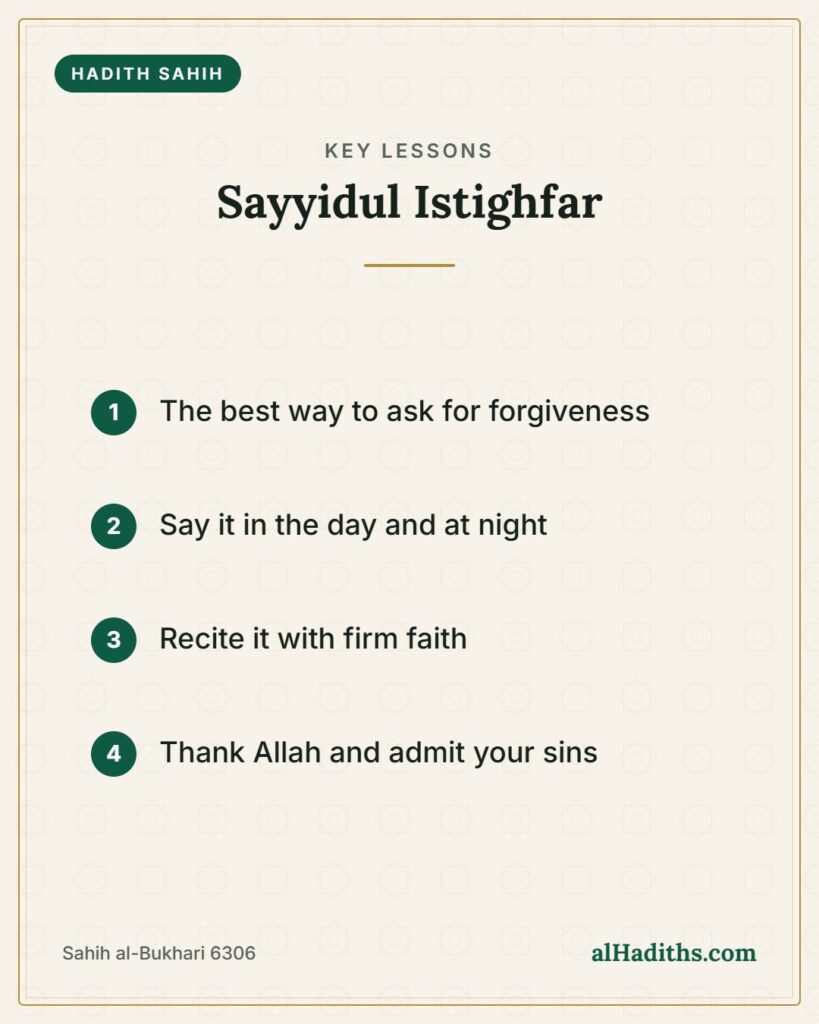
- Sayyidul Istighfar is the master of all istighfar (Sahih al-Bukhari 6306).
- Whoever says it with certainty and dies that day or night is among the people of Jannah.
- The Prophet ﷺ himself sought forgiveness a hundred times a day (Sahih Muslim 2702a; see also Sahih al-Bukhari 6307).
Questions people ask
What is Sayyidul Istighfar?
Sayyidul Istighfar means “the master of seeking forgiveness”. The Prophet ﷺ called it “the most superior way of asking for forgiveness from Allah” (Sahih al-Bukhari 6306).
What is the benefit of reciting Sayyidul Istighfar?
The Prophet ﷺ said that whoever recites it during the day with firm faith in it and dies that day before the evening will be from the people of Paradise, and the same for whoever recites it at night and dies before the morning (Sahih al-Bukhari 6306).
When should I recite Sayyidul Istighfar?
The hadith mentions reciting it during the day and at night. Many people say it as part of their morning and evening remembrance.
How many times should I recite it?
The hadith does not mention a number. It speaks of saying it in the day and at night with firm faith.
Conclusion of Sayyidul Istighfar
Sayyidul Istighfar is the highest form of Istighfar that a person can recite. As a Muslim, we should ask for forgiveness from Allah as much as we can.
The prophet, Muhammad Rasulullah makes Istighfar for at least 100 times in a day (Sahih Muslim 2702a). Do remember that he is Maksum or free from sin.
Let’s do our best to ask for forgiveness from Allah and may He grant us Jannah.
Save this to Pinterest so you can memorise it step by step
Share the reward. Send this article to someone who needs it today — teaching a hadith or dua can become a lasting good deed for you, in shaa Allah.

One Comment