SubhanAllahi wa Bihamdihi 100 Times: Sins Forgiven Like Sea Foam
Many of us assume a big reward needs a big deed. Yet saying SubhanAllahi wa bihamdihi 100 times takes just a few minutes, and the Prophet ﷺ said it wipes away sins even if they are like the foam of the sea. Here is the hadith, what the words mean, and simple ways to make it a daily habit.
At a glance
- Source: Sahih al-Bukhari 6405 (also Jami’ at-Tirmidhi 3466)
- Narrated by: Abu Hurairah (may Allah be pleased with him)
- Grade: Sahih (in Sahih al-Bukhari)
- Topic: Dhikr: glorifying and praising Allah
- Practise it: Say SubhanAllahi wa bihamdihi 100 times a day, for example in the morning and evening
The hadith
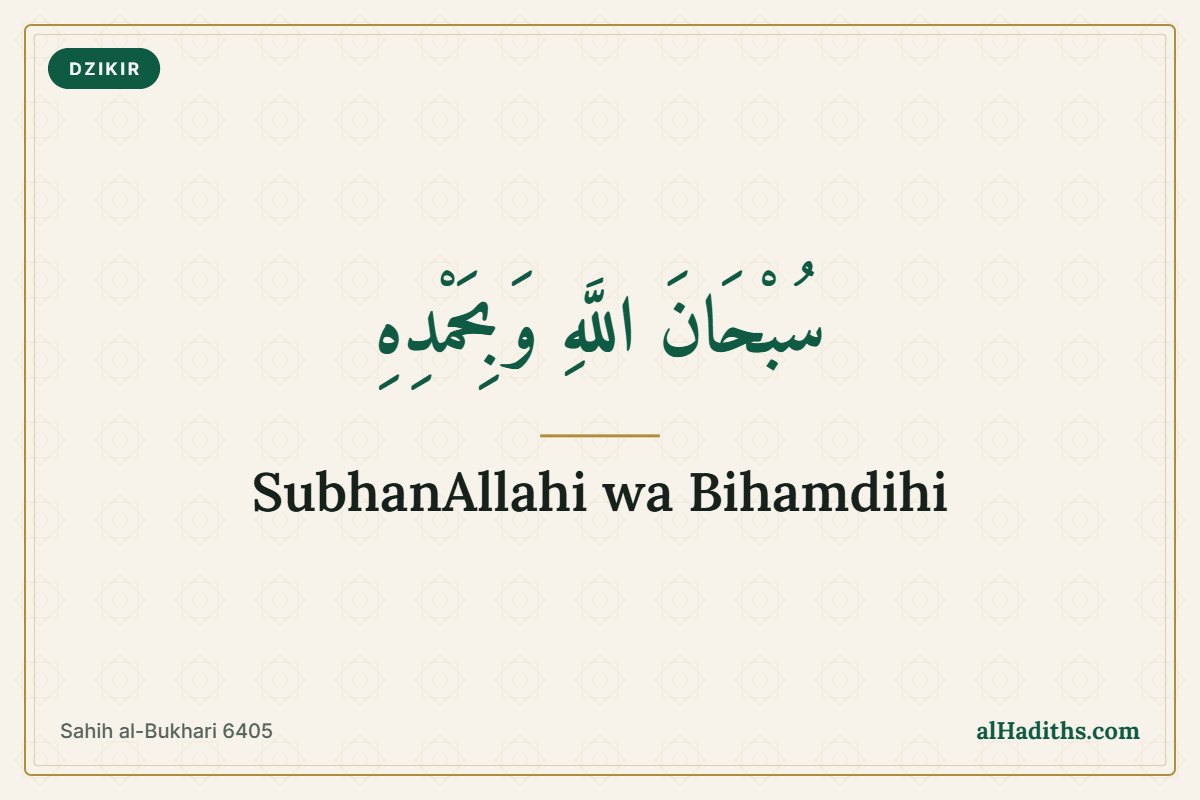
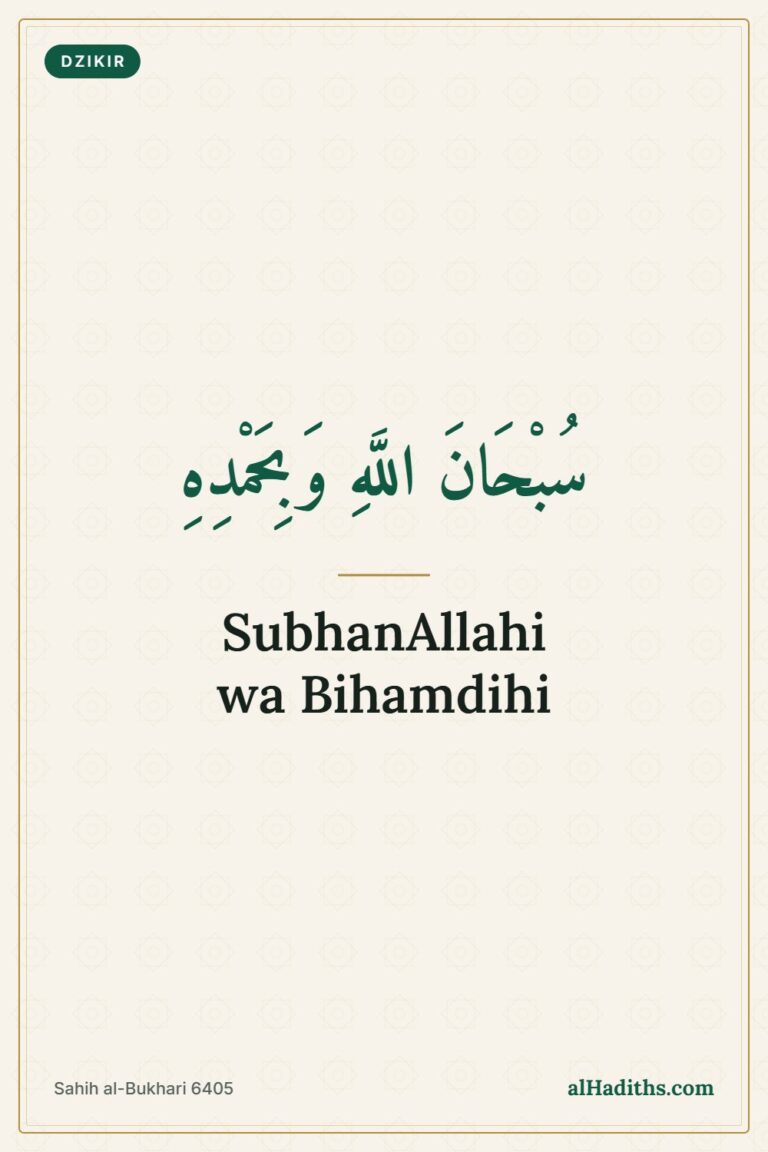
سُبْحَانَ اللَّهِ وَبِحَمْدِهِ
Subḥānallāhi wa biḥamdih
Glory be to Allah, and praise be to Him.
مَنْ قَالَ سُبْحَانَ اللَّهِ وَبِحَمْدِهِ. فِي يَوْمٍ مِائَةَ مَرَّةٍ حُطَّتْ خَطَايَاهُ، وَإِنْ كَانَتْ مِثْلَ زَبَدِ الْبَحْرِ
Allah’s Messenger ﷺ said, “Whoever says, ‘SubhanAllahi wa bihamdihi,’ one hundred times a day, will be forgiven all his sins even if they were as much as the foam of the sea.”
Sahih al-Bukhari 6405 · Also Jami’ at-Tirmidhi 3466, Sahih (Darussalam)
What SubhanAllahi wa bihamdihi means
Subhanallah declares Allah free from every flaw and imperfection. Wa bihamdihi means “and with His praise”: we glorify Him and praise Him in the same breath. Two short words that sum up how a believer sees Allah, perfect in every way and deserving of every praise.
More hadiths about this dhikr
مَنْ قَالَ حِينَ يُصْبِحُ وَحِينَ يُمْسِي سُبْحَانَ اللَّهِ وَبِحَمْدِهِ مِائَةَ مَرَّةٍ . لَمْ يَأْتِ أَحَدٌ يَوْمَ الْقِيَامَةِ بِأَفْضَلَ مِمَّا جَاءَ بِهِ إِلاَّ أَحَدٌ قَالَ مِثْلَ مَا قَالَ أَوْ زَادَ عَلَيْهِ
“Whoever says, when he enters the morning and when he enters the evening, ‘SubhanAllahi wa bihamdihi’ one hundred times, no one will bring anything better on the Day of Resurrection than what he brings, except someone who said the same or more.”
Sahih Muslim 2692 · Narrated by Abu Hurairah · Translation adapted from Sunnah.com
كَلِمَتَانِ خَفِيفَتَانِ عَلَى اللِّسَانِ، ثَقِيلَتَانِ فِي الْمِيزَانِ، حَبِيبَتَانِ إِلَى الرَّحْمَنِ سُبْحَانَ اللَّهِ وَبِحَمْدِهِ، سُبْحَانَ اللَّهِ الْعَظِيمِ
“Two words are light on the tongue, heavy in the scale, and beloved to the Most Merciful: SubhanAllahi wa bihamdihi, SubhanAllahil-‘Azim.”
Sahih al-Bukhari 6682 · Also Sahih Muslim 2694 · Narrated by Abu Hurairah · Translation adapted from Sunnah.com
Imam al-Bukhari ended his whole Sahih with this same hadith (Sahih al-Bukhari 7563). And when the Prophet ﷺ was asked which words are best, he named the words Allah chose for His angels and His servants: SubhanAllahi wa bihamdihi (Sahih Muslim 2731a).
What it means
Reflection: Sea foam is countless and keeps coming back with every wave, and still the hadith says sins like that can be wiped away by a short phrase said a hundred times. It shows how generous Allah is with those who remember Him. It isn’t a licence to keep sinning, though; it is an invitation to keep coming back to Him, with dhikr and with sincere repentance.
How to practise it
- Say it 100 times a day (Sahih al-Bukhari 6405). Sahih Muslim 2692 mentions the morning and the evening, so many people say it after Fajr and again in the evening.
- Count on your fingers. The Prophet ﷺ was seen counting tasbih on his right hand (Sunan Abi Dawud 1502, Sahih, al-Albani), and he told the women Companions to count dhikr on their fingers, because the fingers will be questioned and made to speak (Sunan Abi Dawud 1501, Hasan, al-Albani).
- Fit it into moments you already have: the commute, a queue, waiting for the kettle. The words are light on the tongue.
- Learn the meaning, so your heart says it along with your tongue.
Honestly, I’ve missed this practice more often than I’ve kept it. When I did keep it, I counted on the three segments of each finger, so one round of one hand made 15. Other times, when my hands were busy with something else, I simply recited it without counting. May Allah make it easier for us to keep it.
Key lessons
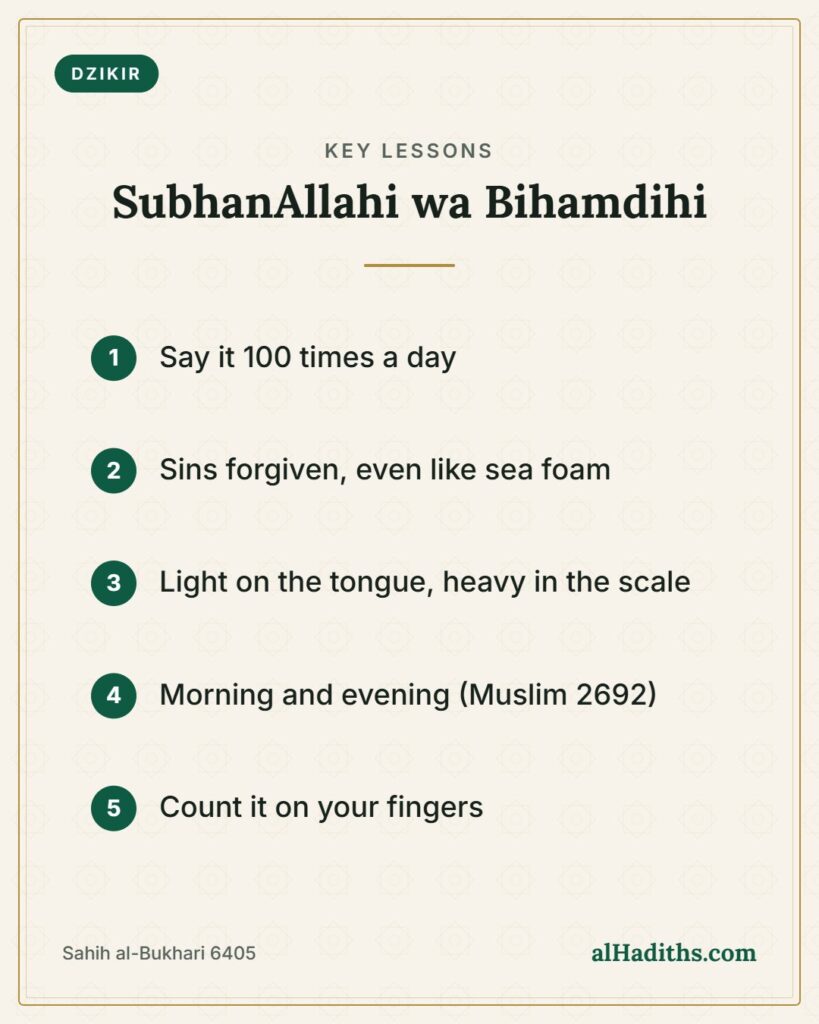
- Saying SubhanAllahi wa bihamdihi 100 times a day wipes away sins, even if like the foam of the sea.
- Said 100 times morning and evening, no one brings anything better on the Day of Resurrection except someone who said the same or more.
- These words are light on the tongue, heavy in the scale and beloved to Allah.
- The Prophet ﷺ counted tasbih on his fingers.
Questions people ask
What is the reward for saying SubhanAllahi wa bihamdihi 100 times?
The Prophet ﷺ said whoever says it 100 times a day will have his sins forgiven, even if they were as much as the foam of the sea (Sahih al-Bukhari 6405). Said 100 times morning and evening, no one brings anything better on the Day of Resurrection except someone who said the same or more (Sahih Muslim 2692).
When should I say SubhanAllahi wa bihamdihi?
Any time in the day (Sahih al-Bukhari 6405). Sahih Muslim 2692 mentions saying it 100 times in the morning and in the evening.
Can I count dhikr on my fingers?
Yes. The Prophet ﷺ was seen counting tasbih on his right hand (Sunan Abi Dawud 1502, Sahih), and he encouraged counting dhikr on the fingers (Sunan Abi Dawud 1501, Hasan).
What does SubhanAllahi wa bihamdihi mean?
“Glory be to Allah, and praise be to Him”: declaring Allah free from every imperfection while praising Him.
Where in your day could you fit these 100 today: the drive to work, a queue, the minutes before you sleep?
Save this to Pinterest so you have this short dhikr ready for your day.
Share the reward. Send this article to someone who needs it today — teaching a hadith or dua can become a lasting good deed for you, in shaa Allah.