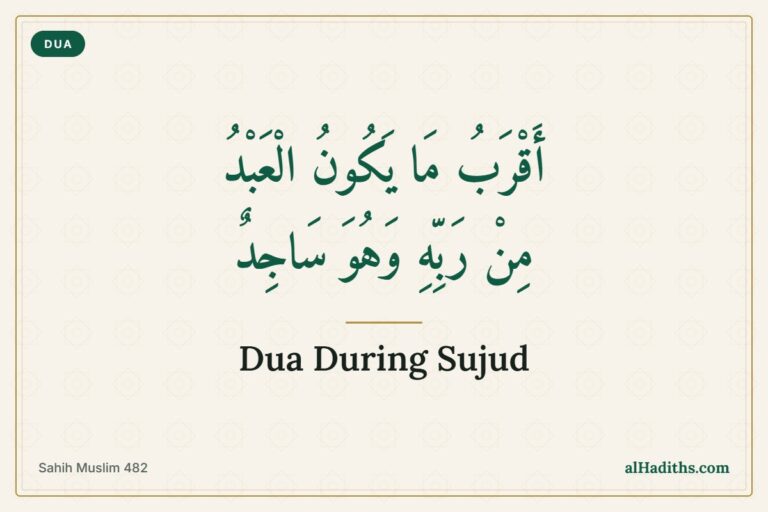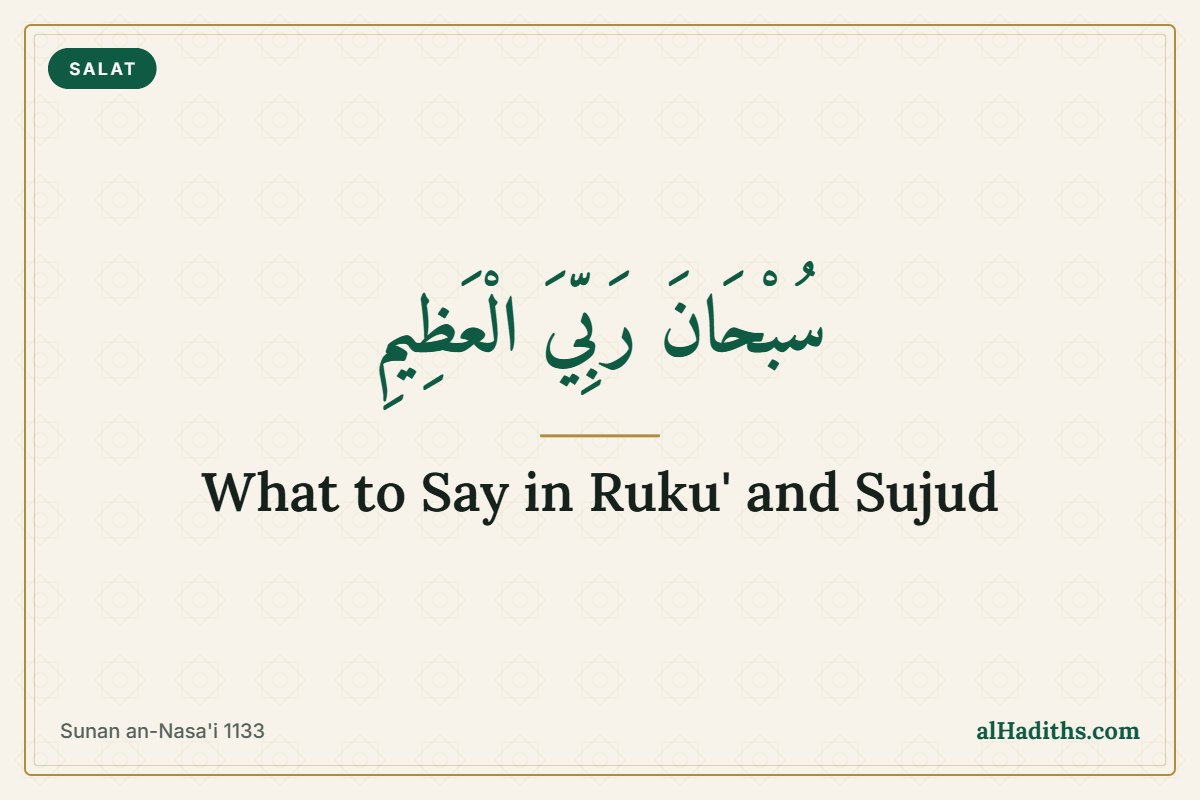
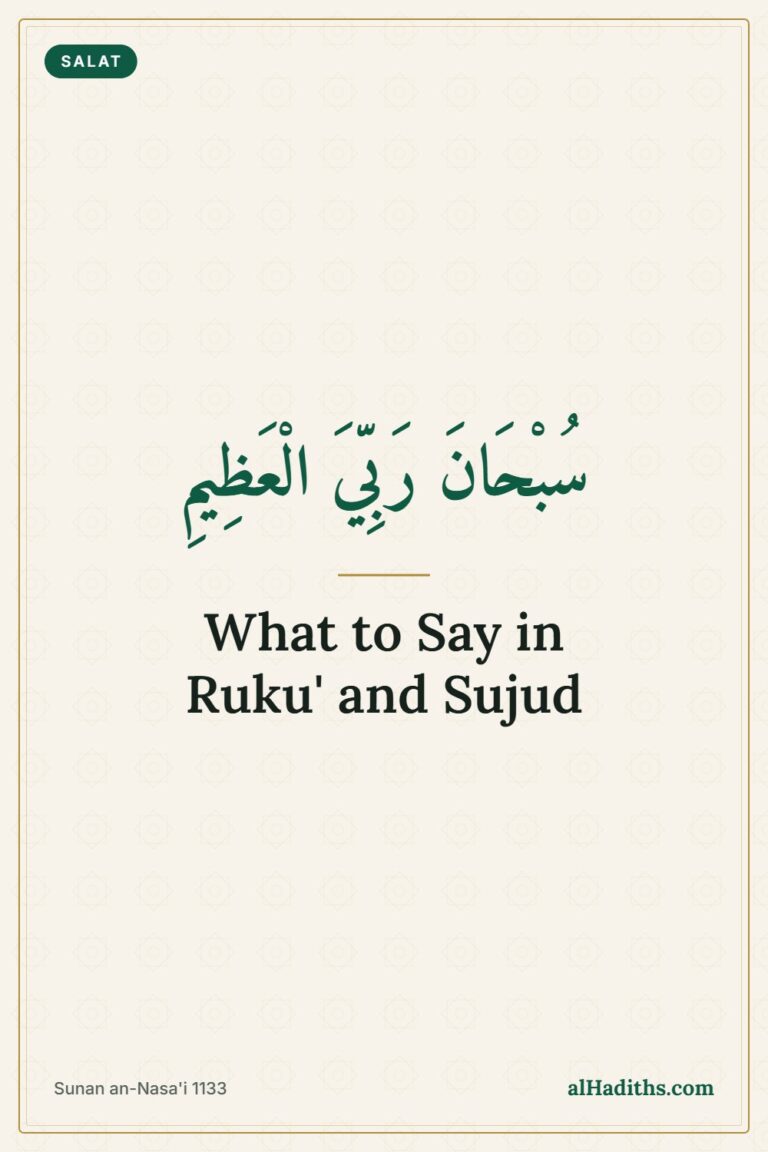
What to Say in Ruku’ and Sujud: Subhana Rabbiyal ‘Azim
Most of us learned to say Subhana Rabbiyal ‘Azim three times in ruku’ and Subhana Rabbiyal A’la three times in sujud. But where do these words come from, and is three really the rule? Here is what to say in ruku’ and sujud from the authentic hadith, with the Arabic, meaning and what the narrations say about the number.
At a glance
- Source: Sunan an-Nasa’i 1133 (also Sahih Muslim 772)
- Narrated by: Hudhaifah ibn al-Yaman (may Allah be pleased with him)
- Grade: Sahih (Darussalam)
- Topic: Salah: what to say in ruku’ and sujud
- Practise it: Say Subhana Rabbiyal-‘Azim in ruku’ and Subhana Rabbiyal-A’la in sujud
The hadith
صَلَّيْتُ مَعَ رَسُولِ اللَّهِ صلى الله عليه وسلم ذَاتَ لَيْلَةٍ فَاسْتَفْتَحَ بِسُورَةِ الْبَقَرَةِ فَقَرَأَ بِمِائَةِ آيَةٍ لَمْ يَرْكَعْ فَمَضَى قُلْتُ يَخْتِمُهَا فِي الرَّكْعَتَيْنِ فَمَضَى قُلْتُ يَخْتِمُهَا ثُمَّ يَرْكَعُ فَمَضَى حَتَّى قَرَأَ سُورَةَ النِّسَاءِ ثُمَّ قَرَأَ سُورَةَ آلِ عِمْرَانَ ثُمَّ رَكَعَ نَحْوًا مِنْ قِيَامِهِ يَقُولُ فِي رُكُوعِهِ سُبْحَانَ رَبِّيَ الْعَظِيمِ سُبْحَانَ رَبِّيَ الْعَظِيمِ سُبْحَانَ رَبِّيَ الْعَظِيمِ . ثُمَّ رَفَعَ رَأْسَهُ فَقَالَ سَمِعَ اللَّهُ لِمَنْ حَمِدَهُ رَبَّنَا لَكَ الْحَمْدُ . وَأَطَالَ الْقِيَامَ ثُمَّ سَجَدَ فَأَطَالَ السُّجُودَ يَقُولُ فِي سُجُودِهِ سُبْحَانَ رَبِّيَ الأَعْلَى سُبْحَانَ رَبِّيَ الأَعْلَى سُبْحَانَ رَبِّيَ الأَعْلَى . لاَ يَمُرُّ بِآيَةِ تَخْوِيفٍ أَوْ تَعْظِيمٍ لِلَّهِ عَزَّ وَجَلَّ إِلاَّ ذَكَرَهُ
Hudhaifah said: “I prayed with the Messenger of Allah ﷺ one night. He began with Surat Al-Baqarah and recited a hundred verses, and did not bow but carried on. I thought he would finish it in two rak’ahs, but he carried on. I thought he would finish it and then bow, but he carried on until he recited Surat An-Nisa’, then Al ‘Imran. Then he bowed for about as long as he had stood, saying in his bowing: ‘Subhana Rabbiyal-‘Azim, Subhana Rabbiyal-‘Azim, Subhana Rabbiyal-‘Azim.’ Then he raised his head and said: ‘Sami’Allahu liman hamidah, Rabbana lakal-hamd,’ and he stood for a long time. Then he prostrated and made his prostration long, saying in his prostration: ‘Subhana Rabbiyal-A’la, Subhana Rabbiyal-A’la, Subhana Rabbiyal-A’la.’ He did not pass a verse of warning or of Allah’s greatness without remembering Him.”
Sunan an-Nasa’i 1133 · Sahih (Darussalam) · Also Sahih Muslim 772 · Translation adapted from Sunnah.com
A note on the translation: the Arabic includes “Rabbana lakal-hamd” after “Sami’Allahu liman hamidah”, and says he stood for a long time after rising from ruku’. Sunnah.com’s English leaves both out, so we have added them back.
What to say in ruku’ and sujud
In ruku’
سُبْحَانَ رَبِّيَ الْعَظِيمِ
Subḥāna Rabbiyal-‘Aẓīm
Glory be to my Lord, the Almighty.
Rising from ruku’
سَمِعَ اللَّهُ لِمَنْ حَمِدَهُ رَبَّنَا لَكَ الْحَمْدُ
Sami‘allāhu liman ḥamidah, Rabbanā lakal-ḥamd
Allah hears the one who praises Him. Our Lord, to You belongs all praise.
For another praise said at this point, see Hamdan Kathiran Taiyiban Mubarakan Fihi.
In sujud
سُبْحَانَ رَبِّيَ الأَعْلَى
Subḥāna Rabbiyal-A‘lā
Glory be to my Lord, the Most High.
فَكَانَ يَقُولُ فِي رُكُوعِهِ سُبْحَانَ رَبِّيَ الْعَظِيمِ . وَفِي سُجُودِهِ سُبْحَانَ رَبِّيَ الأَعْلَى . وَمَا مَرَّ بِآيَةِ رَحْمَةٍ إِلاَّ وَقَفَ عِنْدَهَا فَسَأَلَ وَلاَ بِآيَةِ عَذَابٍ إِلاَّ وَقَفَ عِنْدَهَا فَتَعَوَّذَ
He said when bowing, “Glory be to my mighty Lord,” and when he prostrated, “Glory be to my most high Lord.” When he came to a verse which spoke of mercy, he stopped and made supplication, and when he came to a verse which spoke of punishment, he stopped and sought refuge in Allah.
Sunan Abi Dawud 871 · Sahih (al-Albani) · Also Jami’ at-Tirmidhi 262, Sahih (Darussalam) · Narrated by Hudhaifah
Glorify in ruku’, make dua in sujud
فَأَمَّا الرُّكُوعُ فَعَظِّمُوا فِيهِ الرَّبَّ عَزَّ وَجَلَّ وَأَمَّا السُّجُودُ فَاجْتَهِدُوا فِي الدُّعَاءِ فَقَمِنٌ أَنْ يُسْتَجَابَ لَكُمْ
“As for ruku’, glorify the Lord, Mighty and Majestic, in it. As for sujud, strive hard in supplication in it, for it is more likely that you will be answered.”
Sahih Muslim 479a · Narrated by Ibn ‘Abbas (may Allah be pleased with him) · Translation adapted from Sunnah.com
So sujud isn’t only for the tasbih. After Subhana Rabbiyal-A’la, it is also a place for your own dua. See the Prophet’s ﷺ guide on supplication in prayer.
How many times should you say it?
In Sunan an-Nasa’i 1133, Hudhaifah heard the Prophet ﷺ say each phrase three times in that night prayer. You may also hear that three is “the minimum”. That wording is in Sunan Abi Dawud 886, but Abu Dawud himself noted that its chain is broken, and al-Albani graded it Da’if (weak). A similar narration in Sunan Ibn Majah 888 is graded Da’if by Darussalam.
So the authentic hadith shows him saying it three times, and in his long night prayer he stayed in ruku’ and sujud far longer than that. For the ruling on a minimum in your own prayers, ask a qualified local scholar.
What it means
Reflection: In ruku’ we bow and call Allah al-‘Azim, the Almighty. In sujud, with our face at the lowest point it can go, we call Him al-A’la, the Most High. The lower we go, the higher we declare Him to be. Each position puts into words exactly what the body is doing.
How to practise it
- In ruku’, say Subhana Rabbiyal-‘Azim, three times as in the hadith.
- When rising, say Sami’Allahu liman hamidah, Rabbana lakal-hamd.
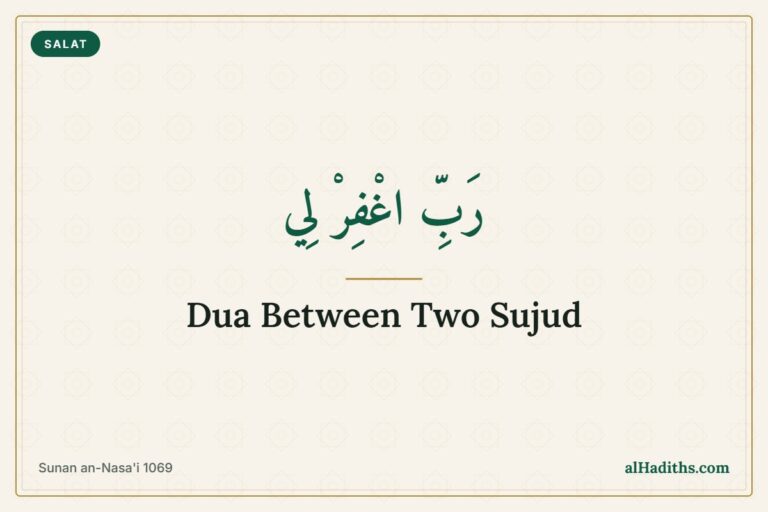
- In sujud, say Subhana Rabbiyal-A’la, then add your own dua (Sahih Muslim 479a).
- Slow down: settle in each position so the words don’t run together.
- In your own night prayer, try lengthening ruku’ and sujud by repeating the tasbih more, as the Prophet ﷺ did.
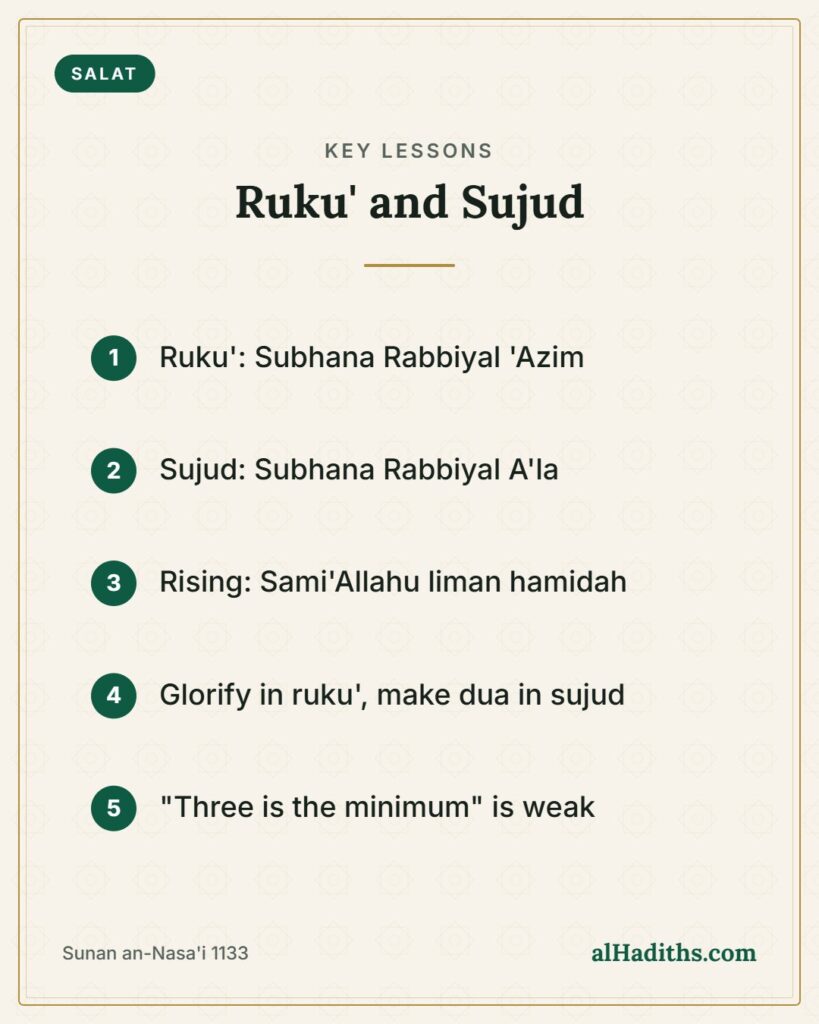
Key lessons
- In ruku’, the Prophet ﷺ said Subhana Rabbiyal-‘Azim; in sujud, Subhana Rabbiyal-A’la.
- Rising from ruku’, he said Sami’Allahu liman hamidah, Rabbana lakal-hamd.
- Glorify Allah in ruku’, and strive in dua in sujud.
- The authentic hadith shows three times; “three is the minimum” is from a weak narration.
Questions people ask
What do you say in ruku’?
Subhana Rabbiyal-‘Azim, “Glory be to my Lord, the Almighty”. The Prophet ﷺ said it three times in his night prayer (Sunan an-Nasa’i 1133).
What do you say in sujud?
Subhana Rabbiyal-A’la, “Glory be to my Lord, the Most High” (Sunan an-Nasa’i 1133), and you can add your own dua, as sujud is a place where dua is likely to be answered (Sahih Muslim 479a).
How many times should I say Subhana Rabbiyal ‘Azim?
Sunan an-Nasa’i 1133 records the Prophet ﷺ saying it three times. The narration saying three is “the minimum” (Sunan Abi Dawud 886) is weak. For the ruling in your own prayers, ask a qualified local scholar.
In your next salah, slow down in ruku’ and sujud, and let each Subhana mean what it says.
Save this to Pinterest so you know exactly what to say in ruku’ and sujud.
Share the reward. Send this article to someone who needs it today — teaching a hadith or dua can become a lasting good deed for you, in shaa Allah.