Hamdan Kathiran Tayyiban Mubarakan Fihi: Meaning, Reward and When to Say It
Contents
Hamdan kathiran tayyiban mubarakan fihi: “praise that is abundant, good and blessed.” A man said these few words in prayer, and the Prophet ﷺ saw over thirty angels racing to write them down. The sentence is short, but it is powerful.
At a glance
- Source: Sahih al-Bukhari 799, Sahih Muslim 600, Jami‘ at-Tirmidhi 404
- Narrated by: Rifa‘ah bin Rafi‘ and Anas bin Malik (may Allah be pleased with them)
- Grade: Sahih (Bukhari, Muslim); Hasan (Darussalam) for Tirmidhi 404
- Topic: Praising Allah in salah
- Practise it: After rising from ruku‘, following “Rabbana wa lakal-hamd”
Hamdan kathiran tayyiban mubarakan fihi in Arabic, with meaning
This is the wording the man said in prayer, as reported in Sahih al-Bukhari:
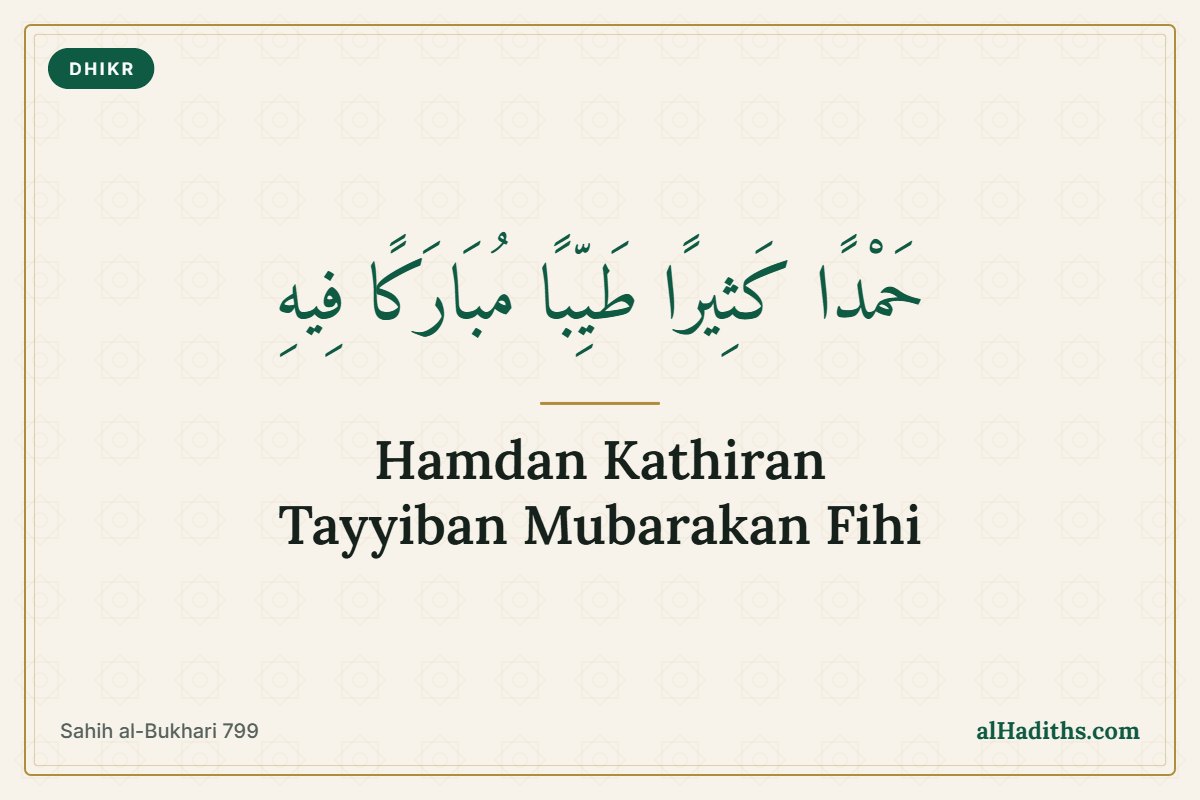
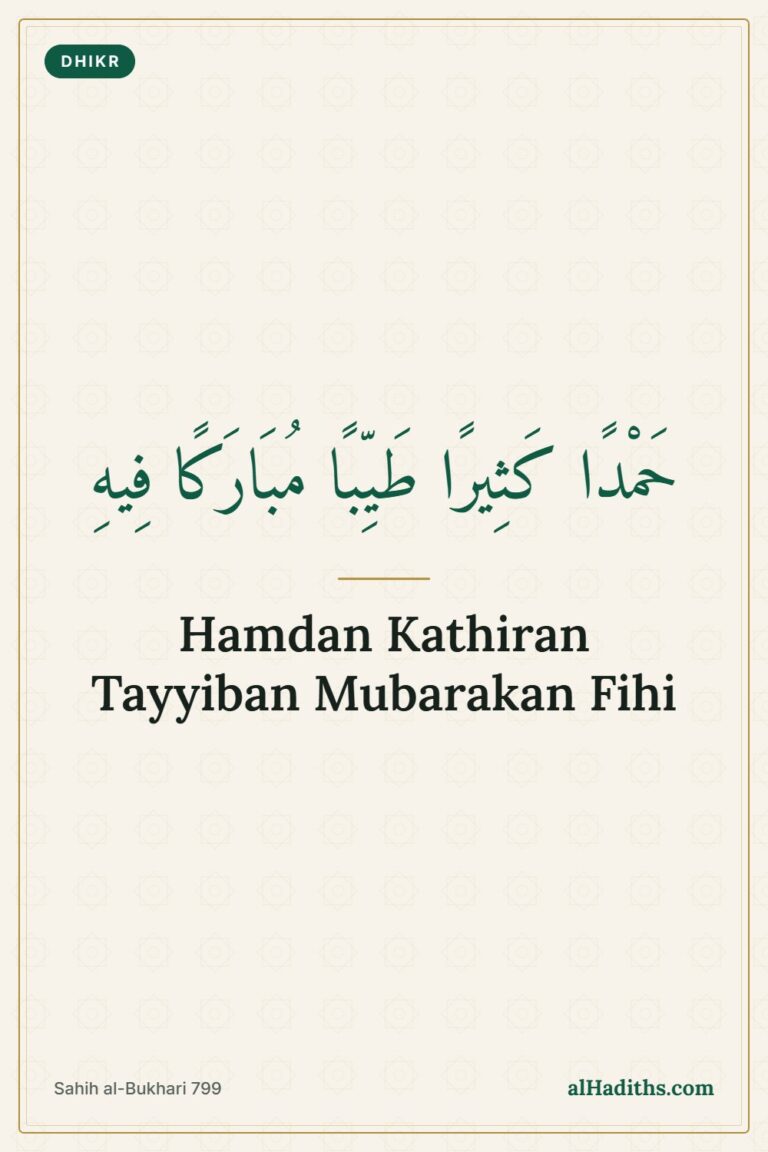
رَبَّنَا وَلَكَ الْحَمْدُ، حَمْدًا كَثِيرًا طَيِّبًا مُبَارَكًا فِيهِ
Rabbanā wa lakal-ḥamd, ḥamdan kathīran ṭayyiban mubārakan fīh
“O our Lord! All the praises are for You, many good and blessed praises.”
Sahih al-Bukhari 799 · Narrated by Rifa‘ah bin Rafi‘ · Translation from Sunnah.com
Word by word:
- Ḥamdan (حَمْدًا): praise.
- Kathīran (كَثِيرًا): much, abundant.
- Ṭayyiban (طَيِّبًا): good and pure.
- Mubārakan fīh (مُبَارَكًا فِيهِ): blessed, full of blessing.
Put together: our Lord, all praise belongs to You, praise that is abundant, pure and full of blessing.
1. After rising from ruku‘ (Sahih al-Bukhari 799)
Rifa‘ah bin Rafi‘ az-Zuraqi (may Allah be pleased with him) describes a day when the companions were praying behind the Prophet ﷺ:
كُنَّا يَوْمًا نُصَلِّي وَرَاءَ النَّبِيِّ صلى الله عليه وسلم فَلَمَّا رَفَعَ رَأْسَهُ مِنَ الرَّكْعَةِ قَالَ سَمِعَ اللَّهُ لِمَنْ حَمِدَهُ. قَالَ رَجُلٌ وَرَاءَهُ رَبَّنَا وَلَكَ الْحَمْدُ، حَمْدًا كَثِيرًا طَيِّبًا مُبَارَكًا فِيهِ، فَلَمَّا انْصَرَفَ قَالَ مَنِ الْمُتَكَلِّمُ. قَالَ أَنَا. قَالَ رَأَيْتُ بِضْعَةً وَثَلاَثِينَ مَلَكًا يَبْتَدِرُونَهَا، أَيُّهُمْ يَكْتُبُهَا أَوَّلُ
“One day we were praying behind the Prophet ﷺ. When he raised his head from bowing, he said, ‘Sami‘a Allahu liman hamidah.’ A man behind him said, ‘Rabbana wa lakal-hamd, hamdan kathiran tayyiban mubarakan fihi’ (O our Lord! All the praises are for You, many good and blessed praises). When the Prophet ﷺ completed the prayer, he asked, ‘Who has said these words?’ The man replied, ‘I.’ The Prophet ﷺ said, ‘I saw over thirty angels competing to write it first.’”
Sahih al-Bukhari 799 · Narrated by Rifa‘ah bin Rafi‘ az-Zuraqi · Translation adapted from Sunnah.com
This is the best-known occasion. The man said it right after the imam’s “Sami‘a Allahu liman hamidah,” as he stood up from ruku‘. Over thirty angels hurried to be the first to record it.
2. When joining the prayer (Sahih Muslim 600)
Anas bin Malik (may Allah be pleased with him) reports a second occasion, with a slightly different opening, “Al-hamdu lillah”:
أَنَّ رَجُلاً، جَاءَ فَدَخَلَ الصَّفَّ وَقَدْ حَفَزَهُ النَّفَسُ فَقَالَ الْحَمْدُ لِلَّهِ حَمْدًا كَثِيرًا طَيِّبًا مُبَارَكًا فِيهِ. فَلَمَّا قَضَى رَسُولُ اللَّهِ صلى الله عليه وسلم صَلاَتَهُ قَالَ أَيُّكُمُ الْمُتَكَلِّمُ بِالْكَلِمَاتِ. فَأَرَمَّ الْقَوْمُ فَقَالَ أَيُّكُمُ الْمُتَكَلِّمُ بِهَا فَإِنَّهُ لَمْ يَقُلْ بَأْسًا. فَقَالَ رَجُلٌ جِئْتُ وَقَدْ حَفَزَنِي النَّفَسُ فَقُلْتُهَا. فَقَالَ لَقَدْ رَأَيْتُ اثْنَىْ عَشَرَ مَلَكًا يَبْتَدِرُونَهَا أَيُّهُمْ يَرْفَعُهَا
“A man came, out of breath, and entered the row and said: ‘Al-hamdu lillahi hamdan kathiran tayyiban mubarakan fihi’ (Praise be to Allah, much good and blessed praise). When the Messenger of Allah ﷺ finished the prayer he said: ‘Who amongst you uttered these words?’ The people remained silent. He said: ‘Who amongst you uttered them? He said nothing wrong.’ Then a man said: ‘I came and had difficulty breathing, so I uttered them.’ He replied: ‘I saw twelve angels racing one another as to which of them would take it up (to Allah).’”
Sahih Muslim 600 · Narrated by Anas bin Malik · Translation adapted from Sunnah.com
Notice how the people stayed silent at first, perhaps worried they had done something wrong. The Prophet ﷺ reassured them: “He said nothing wrong.” A latecomer, still catching his breath, said a few sincere words, and twelve angels raced to raise them.
3. The longer version, said after sneezing (Jami‘ at-Tirmidhi 404)
Rifa‘ah bin Rafi‘ (may Allah be pleased with him) narrates that he himself sneezed in prayer and said a longer form:
صَلَّيْتُ خَلْفَ رَسُولِ اللَّهِ صلى الله عليه وسلم فَعَطَسْتُ فَقُلْتُ الْحَمْدُ لِلَّهِ حَمْدًا كَثِيرًا طَيِّبًا مُبَارَكًا فِيهِ مُبَارَكًا عَلَيْهِ كَمَا يُحِبُّ رَبُّنَا وَيَرْضَى. فَلَمَّا صَلَّى رَسُولُ اللَّهِ صلى الله عليه وسلم انْصَرَفَ فَقَالَ مَنِ الْمُتَكَلِّمُ فِي الصَّلاَةِ. فَلَمْ يَتَكَلَّمْ أَحَدٌ ثُمَّ قَالَهَا الثَّانِيَةَ مَنِ الْمُتَكَلِّمُ فِي الصَّلاَةِ. فَلَمْ يَتَكَلَّمْ أَحَدٌ ثُمَّ قَالَهَا الثَّالِثَةَ مَنِ الْمُتَكَلِّمُ فِي الصَّلاَةِ. فَقَالَ رِفَاعَةُ بْنُ رَافِعِ ابْنِ عَفْرَاءَ أَنَا يَا رَسُولَ اللَّهِ. قَالَ كَيْفَ قُلْتَ. قَالَ قُلْتُ الْحَمْدُ لِلَّهِ حَمْدًا كَثِيرًا طَيِّبًا مُبَارَكًا فِيهِ مُبَارَكًا عَلَيْهِ كَمَا يُحِبُّ رَبُّنَا وَيَرْضَى فَقَالَ النَّبِيُّ صلى الله عليه وسلم وَالَّذِي نَفْسِي بِيَدِهِ لَقَدِ ابْتَدَرَهَا بِضْعَةٌ وَثَلاَثُونَ مَلَكًا أَيُّهُمْ يَصْعَدُ بِهَا
“I prayed behind the Messenger of Allah ﷺ. I sneezed and said: ‘Al-hamdu lillahi hamdan kathiran tayyiban mubarakan fihi, mubarakan ‘alaihi, kama yuhibbu Rabbuna wa yarda’ (All praise is due to Allah, many good blessed praises, blessed upon it, as our Lord loves and is pleased with). When the Messenger of Allah ﷺ prayed and turned (after finishing), he said: ‘Who was the speaker during the prayer?’ No one spoke. Then he said it a second time: ‘Who was the speaker during the prayer?’ But no one spoke. Then he said it a third time: ‘Who was the speaker during the prayer?’ So Rifa‘ah bin Rafi‘ bin ‘Afra’ said: ‘It was I, O Messenger of Allah.’ He said: ‘What did you say?’ He said: ‘I said: Al-hamdu lillahi hamdan kathiran tayyiban mubarakan fihi, mubarakan ‘alaihi, kama yuhibbu Rabbuna wa yarda.’ The Prophet ﷺ said: ‘By the One in Whose Hand is my soul! I saw thirty-some angels competing over which of them would ascend with it.’”
Jami‘ at-Tirmidhi 404 · Hasan (Darussalam) · Narrated by Rifa‘ah bin Rafi‘ · Translation adapted from Sunnah.com
Abu Dawud reports the same incident in Sunan Abi Dawud 773, graded Hasan by al-Albani. Here is the longer wording on its own:
الْحَمْدُ لِلَّهِ حَمْدًا كَثِيرًا طَيِّبًا مُبَارَكًا فِيهِ مُبَارَكًا عَلَيْهِ كَمَا يُحِبُّ رَبُّنَا وَيَرْضَى
Al-ḥamdu lillāhi ḥamdan kathīran ṭayyiban mubārakan fīh, mubārakan ‘alaih, kamā yuḥibbu Rabbunā wa yarḍā
“All praise is due to Allah, many good blessed praises, blessed upon it, as our Lord loves and is pleased with.”
Jami‘ at-Tirmidhi 404 · Hasan (Darussalam) · Translation adapted from Sunnah.com
Right after this hadith, at-Tirmidhi adds that some scholars understood it as being in a voluntary prayer, because several of the Tabi‘in said that someone who sneezes in an obligatory prayer praises Allah only within himself (our translation of his note in the Arabic on Sunnah.com). Scholars differ on details like this, so ask a qualified local scholar.
What it means: praise that fills the moment
Reflection: “Sami‘a Allahu liman hamidah” means Allah hears the one who praises Him. In these hadith, a companion answered that moment with praise that was more than enough: abundant, pure and blessed. Twice the Prophet ﷺ had to ask who said it, and the man was slow to own up. He was not trying to be noticed, and that may be part of why it rose so high. The words are short. What made them heavy was the heart behind them.
You can listen to the recitation here to get the pronunciation right:
How to practise it
- Say it after “Rabbana wa lakal-hamd” when you rise from ruku‘. That is where the man said it in Bukhari 799.
- Learn the short version first. The hadith give no set number of times.
- When it comes easily, learn the longer wording from Tirmidhi 404: “…mubarakan ‘alaihi, kama yuhibbu Rabbuna wa yarda.”
- Questions like saying it aloud, or in an obligatory prayer after sneezing, are for a qualified local scholar.
- Outside salah, it is still a beautiful way to praise Allah. That is a suggestion, not something these hadith state.
It is easy to memorize and a beautiful sentence to add during our meeting with Allah. May Allah fill our books with good deeds.
Kathiran, kaseeran or katheeran? A note on spelling
You will see this phrase written many ways: kathiran, kaseeran, katheeran or kasiran; tayyiban or taiyiban; fihi, feeh or fih. They are all English spellings of the same Arabic words, such as كَثِيرًا. The words, the meaning and the reward are the same.
Questions people ask
What does hamdan kathiran tayyiban mubarakan fihi mean?
It means “praise that is abundant, good and blessed.” The full phrase in Sahih al-Bukhari 799 is “Rabbana wa lakal-hamd, hamdan kathiran tayyiban mubarakan fihi”: “O our Lord! All the praises are for You, many good and blessed praises.”
When do you say it in salah?
In Sahih al-Bukhari 799 the man said it after rising from ruku‘, following “Rabbana wa lakal-hamd.” In Sahih Muslim 600 a man said it as he joined the row, starting with “Al-hamdu lillah.”
What is the full version of alhamdulillahi hamdan kathiran tayyiban?
Jami‘ at-Tirmidhi 404 (Hasan, Darussalam) has the longer wording: “Al-hamdu lillahi hamdan kathiran tayyiban mubarakan fihi, mubarakan ‘alaihi, kama yuhibbu Rabbuna wa yarda.” Thirty-some angels competed to take it up.
Key lessons
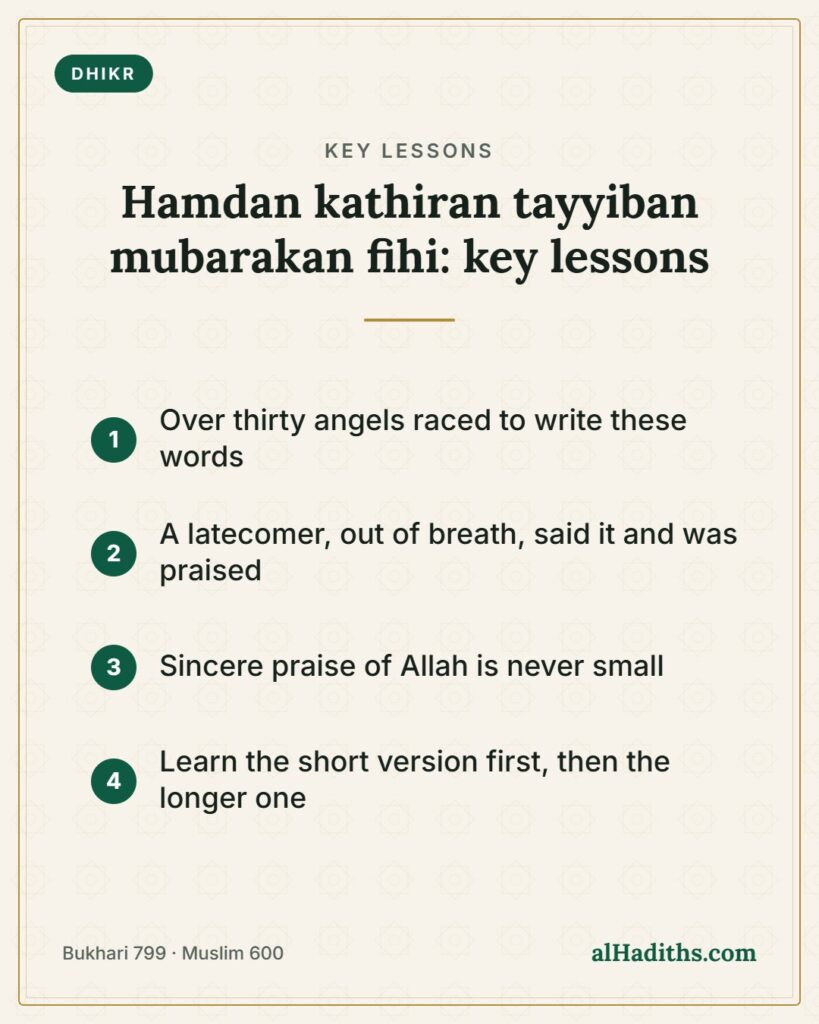
- Over thirty angels raced to record these words (Sahih al-Bukhari 799).
- Twelve angels raced to raise them when a breathless latecomer said them (Sahih Muslim 600).
- A longer version adds “mubarakan ‘alaihi, kama yuhibbu Rabbuna wa yarda” (Jami‘ at-Tirmidhi 404).
- Short, sincere praise of Allah can carry great reward.
Part of our Salah and Dhikr series: see all our salah articles and dhikr articles in one place.
A few words, yet angels raced to write them down. By Allah’s grace, He opens many ways for us to add rewards to our book of deeds. So why not make it part of our salah, starting with the next one?
Save this to Pinterest so you can add it to your next salah
Share the reward. Send this article to someone who needs it today — teaching a hadith or dua can become a lasting good deed for you, in shaa Allah.