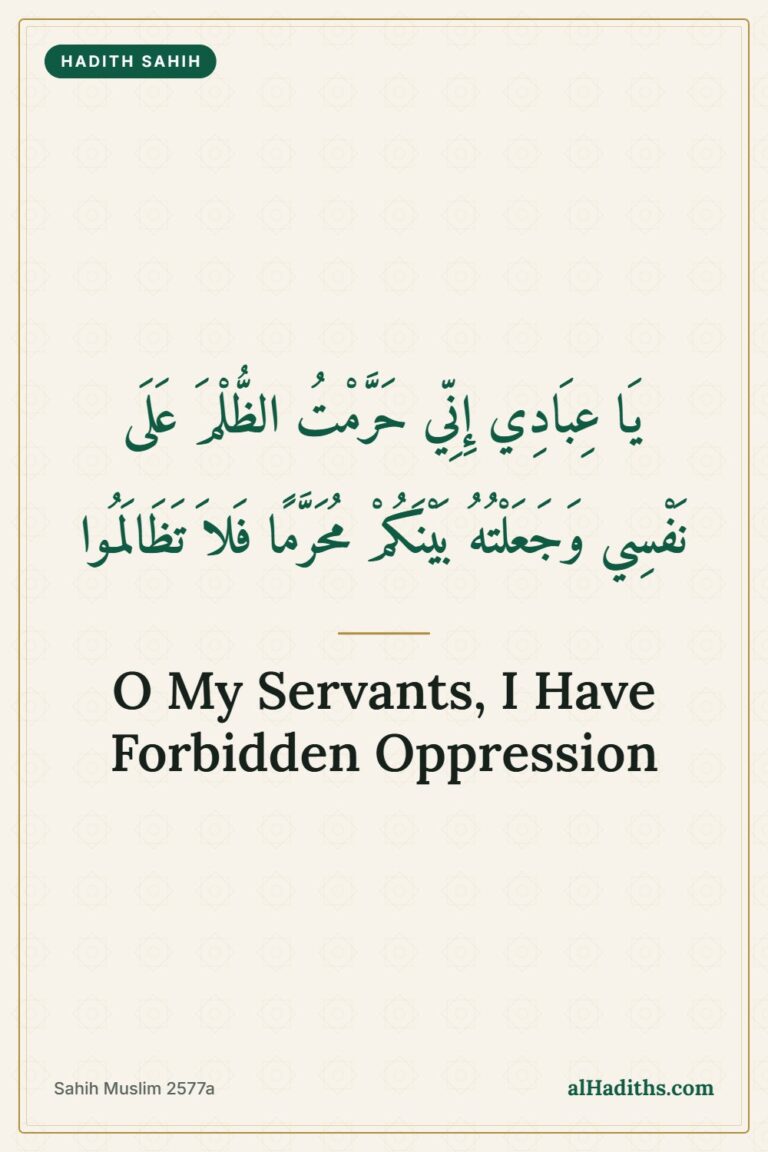
O My Servants, I Have Forbidden Oppression: Hadith 24
When Abu Idris al-Khawlani narrated this hadith, he would kneel on his knees. That small detail, kept in Sahih Muslim, says a lot about its weight. It is a hadith qudsi: the Prophet ﷺ conveys the words of Allah, who calls out “O My servants” ten times. It opens with “I have forbidden oppression for Myself” and ends with our own deeds. This is Hadith 24 of Imam an-Nawawi’s collection; here is the full text, what it means and how to live by it.
At a glance
- Source: Sahih Muslim 2577a (Hadith 24 of an-Nawawi’s 40)
- Narrated by: Abu Dharr al-Ghifari (may Allah be pleased with him)
- Grade: Sahih (Sahih Muslim); a hadith qudsi
- Topic: Oppression, guidance, provision, forgiveness and Allah’s perfect self-sufficiency
- Put it into practice: Today, ask Allah directly for guidance, provision and forgiveness.
The hadith
Abu Dharr (may Allah be pleased with him) reported that the Messenger of Allah ﷺ said that Allah, the Exalted and Glorious, said:
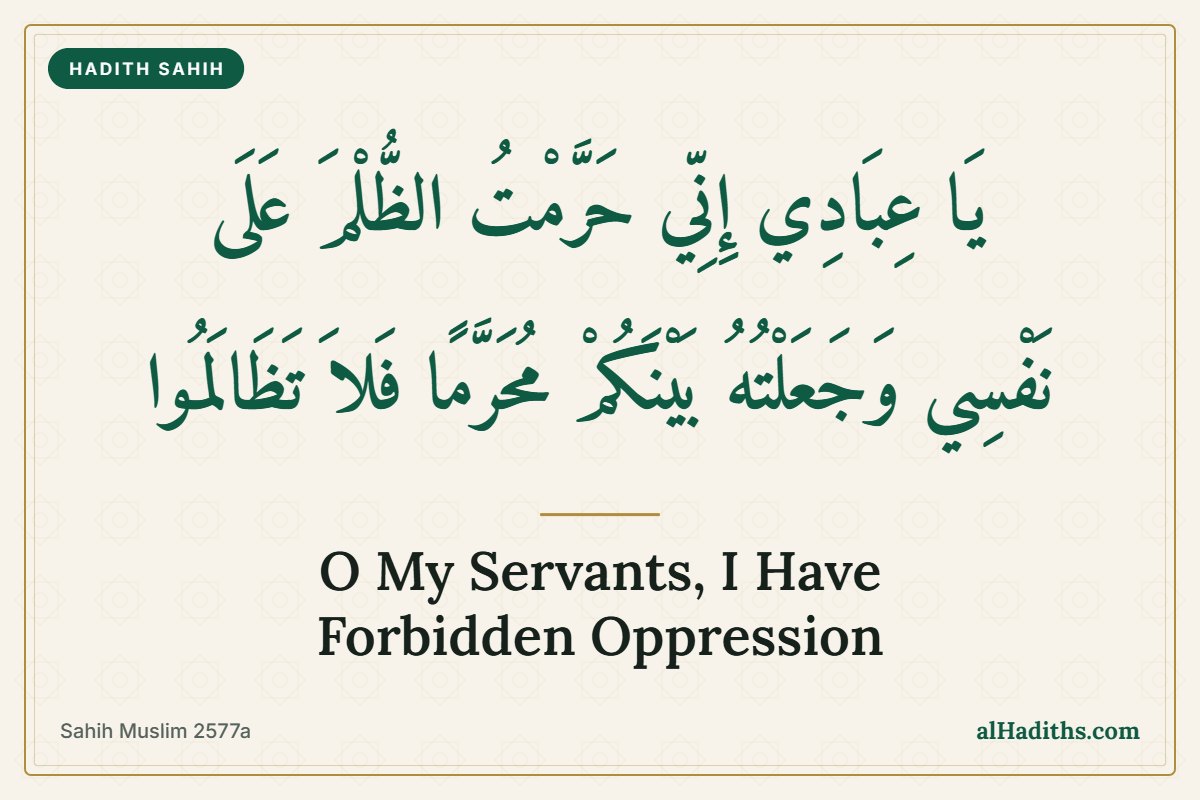
يَا عِبَادِي إِنِّي حَرَّمْتُ الظُّلْمَ عَلَى نَفْسِي وَجَعَلْتُهُ بَيْنَكُمْ مُحَرَّمًا فَلاَ تَظَالَمُوا يَا عِبَادِي كُلُّكُمْ ضَالٌّ إِلاَّ مَنْ هَدَيْتُهُ فَاسْتَهْدُونِي أَهْدِكُمْ يَا عِبَادِي كُلُّكُمْ جَائِعٌ إِلاَّ مَنْ أَطْعَمْتُهُ فَاسْتَطْعِمُونِي أُطْعِمْكُمْ يَا عِبَادِي كُلُّكُمْ عَارٍ إِلاَّ مَنْ كَسَوْتُهُ فَاسْتَكْسُونِي أَكْسُكُمْ يَا عِبَادِي إِنَّكُمْ تُخْطِئُونَ بِاللَّيْلِ وَالنَّهَارِ وَأَنَا أَغْفِرُ الذُّنُوبَ جَمِيعًا فَاسْتَغْفِرُونِي أَغْفِرْ لَكُمْ يَا عِبَادِي إِنَّكُمْ لَنْ تَبْلُغُوا ضَرِّي فَتَضُرُّونِي وَلَنْ تَبْلُغُوا نَفْعِي فَتَنْفَعُونِي يَا عِبَادِي لَوْ أَنَّ أَوَّلَكُمْ وَآخِرَكُمْ وَإِنْسَكُمْ وَجِنَّكُمْ كَانُوا عَلَى أَتْقَى قَلْبِ رَجُلٍ وَاحِدٍ مِنْكُمْ مَا زَادَ ذَلِكَ فِي مُلْكِي شَيْئًا يَا عِبَادِي لَوْ أَنَّ أَوَّلَكُمْ وَآخِرَكُمْ وَإِنْسَكُمْ وَجِنَّكُمْ كَانُوا عَلَى أَفْجَرِ قَلْبِ رَجُلٍ وَاحِدٍ مَا نَقَصَ ذَلِكَ مِنْ مُلْكِي شَيْئًا يَا عِبَادِي لَوْ أَنَّ أَوَّلَكُمْ وَآخِرَكُمْ وَإِنْسَكُمْ وَجِنَّكُمْ قَامُوا فِي صَعِيدٍ وَاحِدٍ فَسَأَلُونِي فَأَعْطَيْتُ كُلَّ إِنْسَانٍ مَسْأَلَتَهُ مَا نَقَصَ ذَلِكَ مِمَّا عِنْدِي إِلاَّ كَمَا يَنْقُصُ الْمِخْيَطُ إِذَا أُدْخِلَ الْبَحْرَ يَا عِبَادِي إِنَّمَا هِيَ أَعْمَالُكُمْ أُحْصِيهَا لَكُمْ ثُمَّ أُوَفِّيكُمْ إِيَّاهَا فَمَنْ وَجَدَ خَيْرًا فَلْيَحْمَدِ اللَّهَ وَمَنْ وَجَدَ غَيْرَ ذَلِكَ فَلاَ يَلُومَنَّ إِلاَّ نَفْسَهُ
“O My servants, I have forbidden oppression for Myself and have made it forbidden amongst you, so do not oppress one another. O My servants, all of you are astray except for those I have guided, so seek guidance of Me and I shall guide you, O My servants, all of you are hungry except for those I have fed, so seek food of Me and I shall feed you. O My servants, all of you are naked except for those I have clothed, so seek clothing of Me and I shall clothe you. O My servants, you sin by night and by day, and I forgive all sins, so seek forgiveness of Me and I shall forgive you. O My servants, you will not attain harming Me so as to harm Me, and will not attain benefitting Me so as to benefit Me. O My servants, were the first of you and the last of you, the human of you and the jinn of you to be as pious as the most pious heart of any one man of you, that would not increase My dominion in anything. O My servants, were the first of you and the last of you, the human of you and the jinn of you to be as wicked as the most wicked heart of any one man of you, that would not decrease My dominion in anything. O My servants, were the first of you and the last of you, the human of you and the jinn of you to rise up in one place and make a request of Me, and were I to give everyone what he requested, that would not decrease what I have, any more that a needle decreases the sea if put into it. O My servants, it is but your deeds that I record for you and then recompense you for. So let him who finds good, praise Allah, and let him who finds other than that blame no one but himself.”
Sahih Muslim 2577a · Hadith qudsi · Narrated by Abu Dharr · Translation from Sunnah.com
At the end of the narration in Sahih Muslim, Sa’id says that when Abu Idris al-Khawlani narrated this hadith, he knelt upon his knees. Imam an-Nawawi gives it as Hadith 24 of his 40 Hadith.
What “I have forbidden oppression for Myself” means
The Encyclopedia of Translated Prophetic Hadiths (HadeethEnc) explains each call in turn:
- Oppression: Allah has made oppression forbidden for Himself and forbidden among His servants, so people must not oppress one another.
- Guidance: all servants are astray from the true path unless Allah guides them, and whoever asks Him for guidance, He guides.
- Food and clothing: every servant needs Allah in all their affairs, and whoever asks Him, He meets that need.
- Forgiveness: people sin by night and by day, and Allah conceals their sins and pardons them when they ask Him for forgiveness.
- No harm and no benefit to Allah: the piety of all creation would add nothing to His dominion, and their wickedness would take nothing from it. They need Him; He needs no one.
- The needle and the sea: if all humans and jinn asked at once and He gave each one what he asked, it would decrease what He has no more than a needle decreases the sea.
- Our deeds: Allah records them and repays them in full. Whoever finds good should praise Allah for guiding him, and whoever finds otherwise should blame only himself.
What is a hadith qudsi?
HadeethEnc notes that this is a hadith qudsi: one the Prophet ﷺ narrated from his Lord, with its wording and meaning attributed to Allah. It is still not the Quran, and it does not share the Quran’s features, such as reciting it as an act of worship, purifying oneself for it, or its miraculous nature.
The Quran states the same truth with which this hadith opens:
إِنَّ ٱللَّهَ لَا يَظْلِمُ ٱلنَّاسَ شَيْـًٔا وَلَـٰكِنَّ ٱلنَّاسَ أَنفُسَهُمْ يَظْلِمُونَ
“Indeed, Allāh does not wrong the people at all, but it is the people who are wronging themselves.”
Surah Yunus 10:44 · Translation: Saheeh International, from Quran.com
Reflection: oppression can sound like something only rulers and armies do. But the hadith speaks to every servant, and it begins and ends in the same place. Allah does not wrong anyone, and at the end, each of us finds only our own deeds. Between those two lines, every call is an invitation to ask Him for something we cannot provide for ourselves. Wronging others, in big ways or small, is the opposite of that humility; see also the blood, wealth and honor of a Muslim.
How to put it into practice
The hadith does not set a routine, so these are suggestions:
- Look for anyone you may have wronged: a debt not yet repaid, a harsh word, or someone’s right at home or at work. Put it right while you can.
- Ask Allah directly. The hadith repeats “so seek … of Me” for guidance, food, clothing and forgiveness. Ask Him for what you need, in your own words.
- Seek forgiveness every day, since we “sin by night and by day”; see the best dua for forgiveness.
- Read your results honestly. When things go well, praise Allah. When they do not, look at your own deeds before blaming anyone else.
Key lessons
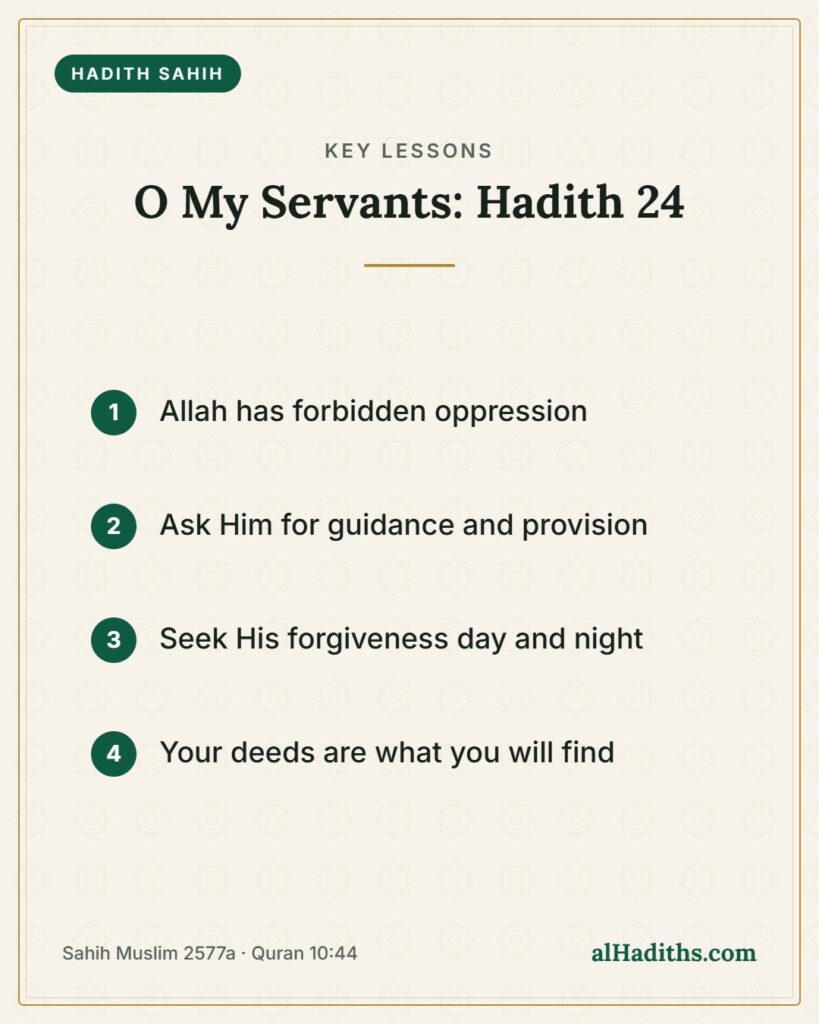
- Allah has forbidden oppression for Himself and among His servants.
- Guidance, food, clothing and forgiveness all come from Allah, so ask Him for them.
- Allah needs nothing from us; His treasures never decrease.
- In the end, we find our own deeds: praise Allah for the good and blame no one else for the rest.
Questions people ask
What does “I have forbidden oppression for Myself” mean?
It means Allah never wrongs anyone, and He has made oppression forbidden among people too, so they must not oppress one another. This is how the Encyclopedia of Translated Prophetic Hadiths (HadeethEnc) explains the opening of Sahih Muslim 2577a.
Is Hadith 24 of an-Nawawi a hadith qudsi?
Yes. The Prophet ﷺ narrates it from Allah, and its wording and meaning are attributed to Allah. A hadith qudsi is still not part of the Quran.
What does the needle and the sea mean in this hadith?
If every human and jinn asked Allah at once and He gave each one what he asked, it would decrease what He has no more than a needle decreases the sea when dipped into it. HadeethEnc explains that this is because of Allah’s perfect self-sufficiency.
One thing to do today: ask Allah for one thing you need, in your own words, and remember the needle and the sea.
Save this to Pinterest so you can come back to this hadith qudsi later.
Share the reward. Send this article to someone who needs it today — teaching a hadith or dua can become a lasting good deed for you, in shaa Allah.