The Best Dhikr and the Best Dua, From the Hadith
There are so many adhkar in the Sunnah that it is natural to ask: which one is the best? The Prophet ﷺ answered this in one short line. The best dhikr is La ilaha illallah, and the best dua is Alhamdulillah. Two phrases most of us already know, with a reward far bigger than their length.
At a glance
- Source: Jami` at-Tirmidhi 3383 and Sunan Ibn Majah 3800
- Narrated by: Jabir ibn ‘Abdullah (may Allah be pleased with him)
- Grade: Hasan (Darussalam)
- Topic: The best dhikr and the best dua
- Practise it: Fill spare moments with La ilaha illallah and Alhamdulillah
The hadith
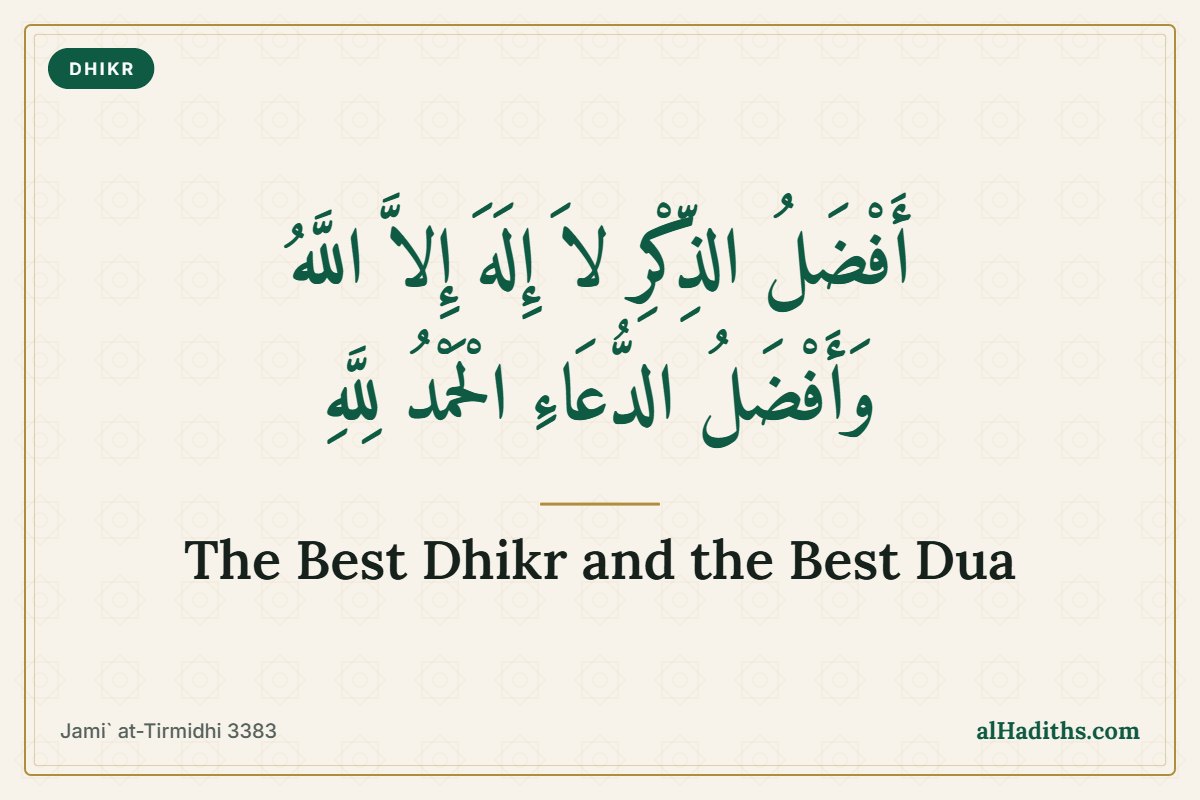
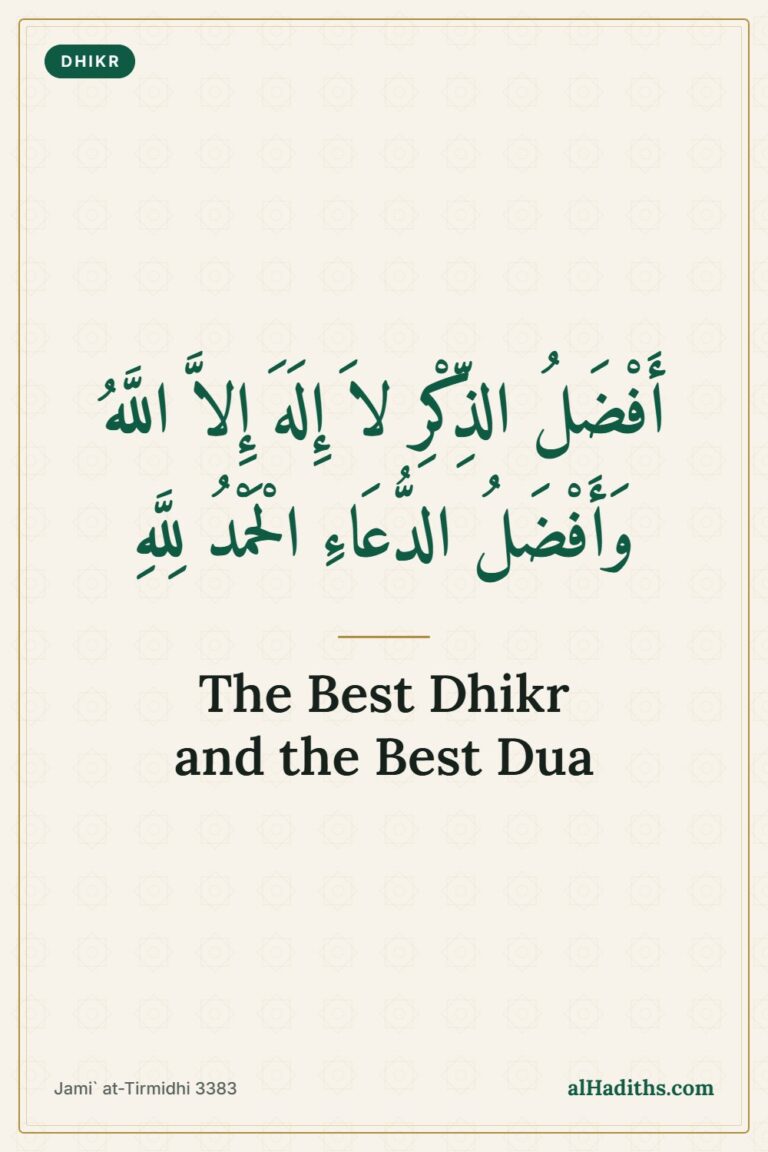
أَفْضَلُ الذِّكْرِ لاَ إِلَهَ إِلاَّ اللَّهُ وَأَفْضَلُ الدُّعَاءِ الْحَمْدُ لِلَّهِ
“The best of remembrance is La ilaha illallah (None has the right to be worshipped but Allah), and the best of supplication is Al-Hamdu Lillah (praise is to Allah).”
Sunan Ibn Majah 3800 · Narrated by Jabir ibn ‘Abdullah · Grade: Hasan (Darussalam) · Translation from Sunnah.com
At-Tirmidhi narrates the same words (Jami` at-Tirmidhi 3383), also graded Hasan by Darussalam. A Hasan (good) hadith is one whose narrators are trustworthy but slightly less precise in memory than those of a Sahih hadith. Scholars accept it as evidence, and it counts among the authentic hadith.
What the two phrases mean
La ilaha illallah: there is no god worthy of worship except Allah. It is the declaration of tawhid, the first pillar of Islam and the heart of our faith, which is why it is the best of all remembrance.
Alhamdulillah: all praise belongs to Allah. It may seem strange to call praise a dua, since we are not asking for anything. But praising Allah is itself a way of turning to Him, and Allah promises to give more to those who are grateful:
وَإِذْ تَأَذَّنَ رَبُّكُمْ لَئِن شَكَرْتُمْ لَأَزِيدَنَّكُمْ ۖ وَلَئِن كَفَرْتُمْ إِنَّ عَذَابِى لَشَدِيدٌ
“And [remember] when your Lord proclaimed, ‘If you are grateful, I will surely increase you [in favor]; but if you deny, indeed, My punishment is severe.'””
Surah Ibrahim 14:7 · Translation: Saheeh International, from Quran.com
Both phrases are also among the four phrases the Prophet ﷺ called the dearest of all speech to Allah (Sahih Muslim 2137a).
Reflection: this does not mean other dhikr are lesser. Each dhikr taught by the Prophet ﷺ has its own place and occasion, after salah, in the morning and evening, before sleep. These two are simply the ones we can carry with us everywhere.
Videos to help you recite
For our new brothers and sisters, here are two video recitations you can follow to help you recite La ilaha illallah and Alhamdulillah. May Allah shower guidance on all of us.
How to practise it
The hadith does not give a number or a time, so these are suggestions:
- Fill small gaps, such as waiting in traffic or in a queue, with La ilaha illallah.
- Make Alhamdulillah your first word when something good happens, big or small.
- Start your dua with praise: say Alhamdulillah before asking Allah for anything.
- Teach both phrases to children; they are among the first words a Muslim learns.
Key lessons
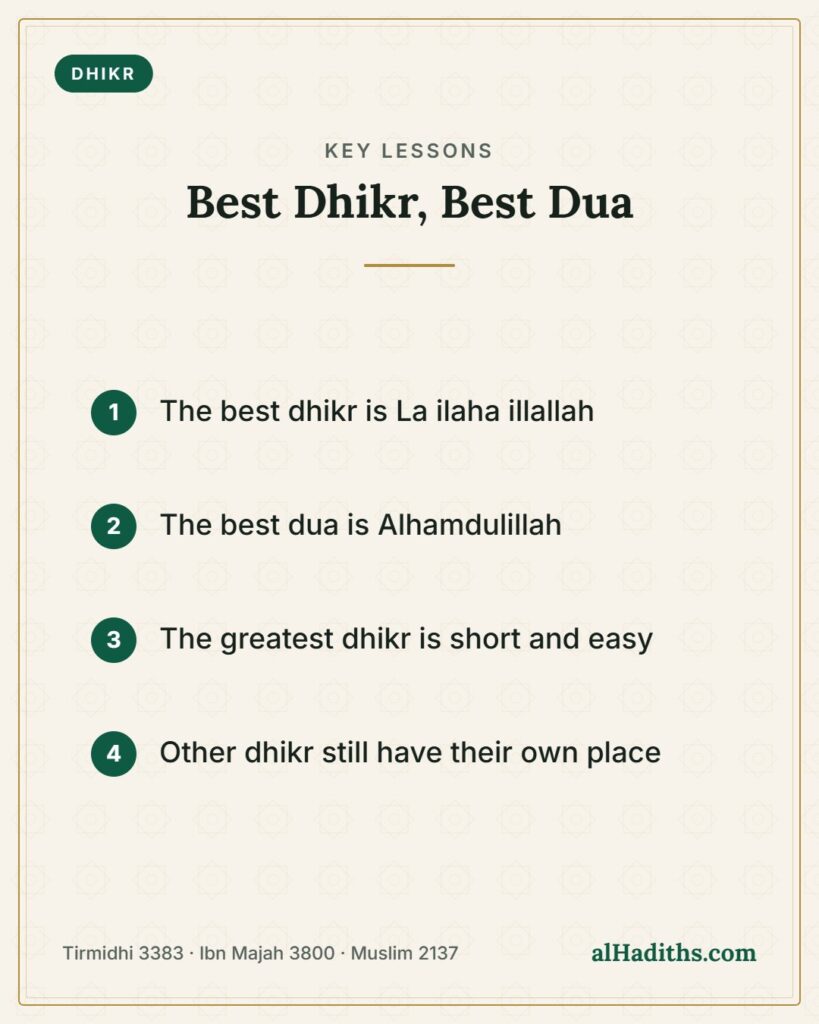
- The best dhikr is La ilaha illallah.
- The best dua is Alhamdulillah.
- The greatest dhikr is short and easy for everyone.
- Other dhikr still have their own place and occasion.
Questions people ask
What is the best dhikr in Islam?
The Prophet ﷺ said the best remembrance is La ilaha illallah (Jami` at-Tirmidhi 3383, Sunan Ibn Majah 3800; Hasan, Darussalam).
Why is Alhamdulillah called the best dua?
The hadith calls it the best supplication (Jami` at-Tirmidhi 3383). Praising Allah is a way of turning to Him, and Allah promises to give more to those who are grateful (Surah Ibrahim 14:7).
Is a Hasan hadith authentic?
Yes. A Hasan hadith is accepted as evidence by hadith scholars. Its narrators are reliable, though slightly less precise than those of a Sahih hadith.
I make dua that Allah makes it easy for you and me to recite the dhikr taught to us by the Prophet ﷺ, and that it brings calmness and serenity to our lives.
Save this to Pinterest so you can remember the best dhikr and the best dua
Share the reward. Send this article to someone who needs it today — teaching a hadith or dua can become a lasting good deed for you, in shaa Allah.