Dua to Recite After Tashahhud and Its Amazing Reward
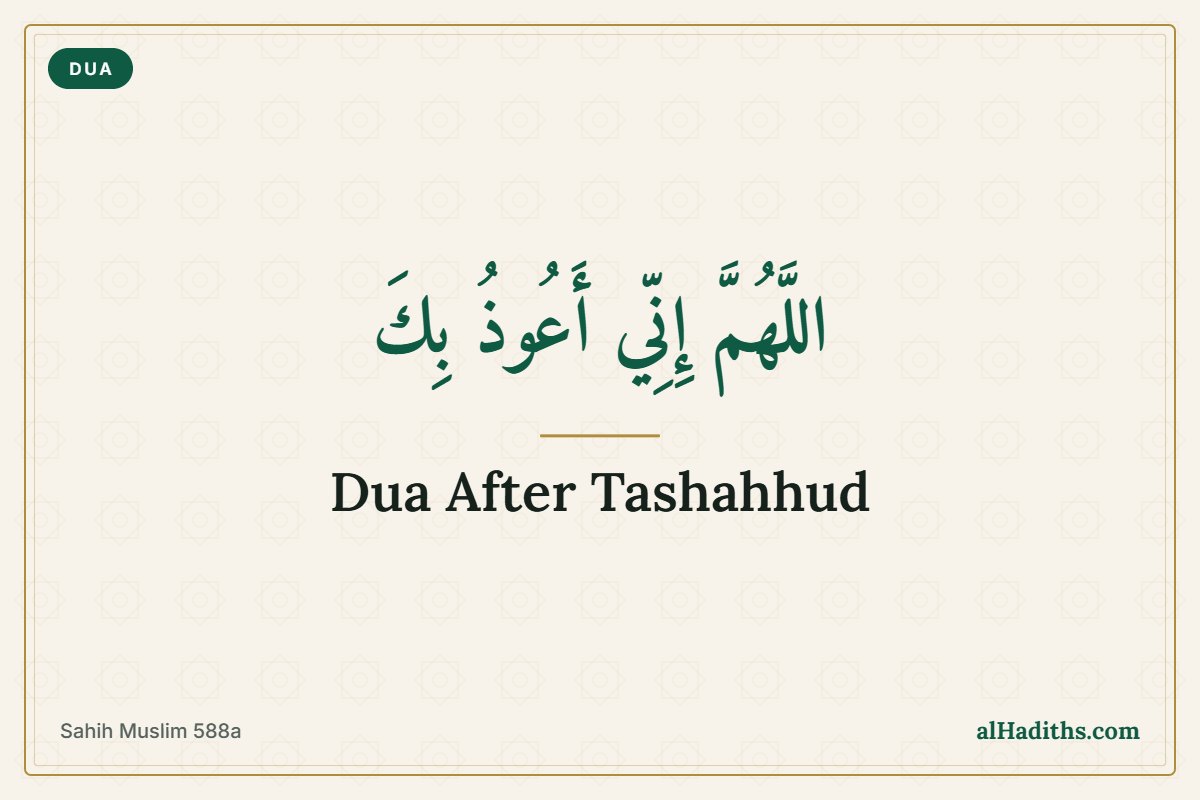
The tashahhud is recited during the last tahiyyat. There is a dua to recite after tashahhud that the Prophet Muhammad ﷺ taught us to add.
At a glance
- Source: Sahih Muslim 588a; also in Riyad as-Salihin 1423
- Narrated by: Abu Hurairah (may Allah be pleased with him)
- Grade: Sahih (Sahih Muslim)
- Topic: Dua, Salat
- Practise it: After the final tashahhud, before giving salam
This dua invokes Allah to save oneself from doom of the grave and torment of the hellfire. It also includes protection from the trials of life and death and the trial of al-Masih ad-Dajjal.
Let’s take a look at the hadith regarding the dua below.
Hadith about the dua to recite after tashahhud
إِذَا تَشَهَّدَ أَحَدُكُمْ فَلْيَسْتَعِذْ بِاللَّهِ مِنْ أَرْبَعٍ يَقُولُ اللَّهُمَّ إِنِّي أَعُوذُ بِكَ مِنْ عَذَابِ جَهَنَّمَ وَمِنْ عَذَابِ الْقَبْرِ وَمِنْ فِتْنَةِ الْمَحْيَا وَالْمَمَاتِ وَمِنْ شَرِّ فِتْنَةِ الْمَسِيحِ الدَّجَّالِ
“Abu Huraira reported: The Messenger of Allah (ﷺ) said: When any one of you utters tashahhud (in prayer) he must seek refuge with Allah from four (trials) and should thus say:” O Allah! I seek refuge with Thee from the torment of the Hell, from the torment of the grave, from the trial of life and death and from the evil of the trial of Masih al-Dajjal” (Antichrist).”
Sahih Muslim 588a · Narrated by Abu Hurairah · Translation adapted from Sunnah.com
The dua is recited before giving the Salam to end the salat.
The dua extracted from the hadith and its meaning
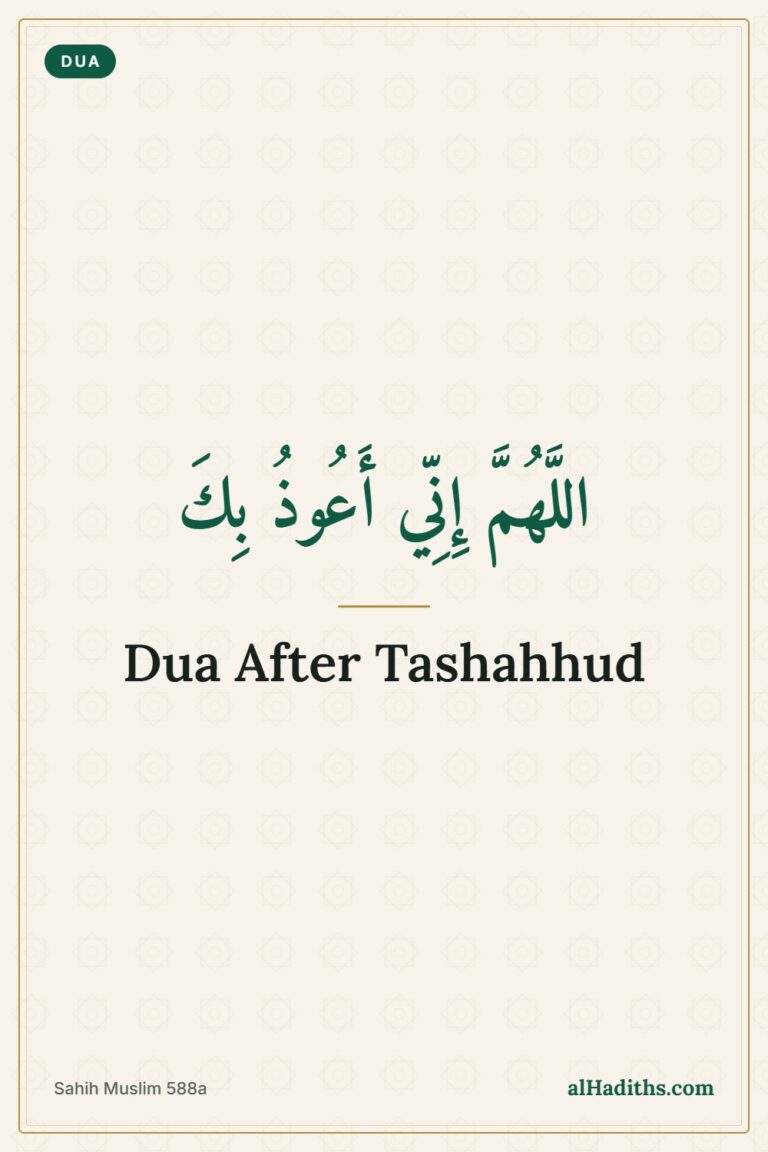
اللَّهُمَّ إِنِّي أَعُوذُ بِكَ مِنْ عَذَابِ جَهَنَّمَ وَمِنْ عَذَابِ الْقَبْرِ وَمِنْ فِتْنَةِ الْمَحْيَا وَالْمَمَاتِ وَمِنْ شَرِّ فِتْنَةِ الْمَسِيحِ الدَّجَّالِ
Allahumma inni a’udhu bika min ‘adhabi jahannam, wa min ‘adhabil-qabr, wa min fitnatil-mahya wal-mamat, wa min sharri fitnatil-masihid-dajjal
“O Allah! I seek refuge with You from the torment of Hell, from the torment of the grave, from the trial of life and death and from the evil of the trial of al-Masih ad-Dajjal.”
Sahih Muslim 588a · Translation adapted from Sunnah.com
The four things we seek refuge from:
- The torment of Hell (عَذَابِ جَهَنَّمَ).
- The torment of the grave (عَذَابِ الْقَبْرِ).
- The trials of life and death (فِتْنَةِ الْمَحْيَا وَالْمَمَاتِ): every test we face while living and at the time of death.
- The evil of the trial of the Dajjal (شَرِّ فِتْنَةِ الْمَسِيحِ الدَّجَّالِ).
Key lessons
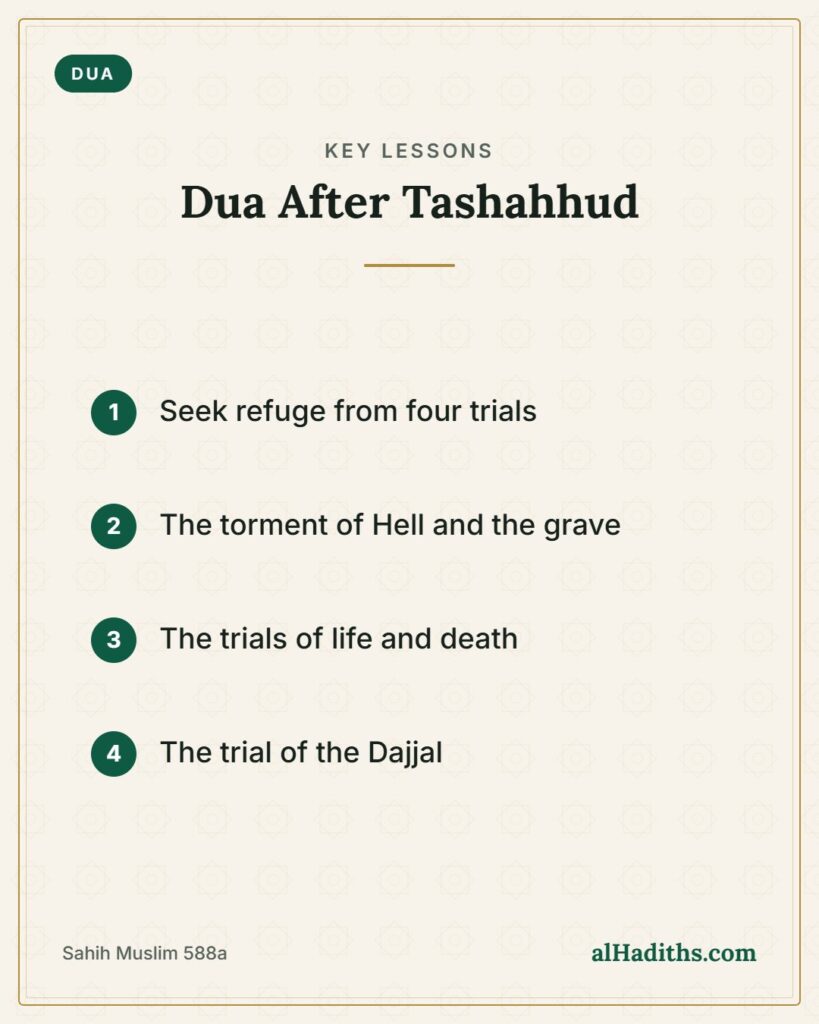
- Seek refuge from four things: Hell, the grave, the trials of life and death, and the Dajjal.
- The Prophet ﷺ instructed us to say it when we recite the tashahhud (Sahih Muslim 588a).
- The dua is short and easy to memorise.
Video about the dua to recite after tashahhud
May Allah ease for you to memorize the dua in the video shared above and may Allah ease for you to practice it as well.
Questions people ask
What dua is recited after tashahhud?
The Prophet ﷺ said: when any one of you utters tashahhud, seek refuge with Allah from four things and say: “Allahumma inni a’udhu bika min ‘adhabi jahannam, wa min ‘adhabil-qabr, wa min fitnatil-mahya wal-mamat, wa min sharri fitnatil-masihid-dajjal” (Sahih Muslim 588a).
Is the dua after tashahhud the same as the dua after attahiyat?
Yes. The tashahhud begins with the words “at-tahiyyatu lillah”, so many people call it the attahiyat. The dua after tashahhud and the dua after attahiyat are the same thing.
Is it said in the first or the last tashahhud?
The wording in Sahih Muslim 588a is “when any one of you utters tashahhud”. It is commonly said in the final tashahhud, just before the salam. For the details, please ask a qualified local scholar.
What does “fitnatil mahya wal mamat” mean?
It means “the trial of life and death”: the tests we face while we are alive and at the time of death.
Conclusion
Allah is the best of protectors. Let’s ask Allah for protection from the torment of the grave and hellfire and the trials of life and death and the trial of the antichrist.
The dua is quite short and InsyaAllah easy to add into our daily list of prayers.
Save this to Pinterest so you can learn it for your next salat
Share the reward. Send this article to someone who needs it today — teaching a hadith or dua can become a lasting good deed for you, in shaa Allah.