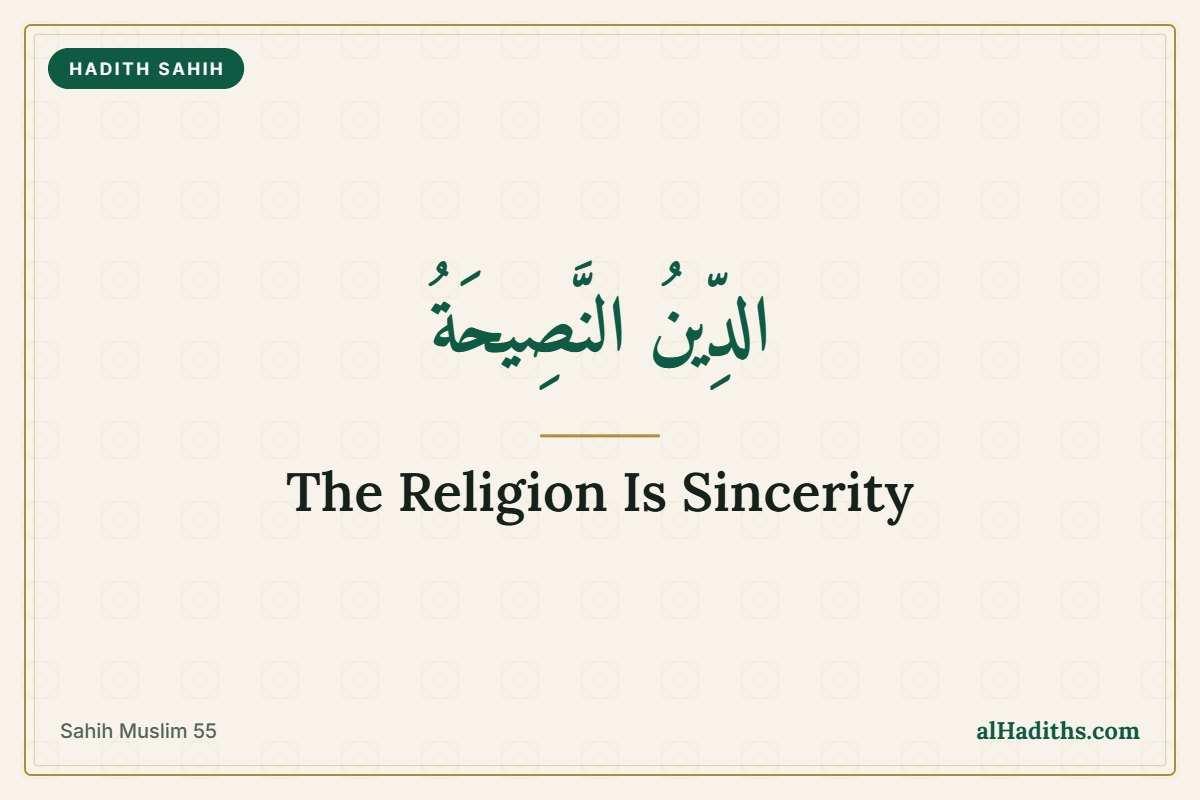
The Religion Is Sincerity (Nasihah): Hadith 7 of an-Nawawi
How would you sum up the whole religion in two words? The Prophet ﷺ did it once: ad-deen an-nasihah, “the religion is sincerity”. The companions asked the obvious question, “To whom?”, and his answer reaches from our relationship with Allah all the way to how we treat the people around us.
At a glance
- Source: Sahih Muslim 55a
- Narrated by: Tamim ad-Dari (may Allah be pleased with him)
- Grade: Sahih (Muslim)
- Topic: Nasihah: sincerity and wishing good
- Put it into practice: Give advice kindly and privately, and mean well
The hadith: the religion is sincerity
“الدِّينُ النَّصِيحَةُ.” قُلْنَا: لِمَنْ؟ قَالَ: “لِلَّهِ، وَلِكِتَابِهِ، وَلِرَسُولِهِ، وَلِأَئِمَّةِ الْمُسْلِمِينَ وَعَامَّتِهِمْ.”
“The Religion is sincerity.” We said, “To whom?” He said “To Allah, to His Book, To His Messenger, and to the leaders of the Muslims and their masses.”
Sahih Muslim 55a · Narrated by Tamim ad-Dari · Translation from Sunnah.com
Imam an-Nawawi placed it as Hadith 7 of an-Nawawi’s 40 Hadith.
What does nasihah mean?
The Arabic word nasihah is often translated as “advice”, but it is wider than that. Sunnah.com’s translation of an-Nawawi’s 40 renders it as “advice, sincerity”.
The Encyclopedia of Translated Prophetic Hadiths (HadeethEnc) explains that the religion rests on sincerity and truthfulness, done as Allah ordained, without shortcomings or deception. Among the benefits it lists: part of nasihah is to rid yourself of any deception toward the one you are sincere to, and to wish good for him.
Sincerity to whom? The five answers
Here is how HadeethEnc’s explanation describes each part, in brief:
- To Allah: doing deeds sincerely for His sake, not associating partners with Him, and believing in His lordship, His divinity, and His names and attributes.
- To His Book: believing that the Qur’an is His speech, revering it, reciting it correctly, acting on it, taking its lessons, and spreading its knowledge.
- To His Messenger ﷺ: believing him in all he brought, following his commands and prohibitions, worshipping Allah only in the way he taught, and honoring him.
- To the leaders of the Muslims: helping them in what is right, and hearing and obeying them in what is pleasing to Allah.
- To the Muslims in general: being kind to them, keeping harm away from them, wishing good for them, and cooperating with them in righteousness and piety.
HadeethEnc also notes the order: the Prophet ﷺ began with sincerity to Allah, then His Book, then His Messenger, then the leaders, then the rest of the Muslims. It also points out his way of teaching: a short statement first, then the details once the companions asked.
A pledge that included sincerity
Sincerity to others was not a side point. Jarir ibn ‘Abdullah (may Allah be pleased with him) named it next to salah and zakah:
بَايَعْتُ رَسُولَ اللَّهِ صلى الله عليه وسلم عَلَى إِقَامِ الصَّلاَةِ، وَإِيتَاءِ الزَّكَاةِ، وَالنُّصْحِ لِكُلِّ مُسْلِمٍ
“I gave the pledge of allegiance to Allah’s Messenger ﷺ for the following: offer prayers perfectly, pay the Zakat (obligatory charity), and be sincere and true to every Muslim.”
Sahih al-Bukhari 57 · Narrated by Jarir ibn ‘Abdullah · Translation adapted from Sunnah.com
Sincerity to Allah links closely to the hadith on intentions: both ask who we are really doing things for.
Reflection: sincere advice is a gift, both to give and to receive. When someone points out a mistake to us kindly, it may be the best thing they do for us that day, even if it stings a little.
How to put it into practice
The hadith does not set a routine, so these are suggestions:
- Check your intention in your worship: is this for Allah alone?
- Spend time with the Qur’an: recite it, learn its meaning, and act on one thing you read.
- Learn the Sunnah and follow what the Prophet ﷺ taught.
- When you advise someone, do it gently and, where you can, in private, wanting good for them.
- Be honest with family, colleagues and customers; do not cheat or mislead.
- Accept advice graciously when it comes your way.
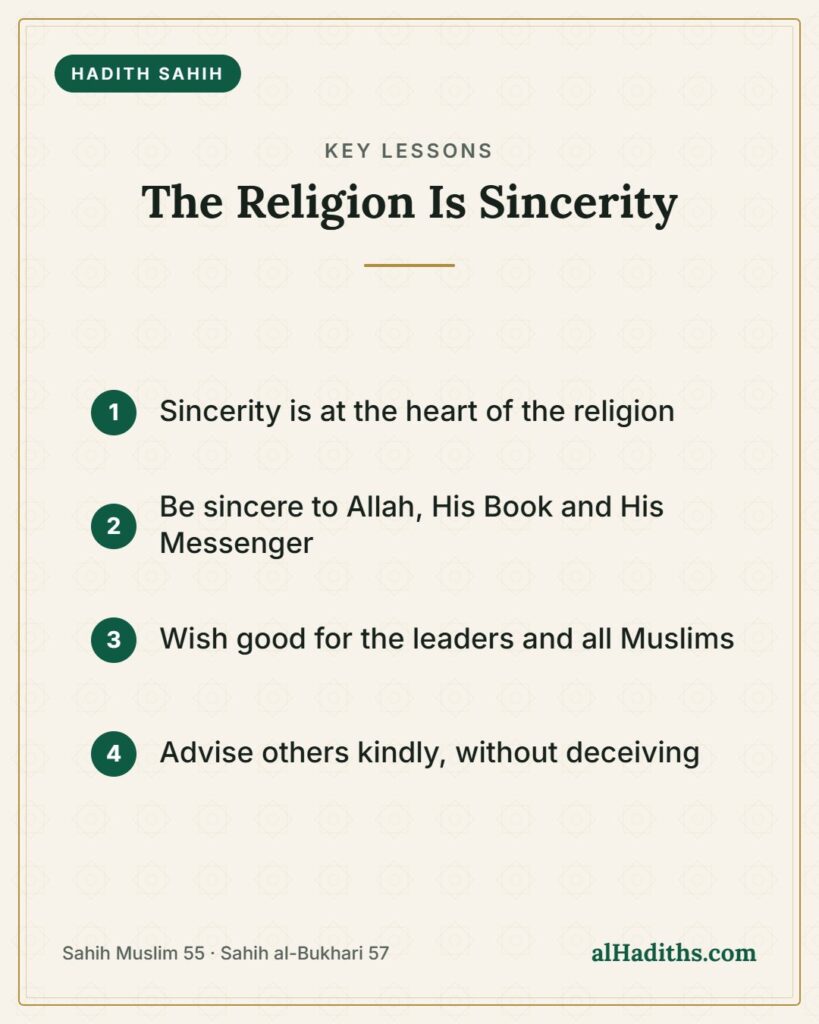
Key lessons
- The Prophet ﷺ summed up the religion as nasihah: sincerity and wishing good.
- Nasihah is owed to Allah, His Book, His Messenger, the leaders of the Muslims and all Muslims.
- Part of nasihah is to be free of deception and to want good for others.
- Jarir pledged sincerity to every Muslim alongside salah and zakah.
Questions people ask
What does “ad-deen an-nasihah” mean?
It means “the religion is sincerity”. The Prophet ﷺ said it and then explained that it is to Allah, His Book, His Messenger, the leaders of the Muslims and their common folk (Sahih Muslim 55a).
Is nasihah the same as giving advice?
Giving advice is part of it, but nasihah is wider: it means sincerity, being free of deception, and wishing good for the one you are sincere to, as the Encyclopedia of Translated Prophetic Hadiths (HadeethEnc) explains.
Who narrated the hadith “the religion is sincerity”?
Tamim ad-Dari (may Allah be pleased with him) narrated it, and Imam Muslim recorded it in his Sahih (Sahih Muslim 55a). It is Hadith 7 in an-Nawawi’s 40 Hadith.
One thing to do today: think of someone who could use a kind word of advice or encouragement, and offer it sincerely, wanting only good for them.
Save this to Pinterest so you can remember what nasihah really means
Share the reward. Send this article to someone who needs it today — teaching a hadith or dua can become a lasting good deed for you, in shaa Allah.

One Comment