Do Not Become Angry: Hadith 16 of an-Nawawi
A message arrives that makes your blood rise. Your reply is already half typed. In that moment, one of the shortest hadiths in Imam an-Nawawi’s collection has something to say. A man asked the Prophet ﷺ for advice, and the answer he received, again and again, was: do not become angry. This hadith about anger is short, but it holds a whole way of living. Here is the hadith, what it means, and the steps the Prophet ﷺ taught for when anger comes.
At a glance
- Source: Sahih al-Bukhari 6116 (Hadith 16 of an-Nawawi’s 40)
- Narrated by: Abu Hurairah (may Allah be pleased with him)
- Grade: Sahih (Sahih al-Bukhari)
- Topic: Anger and self-control
- Put it into practice: When anger rises, say a’udhu billahi min ash-shaytan and sit down
The hadith
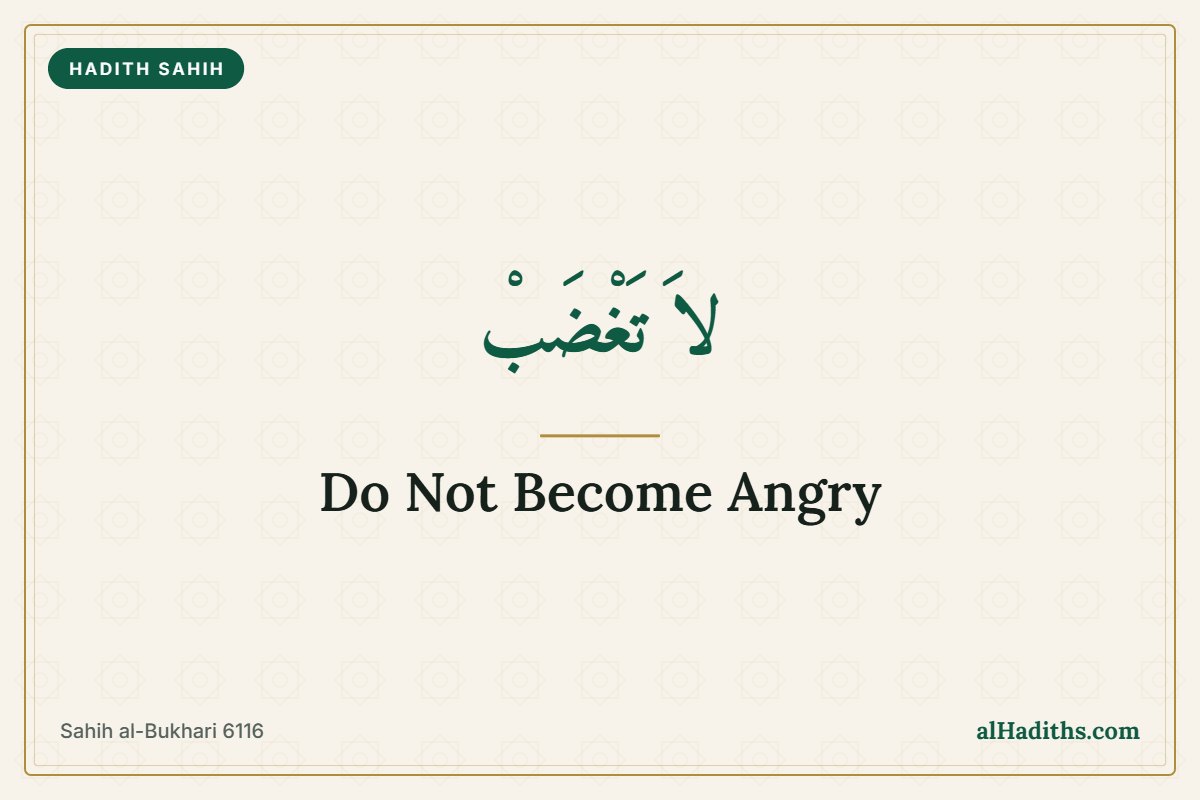
Abu Hurairah (may Allah be pleased with him) reported that a man said to the Prophet ﷺ, “Advise me!” The Prophet ﷺ said:
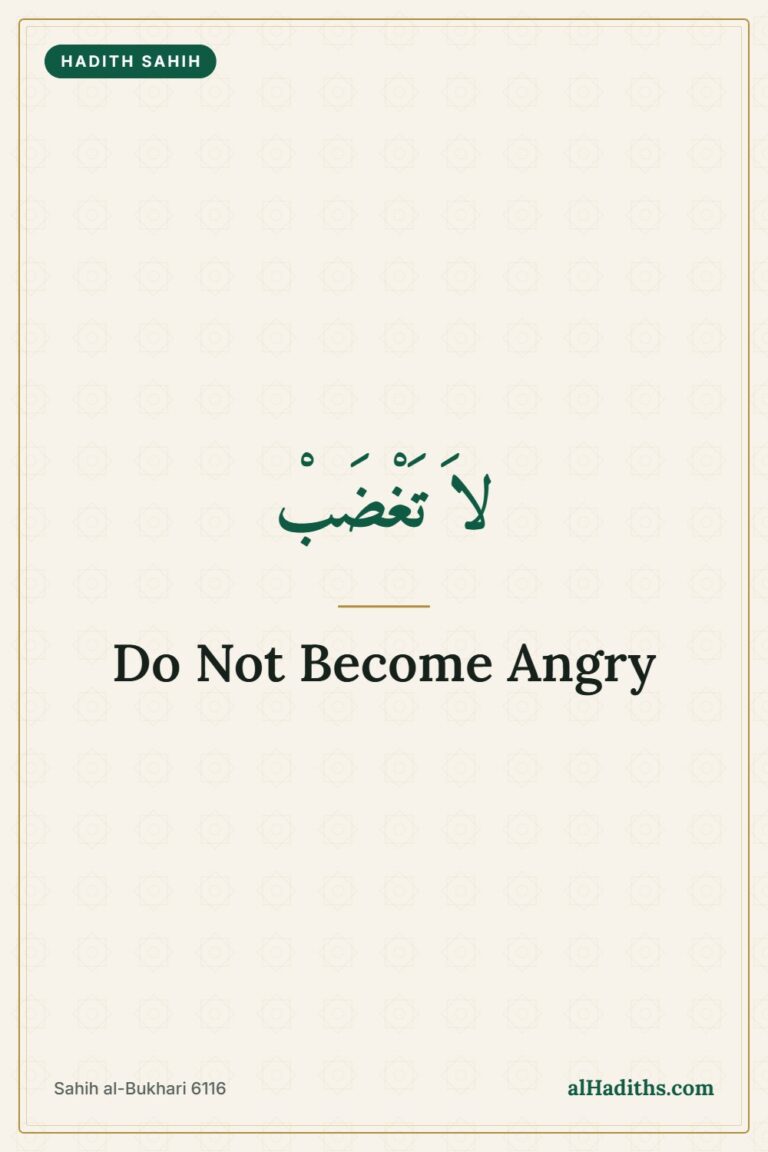
لاَ تَغْضَبْ
“Do not become angry.”
Sahih al-Bukhari 6116 · Narrated by Abu Hurairah · Translation from Sunnah.com
The man asked the same again and again, and each time the Prophet ﷺ gave the same answer: “Do not become angry.” Imam an-Nawawi placed it as Hadith 16 of his 40 Hadith.
What “do not become angry” means
The Encyclopedia of Translated Prophetic Hadiths (HadeethEnc) explains that the man was asking for something that would benefit him, and the Prophet ﷺ told him not to get angry. This means avoiding the things that lead to anger, and holding yourself back when anger comes, so that you do not go too far with it by hitting, cursing and the like. When the man kept asking, the Prophet ﷺ added nothing beyond those words.
Among the benefits it lists:
- The hadith warns against anger and what causes it, because anger brings together many kinds of evil, and avoiding it leads to much good.
- Anger for the sake of Allah, such as when His prohibitions are violated, is praiseworthy.
- Repeating advice can help the listener understand how important it is.
- It shows the value of asking a knowledgeable person for advice.
The strong one controls himself
The Prophet ﷺ also changed how we think about strength:
لَيْسَ الشَّدِيدُ بِالصُّرَعَةِ، إِنَّمَا الشَّدِيدُ الَّذِي يَمْلِكُ نَفْسَهُ عِنْدَ الْغَضَبِ
“The strong is not the one who overcomes the people by his strength, but the strong is the one who controls himself while in anger.”
Sahih al-Bukhari 6114 · Narrated by Abu Hurairah · Translation from Sunnah.com
Muslim recorded the same words (Sahih Muslim 2609a). Losing your temper can look like strength. This hadith says the opposite: real strength is holding it in.
What to do when anger comes
Sulaiman ibn Surad (may Allah be pleased with him) was sitting with the Prophet ﷺ when two men began insulting each other. One of them grew red in the face with anger. The Prophet ﷺ said:
إِنِّي لأَعْلَمُ كَلِمَةً لَوْ قَالَهَا ذَهَبَ عَنْهُ مَا يَجِدُ، لَوْ قَالَ أَعُوذُ بِاللَّهِ مِنَ الشَّيْطَانِ. ذَهَبَ عَنْهُ مَا يَجِدُ
“I know a word, the saying of which will cause him to relax, if he does say it. If he says: ‘I seek Refuge with Allah from Satan,’ then all his anger will go away.”
Sahih al-Bukhari 3282 · Narrated by Sulaiman ibn Surad · Translation adapted from Sunnah.com
He ﷺ also taught a change of position:
إِذَا غَضِبَ أَحَدُكُمْ وَهُوَ قَائِمٌ فَلْيَجْلِسْ فَإِنْ ذَهَبَ عَنْهُ الْغَضَبُ وَإِلاَّ فَلْيَضْطَجِعْ
“When one of you becomes angry while standing, he should sit down. If the anger leaves him, well and good; otherwise he should lie down.”
Sunan Abi Dawud 4782 · Narrated by Abu Dharr · Grade: Sahih (al-Albani) · Translation from Sunnah.com
Both steps are simple. The first turns the heart to Allah; the second brings the body to rest. Neither needs any preparation, so they can be used the moment anger starts.
A personal note: what helps me calm down is going for a long walk or a long drive. That is my own habit, not something stated in these hadiths; the steps above are the ones the Prophet ﷺ taught.
Reflection: the man asked for advice and received two words. He asked again, hoping for more, and received the same two words. Sometimes the shortest advice is the hardest to live by, and the one we need most. So much of what we later regret, the harsh word or the broken tie, begins in a moment of anger.
How to put it into practice
These come from the hadiths above; the order is a suggestion:
- Notice it early. Learn the signs that anger is rising in you.
- Seek refuge with Allah: say a’udhu billahi min ash-shaytan, “I seek refuge with Allah from Satan.”
- Change your position: if you are standing, sit down; if the anger stays, lie down.
- Hold your tongue until it passes. Speak good or remain silent applies most of all when we are angry.
- Avoid what sets you off where you can, as HadeethEnc explains.
Key lessons
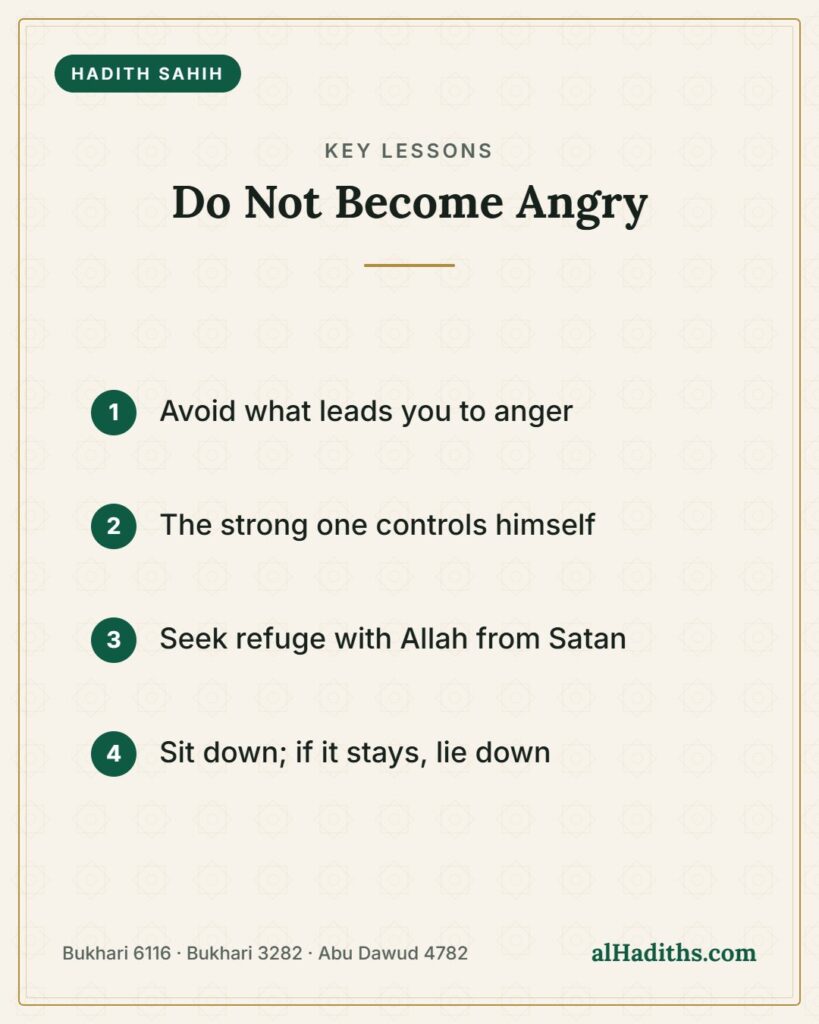
- “Do not become angry” was the Prophet’s ﷺ advice, repeated again and again.
- It means avoiding what causes anger and controlling yourself when it comes.
- The strong one is the one who controls himself in anger.
- Seeking refuge with Allah from Satan, and sitting or lying down, help anger pass.
- Anger for Allah’s sake, when His limits are violated, is praiseworthy.
Questions people ask
What does the hadith “do not become angry” mean?
It means avoiding what leads to anger, and restraining yourself when you do become angry so you do not go to excess by hitting, cursing and the like (Encyclopedia of Translated Prophetic Hadiths (HadeethEnc)).
What should a Muslim say when angry?
The Prophet ﷺ said that if an angry person says “I seek refuge with Allah from Satan” (a’udhu billahi min ash-shaytan), his anger will go away (Sahih al-Bukhari 3282).
Who is the strong person according to the hadith?
The Prophet ﷺ said the strong person is not the one who overpowers people by strength, but the one who controls himself when angry (Sahih al-Bukhari 6114, Sahih Muslim 2609a).
Is all anger bad in Islam?
No. HadeethEnc notes that anger for the sake of Allah, such as when His prohibitions are violated, is praiseworthy (Encyclopedia of Translated Prophetic Hadiths (HadeethEnc)). The hadith warns against the anger that leads a person to harm and excess.
May Allah make us among those who are strong in the way the Prophet ﷺ described: those who control themselves when anger comes.
Save this to Pinterest so you can come back to this hadith.
Share the reward. Send this article to someone who needs it today — teaching a hadith or dua can become a lasting good deed for you, in shaa Allah.