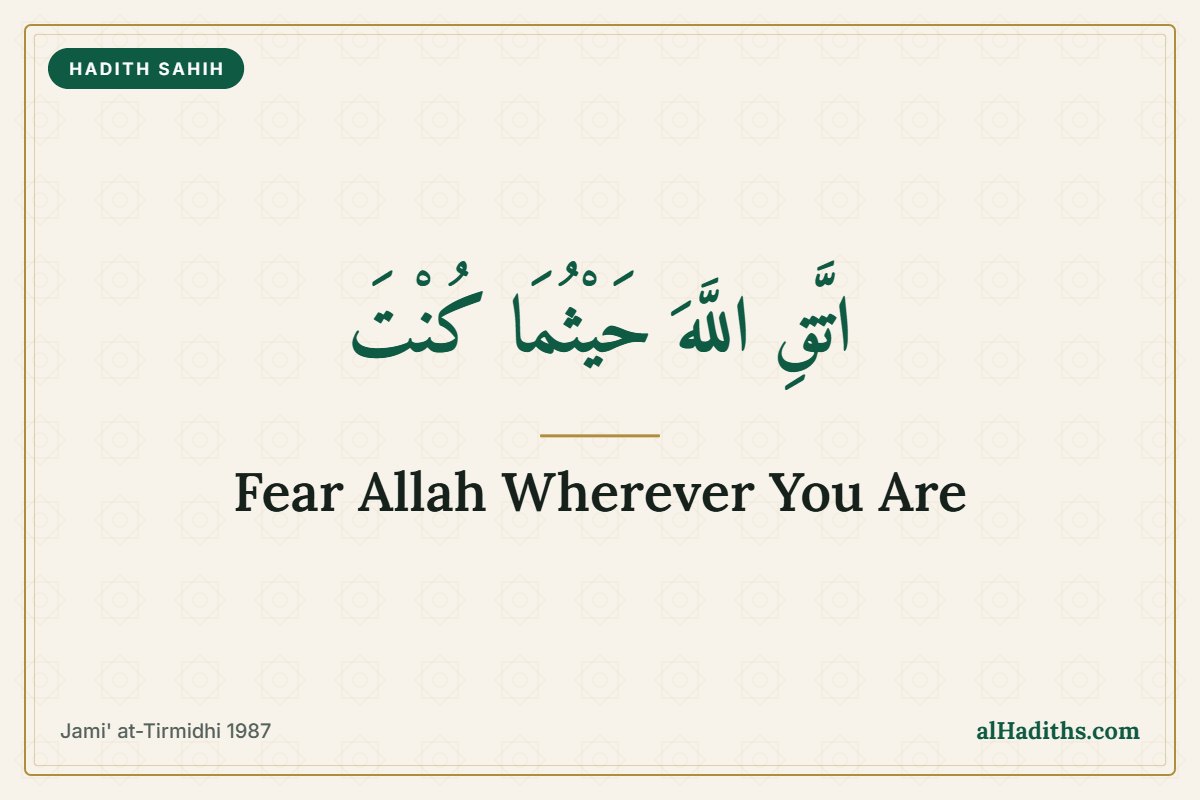
Fear Allah Wherever You Are: Hadith 18 of an-Nawawi
What do you do in the moment after you slip? Many of us either brush it off or sink into guilt. Hadith 18 of Imam an-Nawawi’s collection offers a better path in three short instructions: fear Allah wherever you are, follow a bad deed with a good one to wipe it out, and treat people with good character. Here is the hadith, what it means, and how to live by it.
At a glance
- Source: Jami’ at-Tirmidhi 1987 (Hadith 18 of an-Nawawi’s 40)
- Narrated by: Abu Dharr and Mu’adh ibn Jabal (may Allah be pleased with them)
- Grade: Hasan (Darussalam); at-Tirmidhi called it hasan sahih
- Topic: Taqwa, erasing sins with good deeds, and good character
- Put it into practice: After any slip today, do one good deed straight away
The hadith
Abu Dharr (may Allah be pleased with him) said that the Messenger of Allah ﷺ said to him:
اتَّقِ اللَّهَ حَيْثُمَا كُنْتَ وَأَتْبِعِ السَّيِّئَةَ الْحَسَنَةَ تَمْحُهَا وَخَالِقِ النَّاسَ بِخُلُقٍ حَسَنٍ
“Have Taqwa of Allah wherever you are, and follow an evil deed with a good one to wipe it out, and treat the people with good behavior.”
Jami’ at-Tirmidhi 1987 · Narrated by Abu Dharr · Grade: Hasan (Darussalam) · Translation from Sunnah.com
At-Tirmidhi called it hasan sahih in the text on Sunnah.com; Imam an-Nawawi notes that some copies say hasan. He placed it as Hadith 18 of his 40 Hadith, narrated from both Abu Dharr and Mu’adh ibn Jabal.
Three rights in one hadith
The Encyclopedia of Translated Prophetic Hadiths (HadeethEnc) explains that the hadith gathers three rights: the right of Allah, which is to fear Him; the right of yourself, which is to follow bad deeds with good ones; and the right of people, which is to treat them with good character.
Fear Allah wherever you are
HadeethEnc explains taqwa as fulfilling what Allah has made obligatory and avoiding what He has forbidden, in every place, time and condition: in private and in public, in good times and hard ones. The word “wherever” leaves nowhere out: at home, at work, online, and when no one is watching. This is close to ihsan as described in the Hadith of Jibril: worshipping Allah as though you see Him.
Follow a bad deed with a good deed
The hadith does not pretend we will never slip. It tells us what to do next. HadeethEnc gives examples of good deeds that erase a sin: prayer, charity, an act of kindness, keeping family ties, and repentance. Allah says:
وَأَقِمِ ٱلصَّلَوٰةَ طَرَفَىِ ٱلنَّهَارِ وَزُلَفًا مِّنَ ٱلَّيْلِ ۚ إِنَّ ٱلْحَسَنَـٰتِ يُذْهِبْنَ ٱلسَّيِّـَٔاتِ ۚ ذَٰلِكَ ذِكْرَىٰ لِلذَّٰكِرِينَ
“And establish prayer at the two ends of the day and at the approach of the night. Indeed, good deeds do away with misdeeds. That is a reminder for those who remember.”
Quran 11:114 · Translation: Saheeh International, from Quran.com
When a man asked whether this verse was for him alone, the Prophet ﷺ said it is for all of his followers (Sahih al-Bukhari 526).
Simple acts of dhikr are among those good deeds, such as SubhanAllahi wa bihamdihi 100 times.
Treat people with good character
HadeethEnc describes good character as smiling at people, being gentle and easy with them, doing good to them, and keeping harm away from them. The Prophet ﷺ placed it very high:
إِنَّ خِيَارَكُمْ أَحَاسِنُكُمْ أَخْلاَقًا
“The best among you are the best in character (having good manners).”
Sahih al-Bukhari 6035 · Narrated by ‘Abdullah ibn ‘Amr · Translation from Sunnah.com
مَا شَيْءٌ أَثْقَلُ فِي مِيزَانِ الْمُؤْمِنِ يَوْمَ الْقِيَامَةِ مِنْ خُلُقٍ حَسَنٍ وَإِنَّ اللَّهَ لَيَبْغَضُ الْفَاحِشَ الْبَذِيءَ
“Nothing is heavier on the believer’s Scale on the Day of Judgment than good character. For indeed Allah, Most High, is angered by the shameless obscene person.”
Jami’ at-Tirmidhi 2002 · Narrated by Abu ad-Darda’ · Grade: Sahih (Darussalam) · Translation from Sunnah.com
Reflection: this hadith holds the whole of a believer’s day in three lines. Fear Allah when you are alone, repair what you got wrong, and be good to the people around you. It is realistic about our mistakes and generous about the way back: no slip has to be the last word.
How to put it into practice
The hadith does not give a routine, so these are suggestions:
- Remember Allah sees you in private moments, online and offline.
- After a slip, act quickly: seek Allah’s forgiveness and do a good deed, such as a prayer, a charity or a kind word.
- Keep a small set of good deeds ready, like dhikr or a little charity, so the next step is easy.
- Smile and be gentle with the people you meet today, at home and at work.
- Keep harm away from others, including harsh words and gossip. See speak good or remain silent.
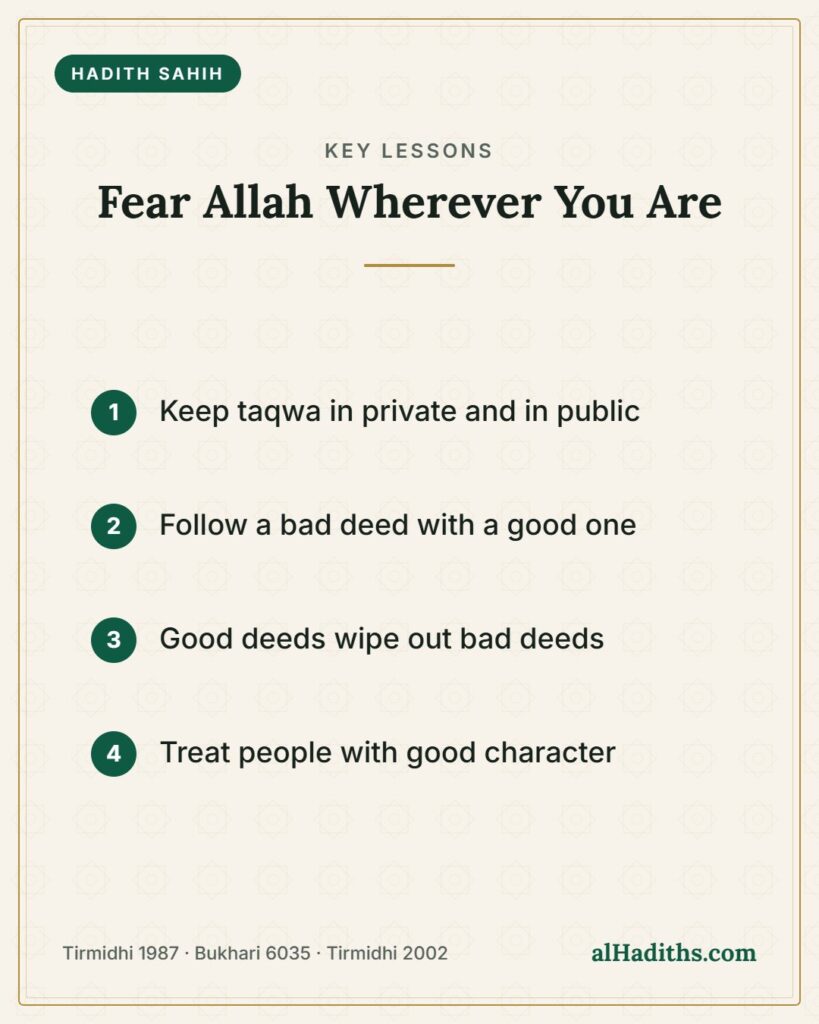
Key lessons
- Taqwa means obeying Allah and avoiding what He forbids, in private and in public.
- Good deeds wipe out bad deeds, by Allah’s mercy.
- Good character is among the heaviest things on the Scale.
- The hadith gathers the rights of Allah, of yourself and of people.
Questions people ask
What does “fear Allah wherever you are” mean?
It means fulfilling what Allah has made obligatory and avoiding what He has forbidden in every place, time and condition, in private and in public (Encyclopedia of Translated Prophetic Hadiths (HadeethEnc)).
Can good deeds erase bad deeds?
Yes. The Prophet ﷺ said to follow a bad deed with a good one to wipe it out (Jami’ at-Tirmidhi 1987), and Allah says “good deeds do away with misdeeds” (Quran 11:114). HadeethEnc lists prayer, charity, kindness, keeping family ties and repentance as examples.
What is good character in Islam?
HadeethEnc describes it as smiling at people, being gentle and easy with them, doing good to them and keeping harm away from them (Encyclopedia of Translated Prophetic Hadiths (HadeethEnc)). The Prophet ﷺ said the best of people are those best in character (Sahih al-Bukhari 6035).
One step for today: think of one thing you regret from this week, and answer it with a good deed before the day ends.
Save this to Pinterest so you can come back to this hadith.
Share the reward. Send this article to someone who needs it today — teaching a hadith or dua can become a lasting good deed for you, in shaa Allah.

One Comment