Becoming a Friend of Allah (Wali): Hadith 38 of an-Nawawi
Who are the friends of Allah, and how does a person become one? In this hadith qudsi, Hadith 38 of Imam an-Nawawi’s collection, Allah Himself answers. It is known as the whoever shows enmity to My wali hadith, and it lays out a clear path: the obligations first, then the voluntary deeds, until Allah loves His servant.
At a glance
- Source: Sahih al-Bukhari 6502; also Hadith 38 of an-Nawawi’s 40
- Narrated by: Abu Hurairah (may Allah be pleased with him)
- Grade: Sahih (al-Bukhari); a hadith qudsi
- Topic: The friends of Allah, and drawing near to Him through obligatory and voluntary deeds
- Put it into practice: Today, guard your obligatory prayers, then add one voluntary deed
The hadith
Abu Hurairah (may Allah be pleased with him) reported that the Messenger of Allah ﷺ said:
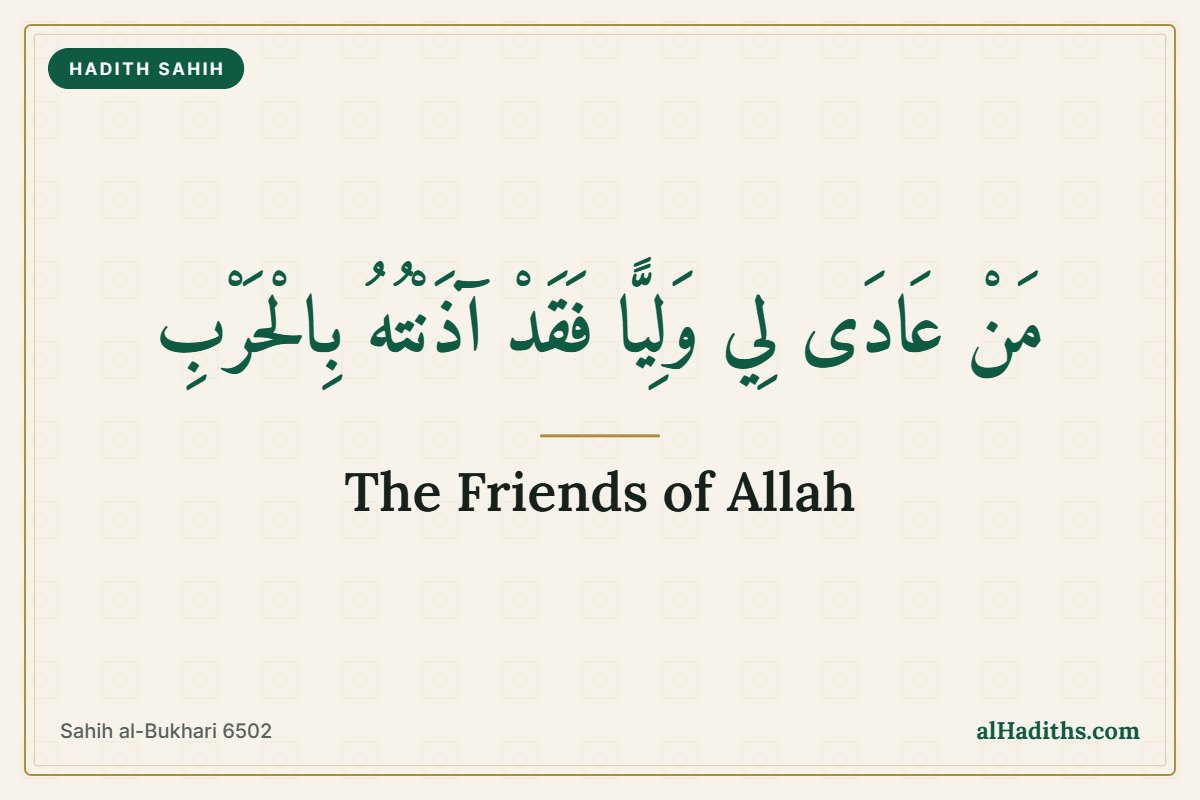
مَنْ عَادَى لِي وَلِيًّا فَقَدْ آذَنْتُهُ بِالْحَرْبِ، وَمَا تَقَرَّبَ إِلَىَّ عَبْدِي بِشَىْءٍ أَحَبَّ إِلَىَّ مِمَّا افْتَرَضْتُ عَلَيْهِ، وَمَا يَزَالُ عَبْدِي يَتَقَرَّبُ إِلَىَّ بِالنَّوَافِلِ حَتَّى أُحِبَّهُ، فَإِذَا أَحْبَبْتُهُ كُنْتُ سَمْعَهُ الَّذِي يَسْمَعُ بِهِ، وَبَصَرَهُ الَّذِي يُبْصِرُ بِهِ، وَيَدَهُ الَّتِي يَبْطُشُ بِهَا وَرِجْلَهُ الَّتِي يَمْشِي بِهَا، وَإِنْ سَأَلَنِي لأُعْطِيَنَّهُ، وَلَئِنِ اسْتَعَاذَنِي لأُعِيذَنَّهُ، وَمَا تَرَدَّدْتُ عَنْ شَىْءٍ أَنَا فَاعِلُهُ تَرَدُّدِي عَنْ نَفْسِ الْمُؤْمِنِ، يَكْرَهُ الْمَوْتَ وَأَنَا أَكْرَهُ مَسَاءَتَهُ
“Allah said, ‘I will declare war against him who shows hostility to a pious worshipper of Mine. And the most beloved things with which My slave comes nearer to Me, is what I have enjoined upon him; and My slave keeps on coming closer to Me through performing Nawafil (praying or doing extra deeds besides what is obligatory) till I love him, so I become his sense of hearing with which he hears, and his sense of sight with which he sees, and his hand with which he grips, and his leg with which he walks; and if he asks Me, I will give him, and if he asks My protection (Refuge), I will protect him; (i.e. give him My Refuge) and I do not hesitate to do anything as I hesitate to take the soul of the believer, for he hates death, and I hate to disappoint him.”
Sahih al-Bukhari 6502 · Narrated by Abu Hurairah · Translation from Sunnah.com
Imam an-Nawawi’s text stops at “I will protect him”. Al-Bukhari’s narration, quoted above, has one more line, about the believer’s death.
Who is a wali, a friend of Allah?
HadeethEnc explains that a wali is the pious believer, and that each servant’s share of closeness to Allah is in proportion to his faith and piety. Allah describes His friends in the Quran:
أَلَآ إِنَّ أَوْلِيَآءَ ٱللَّهِ لَا خَوْفٌ عَلَيْهِمْ وَلَا هُمْ يَحْزَنُونَ
“Unquestionably, [for] the allies of Allāh there will be no fear concerning them, nor will they grieve -“
Surah Yunus 10:62 · Translation: Saheeh International, from Quran.com
ٱلَّذِينَ ءَامَنُوا۟ وَكَانُوا۟ يَتَّقُونَ
“Those who believed and were fearing Allāh.”
Surah Yunus 10:63 · Translation: Saheeh International, from Quran.com
Whoever harms such a person, angers him or shows him enmity, Allah has declared war against him. HadeethEnc adds that anyone who claims to be a friend of Allah without following His Shariah is lying in that claim.
The path: obligations first, then voluntary deeds
Based on HadeethEnc’s explanation:
- The obligations come first. Nothing brings a servant nearer to Allah than what He made obligatory: doing the acts of obedience and avoiding what is forbidden.
- Then the voluntary deeds. The servant keeps drawing near with extra deeds alongside the obligatory ones, until he gains Allah’s love.
- “I become his hearing… his sight… his hand… his foot.” HadeethEnc explains that Allah guides him in these four: he hears only what pleases Allah, looks only at what pleases Him, does with his hand only what pleases Him, and walks only towards what pleases Him and what is good.
- His dua is answered. If he asks Allah, he is given; if he seeks refuge with Him, he is protected from what he fears.
Reflection: it is easy to chase extra deeds while the basics slip, a long voluntary night prayer after a missed Fajr, for example. This hadith puts things in order. The obligations are what Allah loves most; the voluntary deeds are how we keep coming closer once those are in place. And small voluntary deeds done regularly count for a lot; Allah loves deeds done regularly.
How to put it into practice
The hadith does not name particular voluntary deeds, so these are suggestions:
- Guard the five daily prayers on time before anything else.
- Add one voluntary deed, like the Duha prayer or Witr; see 3 daily Sunnahs the Prophet ﷺ advised.
- Keep it small and steady rather than big and rare.
- Watch your hearing, sight, hands and feet. Ask: would this please Allah?
- Respect the pious. Never harm or mock people who are known for their devotion.
- Do what you can. Do as much as you can of what is commanded, and keep going.
Key lessons
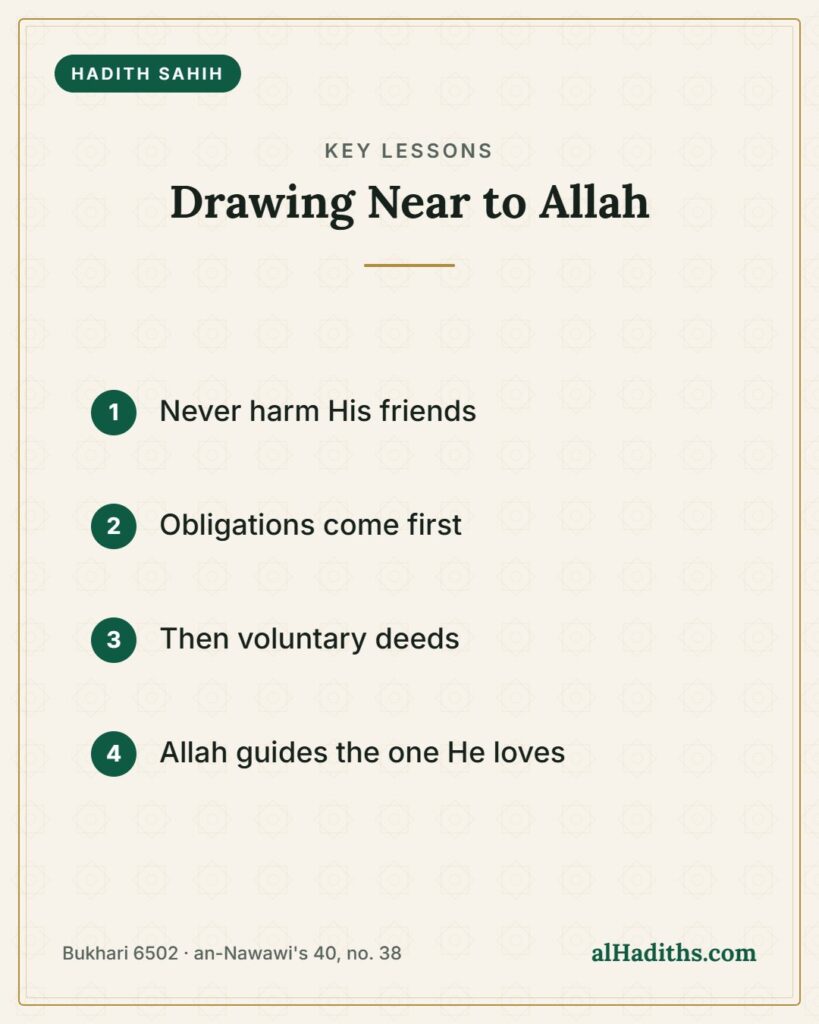
- Harming a friend of Allah is very serious.
- The obligations are the most beloved way to draw near to Allah.
- Voluntary deeds, on top of them, bring Allah’s love.
- Allah guides the hearing, sight, hands and feet of the one He loves.
- His dua is answered and he is protected.
Questions people ask
Who is a wali of Allah?
According to HadeethEnc, a wali is the pious believer. The Quran describes them as those who believed and feared Allah (Surah Yunus 10:62–63).
What does “I become his hearing and his sight” mean?
HadeethEnc explains that Allah guides that person in his hearing, sight, hands and feet, so he hears, sees, does and walks towards only what pleases Allah.
What is the best way to get closer to Allah?
The hadith says nothing is more beloved to Allah than the obligatory deeds. After them, the servant keeps drawing near through voluntary deeds until Allah loves him.
May Allah make us among His friends, help us guard what He made obligatory, and make our voluntary deeds a way to His love.
Save this to Pinterest so you can come back to this hadith later.
Share the reward. Send this article to someone who needs it today — teaching a hadith or dua can become a lasting good deed for you, in shaa Allah.