Do As Much As You Can: Hadith 9 of an-Nawawi
Some people give up on a good deed because they cannot do all of it. The Prophet ﷺ gave a different rule: do as much as you can. In the same short hadith he also told us how to treat what is forbidden, and warned about a habit that ruined earlier nations.
At a glance
- Source: Sahih al-Bukhari 7288 (also Sahih Muslim 1337)
- Narrated by: Abu Hurayrah (may Allah be pleased with him)
- Grade: Sahih (Bukhari and Muslim)
- Topic: Commands, prohibitions and asking questions
- Put it into practice: Pick one good deed and start small
The hadith
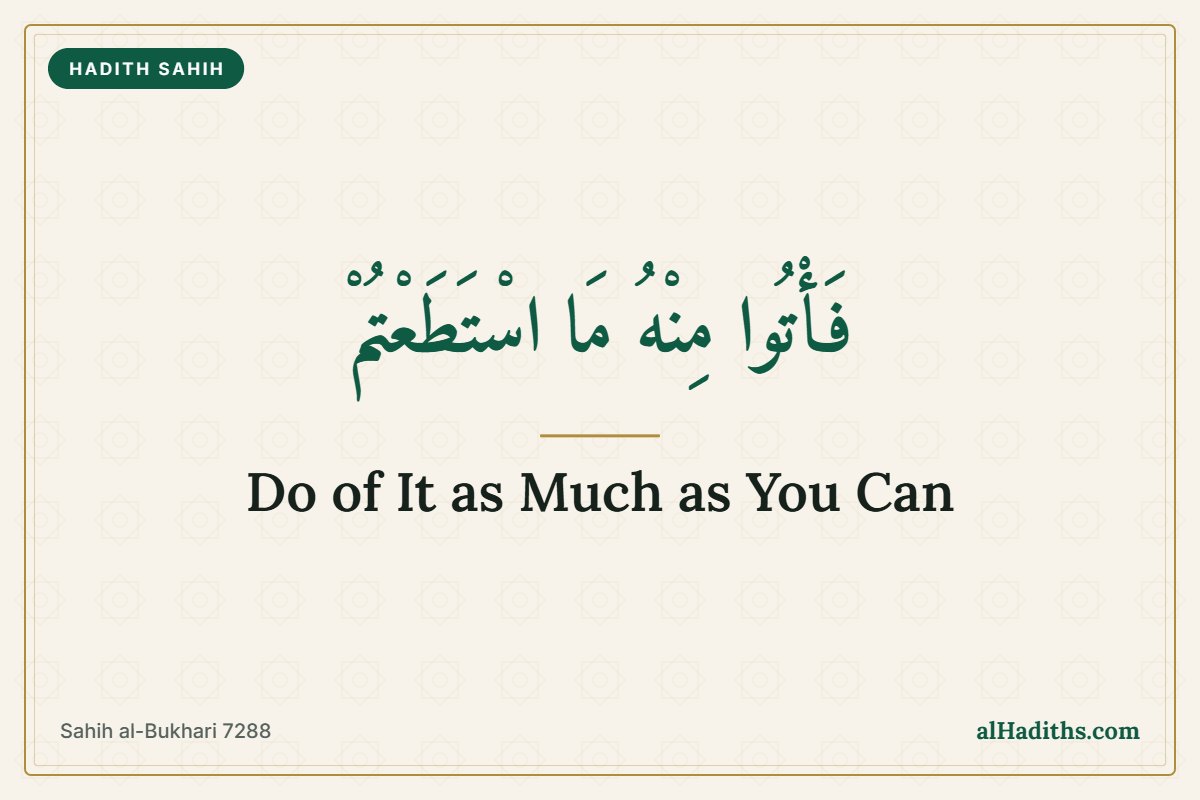
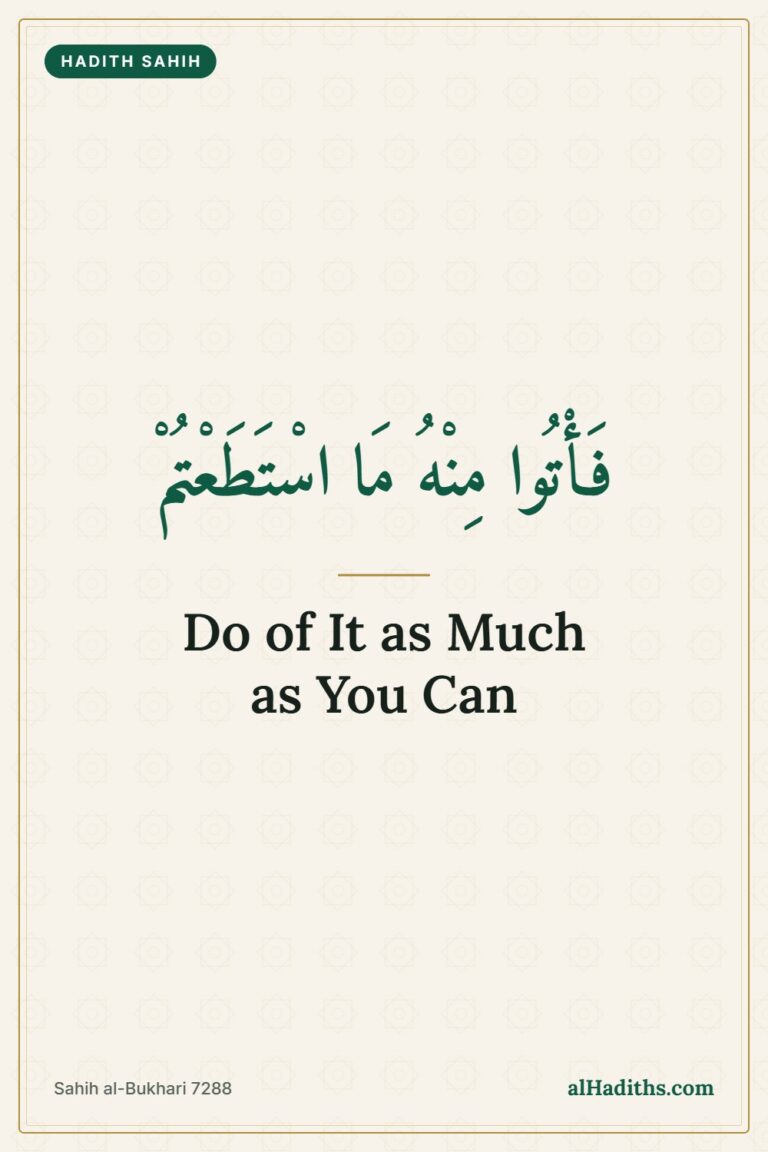
دَعُونِي مَا تَرَكْتُكُمْ، إِنَّمَا هَلَكَ مَنْ كَانَ قَبْلَكُمْ بِسُؤَالِهِمْ وَاخْتِلاَفِهِمْ عَلَى أَنْبِيَائِهِمْ، فَإِذَا نَهَيْتُكُمْ عَنْ شَىْءٍ فَاجْتَنِبُوهُ، وَإِذَا أَمَرْتُكُمْ بِأَمْرٍ فَأْتُوا مِنْهُ مَا اسْتَطَعْتُمْ
“Leave me as I leave you, for the people who were before you were ruined because of their questions and their differences over their prophets. So, if I forbid you to do something, then keep away from it. And if I order you to do something, then do of it as much as you can.”
Sahih al-Bukhari 7288 · Narrated by Abu Hurayrah · Translation from Sunnah.com
Imam an-Nawawi placed it as Hadith 9 of an-Nawawi’s 40 Hadith.
The story behind the hadith
Imam Muslim records the moment it was said. The Prophet ﷺ told the people that Allah had made Hajj obligatory on them. A man asked, “Is it to be performed every year?” The Prophet ﷺ stayed silent, and the man asked three times. Then he said:
لَوْ قُلْتُ نَعَمْ لَوَجَبَتْ وَلَمَا اسْتَطَعْتُمْ
“If I were to say ‘Yes,’ it would become obligatory (for you to perform it every year) and you would not be able to do it.”
Sahih Muslim 1337 · Narrated by Abu Hurayrah · Translation from Sunnah.com
He then said the words of this hadith. The lesson is clear: some questions make the religion heavier than Allah made it.
Forbidden things: stay away completely
The Encyclopedia of Translated Prophetic Hadiths (HadeethEnc) explains that if the Prophet ﷺ forbade something, “we must avoid it without exception”. It adds two points among its benefits:
- A prohibition covers any amount of the thing, small or large.
- Avoiding something also means keeping away from what leads to it.
Commands: as much as you can
Commands are different. HadeethEnc gives the reason: leaving something is always within a person’s power, whereas doing an action needs ability. So the Prophet ﷺ tied commands to what we are able to do.
The Qur’an says the same:
فَٱتَّقُوا۟ ٱللَّهَ مَا ٱسْتَطَعْتُمْ وَٱسْمَعُوا۟ وَأَطِيعُوا۟ وَأَنفِقُوا۟ خَيْرًا لِّأَنفُسِكُمْ ۗ وَمَن يُوقَ شُحَّ نَفْسِهِۦ فَأُو۟لَـٰٓئِكَ هُمُ ٱلْمُفْلِحُونَ
“So fear Allāh as much as you are able and listen and obey and spend [in the way of Allāh]; it is better for your selves.”
Surah at-Taghabun 64:16 · Saheeh International translation
Allah also says:
لَا يُكَلِّفُ ٱللَّهُ نَفْسًا إِلَّا وُسْعَهَا ۚ لَهَا مَا كَسَبَتْ وَعَلَيْهَا مَا ٱكْتَسَبَتْ ۗ رَبَّنَا لَا تُؤَاخِذْنَآ إِن نَّسِينَآ أَوْ أَخْطَأْنَا ۚ رَبَّنَا وَلَا تَحْمِلْ عَلَيْنَآ إِصْرًا كَمَا حَمَلْتَهُۥ عَلَى ٱلَّذِينَ مِن قَبْلِنَا ۚ رَبَّنَا وَلَا تُحَمِّلْنَا مَا لَا طَاقَةَ لَنَا بِهِۦ ۖ وَٱعْفُ عَنَّا وَٱغْفِرْ لَنَا وَٱرْحَمْنَآ ۚ أَنتَ مَوْلَىٰنَا فَٱنصُرْنَا عَلَى ٱلْقَوْمِ ٱلْكَـٰفِرِينَ
“Allāh does not charge a soul except [with that within] its capacity. It will have [the consequence of] what [good] it has gained, and it will bear [the consequence of] what [evil] it has earned. “Our Lord, do not impose blame upon us if we have forgotten or erred. Our Lord, and lay not upon us a burden like that which You laid upon those before us. Our Lord, and burden us not with that which we have no ability to bear. And pardon us; and forgive us; and have mercy upon us. You are our protector, so give us victory over the disbelieving people.””
Surah al-Baqarah 2:286 · Translation: Saheeh International, from Quran.com
Asking questions: to learn, not to burden
The hadith does not stop people from asking. HadeethEnc notes that scholars divide questions into two types: questions to learn what one needs in the religion, which are required and are what the companions used to ask, and questions asked out of obstinacy and affectation, which are prohibited.
So keep asking about your salah, your wudu and your dealings. What the hadith warns against is the kind of questioning that adds burdens, or that disputes the Prophet ﷺ rather than following him. It sits well with the hadith on bid’ah: we follow what he taught, without adding to it.
Reflection: “as much as you can” is not a loophole for doing less. It is mercy that keeps us going: the person who cannot do everything still does what they can, instead of doing nothing.
How to put it into practice
I try to start with small amounts and increase over time, so the practice becomes consistent. I also vary it with other authentic practices so it does not become mechanical, and I try to be present in my worship.
- Make a clean break from something you know is forbidden, including what leads to it.
- Pick one good deed and do what you can of it today, even if it is small.
- Stay consistent; Allah loves deeds done regularly, even if they are few.
- Ask to learn: take your questions about the religion to a qualified scholar.
- Be gentle with others who are doing what they can.
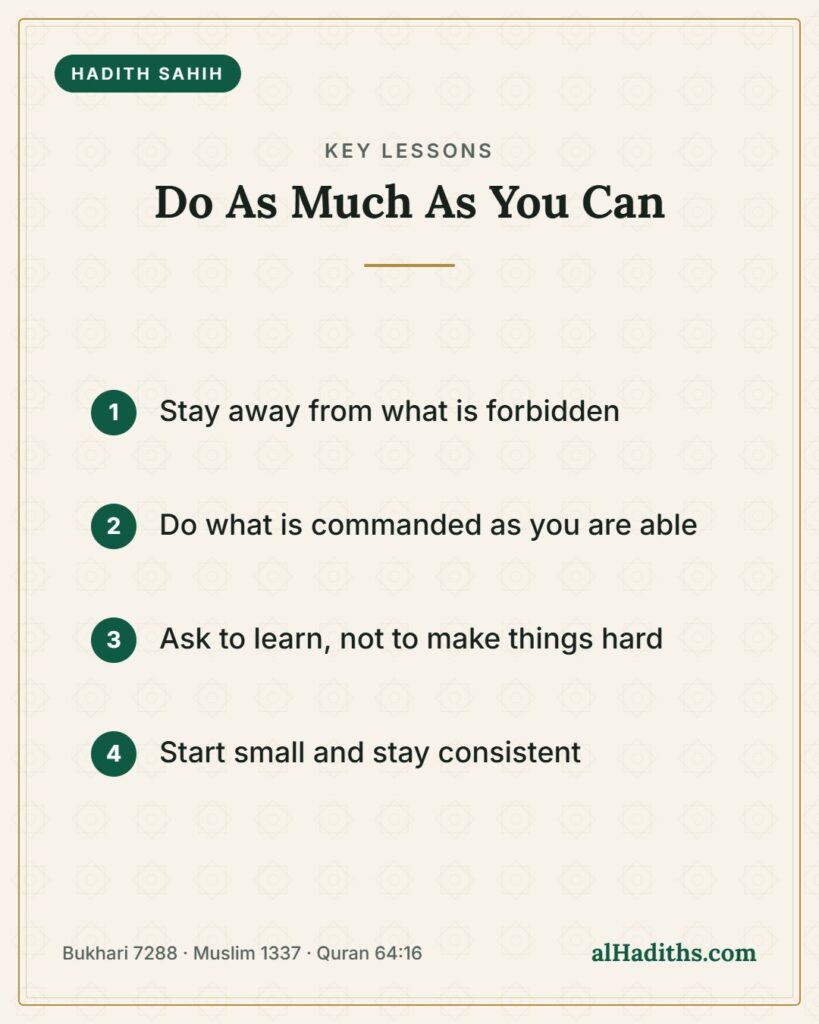
Key lessons
- What the Prophet ﷺ forbade must be avoided completely.
- What he commanded should be done as much as we are able.
- Allah does not burden a soul beyond its capacity.
- Ask questions to learn, not to make the religion harder.
Questions people ask
What does “do of it as much as you can” mean?
It means that when the Prophet ﷺ commands something, we do it to the extent of our ability. The Qur’an says the same: “So fear Allāh as much as you are able” (Surah at-Taghabun 64:16).
Why are prohibitions treated differently from commands?
Because leaving something is always within a person’s power, whereas doing an action needs ability, as the Encyclopedia of Translated Prophetic Hadiths (HadeethEnc) explains. So what is forbidden is avoided completely, and what is commanded is done as far as we can.
Is it wrong to ask questions about Islam?
No. Asking to learn what you need in your religion is encouraged; the companions did it. The hadith warns against excessive questioning out of obstinacy, which makes things harder. For specific questions, ask a qualified scholar.
One thing to do today: choose one good deed you have been putting off because you cannot do all of it, and do a small part of it today.
Save this to Pinterest so you can remember that Allah asks within your ability
Share the reward. Send this article to someone who needs it today — teaching a hadith or dua can become a lasting good deed for you, in shaa Allah.