Allah Is Good and Accepts Only What Is Good: Hadith 10
Picture a man on a long journey, dusty and worn out, raising his hands to the sky and calling “O Lord, O Lord”. It sounds like the perfect moment for a dua to be answered. Yet the Prophet ﷺ asked how it could be, because of one thing he was getting wrong. This is the hadith Allah is Good and accepts only what is good.
At a glance
- Source: Sahih Muslim 1015
- Narrated by: Abu Hurayrah (may Allah be pleased with him)
- Grade: Sahih (Muslim)
- Topic: Halal food and earnings, and their link to dua
- Put it into practice: Check that what you eat and earn is halal
The hadith
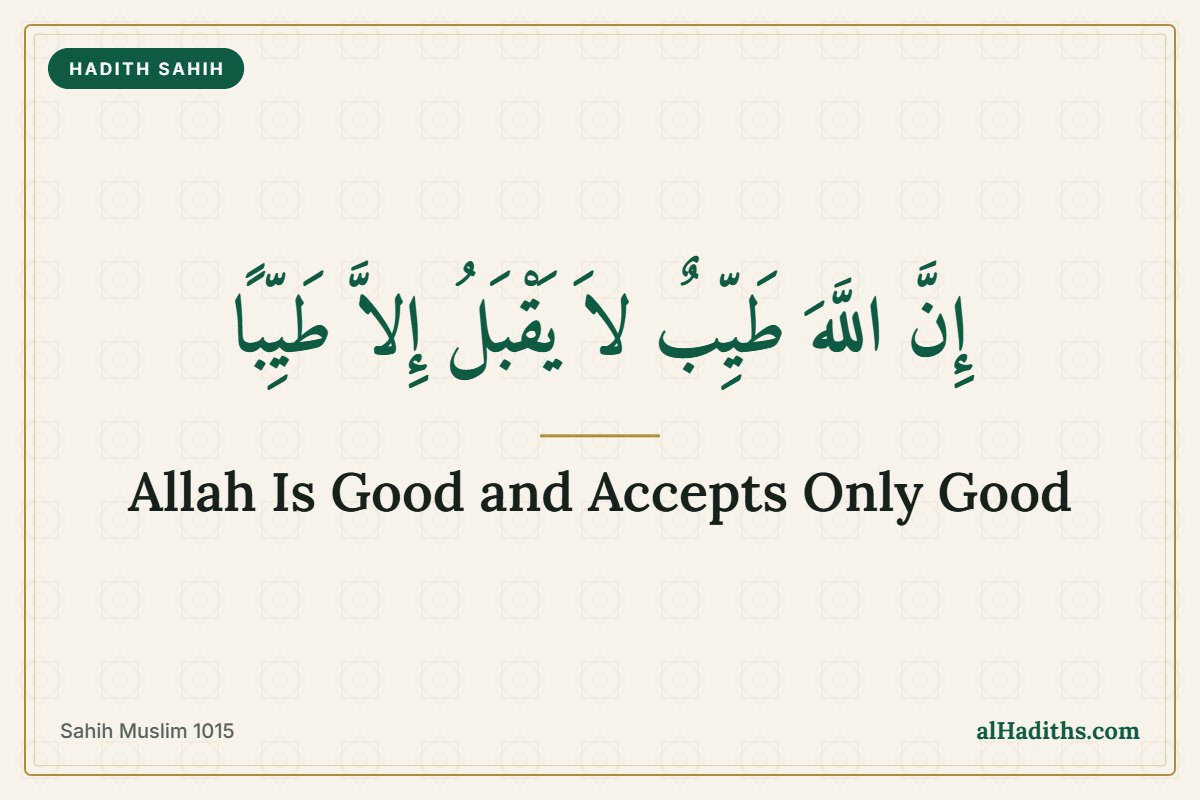
أَيُّهَا النَّاسُ إِنَّ اللَّهَ طَيِّبٌ لاَ يَقْبَلُ إِلاَّ طَيِّبًا وَإِنَّ اللَّهَ أَمَرَ الْمُؤْمِنِينَ بِمَا أَمَرَ بِهِ الْمُرْسَلِينَ
“O people, Allah is Good and He therefore, accepts only that which is good. And Allah commanded the believers as He commanded the Messengers.”
Sahih Muslim 1015 · Narrated by Abu Hurayrah · Translation from Sunnah.com (opening)
The Prophet ﷺ then recited two verses. To the messengers:
يَـٰٓأَيُّهَا ٱلرُّسُلُ كُلُوا۟ مِنَ ٱلطَّيِّبَـٰتِ وَٱعْمَلُوا۟ صَـٰلِحًا ۖ إِنِّى بِمَا تَعْمَلُونَ عَلِيمٌ
“[Allāh said], “O messengers, eat from the good foods and work righteousness. Indeed I, of what you do, am Knowing.”
Surah al-Mu’minun 23:51 · Translation: Saheeh International, from Quran.com
And to the believers:
يَـٰٓأَيُّهَا ٱلَّذِينَ ءَامَنُوا۟ كُلُوا۟ مِن طَيِّبَـٰتِ مَا رَزَقْنَـٰكُمْ وَٱشْكُرُوا۟ لِلَّهِ إِن كُنتُمْ إِيَّاهُ تَعْبُدُونَ
“O you who have believed, eat from the good [i.e., lawful] things which We have provided for you and be grateful to Allāh if it is [indeed] Him that you worship.”
Surah al-Baqarah 2:172 · Translation: Saheeh International, from Quran.com
Then he described a man:
ثُمَّ ذَكَرَ الرَّجُلَ يُطِيلُ السَّفَرَ أَشْعَثَ أَغْبَرَ يَمُدُّ يَدَيْهِ إِلَى السَّمَاءِ يَا رَبِّ يَا رَبِّ وَمَطْعَمُهُ حَرَامٌ وَمَشْرَبُهُ حَرَامٌ وَمَلْبَسُهُ حَرَامٌ وَغُذِيَ بِالْحَرَامِ فَأَنَّى يُسْتَجَابُ لِذَلِكَ
“He then made a mention of a person who travels widely, his hair disheveled and covered with dust. He lifts his hand towards the sky (and thus makes the supplication): ‘O Lord, O Lord,’ whereas his diet is unlawful, his drink is unlawful, and his clothes are unlawful and his nourishment is unlawful. How can then his supplication be accepted?”
Sahih Muslim 1015 · Translation from Sunnah.com
Imam an-Nawawi placed it as Hadith 10 of an-Nawawi’s 40 Hadith.
What does “Allah is Good” mean?
The Encyclopedia of Translated Prophetic Hadiths (HadeethEnc) explains that Allah is Good, Holy, exalted far above every deficiency, and has the attributes of perfection. So He accepts only deeds, words and beliefs that are good: “those that are sincerely devoted to Allah and that comply with the Prophet’s guidance.”
That links two earlier hadith in this series: the hadith on intentions (sincerity) and the hadith on bid’ah (following the Sunnah).
The same command for messengers and believers
The two verses go together: eat what is good and lawful, and do good deeds. HadeethEnc points out that one of the greatest means of making a believer’s deeds good is to eat lawful, good food. It also notes the encouraging way the Prophet ﷺ put it: when a believer realizes the messengers themselves were given this command, it motivates him to follow it.
The traveler whose dua was not answered
HadeethEnc lists what this man had going for him, things that normally help a dua be answered:
- A long journey, such as travel for Hajj or to keep family ties.
- Being disheveled and dusty, in a state of need.
- Raising his hands to the sky.
- Calling on Allah again and again: “O Lord, O Lord”.
Despite all of this, his food, drink and clothing were unlawful and he was nourished by the unlawful. As the hadith asks: how could his dua be answered?
Earning what is halal
The answer is not to stop making dua, but to look at what feeds us. The Prophet ﷺ praised honest work:
مَا أَكَلَ أَحَدٌ طَعَامًا قَطُّ خَيْرًا مِنْ أَنْ يَأْكُلَ مِنْ عَمَلِ يَدِهِ، وَإِنَّ نَبِيَّ اللَّهِ دَاوُدَ ـ عَلَيْهِ السَّلاَمُ ـ كَانَ يَأْكُلُ مِنْ عَمَلِ يَدِهِ
“Nobody has ever eaten a better meal than that which one has earned by working with one’s own hands. The Prophet of Allah, David used to eat from the earnings of his manual labor.”
Sahih al-Bukhari 2072 · Narrated by al-Miqdam · Translation from Sunnah.com
For questions about whether a particular job, investment or source of income is halal, please ask a qualified scholar. For the grey areas, see the hadith on doubtful matters.
Reflection: we often think of dua as only words. This hadith shows that what we eat, wear and earn speaks too, long before we raise our hands.
How to put it into practice
The hadith does not give a routine, so these are suggestions:
- Check your income: if you are unsure about any part of it, ask a qualified scholar.
- Be honest at work: give full time and effort for the pay you take.
- Check what you eat and buy, and choose what is clearly halal.
- Keep making dua with sincerity, and pair it with clean earnings and good deeds.
- Provide for your family from halal; spending on them counts as sadaqah.
Key lessons
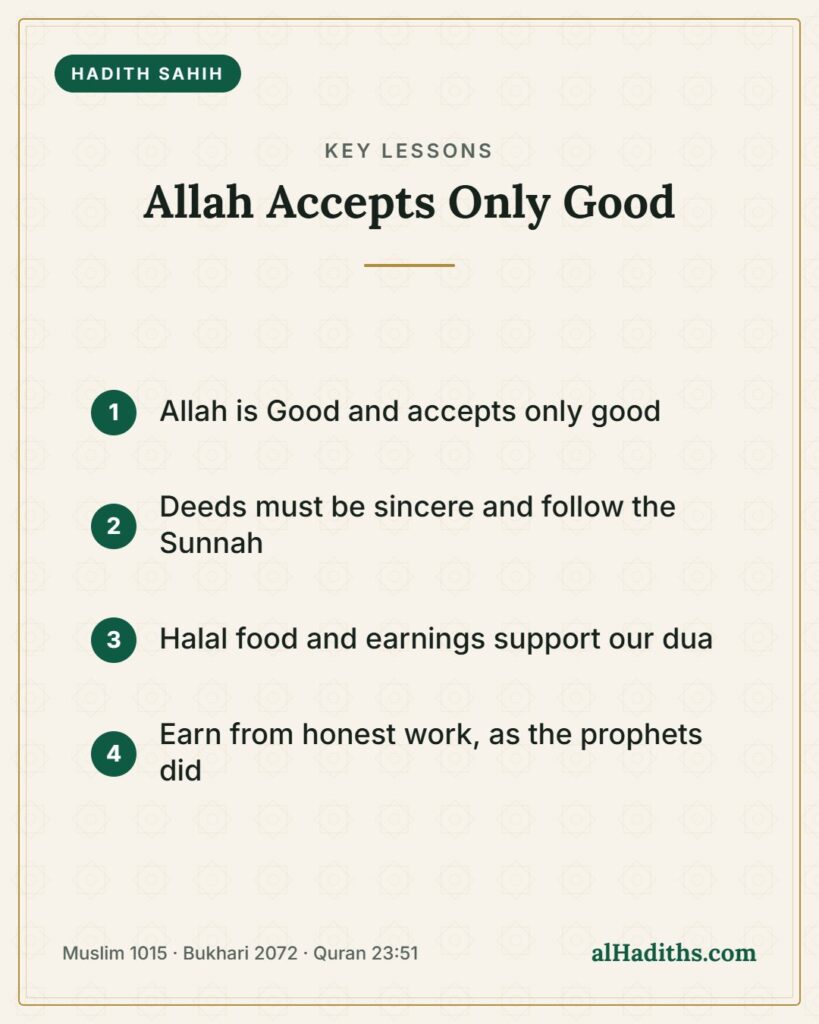
- Allah is Good and accepts only what is good.
- Good deeds are those done sincerely for Allah and in line with the Sunnah.
- Allah gave the believers the same command as the messengers: eat what is lawful and do good.
- Unlawful food and earnings can block a dua, even when everything else looks right.
Questions people ask
What does “Allah is Good and accepts only what is good” mean?
It means Allah is perfect and free of every flaw, and He accepts only deeds that are good: done sincerely for Him and in line with the Prophet’s ﷺ guidance (Sahih Muslim 1015; Encyclopedia of Translated Prophetic Hadiths (HadeethEnc)).
Does eating haram stop my dua from being answered?
The hadith describes a man whose food, drink and clothing were unlawful, and asks how his dua could be answered (Sahih Muslim 1015). It shows how serious unlawful earnings are. Keep making dua, and work on keeping your earnings and food halal.
What is the best kind of earning?
The Prophet ﷺ said nobody has eaten a better meal than one earned by working with one’s own hands, and that Prophet Dawud ate from the earnings of his own work (Sahih al-Bukhari 2072).
One thing to do today: before your next meal, take a moment to think about where it came from, and thank Allah for a provision that is good.
Save this to Pinterest so you can remember why halal earnings matter for your dua
Share the reward. Send this article to someone who needs it today — teaching a hadith or dua can become a lasting good deed for you, in shaa Allah.