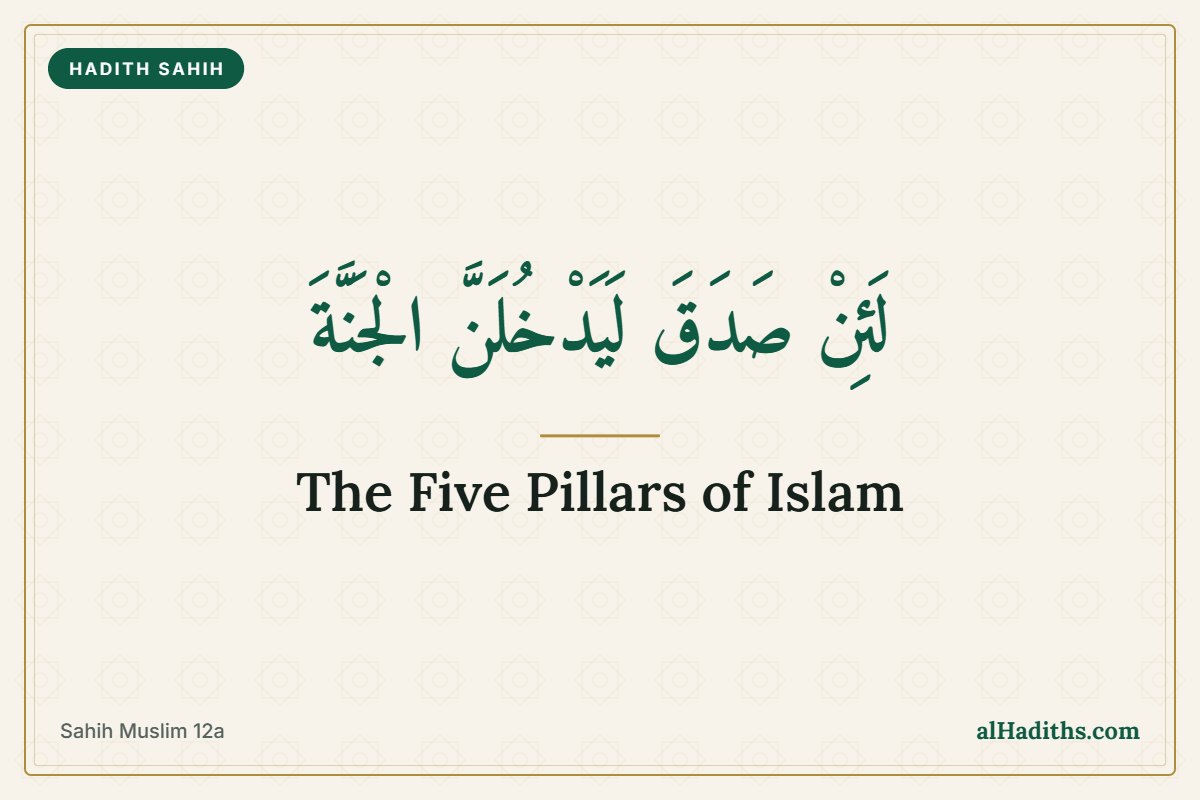
The Bedouin Who Asked About the Five Pillars of Islam
What does Allah actually require of us? A man from the desert once rode into the Prophet’s ﷺ mosque to ask exactly that, and his questions became one of the clearest five pillars of Islam hadith we have. He asked about each pillar in turn, made a simple promise, and the Prophet ﷺ gave him glad tidings of Paradise.
At a glance
- Source: Sahih Muslim 12a; the same story in Sahih al-Bukhari 63
- Narrated by: Anas bin Malik (may Allah be pleased with him)
- Grade: Sahih (in Sahih Muslim and Sahih al-Bukhari)
- Topic: The five pillars of Islam, faith, asking good questions
- Practise it: Pick one pillar and do it a little better this week
The story of the Bedouin and the five pillars
Anas bin Malik (may Allah be pleased with him) begins by explaining why this visit made the companions happy. They had been told not to ask the Prophet ﷺ about things without a genuine need, so they were pleased whenever a sensible man from the desert came and asked, while they sat and listened.
نُهِينَا أَنْ نَسْأَلَ، رَسُولَ اللَّهِ صلى الله عليه وسلم عَنْ شَىْءٍ فَكَانَ يُعْجِبُنَا أَنْ يَجِيءَ الرَّجُلُ مِنْ أَهْلِ الْبَادِيَةِ الْعَاقِلُ فَيَسْأَلَهُ وَنَحْنُ نَسْمَعُ فَجَاءَ رَجُلٌ مِنْ أَهْلِ الْبَادِيَةِ فَقَالَ يَا مُحَمَّدُ أَتَانَا رَسُولُكَ فَزَعَمَ لَنَا أَنَّكَ تَزْعُمُ أَنَّ اللَّهَ أَرْسَلَكَ قَالَ ” صَدَقَ ” . قَالَ فَمَنْ خَلَقَ السَّمَاءَ قَالَ ” اللَّهُ ” . قَالَ فَمَنْ خَلَقَ الأَرْضَ قَالَ ” اللَّهُ ” . قَالَ فَمَنْ نَصَبَ هَذِهِ الْجِبَالَ وَجَعَلَ فِيهَا مَا جَعَلَ . قَالَ ” اللَّهُ ” . قَالَ فَبِالَّذِي خَلَقَ السَّمَاءَ وَخَلَقَ الأَرْضَ وَنَصَبَ هَذِهِ الْجِبَالَ آللَّهُ أَرْسَلَكَ قَالَ ” نَعَمْ ” . قَالَ وَزَعَمَ رَسُولُكَ أَنَّ عَلَيْنَا خَمْسَ صَلَوَاتٍ فِي يَوْمِنَا وَلَيْلَتِنَا . قَالَ ” صَدَقَ ” . قَالَ فَبِالَّذِي أَرْسَلَكَ آللَّهُ أَمْرَكَ بِهَذَا قَالَ ” نَعَمْ ” . قَالَ وَزَعَمَ رَسُولُكَ أَنَّ عَلَيْنَا زَكَاةً فِي أَمْوَالِنَا . قَالَ ” صَدَقَ ” . قَالَ فَبِالَّذِي أَرْسَلَكَ آللَّهُ أَمْرَكَ بِهَذَا قَالَ ” نَعَمْ ” . قَالَ وَزَعَمَ رَسُولُكَ أَنَّ عَلَيْنَا صَوْمَ شَهْرِ رَمَضَانَ فِي سَنَتِنَا . قَالَ ” صَدَقَ ” . قَالَ فَبِالَّذِي أَرْسَلَكَ آللَّهُ أَمَرَكَ بِهَذَا قَالَ ” نَعَمْ ” . قَالَ وَزَعَمَ رَسُولُكَ أَنَّ عَلَيْنَا حَجَّ الْبَيْتِ مَنِ اسْتَطَاعَ إِلَيْهِ سَبِيلاً . قَالَ ” صَدَقَ ” . قَالَ ثُمَّ وَلَّى . قَالَ وَالَّذِي بَعَثَكَ بِالْحَقِّ لاَ أَزِيدُ عَلَيْهِنَّ وَلاَ أَنْقُصُ مِنْهُنَّ . فَقَالَ النَّبِيُّ صلى الله عليه وسلم ” لَئِنْ صَدَقَ لَيَدْخُلَنَّ الْجَنَّةَ ” .
“We were forbidden that we should ask anything (without the genuine need) from the Holy Prophet. It, therefore, pleased us that an intelligent person from the dwellers of the desert should come and asked him (the Holy Prophet) and we should listen to it. A man from the dwellers of the desert came (to the Holy Prophet) and said: Muhammad, your messenger came to us and told us your assertion that verily Allah had sent you (as a prophet). He (the Holy Prophet) remarked: He told the truth. He (the bedouin) said: Who created the heaven? He (the Holy Prophet) replied: Allah. He (the bedouin again) said: Who created the earth? He (the Holy Prophet) replied: Allah. He (the bedouin again) said: Who raised these mountains and who created in them whatever is created there? He (the Holy Prophet) replied: Allah. Upon this he (the bedouin) remarked: By Him Who created the heaven and created the earth and raised mountains thereupon, has Allah (in fact) sent you? He (the Holy Prophet) said: Yes. He (the bedouin) said: Your messenger also told us that five prayers (had been made) obligatory for us during the day and the night. He (the Holy Prophet) remarked: He told you the truth. He (the bedouin) said: By Him Who sent you, is it Allah Who ordered you about this (i. e. prayers)? He (the Holy Prophet) said: Yes. He (the bedouin) said: Your messenger told us that Zakat had been made obligatory in our riches. He (the Holy Prophet) said. He has told the truth. He (the bedouin) said: By Him Who sent you (as a prophet), is it Allah Who ordered you about it (Zakat)? He (the Holy Prophet) said: Yes. He (the bedouin) said: Your messenger told us that it had been made obligatory for us to fast every year during the month of Ramadan. He (the Holy Prophet) said: He has told the truth. He (the bedouin) said: By Him Who sent you (as a prophet), is it Allah Who ordered you about it (the fasts of Ramadan)? He (the Holy Prophet) said: Yes. He (the bedouin) said: Your messenger also told us that pilgrimage (Hajj) to the House (of Ka’bah) had been made obligatory for him who is able to undertake the journey to it. He (the Holy Prophet) said: Yes. The narrator said that he (the bedouin) set off (at the conclusion of this answer, but at the time of his departure) remarked: ‘By Him Who sent you with the Truth, I would neither make any addition to them nor would I diminish anything out of them. Upon this the Prophet remarked: If he were true (to what he said) he must enter Paradise.”
Sahih Muslim 12a · Narrated by Anas bin Malik
A small translation note: for Hajj, the English above has the Prophet ﷺ answering “Yes”. In the Arabic his answer is ṣadaqa, “he told the truth”, the same reply he gave for prayer, zakat and fasting.
Who was the Bedouin?
Anas tells the same story in Sahih al-Bukhari 63, and there the man names himself: “I am Dimam bin Tha`laba from the brothers of Bani Sa`d bin Bakr.” He tied his camel in the mosque and asked, “Who amongst you is Muhammad?” Then he warned the Prophet ﷺ: “I want to ask you something and will be hard in questioning. So do not get angry.” The Prophet ﷺ simply replied, “Ask whatever you want.” At the end Dimam said, “I have believed in all that with which you have been sent, and I have been sent by my people as a messenger.”
The five pillars of Islam in this hadith
Look at what the Bedouin asked about, in order:
- Allah and His Messenger. Who created the heaven, the earth and the mountains, and did Allah truly send you? This is the testimony of faith.
- Five prayers every day and night.
- Zakat, the obligatory charity on our wealth.
- Fasting the month of Ramadan every year.
- Hajj to the House for whoever is able to make the journey.
These are the same five that the Prophet ﷺ described as the foundation of Islam:
بُنِيَ الإِسْلاَمُ عَلَى خَمْسٍ شَهَادَةِ أَنْ لاَ إِلَهَ إِلاَّ اللَّهُ وَأَنَّ مُحَمَّدًا رَسُولُ اللَّهِ، وَإِقَامِ الصَّلاَةِ، وَإِيتَاءِ الزَّكَاةِ، وَالْحَجِّ، وَصَوْمِ رَمَضَانَ
“Allah’s Messenger (ﷺ) said: Islam is based on (the following) five (principles): 1. To testify that none has the right to be worshipped but Allah and Muhammad is Allah’s Messenger (ﷺ). 2. To offer the (compulsory congregational) prayers dutifully and perfectly. 3. To pay Zakat (i.e. obligatory charity). 4. To perform Hajj. (i.e. Pilgrimage to Mecca) 5. To observe fast during the month of Ramadan.”
Sahih al-Bukhari 8 · Narrated by Ibn ‘Umar
This hadith is also Hadith 3 in Imam an-Nawawi’s collection of 40 Hadith, the famous short collection many Muslims study and memorize.
What the hadith teaches us
- Good questions are part of seeking knowledge. The companions were happy to hear a sincere question asked well, because everyone in the gathering learned from the answer.
- Check what you hear at its source. The Bedouin had already heard all of this from the Prophet’s ﷺ messenger, yet he came to hear it from the Prophet ﷺ himself before committing.
- Patience with a blunt questioner. In Sahih al-Bukhari 63 the man warns that he will be hard in his questioning. The Prophet ﷺ does not take offence; he answers every question.
- A promise kept simply. His last words were: “By Him Who sent you with the Truth, I would neither make any addition to them nor would I diminish anything out of them” (وَالَّذِي بَعَثَكَ بِالْحَقِّ لاَ أَزِيدُ عَلَيْهِنَّ وَلاَ أَنْقُصُ مِنْهُنَّ). The Prophet ﷺ answered: “If he were true (to what he said) he must enter Paradise.”
Reflection: What stays with me is how ordinary the Bedouin’s promise sounds. He did not promise great feats; he promised to keep what Allah had made obligatory, fully and honestly. On busy days it is easy to feel that our worship is too small to matter. This hadith reminds us that guarding the basics, with truthfulness, is already a path to Jannah.
How to practice this hadith
- Audit your five. Go through the pillars one by one, as the Bedouin did, and ask yourself honestly how each is going.
- Start with the prayer. It comes up five times a day, so improving one prayer (praying it on time, or with more focus) makes a difference quickly.
- Check your zakat. If you have savings, gold or business assets, find out whether zakat is due on them; a local zakat centre or a qualified scholar can help you calculate it.
- Plan ahead for Ramadan and Hajj. If you have missed fasts to make up, set dates for them, and if you are able, start preparing or saving for Hajj.
- Ask when you don’t know. Like the Bedouin, take your questions to people of knowledge you trust.
Key lessons
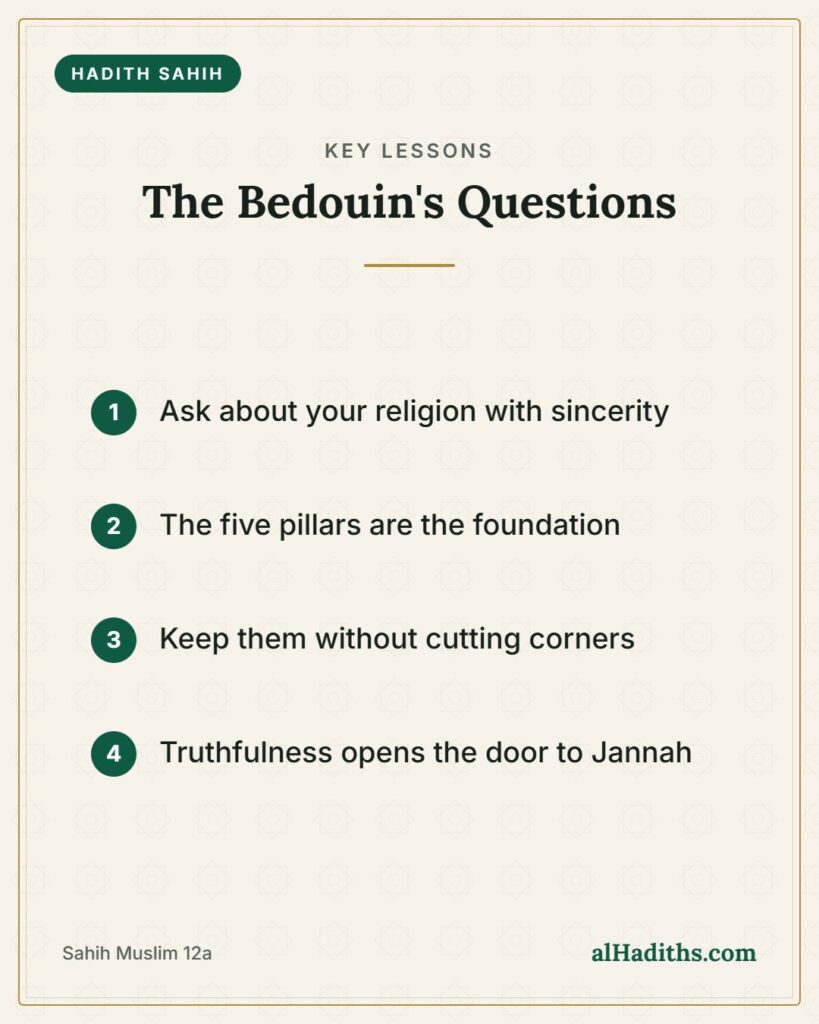
- A man from the desert asked the Prophet ﷺ about Allah and the five pillars, and the Prophet ﷺ confirmed each one (Sahih Muslim 12a).
- The same man is named in Sahih al-Bukhari 63 as Dimam bin Tha’laba, who had come as his people’s messenger.
- Islam is built on five: the testimony of faith, prayer, zakat, Hajj and fasting Ramadan (Sahih al-Bukhari 8).
- Keeping the obligations truthfully, without cutting them short, was tied to entering Paradise.
Questions people ask
Is doing the five pillars of Islam enough to enter Jannah?
In this hadith the Prophet ﷺ said of the man who promised to keep the obligations: “If he were true (to what he said) he must enter Paradise” (Sahih Muslim 12a). The pillars are the foundation, and the condition was truthfulness. Voluntary prayers, charity and good character add much more reward on top. For detailed questions, please ask a qualified local scholar.
Who was the Bedouin who asked about the pillars of Islam?
In Sahih al-Bukhari 63, Anas bin Malik narrates the same story and the man introduces himself as Dimam bin Tha’laba of Bani Sa’d bin Bakr. He said he had been sent by his people as their messenger.
Why were the companions told not to ask the Prophet ﷺ questions?
Anas bin Malik said they were forbidden to ask about things “without the genuine need”, as the Sunnah.com translation explains. That is why they were glad when a sincere visitor from the desert came and asked, and they could learn from the answers.
What does “neither add nor diminish” mean in this hadith?
The Bedouin was promising to keep exactly what he had been told was obligatory: he would not cut any of it short. The Prophet ﷺ linked his success to whether he was truthful in that promise.
I’ll end with a dua from me: may Allah give every one of us the strength to uphold the five pillars of Islam as well as we are able, to guard our prayers, pay our zakat, fast Ramadan and, for those who can, make Hajj, and may He accept it all from us. Ameen.
Save this to Pinterest so you can come back to these lessons
Share the reward. Send this article to someone who needs it today — teaching a hadith or dua can become a lasting good deed for you, in shaa Allah.

One Comment