Creation in the Womb and the Four Things Written: Hadith 4
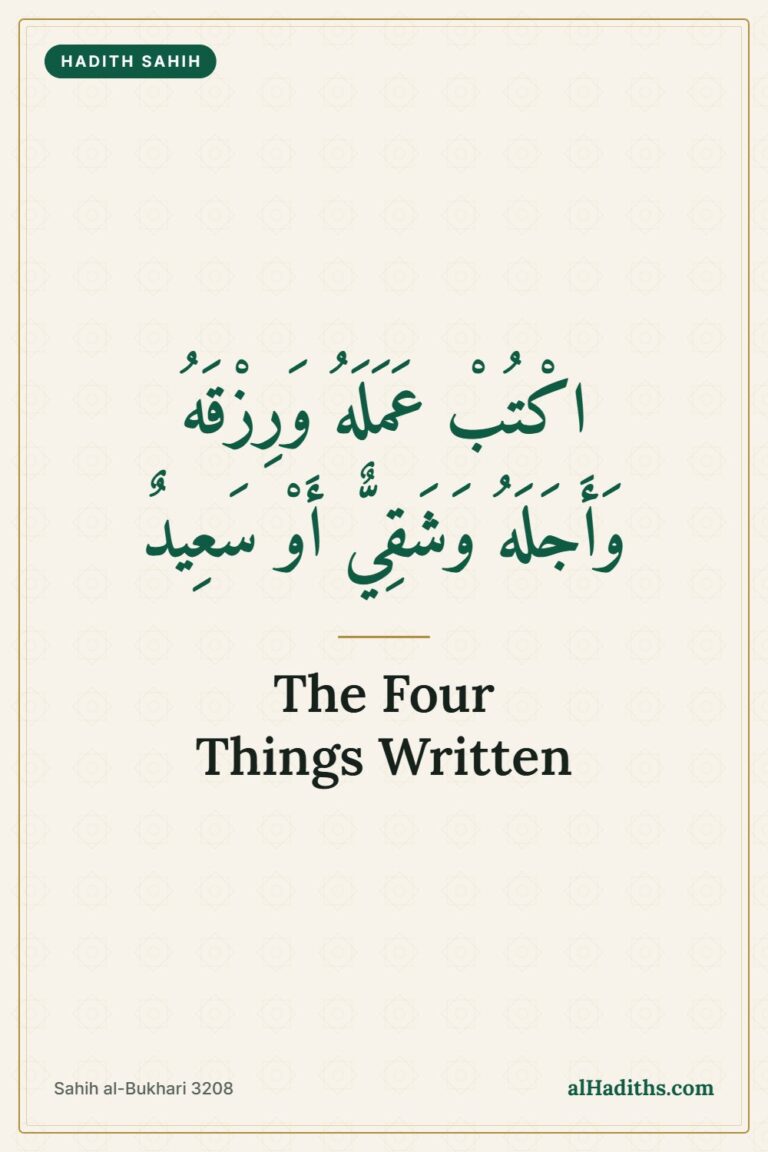
Before you took your first breath, four things about your life were already written: your deeds, your provision, your lifespan, and whether you will be among the happy or the wretched in the Hereafter. The hadith about creation in the womb tells us this, and then ends with one of the most sobering lines in the Sunnah, about people who are only an arm’s length from Paradise or the Fire.
At a glance
- Source: Sahih al-Bukhari 3208 (also Sahih Muslim 2643a)
- Narrated by: ‘Abdullah ibn Mas’ud (may Allah be pleased with him)
- Grade: Sahih (Bukhari and Muslim)
- Topic: Creation in the womb, the Divine Decree and good endings
- Put it into practice: Keep doing good, and ask Allah for a good ending
The hadith of creation in the womb
‘Abdullah ibn Mas’ud said that the Messenger of Allah ﷺ, “the true and truly inspired”, told them:
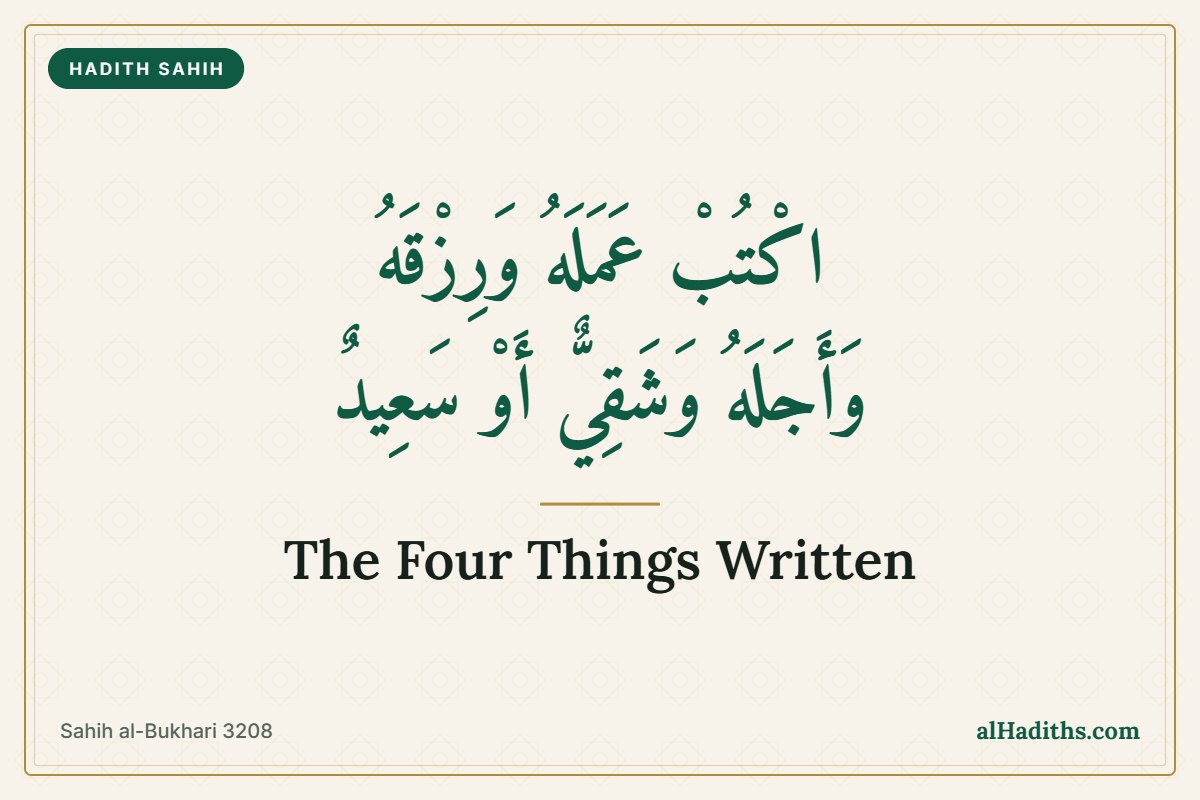
إِنَّ أَحَدَكُمْ يُجْمَعُ خَلْقُهُ فِي بَطْنِ أُمِّهِ أَرْبَعِينَ يَوْمًا، ثُمَّ يَكُونُ عَلَقَةً مِثْلَ ذَلِكَ، ثُمَّ يَكُونُ مُضْغَةً مِثْلَ ذَلِكَ، ثُمَّ يَبْعَثُ اللَّهُ مَلَكًا، فَيُؤْمَرُ بِأَرْبَعِ كَلِمَاتٍ، وَيُقَالُ لَهُ اكْتُبْ عَمَلَهُ وَرِزْقَهُ وَأَجَلَهُ وَشَقِيٌّ أَوْ سَعِيدٌ. ثُمَّ يُنْفَخُ فِيهِ الرُّوحُ، فَإِنَّ الرَّجُلَ مِنْكُمْ لَيَعْمَلُ حَتَّى مَا يَكُونُ بَيْنَهُ وَبَيْنَ الْجَنَّةِ إِلاَّ ذِرَاعٌ، فَيَسْبِقُ عَلَيْهِ كِتَابُهُ، فَيَعْمَلُ بِعَمَلِ أَهْلِ النَّارِ، وَيَعْمَلُ حَتَّى مَا يَكُونُ بَيْنَهُ وَبَيْنَ النَّارِ إِلاَّ ذِرَاعٌ، فَيَسْبِقُ عَلَيْهِ الْكِتَابُ، فَيَعْمَلُ بِعَمَلِ أَهْلِ الْجَنَّةِ
“(The matter of the Creation of) a human being is put together in the womb of the mother in forty days, and then he becomes a clot of thick blood for a similar period, and then a piece of flesh for a similar period. Then Allah sends an angel who is ordered to write four things. He is ordered to write down his deeds, his livelihood, his (date of) death, and whether he will be blessed or wretched (in religion). Then the soul is breathed into him. So, a man amongst you may do (good) deeds till there is only a cubit between him and Paradise and then what has been written for him decides his behavior and he starts doing (evil) deeds characteristic of the people of the (Hell) Fire. And similarly a man amongst you may do (evil) deeds till there is only a cubit between him and the (Hell) Fire, and then what has been written for him decides his behavior, and he starts doing deeds characteristic of the people of Paradise.”
Sahih al-Bukhari 3208 · Narrated by ‘Abdullah ibn Mas’ud · Translation adapted from Sunnah.com
Imam Muslim narrates it too (Sahih Muslim 2643a), and Imam an-Nawawi included it as Hadith 4 of an-Nawawi’s 40 Hadith.
The stages of creation in the womb
The hadith describes three stages of forty days each: the gathering of a person’s creation, then a clot (‘alaqah), then a lump of flesh (mudghah). The Quran describes the same journey:
ثُمَّ خَلَقْنَا ٱلنُّطْفَةَ عَلَقَةً فَخَلَقْنَا ٱلْعَلَقَةَ مُضْغَةً فَخَلَقْنَا ٱلْمُضْغَةَ عِظَـٰمًا فَكَسَوْنَا ٱلْعِظَـٰمَ لَحْمًا ثُمَّ أَنشَأْنَـٰهُ خَلْقًا ءَاخَرَ ۚ فَتَبَارَكَ ٱللَّهُ أَحْسَنُ ٱلْخَـٰلِقِينَ
Then We made the sperm-drop into a clinging clot, and We made the clot into a lump [of flesh], and We made [from] the lump, bones, and We covered the bones with flesh; then We developed him into another creation. So blessed is Allāh, the best of creators.
Surah al-Mu’minun 23:14 · Translation: Saheeh International (Quran.com)
The verse ends with “So blessed is Allah, the best of creators”. The point of these stages is not to turn the hadith into a science lesson, but to remind us how carefully each of us was made, and by Whom.
The four things written for every person
Then an angel is sent and told to write four things. Each one carries a lesson for how we live:
- His deeds: what he will do in his life. Allah knows it before it happens, yet we are the ones who choose and act.
- His provision (rizq): what will reach him of wealth, food and blessings. It is already decreed, so there is no need to chase it through what is forbidden.
- His lifespan (ajal): the moment of death, which no one can bring forward or delay.
- Wretched or blessed: where he will end up in the Hereafter.
Belief in this Divine Decree is one of the six pillars of iman the Prophet ﷺ taught in the Hadith of Jibril.
“An arm’s length from Paradise”: what does it mean?
This is the part of the hadith that frightens people. How can someone do good deeds for years and still end up in the Fire? The Prophet ﷺ explained it himself. During a battle, a man fought so bravely that the companions praised him, yet the Prophet ﷺ said he was from the people of the Fire. A companion followed him and saw him, after being wounded, take his own life. The Prophet ﷺ then said:
إِنَّ الْعَبْدَ لَيَعْمَلُ فِيمَا يَرَى النَّاسُ عَمَلَ أَهْلِ الْجَنَّةِ، وَإِنَّهُ لَمِنْ أَهْلِ النَّارِ، وَيَعْمَلُ فِيمَا يَرَى النَّاسُ عَمَلَ أَهْلِ النَّارِ وَهْوَ مِنْ أَهْلِ الْجَنَّةِ، وَإِنَّمَا الأَعْمَالُ بِخَوَاتِيمِهَا
“A person may do deeds that seem to the people as the deeds of the people of Paradise while in fact, he is from the dwellers of the (Hell) Fire: and similarly a person may do deeds that seem to the people as the deeds of the people of the (Hell) Fire while in fact, he is from the dwellers of Paradise. Verily, the (results of) deeds done, depend upon the last actions.”
Sahih al-Bukhari 6493 · Narrated by Sahl ibn Sa’d · Translation from Sunnah.com
The key words are “seem to the people”. What people saw from outside was not what was in the heart. So the hadith is not about a sincere believer whose good deeds are suddenly cancelled; it is about the gap between how deeds look and what lies behind them. The same story is in Sahih al-Bukhari 6607.
The other half is full of hope: someone whose life looked far from Allah may turn back at the end and be among the people of Paradise. No one should give up on themselves, or look down on anyone else.
If it is written, why do good deeds?
The companions asked this exact question. ‘Ali (may Allah be pleased with him) narrated that the Prophet ﷺ said each person’s place in Paradise or the Fire is already written. They asked whether they should rely on that and give up deeds. He ﷺ replied:
اعْمَلُوا فَكُلٌّ مُيَسَّرٌ لِمَا خُلِقَ لَهُ، أَمَّا مَنْ كَانَ مِنْ أَهْلِ السَّعَادَةِ فَيُيَسَّرُ لِعَمَلِ أَهْلِ السَّعَادَةِ، وَأَمَّا مَنْ كَانَ مِنْ أَهْلِ الشَّقَاءِ فَيُيَسَّرُ لِعَمَلِ أَهْلِ الشَّقَاوَةِ
“Carry on doing (good) deeds, for everybody will find easy to do such deeds as will lead him to his destined place for which he has been created. So he who is destined to be among the happy (in the Hereafter), will find it easy to do the deeds characteristic of such people, while he who is destined to be among the miserable ones, will find it easy to do the deeds characteristic of such people.”
Sahih al-Bukhari 4949 · Narrated by ‘Ali ibn Abi Talib · Translation from Sunnah.com
We do not know what is written, but we do know what we are asked to do. Allah’s knowledge is not a reason to stop; finding good deeds easy is itself a sign of where we are heading.
Reflection: the hadith moves from the womb to the very last deed of a life. Between those two points is everything we control: our choices today. The ending is unknown to us, so the safest place to be is in the middle of doing good.
Duas for a good ending
Because the heart can change, the Prophet ﷺ asked Allah to keep hearts firm. He said that the hearts of the children of Adam are between two of the fingers of the Most Merciful, and then made this dua:
اللَّهُمَّ مُصَرِّفَ الْقُلُوبِ صَرِّفْ قُلُوبَنَا عَلَى طَاعَتِكَ
Allahumma musarrifal-qulub, sarrif qulubana ‘ala ta’atik
O Allah, Turner of the hearts, turn our hearts to Your obedience.
Sahih Muslim 2655 · Narrated by ‘Abdullah ibn ‘Amr · Translation adapted from Sunnah.com
I often recite this dua, Allahumma inni as’alukal-‘afwa wal-‘afiyah fid-dunya wal-akhirah, with the hope that Allah forgives me and showers me with ‘afiyah in this world and in the hereafter. The Prophet ﷺ never left these supplications, morning and evening, and this is how they begin:
اللَّهُمَّ إِنِّي أَسْأَلُكَ الْعَفْوَ وَالْعَافِيَةَ فِي الدُّنْيَا وَالآخِرَةِ
Allahumma inni as’alukal-‘afwa wal-‘afiyah fid-dunya wal-akhirah
O Allah, I ask You for forgiveness and well-being in this world and in the Hereafter.
Sunan Ibn Majah 3871 · Narrated by Ibn ‘Umar · Grade: Sahih (Darussalam) · Translation from Sunnah.com (also Sunan Abi Dawud 5074, Sahih, al-Albani)
How to put it into practice
- Keep doing good, especially the deeds that feel easy for you; do not wait to feel certain of your ending.
- Look after your heart, not only your outward deeds: check your intention and keep some deeds private.
- Never write anyone off, including yourself; endings can surprise us.
- Make the two duas above part of your mornings and evenings.
- Trust Allah with your provision and seek it in halal ways.
Key lessons
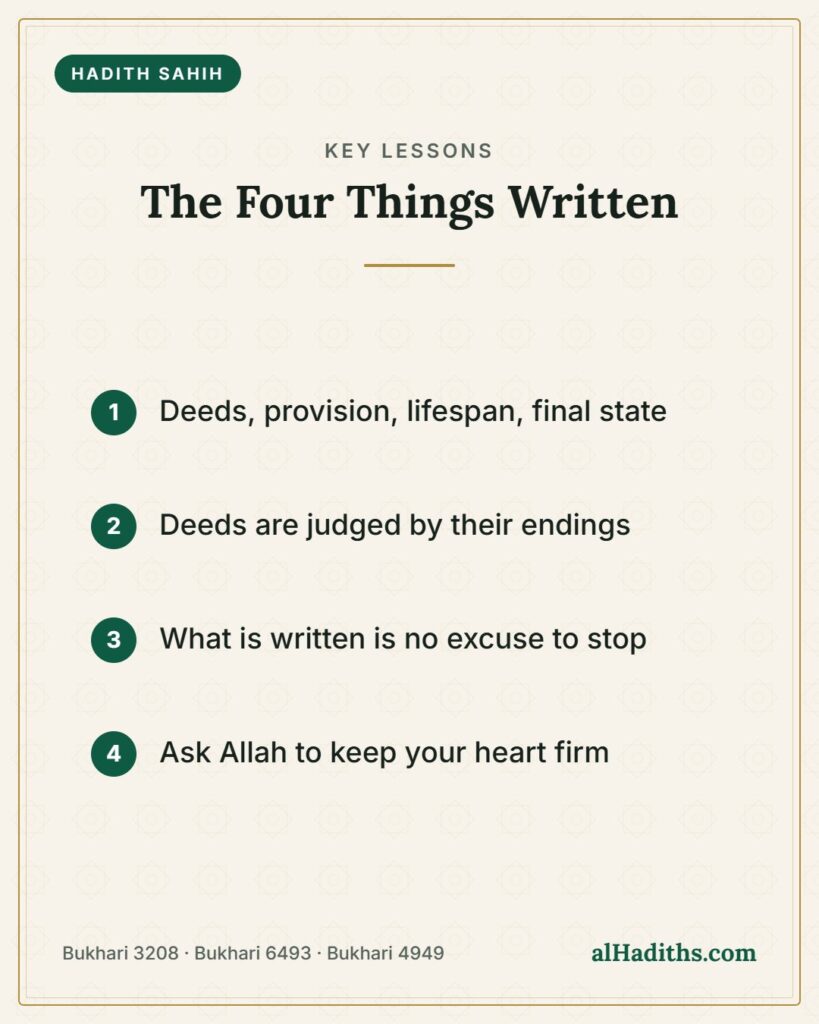
- An angel writes four things for every person: deeds, provision, lifespan, and happiness or misery.
- Deeds are judged by their endings, and by what is in the heart, not only how they look.
- What is written is no excuse to stop; the Prophet ﷺ said: carry on doing good deeds.
- Ask Allah often to keep your heart firm and to grant you a good ending.
Questions people ask
What four things are written for a baby in the womb?
An angel is ordered to write the person’s deeds, provision, lifespan, and whether they will be wretched or blessed (Sahih al-Bukhari 3208).
What does ‘deeds are judged by their endings’ mean?
The Prophet ﷺ said the results of deeds depend on the last actions, and that some deeds only seem good or bad to people while the heart tells another story (Sahih al-Bukhari 6493).
If everything is written, why should we do good deeds?
The companions asked this, and the Prophet ﷺ said: carry on doing good deeds, for everyone will find it easy to do the deeds of what they were created for (Sahih al-Bukhari 4949).
May Allah keep our hearts firm on His religion, forgive us, grant us ‘afiyah in this world and the next, and give each of us a good ending.
Save this to Pinterest so you can remember the four things written for you
Share the reward. Send this article to someone who needs it today — teaching a hadith or dua can become a lasting good deed for you, in shaa Allah.