Importance of Salah: 7 Authentic Hadith About Prayer
Among the very last words the Prophet ﷺ spoke were: “Prayer, prayer.” Of everything he could have left us with, he chose salah. This collection of hadith about salah shows why: it is a pillar of Islam, the first deed to be judged, and a daily washing for the soul. Here are seven authentic hadith on the importance of prayer, each with its Arabic and grade.
In this article
- Why salah stands at the center of a Muslim’s life
- How the five prayers wipe away sins, like a river at your door
- The rewards for walking to the mosque and for much sujud
At a glance
- Hadith: 7 hadith cards, plus Surah al-‘Ankabut 29:45
- Collections: Sahih al-Bukhari, Sahih Muslim, Jami` at-Tirmidhi and Sunan Abi Dawud
- Grade: Sahih, grader named for the Sunan
- Topic: Salah: the importance and virtues of prayer
- Put it into practice: Pray your next salah as if it is the first deed you will be asked about, because it is
1. Salah is a pillar of Islam
Ibn ‘Umar (may Allah be pleased with him) reported that the Messenger of Allah ﷺ said:
بُنِيَ الإِسْلاَمُ عَلَى خَمْسٍ شَهَادَةِ أَنْ لاَ إِلَهَ إِلاَّ اللَّهُ وَأَنَّ مُحَمَّدًا رَسُولُ اللَّهِ، وَإِقَامِ الصَّلاَةِ، وَإِيتَاءِ الزَّكَاةِ، وَالْحَجِّ، وَصَوْمِ رَمَضَانَ
“Islam is based on five (principles): to testify that none has the right to be worshipped but Allah and that Muhammad is Allah’s Messenger, to establish the prayer, to pay Zakat, to perform Hajj, and to fast in the month of Ramadan.”
Sahih al-Bukhari 8 · Narrated by Ibn ‘Umar · Translation adapted from Sunnah.com
Salah comes straight after the testimony of faith. The testimony is said with the tongue; salah is how that testimony shows up in a person’s day, five times, from Fajr to ‘Isha. For the full story of a man who asked the Prophet ﷺ about these pillars, see The Bedouin Who Asked About the Five Pillars.
2. The first deed to be judged
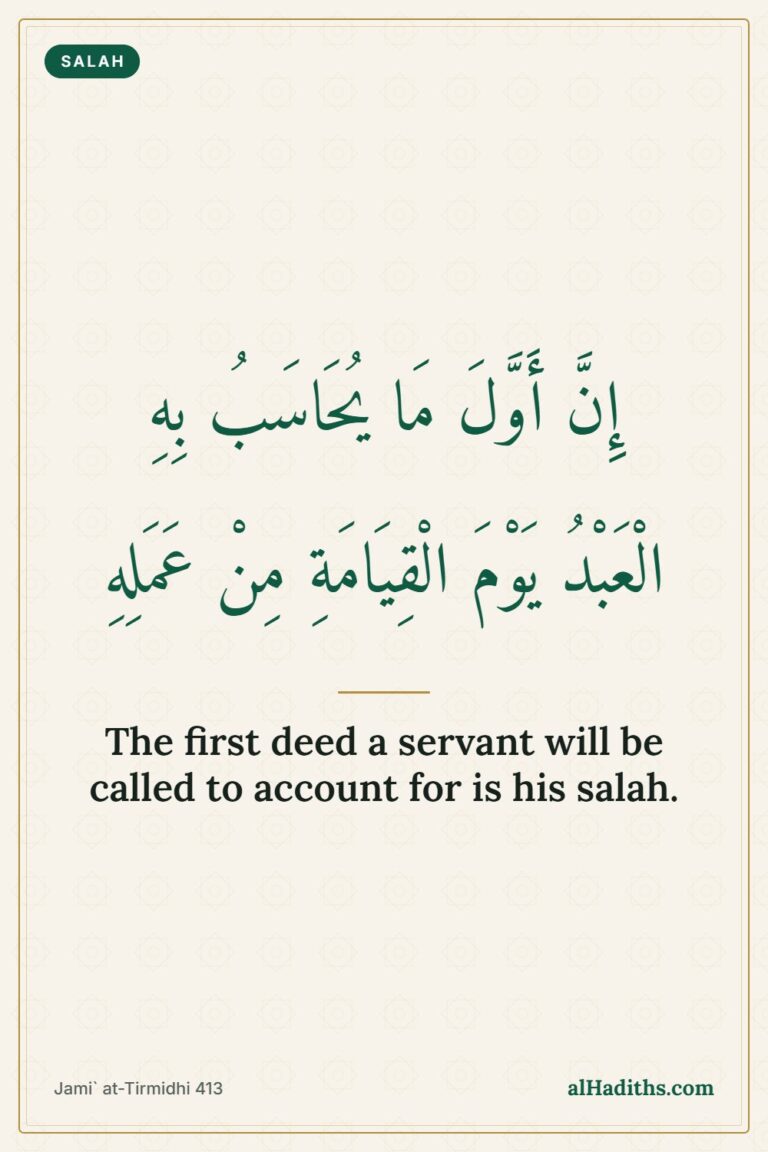
Huraith ibn Qabisah came to Madinah and asked Allah for a righteous companion. He sat with Abu Hurairah (may Allah be pleased with him), who told him he heard the Messenger of Allah ﷺ say:
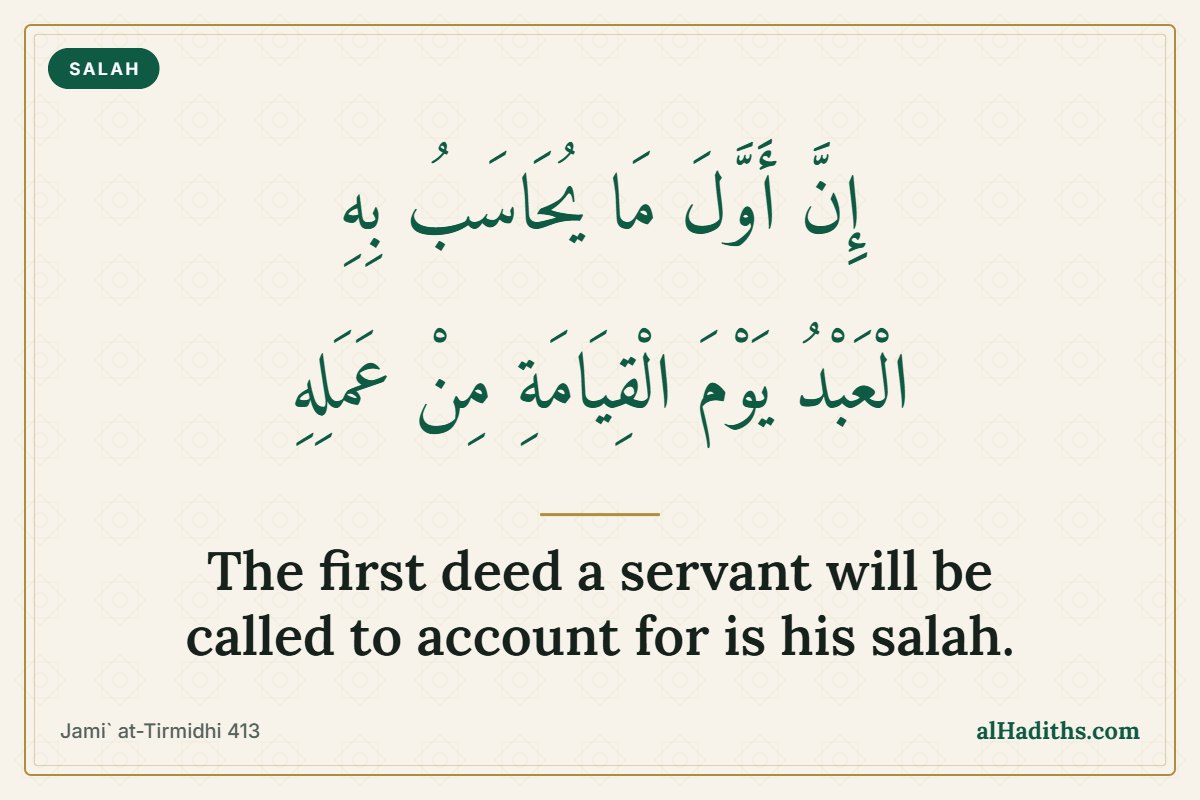
إِنَّ أَوَّلَ مَا يُحَاسَبُ بِهِ الْعَبْدُ يَوْمَ الْقِيَامَةِ مِنْ عَمَلِهِ صَلاَتُهُ فَإِنْ صَلُحَتْ فَقَدْ أَفْلَحَ وَأَنْجَحَ وَإِنْ فَسَدَتْ فَقَدْ خَابَ وَخَسِرَ فَإِنِ انْتَقَصَ مِنْ فَرِيضَتِهِ شَيْءٌ قَالَ الرَّبُّ عَزَّ وَجَلَّ انْظُرُوا هَلْ لِعَبْدِي مِنْ تَطَوُّعٍ فَيُكَمَّلَ بِهَا مَا انْتَقَصَ مِنَ الْفَرِيضَةِ ثُمَّ يَكُونُ سَائِرُ عَمَلِهِ عَلَى ذَلِكَ
“Indeed the first deed by which a servant will be called to account on the Day of Resurrection is his Salat. If it is complete, he is successful and saved, but if it is defective, he has failed and lost. So if something is deficient in his obligatory (prayers), then the Lord, Mighty and Sublime, says: ‘Look! Are there any voluntary (prayers) for My servant?’ So with them, what was deficient in his obligatory (prayers) will be completed. Then the rest of his deeds will be treated like that.”
Jami` at-Tirmidhi 413 · Sahih (Darussalam) · Narrated by Abu Hurairah · Translation adapted from Sunnah.com
At-Tirmidhi called it hasan gharib through this chain and noted it is also narrated through others; Darussalam grades it Sahih, and a similar wording is in Sunan Abi Dawud 864 (Sahih, al-Albani). The hadith also carries a mercy: the voluntary prayers we add, such as the two rak’ahs before Fajr, can make up what was lacking in the obligatory ones.
Try this: add one voluntary prayer to your day, even two short rak’ahs.
3. A river at your door, five times a day
Abu Hurairah (may Allah be pleased with him) heard the Messenger of Allah ﷺ ask his Companions:
أَرَأَيْتُمْ لَوْ أَنَّ نَهَرًا بِبَابِ أَحَدِكُمْ، يَغْتَسِلُ فِيهِ كُلَّ يَوْمٍ خَمْسًا، مَا تَقُولُ ذَلِكَ يُبْقِي مِنْ دَرَنِهِ . قَالُوا لاَ يُبْقِي مِنْ دَرَنِهِ شَيْئًا. قَالَ فَذَلِكَ مِثْلُ الصَّلَوَاتِ الْخَمْسِ، يَمْحُو اللَّهُ بِهَا الْخَطَايَا
“If there was a river at the door of any one of you and he bathed in it five times a day, would you say any dirt would remain on him?” They said: “Not a trace of dirt would be left.” He said: “That is the example of the five prayers, with which Allah wipes out sins.”
Sahih al-Bukhari 528 · Narrated by Abu Hurairah · Translation adapted from Sunnah.com
HadeethEnc explains that just as washing five times a day leaves no dirt, the five prayers wipe away sins, meaning the minor ones; major sins need repentance.
4. From one prayer to the next
Abu Hurairah (may Allah be pleased with him) reported that the Messenger of Allah ﷺ said:
الصَّلاَةُ الْخَمْسُ وَالْجُمُعَةُ إِلَى الْجُمُعَةِ كَفَّارَةٌ لِمَا بَيْنَهُنَّ مَا لَمْ تُغْشَ الْكَبَائِرُ
“The five prayers, and from one Friday prayer to the next, are an expiation for what is between them, as long as major sins are not committed.”
Sahih Muslim 233a · Narrated by Abu Hurairah · Translation adapted from Sunnah.com
Another wording of this hadith adds Ramadan to Ramadan. HadeethEnc notes the condition in it: these acts erase the minor sins between them for the one who avoids major sins, and major sins are forgiven through repentance.
Try this: after each salah, take a moment to ask Allah’s forgiveness for anything since the last one.
5. Every step to the mosque
Abu Hurairah (may Allah be pleased with him) reported that the Messenger of Allah ﷺ said:
مَنْ تَطَهَّرَ فِي بَيْتِهِ ثُمَّ مَشَى إِلَى بَيْتٍ مِنْ بُيُوتِ اللَّهِ لِيَقْضِيَ فَرِيضَةً مِنْ فَرَائِضِ اللَّهِ كَانَتْ خَطْوَتَاهُ إِحْدَاهُمَا تَحُطُّ خَطِيئَةً وَالأُخْرَى تَرْفَعُ دَرَجَةً
“He who purifies himself in his house, then walks to one of the houses of Allah to perform one of the obligatory prayers of Allah, then of his steps, one wipes away a sin and the other raises him a rank.”
Sahih Muslim 666 · Narrated by Abu Hurairah · Translation adapted from Sunnah.com
The reward starts before the prayer itself: at home, with wudu (see How to Make Wudu), then with every step on the way. A walk we might think of as a chore becomes part of the worship.
6. Much sujud, and the company of the Prophet ﷺ
Rabi’ah ibn Ka’b al-Aslami (may Allah be pleased with him) used to serve the Prophet ﷺ at night. He said:
كُنْتُ أَبِيتُ مَعَ رَسُولِ اللَّهِ صلى الله عليه وسلم فَأَتَيْتُهُ بِوَضُوئِهِ وَحَاجَتِهِ فَقَالَ لِي سَلْ . فَقُلْتُ أَسْأَلُكَ مُرَافَقَتَكَ فِي الْجَنَّةِ . قَالَ أَوَغَيْرَ ذَلِكَ . قُلْتُ هُوَ ذَاكَ . قَالَ فَأَعِنِّي عَلَى نَفْسِكَ بِكَثْرَةِ السُّجُودِ
“I used to spend the night with the Messenger of Allah ﷺ and bring him water for his wudu and what he needed. He said to me: ‘Ask (for anything).’ I said: ‘I ask for your company in Paradise.’ He said: ‘Anything else besides that?’ I said: ‘That is all.’ He said: ‘Then help me (to achieve this) for you by much prostration.’”
Sahih Muslim 489 · Narrated by Rabi’ah ibn Ka’b · Translation adapted from Sunnah.com
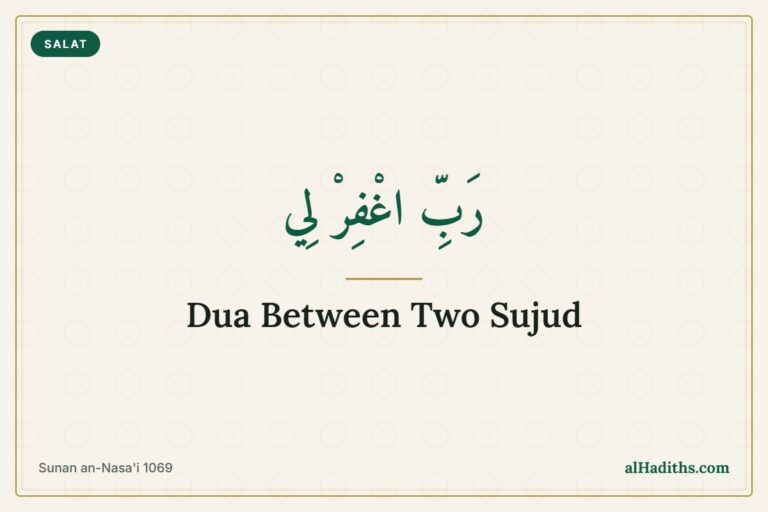
Rabi’ah could have asked for anything in this world. He asked for Jannah alongside the Prophet ﷺ, and the answer he was given was salah: much sujud. Sujud is also the place to pour out our own dua; see Dua Between Two Sujud.
7. His last words: prayer, prayer
‘Ali ibn Abi Talib (may Allah be pleased with him) said:
كَانَ آخِرُ كَلاَمِ رَسُولِ اللَّهِ صلى الله عليه وسلم الصَّلاَةَ الصَّلاَةَ اتَّقُوا اللَّهَ فِيمَا مَلَكَتْ أَيْمَانُكُمْ
“The last words which the Messenger of Allah ﷺ spoke were: Prayer, prayer; fear Allah regarding those whom your right hands possess.”
Sunan Abi Dawud 5156 · Sahih (al-Albani) · Narrated by ‘Ali ibn Abi Talib · Translation adapted from Sunnah.com
At the end of his life, the Prophet ﷺ joined two things: keeping the prayer, and fearing Allah in how we treat those under our care. Salah is not only between a person and Allah; it is meant to shape how we deal with people too.
Bringing it together
Allah links salah to how we live in this verse:
ٱتْلُ مَآ أُوحِىَ إِلَيْكَ مِنَ ٱلْكِتَـٰبِ وَأَقِمِ ٱلصَّلَوٰةَ ۖ إِنَّ ٱلصَّلَوٰةَ تَنْهَىٰ عَنِ ٱلْفَحْشَآءِ وَٱلْمُنكَرِ ۗ وَلَذِكْرُ ٱللَّهِ أَكْبَرُ ۗ وَٱللَّهُ يَعْلَمُ مَا تَصْنَعُونَ
“Recite, [O Muḥammad], what has been revealed to you of the Book and establish prayer. Indeed, prayer prohibits immorality and wrongdoing, and the remembrance of Allāh is greater. And Allāh knows that which you do.”
Surah Al-‘Ankabut 29:45 · Translation: Saheeh International, from Quran.com
Reflection: Put these hadith side by side and a picture forms. Salah is the pillar that holds up our Islam, the first question on the Day of Resurrection, the river that washes us five times a day, and the last thing the Prophet ﷺ asked us to hold on to. If one deed deserves our best effort and our first attention, it is this one.
Questions people ask
What does the hadith say about the importance of salah?
The Prophet ﷺ made salah the second pillar of Islam (Sahih al-Bukhari 8), said it is the first deed a servant will be called to account for (Jami` at-Tirmidhi 413, Sahih), and among his last words were “Prayer, prayer” (Sunan Abi Dawud 5156, Sahih).
What is the first thing we will be asked about on the Day of Judgement?
According to Jami` at-Tirmidhi 413, the first deed a servant will be called to account for is his salah. If it is in order, he succeeds; if anything is lacking, it is made up from his voluntary prayers.
Does salah wipe away sins?
Yes. The Prophet ﷺ compared the five prayers to bathing in a river five times a day (Sahih al-Bukhari 528). Scholars explain this refers to minor sins; major sins need repentance (Sahih Muslim 233a).
Key lessons
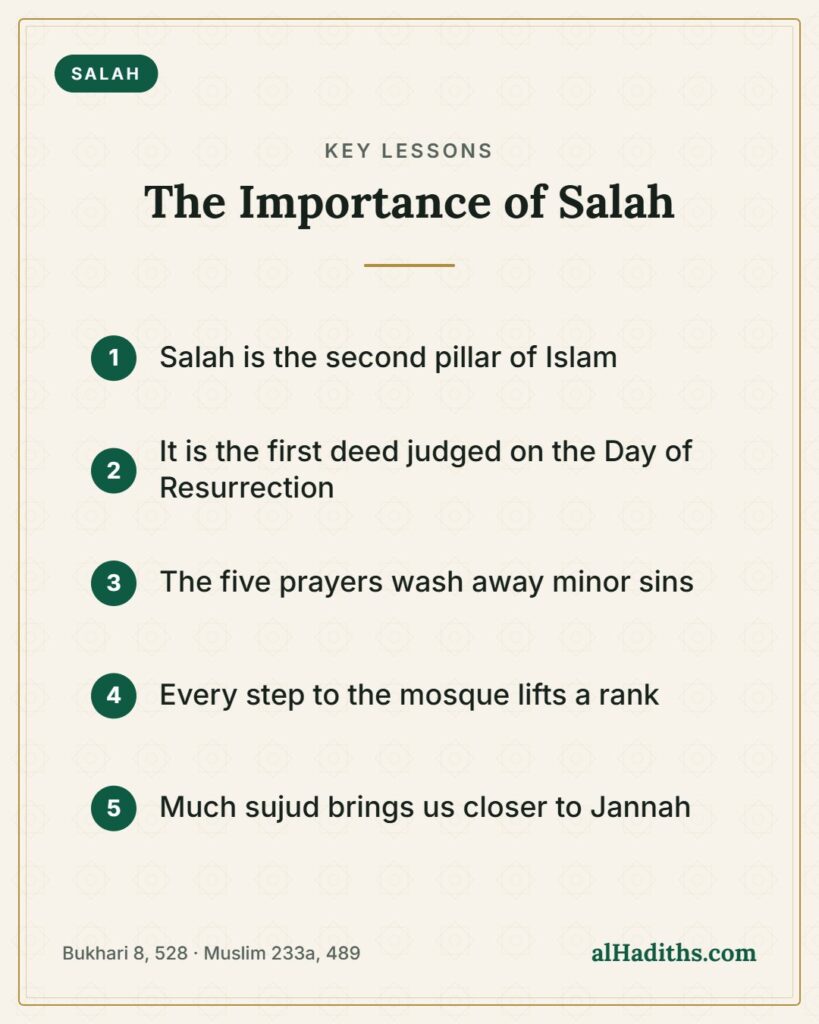
- Salah is the second pillar of Islam, right after the testimony of faith.
- It is the first deed to be judged, and voluntary prayers can make up what is lacking.
- The five prayers wash away minor sins like a river at the door.
- Walking to the mosque wipes away sins and raises ranks.
- Much sujud is the way the Prophet ﷺ gave to his company in Jannah.
One thing for today: at your next salah, pause before the takbir and remember that this is the first deed you will be asked about. Then pray it as well as you can.
Save this to Pinterest so you can remember why every salah matters
Share the reward. Send this article to someone who needs it today — teaching a hadith or dua can become a lasting good deed for you, in shaa Allah.