Hadith About Leaving Salah: The Warning and the Way Back
Many of us know someone who has drifted from salah, or we have drifted ourselves: a missed Fajr becomes a missed day, and a missed day becomes a habit. Is it really that serious? This hadith about leaving salah collection gives the Prophet’s ﷺ own words, plainly. The warning is among the sternest in the Sunnah. But the same Sunnah also shows the way back, and that door is still open.
In this article
- What the Prophet ﷺ said about abandoning salah, and about missing ‘Asr
- Where scholars differ on whether leaving salah is kufr
- The way back: voluntary prayers, making up what was forgotten, and repentance
At a glance
- Hadith: 5 hadith cards, plus Surah Maryam 19:59–60
- Collections: Sahih al-Bukhari, Sahih Muslim, Jami` at-Tirmidhi and Sunan Abi Dawud
- Grade: Sahih, grader named for the Sunan
- Topic: Salah: the warning against leaving it, and the way back
- Put it into practice: If you have missed a prayer today, pray it now
1. Between a man and kufr: leaving salah
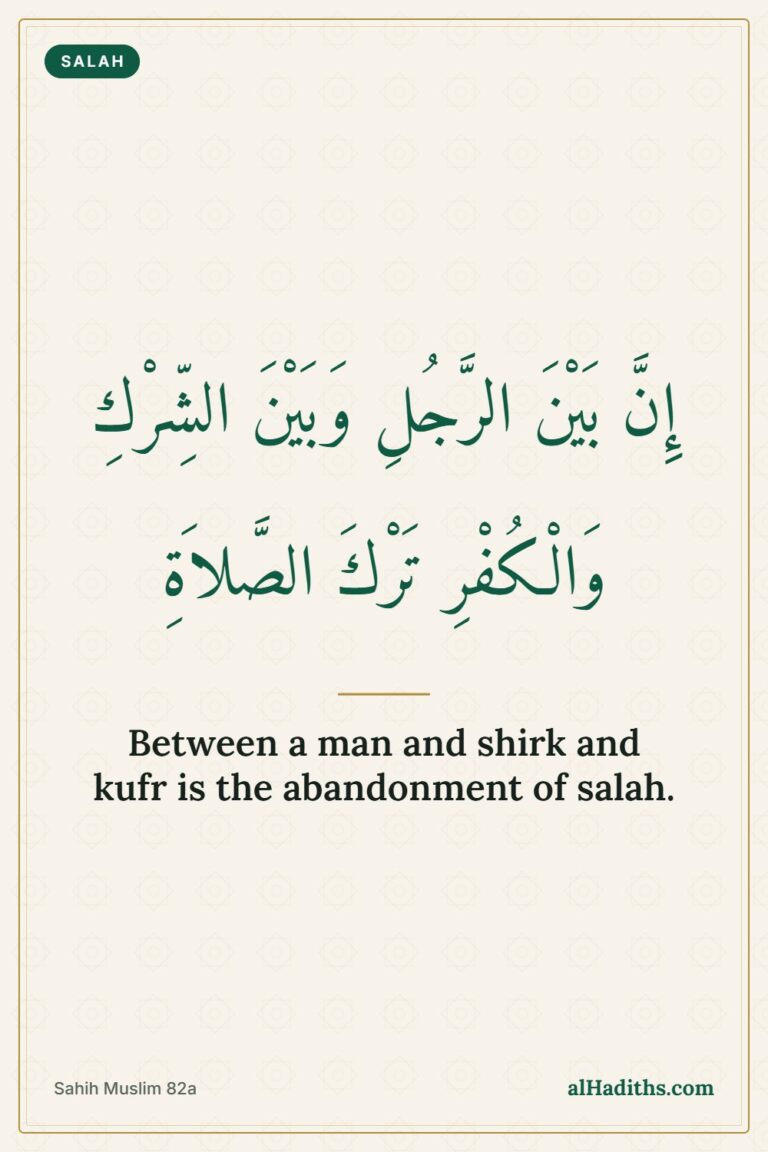
Jabir ibn ‘Abdullah (may Allah be pleased with him) heard the Prophet ﷺ say:
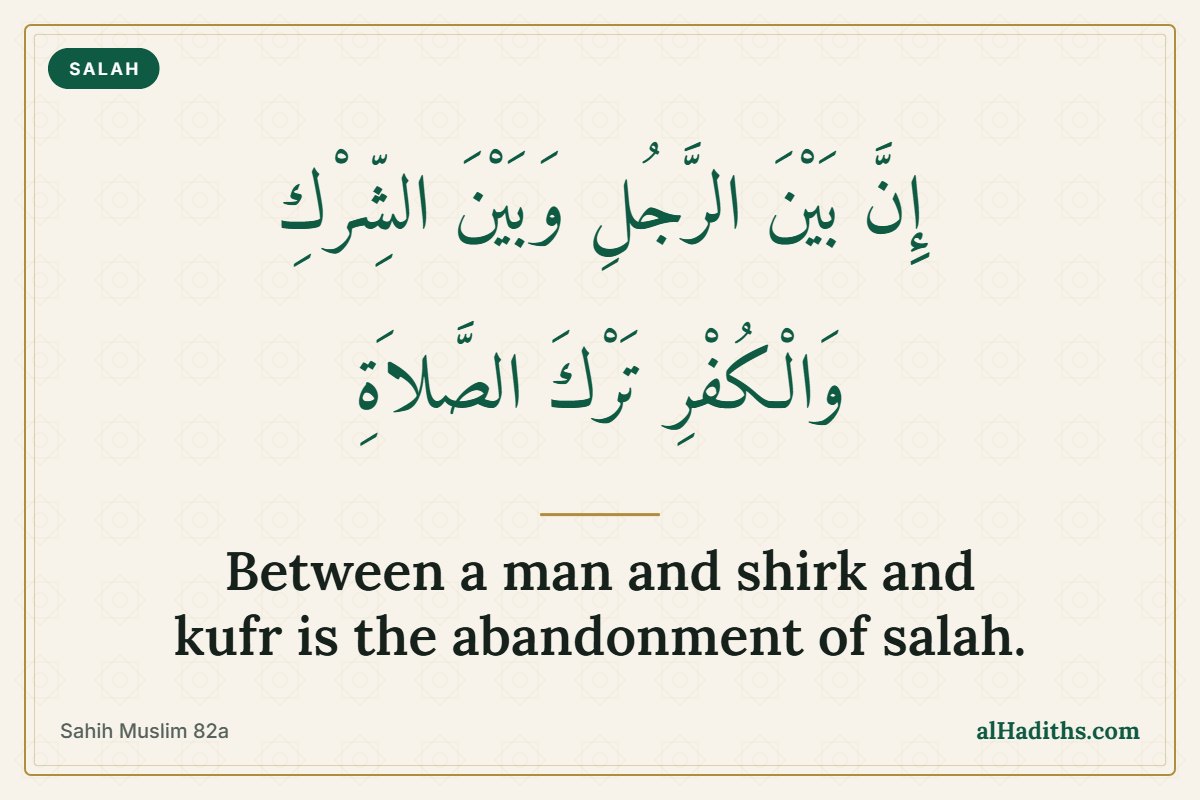
إِنَّ بَيْنَ الرَّجُلِ وَبَيْنَ الشِّرْكِ وَالْكُفْرِ تَرْكَ الصَّلاَةِ
“Indeed, between a man and shirk and kufr is the abandonment of the prayer.”
Sahih Muslim 82a · Narrated by Jabir ibn ‘Abdullah · Translation adapted from Sunnah.com
HadeethEnc explains that salah is what separates a person from shirk and kufr, and that anyone who abandons it while denying it is obligatory is a disbeliever by agreement of the Muslims. How it applies to someone who leaves it out of laziness is where scholars differ; see the section on that below.
Take heed: salah is not one good deed among many. It is the line itself.
2. “The covenant between us and them”
Buraidah (may Allah be pleased with him) reported that the Messenger of Allah ﷺ said:
الْعَهْدُ الَّذِي بَيْنَنَا وَبَيْنَهُمُ الصَّلاَةُ فَمَنْ تَرَكَهَا فَقَدْ كَفَرَ
“The covenant between us and them is the Salat, so whoever abandons it has committed disbelief.”
Jami` at-Tirmidhi 2621 · Sahih (Darussalam) · Narrated by Buraidah · Translation adapted from Sunnah.com
At-Tirmidhi called this hadith hasan sahih gharib. HadeethEnc explains that the “covenant” is the visible mark that separates the Muslims from others: people are judged by what they openly do, and salah is the most open sign of a Muslim.
3. Leaving ‘Asr
Abu al-Malih said they were with Buraidah (may Allah be pleased with him) on a military expedition on a cloudy day. Afraid that the time would slip by unseen, he told them to pray ‘Asr early, because the Prophet ﷺ said:
مَنْ تَرَكَ صَلاَةَ الْعَصْرِ فَقَدْ حَبِطَ عَمَلُهُ
“Whoever leaves the ‘Asr prayer, his deeds are nullified.”
Sahih al-Bukhari 553 · Narrated by Buraidah · Translation adapted from Sunnah.com
Buraidah did not wait to be sure; the clouds were enough for him to act. In another hadith, the one who misses ‘Asr is like someone who has lost his family and his wealth (Sahih al-Bukhari 552). ‘Asr falls in the busiest part of many people’s day, which may be exactly why it is singled out.
Take heed: set a reminder for ‘Asr, the prayer most easily lost to work and errands.
Where scholars differ on calling it kufr
All scholars agree that whoever denies that salah is obligatory has left Islam. They differ over the person who believes it is obligatory but leaves it out of laziness (IslamQA 194309):
- It is kufr that takes a person out of Islam. This view takes the hadith above at their plain meaning and cites the report from ‘Abdullah ibn Shaqiq that the Companions did not consider leaving any deed to be kufr except salah. Among later scholars, Ibn ‘Uthaymin held that this applies to someone who does not pray at all, not to one who prays sometimes (both in IslamQA 194309).
- It is a major sin, not leaving Islam. This is the view of the Hanafi, Maliki and Shafi’i schools, and Ibn Qudamah of the Hanbali school called it the view of most scholars. They read these hadith as a severe warning, like other hadith that call certain sins kufr without taking a person out of Islam (Qibla, on IslamQA.org). They also point to the long practice of the Muslims of washing, praying over and burying such a person as a Muslim.
IslamQA notes that both sides knew the same texts and differed in how to understand them, so this is a matter of genuine scholarly difference. We are not giving a ruling here; please ask a qualified local scholar. What no scholar disputes is that leaving salah is one of the gravest sins a Muslim can commit.
4. The way back: voluntary prayers fill the gap
Abu Hurairah (may Allah be pleased with him) narrated, from the Prophet ﷺ:
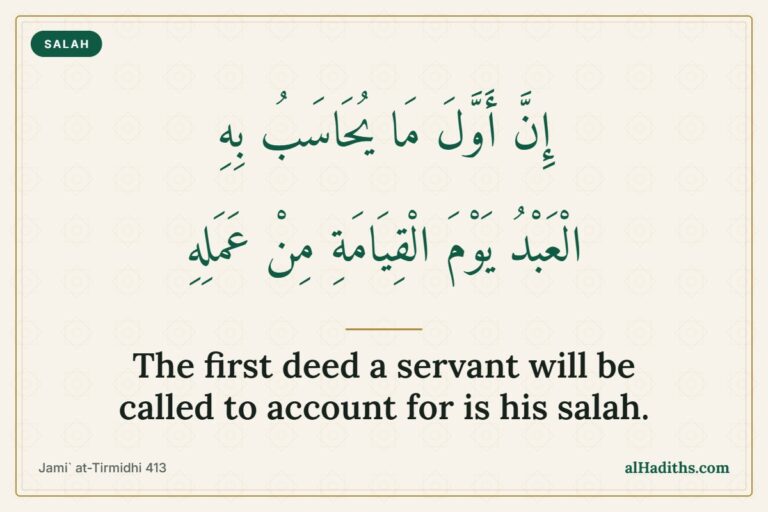
إِنَّ أَوَّلَ مَا يُحَاسَبُ النَّاسُ بِهِ يَوْمَ الْقِيَامَةِ مِنْ أَعْمَالِهِمُ الصَّلاَةُ قَالَ يَقُولُ رَبُّنَا جَلَّ وَعَزَّ لِمَلاَئِكَتِهِ وَهُوَ أَعْلَمُ انْظُرُوا فِي صَلاَةِ عَبْدِي أَتَمَّهَا أَمْ نَقَصَهَا فَإِنْ كَانَتْ تَامَّةً كُتِبَتْ لَهُ تَامَّةً وَإِنْ كَانَ انْتَقَصَ مِنْهَا شَيْئًا قَالَ انْظُرُوا هَلْ لِعَبْدِي مِنْ تَطَوُّعٍ فَإِنْ كَانَ لَهُ تَطَوُّعٌ قَالَ أَتِمُّوا لِعَبْدِي فَرِيضَتَهُ مِنْ تَطَوُّعِهِ ثُمَّ تُؤْخَذُ الأَعْمَالُ عَلَى ذَاكُمْ
“The first thing for which people will be called to account out of their deeds on the Day of Resurrection is the prayer. Our Lord, Glorified and Exalted, will say to His angels, though He knows best: Look into the prayer of My servant: did he complete it or fall short? If it is complete, it will be recorded as complete. If something is lacking, He will say: See whether My servant has any voluntary prayers. If he has voluntary prayers, He will say: Complete My servant’s obligatory prayer from his voluntary prayers. Then the rest of the deeds will be taken in the same way.”
Sunan Abi Dawud 864 · Sahih (al-Albani) · Narrated by Abu Hurairah · Translation adapted from Sunnah.com
A similar wording is in Jami` at-Tirmidhi 413, the second hadith in Importance of Salah: 7 Authentic Hadith. Even on that Day, Allah looks for something to make up what we lacked. The voluntary prayers we add now are part of that.
Try this: pair one obligatory prayer each day with its sunnah prayer, and build from there.
5. Missed a prayer? Pray it when you remember
Anas ibn Malik (may Allah be pleased with him) reported that the Prophet ﷺ said:
مَنْ نَسِيَ صَلاَةً فَلْيُصَلِّ إِذَا ذَكَرَهَا، لاَ كَفَّارَةَ لَهَا إِلاَّ ذَلِكَ
“If anyone forgets a prayer, he should pray it when he remembers it. There is no expiation for it except that.” Then he recited: “And establish prayer for My remembrance” (Taha 20:14).
Sahih al-Bukhari 597 · Narrated by Anas ibn Malik · Translation adapted from Sunnah.com
This hadith is about the prayer that was forgotten; for sleeping through a prayer, see Slept Through Fajr? What the Prophet ﷺ Did. How prayers that were missed on purpose, sometimes over years, should be made up is a question of fiqh with its own details, so ask a qualified local scholar about your situation. Either way, the first step is the same: start praying again, today.
Bringing it together
Allah describes a people who lost the prayer, and in the very next verse He opens the door:
۞ فَخَلَفَ مِنۢ بَعْدِهِمْ خَلْفٌ أَضَاعُوا۟ ٱلصَّلَوٰةَ وَٱتَّبَعُوا۟ ٱلشَّهَوَٰتِ ۖ فَسَوْفَ يَلْقَوْنَ غَيًّا إِلَّا مَن تَابَ وَءَامَنَ وَعَمِلَ صَـٰلِحًا فَأُو۟لَـٰٓئِكَ يَدْخُلُونَ ٱلْجَنَّةَ وَلَا يُظْلَمُونَ شَيْـًٔا
“But there came after them successors [i.e., later generations] who neglected prayer and pursued desires; so they are going to meet evil – Except those who repent, believe and do righteousness; for those will enter Paradise and will not be wronged at all.”
Surah Maryam 19:59–60 · Translation: Saheeh International, from Quran.com
“Except those who repent.” The warning in these hadith is real, and the scholars’ difference over it does not make it light. But no one reading this is beyond Allah’s forgiveness; see O Son of Adam, I Will Forgive You.
Reflection: The Companions saw leaving salah as the dividing line, yet the same Prophet ﷺ who warned so strongly also taught that a forgotten prayer is simply prayed when remembered, and that voluntary prayers can cover our shortfall. The message is not “you are lost”. It is “come back now, before the Day it is counted”.
Questions people ask
Is leaving salah kufr?
Sahih Muslim 82a and Jami` at-Tirmidhi 2621 describe abandoning salah as kufr. Scholars agree that denying it is obligatory is kufr; for one who leaves it out of laziness, some say it takes a person out of Islam, while the Hanafi, Maliki and Shafi’i schools hold it is a major sin. Ask a qualified scholar.
What does the hadith say about missing salah intentionally?
The Prophet ﷺ said that whoever leaves the ‘Asr prayer, his deeds are nullified (Sahih al-Bukhari 553), and that missing ‘Asr is like losing one’s family and wealth (Sahih al-Bukhari 552). Repentance remains open (Surah Maryam 19:60).
What should I do if I forgot a prayer?
Pray it as soon as you remember. The Prophet ﷺ said there is no expiation for it except that (Sahih al-Bukhari 597).
Key lessons
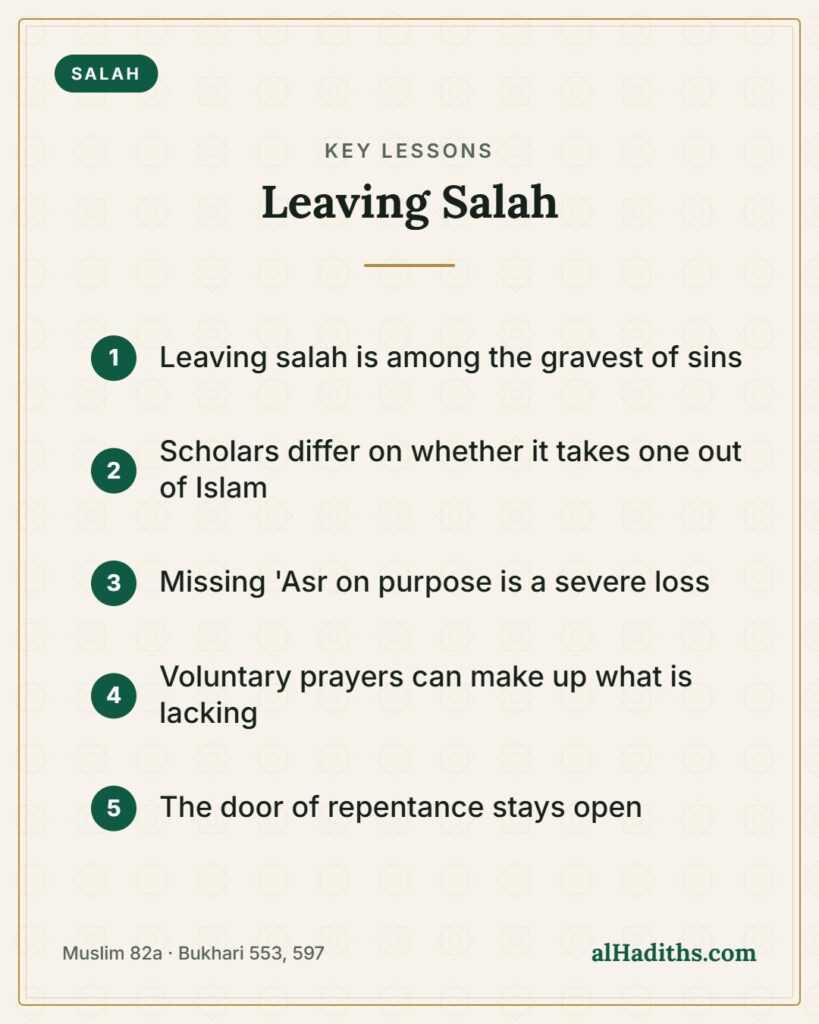
- The Prophet ﷺ made salah the line between a man and kufr.
- Scholars agree denying salah is kufr, and differ over leaving it out of laziness.
- Missing ‘Asr on purpose is a severe loss.
- Voluntary prayers can make up what was lacking in the obligatory ones.
- A forgotten prayer is prayed when remembered, and repentance stays open.
One thing for today: whatever has been missed, pray the next salah on time. That one prayer is the start of the way back.
Save this to Pinterest so you can remember how seriously the Prophet ﷺ took salah
Share the reward. Send this article to someone who needs it today — teaching a hadith or dua can become a lasting good deed for you, in shaa Allah.