Say I Believe in Allah, Then Be Steadfast: Hadith 21 of an-Nawawi
If you could ask the Prophet ﷺ for one piece of advice about Islam, so complete that you would never need to ask anyone else, what would you hope to hear? A companion named Sufyan ibn ‘Abdullah ath-Thaqafi asked exactly that. The answer is Hadith 21 of Imam an-Nawawi’s collection: say I believe in Allah, then be steadfast. It has only two parts, faith and istiqamah (staying upright on that faith), and together they hold the whole religion. Here is the hadith, what it means, and how to keep going.
At a glance
- Source: Sahih Muslim 38 (Hadith 21 of an-Nawawi’s 40)
- Narrated by: Sufyan ibn ‘Abdullah ath-Thaqafi (may Allah be pleased with him)
- Grade: Sahih (Sahih Muslim)
- Topic: Istiqamah: believing in Allah and staying steadfast on it
- Put it into practice: Choose one good deed you can keep doing every day, even if it is small.
The hadith
Sufyan ibn ‘Abdullah ath-Thaqafi (may Allah be pleased with him) said that he asked the Messenger of Allah ﷺ to tell him something about Islam, and the Prophet ﷺ answered:
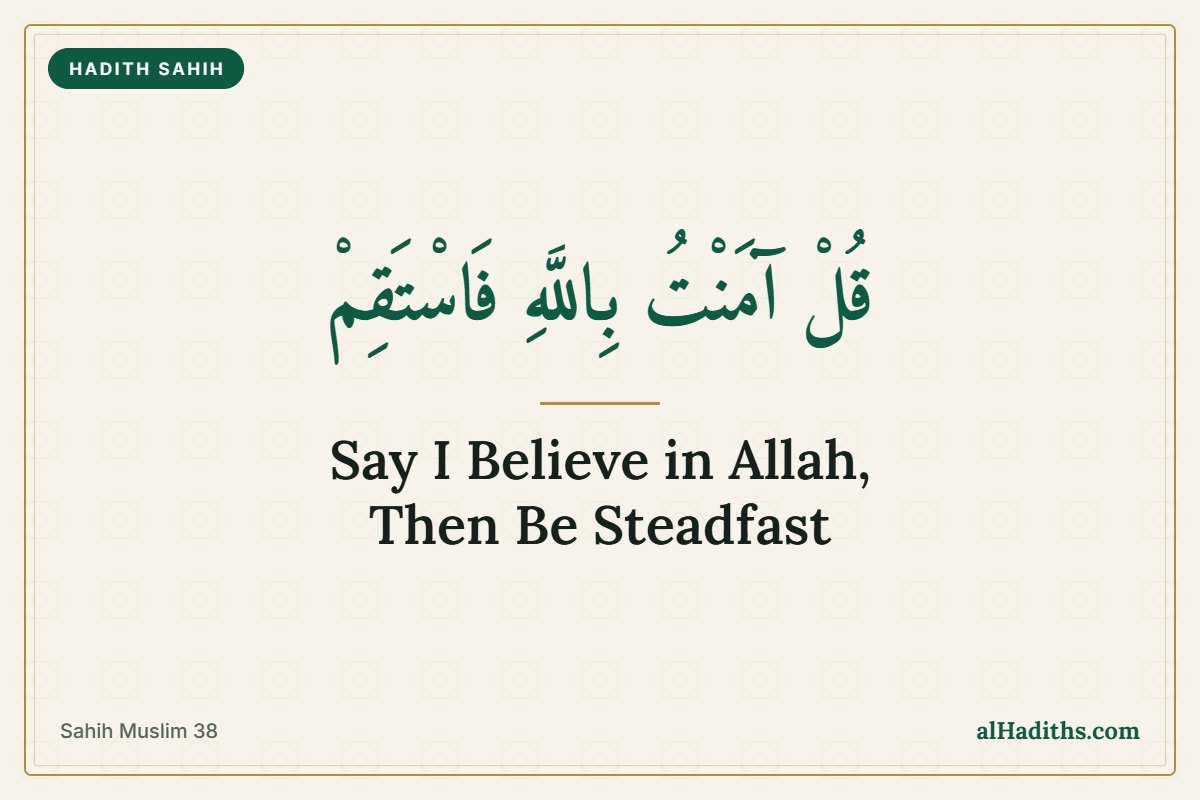
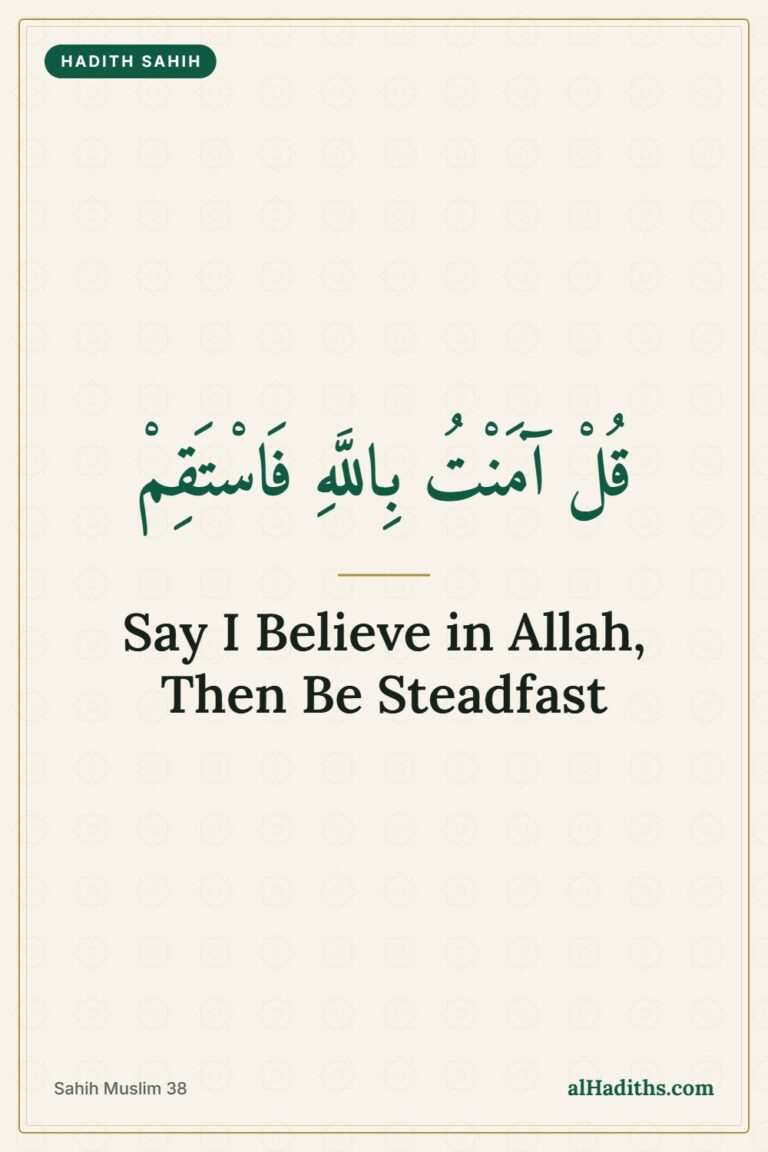
قُلْ لِي فِي الإِسْلاَمِ قَوْلاً لاَ أَسْأَلُ عَنْهُ أَحَدًا بَعْدَكَ … قُلْ آمَنْتُ بِاللَّهِ فَاسْتَقِمْ
“I asked the Messenger of Allah to tell me about Islam a thing which might dispense with the necessity of my asking anybody after you. … He (the Holy Prophet) remarked: Say I affirm my faith in Allah and then remain steadfast to it.”
Sahih Muslim 38 · Narrated by Sufyan ibn ‘Abdullah · Translation from Sunnah.com, shortened
Imam an-Nawawi gives it as Hadith 21 of his 40 Hadith, in the words: “Say I believe in Allah — and then be steadfast.” In Muslim’s own wording the reply is قُلْ آمَنْتُ بِاللَّهِ فَاسْتَقِمْ, joined with fa (“so be steadfast”), while an-Nawawi’s text has thumma (“then”). Muslim also notes that in one chain Sufyan said “anyone other than you” instead of “anyone after you”. The meaning is the same.
Another narration: and guard your tongue
At-Tirmidhi records the same companion asking for something he could hold fast to. The Prophet ﷺ said:
قُلْ رَبِّيَ اللَّهُ ثُمَّ اسْتَقِمْ
“Say: My Lord is Allah, then be steadfast.”
Jami` at-Tirmidhi 2410 · Sahih (Darussalam); at-Tirmidhi: hasan sahih · Translation from Sunnah.com
Sufyan then asked, “O Messenger of Allah! What do you fear most for me?” (مَا أَخْوَفُ مَا تَخَافُ عَلَىَّ). “So he took hold of his tongue and said: ‘This.'” Staying steadfast is not only about what we do. It includes what we say. See speak good or remain silent.
What “say I believe in Allah, then be steadfast” means
The Encyclopedia of Translated Prophetic Hadiths (HadeethEnc) explains that Sufyan wanted one comprehensive statement that holds all the meanings of Islam, so he could keep to it. The answer has two parts:
- Faith (iman): believe in Allah as the only deity: He is your Lord, your God and your Creator, the only One truly worthy of worship, with no partner.
- Steadfastness (istiqamah): then submit to Allah and obey Him: do what He has commanded, avoid what He has forbidden, and stay firm on that.
Among the benefits HadeethEnc lists: the essence of the religion is belief in Allah, His Lordship, His right to be worshipped, and His Names and Attributes; faith is a condition for deeds to be accepted; and being upright means keeping to the straight path by carrying out the duties and avoiding the prohibitions. So the hadith is not about one burst of effort. It is about faith that keeps showing up in daily life.
Istiqamah in the Quran
The same two parts, faith and then steadfastness, appear in the Quran, with a promise for those who live by them:
إِنَّ ٱلَّذِينَ قَالُوا۟ رَبُّنَا ٱللَّهُ ثُمَّ ٱسْتَقَـٰمُوا۟ تَتَنَزَّلُ عَلَيْهِمُ ٱلْمَلَـٰٓئِكَةُ أَلَّا تَخَافُوا۟ وَلَا تَحْزَنُوا۟ وَأَبْشِرُوا۟ بِٱلْجَنَّةِ ٱلَّتِى كُنتُمْ تُوعَدُونَ
“Indeed, those who have said, ‘Our Lord is Allāh’ and then remained on a right course – the angels will descend upon them, [saying], ‘Do not fear and do not grieve but receive good tidings of Paradise, which you were promised.”
Surah Fussilat 41:30 · Translation: Saheeh International, from Quran.com
And in Surah al-Ahqaf:
إِنَّ ٱلَّذِينَ قَالُوا۟ رَبُّنَا ٱللَّهُ ثُمَّ ٱسْتَقَـٰمُوا۟ فَلَا خَوْفٌ عَلَيْهِمْ وَلَا هُمْ يَحْزَنُونَ
“Indeed, those who have said, ‘Our Lord is Allāh,’ and then remained on a right course – there will be no fear concerning them, nor will they grieve.”
Surah Al-Ahqaf 46:13 · Translation: Saheeh International, from Quran.com
Reflection: Sufyan asked for something he would never need to ask anyone about again, and he was given two short phrases. It is a reminder that the hard part of faith is rarely knowing what to do. It is keeping at it after the first rush of motivation fades. The word then in the hadith points to that: belief comes first, and steadfastness is what we carry from that moment onward, day after day. It sits close to the advice in fear Allah wherever you are.
How to put it into practice
The hadith does not set a routine, so these are suggestions:
- Renew the first part. Say it and mean it: Allah is your Lord, and He alone is worshipped.
- Keep the obligations first. Istiqamah starts with the duties, such as the five pillars, and with leaving what is forbidden.
- Pick one small good deed and keep it. The Prophet ﷺ loved deeds done regularly, even if small; see the hadith about consistency and do as much as you can.
- Guard your tongue. The narration in at-Tirmidhi ends with it, so watch what you say as closely as what you do.
Steadfastness, for me right now, looks like one small daily habit: studying the hadith a little at a time. Many hadith are short and general, so I read them with explanations gathered from reliable sources, sometimes with the help of AI tools, and then check them against the original references. The context often changes how I understand a hadith, and taking it slowly helps me keep going.
Key lessons
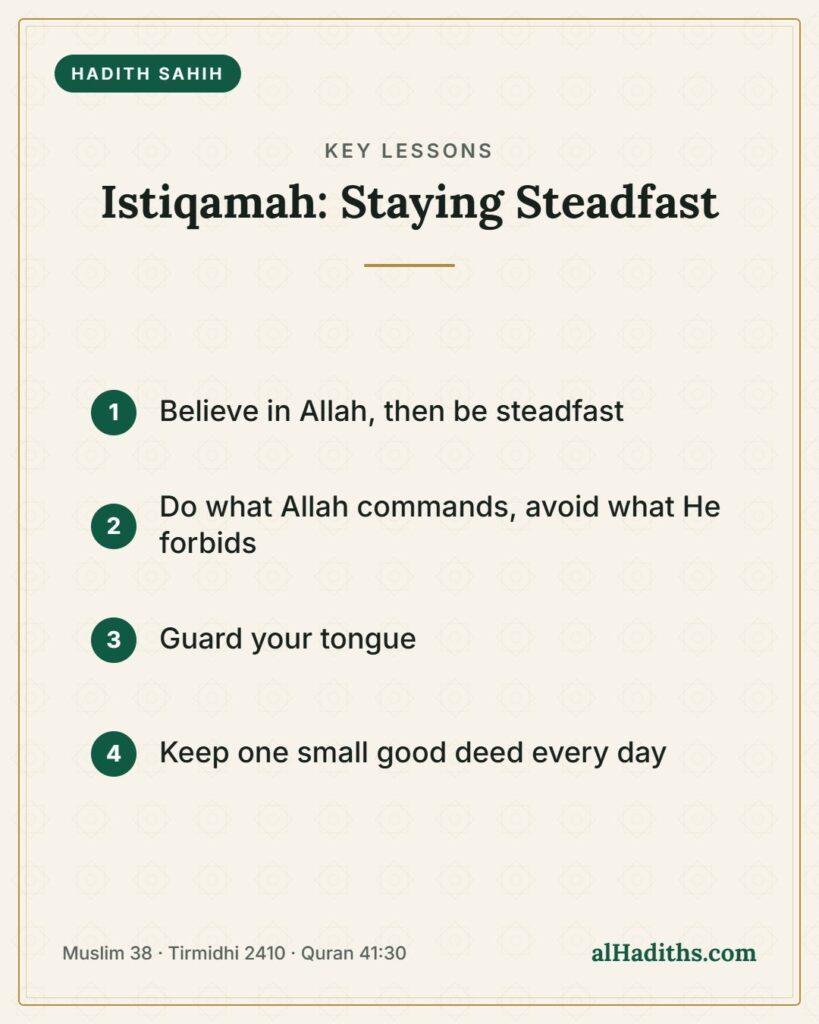
- Islam can be summed up in two parts: faith in Allah, then steadfastness.
- Steadfastness means doing what Allah commands and avoiding what He forbids, and staying on it.
- The tongue is one of the greatest tests of istiqamah.
- The Quran promises those who stay steadfast that they will have no fear and no grief.
Questions people ask
What does “say I believe in Allah, then be steadfast” mean?
It means to believe in Allah as your only Lord and the only One worthy of worship, and then to obey Him by doing what He commands and avoiding what He forbids, and to keep to that. This is how the Encyclopedia of Translated Prophetic Hadiths (HadeethEnc) explains it.
What is istiqamah in Islam?
Is this hadith authentic?
Yes. It is in Sahih Muslim 38, and a similar narration with the addition about the tongue is in Jami` at-Tirmidhi 2410, graded sahih. It is Hadith 21 of an-Nawawi’s 40.
A question to reflect on: which one small deed will you keep doing this week, not because it is big, but because you can keep it?
Save this to Pinterest so you can come back to it when you need a reminder to keep going.
Share the reward. Send this article to someone who needs it today — teaching a hadith or dua can become a lasting good deed for you, in shaa Allah.