Dua for Protection from Calamity, Bad Fate and Hardship
There is a short hadith that lists four things the Prophet ﷺ used to seek refuge from. They are things every one of us worries about: a heavy trial, misery, a bad outcome, and people rejoicing when we fall. It is a simple dua for protection from calamity that we can all add to our daily duas. Let’s take a look at the hadith together.
At a glance
- Source: Sunan an-Nasa’i 5492; also Sahih al-Bukhari 6347 and 6616
- Narrated by: Abu Hurairah (may Allah be pleased with him)
- Grade: Sahih (Darussalam); also in Sahih al-Bukhari
- Topic: Dua, seeking refuge in Allah
- Practise it: Seek refuge from these four things in your daily duas
The hadith
Abu Hurairah (may Allah be pleased with him) narrated:
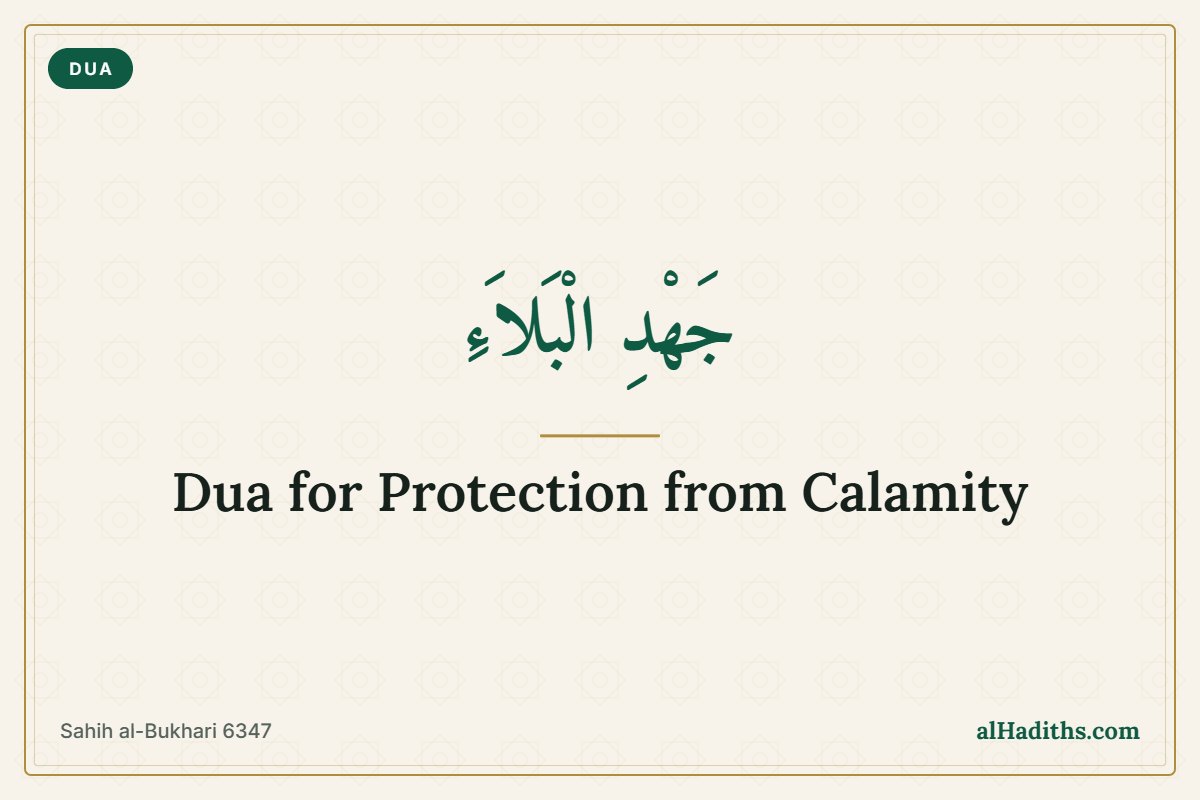
أَنَّ النَّبِيَّ صلى الله عليه وسلم كَانَ يَسْتَعِيذُ مِنْ سُوءِ الْقَضَاءِ وَشَمَاتَةِ الأَعْدَاءِ وَدَرَكِ الشَّقَاءِ وَجَهْدِ الْبَلاَءِ
“The Prophet ﷺ used to seek refuge from being destined to an evil end, from his enemies rejoicing in his misfortune, from being overtaken by destruction and from the difficult moment of a calamity.”
Sunan an-Nasa’i 5492 · Sahih (Darussalam) · Narrated by Abu Hurairah
The same hadith is also in Sahih al-Bukhari, which makes it even stronger. In one narration, Abu Hurairah describes the Prophet ﷺ doing it (Sahih al-Bukhari 6347). In another, the Prophet ﷺ tells us to do it too:
تَعَوَّذُوا بِاللَّهِ مِنْ جَهْدِ الْبَلاَءِ، وَدَرَكِ الشَّقَاءِ، وَسُوءِ الْقَضَاءِ، وَشَمَاتَةِ الأَعْدَاءِ
“Take refuge with Allah from the difficulties of severe calamities, from having an evil end and a bad fate and from the malicious joy of your enemies.”
Sahih al-Bukhari 6616 · Narrated by Abu Hurairah
The four things, explained simply
Here are the four phrases from the hadith, with their meaning in plain English. The meanings follow the Sunnah.com translations above.
- Jahd al-balā’ (جَهْدِ الْبَلاَءِ): the difficult moment of a calamity. A trial so heavy that it wears you out.
- Darak ash-shaqā’ (دَرَكِ الشَّقَاءِ): being overtaken by misery or destruction. Being caught by wretchedness, in this life or the next.
- Sū’ al-qaḍā’ (سُوءِ الْقَضَاءِ): an evil decree, or a bad end. Something decreed for us that turns out badly.
- Shamātat al-a’dā’ (شَمَاتَةِ الأَعْدَاءِ): the malicious joy of enemies. People rejoicing when we suffer.
Reflection: I find it comforting that even the Prophet ﷺ, the most beloved to Allah, sought refuge from these things. Seeking refuge does not mean trials will never come. It means that before anything else, we turn to Allah and ask Him to protect us, to make our trials light, and to give us a good ending.
You may wonder whether asking to be saved from a bad decree goes against believing in qaḍā’ and qadar. It does not. The Prophet ﷺ himself taught us to ask for this, and making dua is part of how a believer turns to Allah.
How to practice this dua for protection from calamity
- Say it in your own duas. The hadith does not give a fixed dua, so you can seek refuge from these four things in your own words, in any language.
- Or use the words of the hadith. Many people say the command in Sahih al-Bukhari 6616 in the first person: A’ūdhu billāhi min jahdil-balā’, wa darakish-shaqā’, wa sū’il-qaḍā’, wa shamātatil-a’dā’ (I seek refuge in Allah from the difficult moment of a calamity, from being overtaken by misery, from an evil decree, and from the malicious joy of enemies).
- Make it part of your routine. For example, add it to the duas you make after your prayers, or when you hear about someone going through a hard time.
- Be the opposite of shamātah. When someone you dislike is going through hardship, don’t rejoice. Make dua for them, and help if you can.
- Teach it to your children. The four phrases are short, and children pick them up quickly.
Key lessons
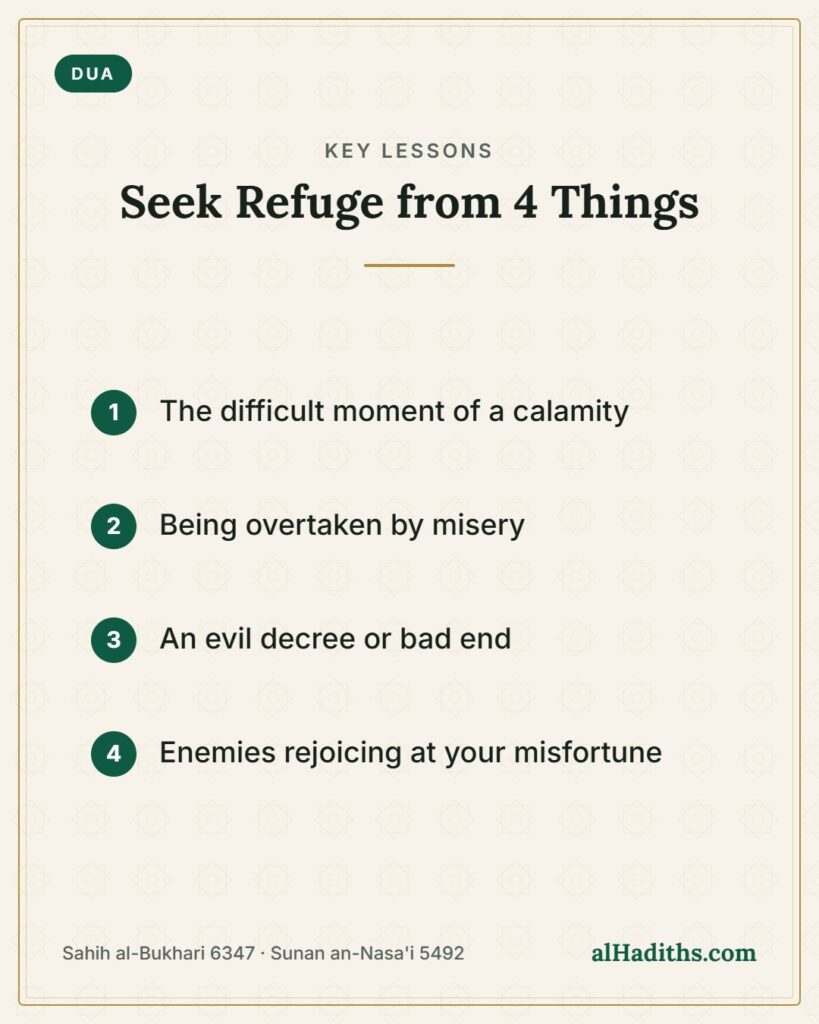
- The Prophet ﷺ used to seek refuge from four things, and told us to do the same (Sahih al-Bukhari 6347, 6616).
- The four are: a heavy trial, being overtaken by misery, an evil decree, and enemies rejoicing at our misfortune.
- There is no fixed wording, so we can ask in our own words or use the phrases of the hadith.
- Seeking refuge from a bad decree does not contradict belief in qadar; it is part of turning to Allah.
Questions people ask
Is there a fixed wording for this dua?
No. The hadith tells us what the Prophet ﷺ sought refuge from, and Sahih al-Bukhari 6616 commands us to take refuge with Allah from the same four things. You can say it in your own words, or use the four phrases from the hadith after “A’ūdhu billāh” (I seek refuge in Allah).
Does seeking refuge from a bad decree go against belief in qadar?
No. The Prophet ﷺ himself taught us to seek refuge from an evil decree, and dua is part of how a believer turns to Allah. For detailed questions about qadar, please ask a qualified local scholar.
What else did the Prophet ﷺ seek refuge from?
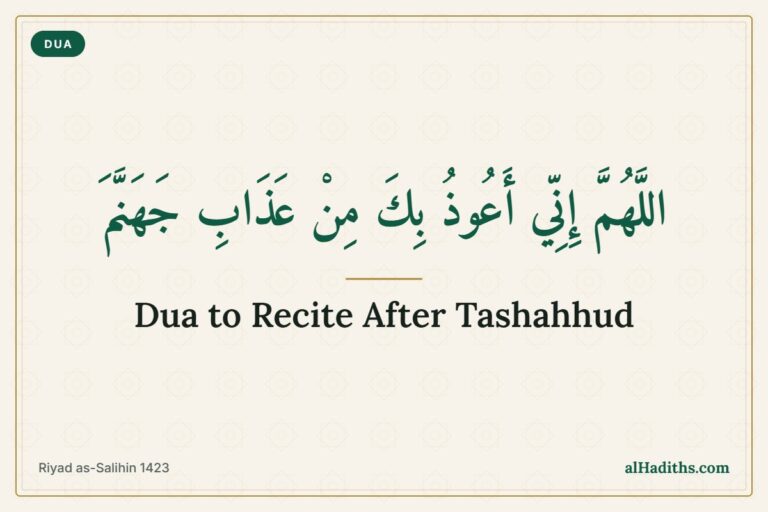
In every prayer, after the tashahhud, he taught us to seek refuge from the punishment of Hell, the punishment of the grave, the trials of life and death, and the trial of the Dajjal (Sahih Muslim 588). I’ve explained that dua in Dua to Recite After Tashahhud.
I hope this short dua becomes part of your daily routine. May Allah protect us all from heavy trials, misery, a bad end and the gloating of enemies. Ameen.
Found this helpful? Save the image below to Pinterest so you can come back to it later.
Share the reward. Send this article to someone who needs it today — teaching a hadith or dua can become a lasting good deed for you, in shaa Allah.