Dua for Healing: 5 Authentic Duas for the Sick and for Pain
Contents
When someone we love falls ill, or pain keeps us awake at night, the first thing many of us look for is a dua for healing. The Prophet ﷺ left us more than one, and each fits a different moment: sitting with a sick person, a pain in your own body, a short visit, a word of comfort. Here are five authentic duas, with the Arabic, the meaning and when to say them.
At a glance
- Duas: 5 authentic duas for the sick and for pain
- Collections: Sahih al-Bukhari, Sahih Muslim, Sunan Abi Dawud
- Grade: All Sahih
- Topic: Sickness, pain and visiting the sick
- Today: Put your hand where it hurts and say Bismillah three times
1. Dua for healing the sick
‘Aishah (may Allah be pleased with her) reported that whenever the Prophet ﷺ visited a sick person, or a sick person was brought to him, he would say:
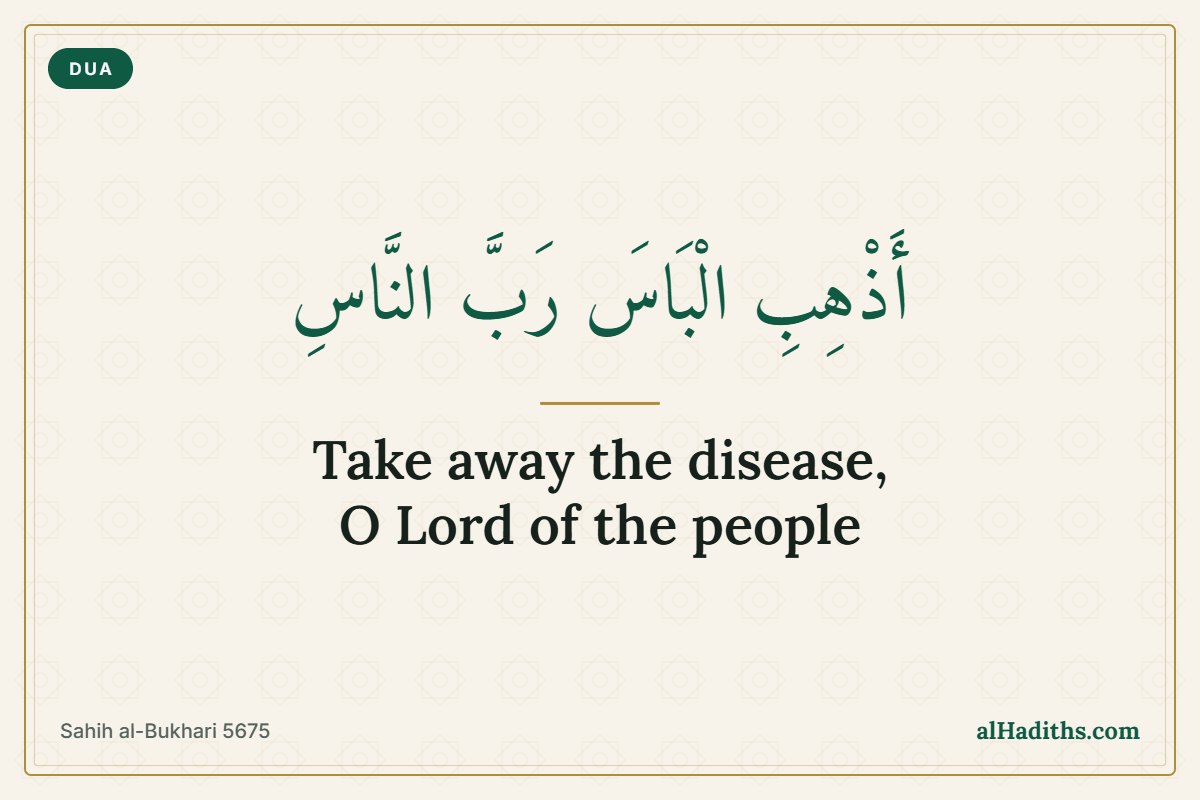
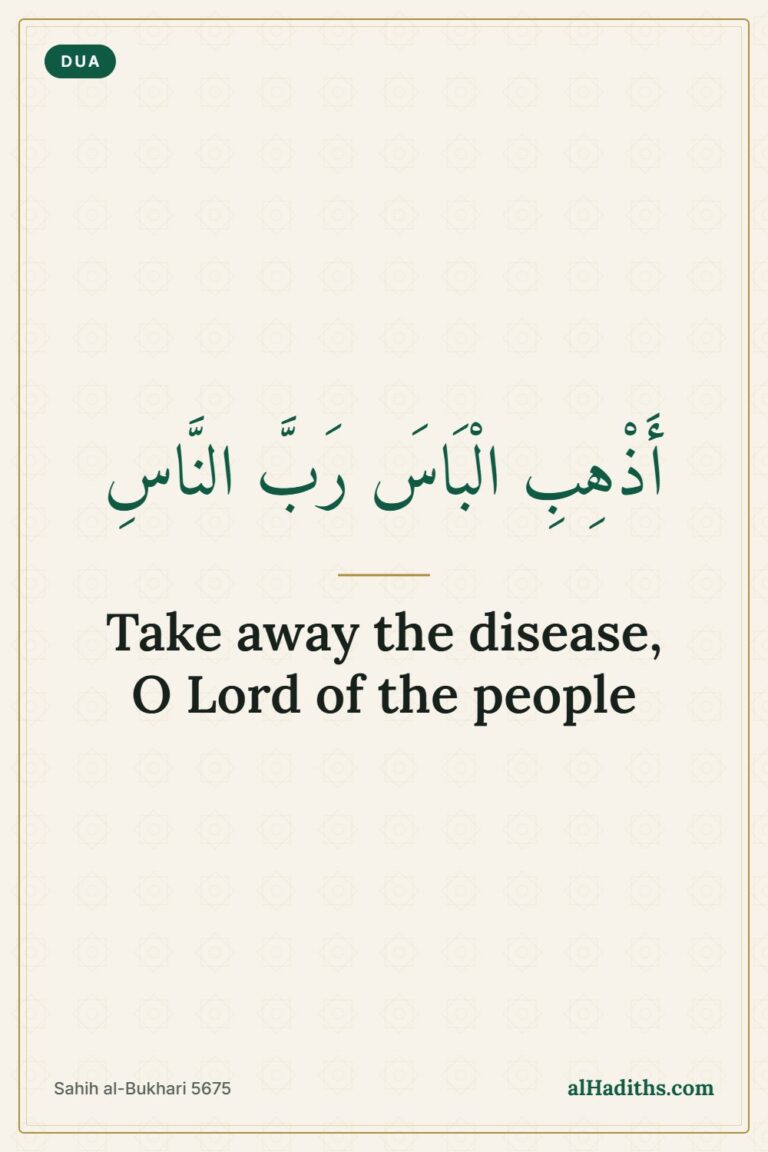
أَذْهِبِ الْبَاسَ رَبَّ النَّاسِ، اشْفِ وَأَنْتَ الشَّافِي لاَ شِفَاءَ إِلاَّ شِفَاؤُكَ، شِفَاءً لاَ يُغَادِرُ سَقَمًا
Adhhibil-ba’s, Rabban-nas, ishfi wa antash-Shafi, la shifa’a illa shifa’uk, shifa’an la yughadiru saqama.
“Take away the disease, O Lord of the people. Cure, for You are the One Who cures. There is no cure but Yours, a cure that leaves no disease behind.”
Sahih al-Bukhari 5675 · Narrated by ‘Aishah · Translation adapted from Sunnah.com
In another narration, ‘Aishah describes the Prophet ﷺ passing his right hand over the place of the illness while saying a very similar dua, beginning with “Allahumma”:
اللَّهُمَّ رَبَّ النَّاسِ أَذْهِبِ الْبَاسَ، اشْفِهِ وَأَنْتَ الشَّافِي، لاَ شِفَاءَ إِلاَّ شِفَاؤُكَ، شِفَاءً لاَ يُغَادِرُ سَقَمًا
Allahumma Rabban-nas, adhhibil-ba’s, ishfihi wa antash-Shafi, la shifa’a illa shifa’uk, shifa’an la yughadiru saqama.
“O Allah, Lord of the people, remove the trouble and heal him, for You are the Healer. There is no healing but Yours, a healing that leaves no illness behind.”
Sahih al-Bukhari 5743 · Narrated by ‘Aishah · Translation adapted from Sunnah.com
The dua puts healing where it belongs. As the HadeethEnc explanation notes, Allah alone is the true Healer; doctors and medicine are means that help only by His permission. Asking for a cure that “leaves no disease behind” asks for full recovery, not just a pause.
Try this: next time you sit with someone who is ill, say this dua for them, and if it is appropriate, rest your right hand on them as you say it.
2. Dua for pain in the body
‘Uthman ibn Abi al-‘As (may Allah be pleased with him) told the Prophet ﷺ about a pain he had felt in his body since he became Muslim. The Prophet ﷺ said:
ضَعْ يَدَكَ عَلَى الَّذِي تَأَلَّمَ مِنْ جَسَدِكَ وَقُلْ بِاسْمِ اللَّهِ. ثَلاَثًا. وَقُلْ سَبْعَ مَرَّاتٍ أَعُوذُ بِاللَّهِ وَقُدْرَتِهِ مِنْ شَرِّ مَا أَجِدُ وَأُحَاذِرُ
“Place your hand on the part of your body that hurts and say “Bismillah” (in the name of Allah) three times, and say seven times: “A’udhu billahi wa qudratihi min sharri ma ajidu wa uhadhir” (I seek refuge in Allah and His power from the evil of what I find and what I fear).”
Sahih Muslim 2202 · Narrated by ‘Uthman ibn Abi al-‘As · Translation adapted from Sunnah.com
This is the dua for pain that many people search for as the “7 times” dua. The HadeethEnc explanation points out that it covers both the pain you feel now and the fear that it will spread or return, and that telling someone about your pain is not a lack of patience. It also says to keep the exact wording and the numbers the Prophet ﷺ gave.
Try this: place your hand on the spot, say “Bismillah” three times, then “A’udhu billahi wa qudratihi min sharri ma ajidu wa uhadhir” seven times.
3. Seven times when you visit the sick
Ibn ‘Abbas (may Allah be pleased with him) reported that the Prophet ﷺ said:
مَنْ عَادَ مَرِيضًا لَمْ يَحْضُرْ أَجَلُهُ فَقَالَ عِنْدَهُ سَبْعَ مِرَارٍ أَسْأَلُ اللَّهَ الْعَظِيمَ رَبَّ الْعَرْشِ الْعَظِيمِ أَنْ يَشْفِيَكَ إِلاَّ عَافَاهُ اللَّهُ مِنْ ذَلِكَ الْمَرَضِ
“Whoever visits a sick person whose time (of death) has not come, and says seven times in his presence: ‘I ask Allah the Mighty, Lord of the Mighty Throne, to cure you,’ Allah will cure him of that illness.”
Sunan Abi Dawud 3106 · Sahih (al-Albani) · Narrated by Ibn ‘Abbas · Translation adapted from Sunnah.com
The words to say are: As’alullahal-‘Azim, Rabbal-‘Arshil-‘Azim, an yashfiyak. The same hadith is in Jami’ at-Tirmidhi 2083 (Sahih, Darussalam). The HadeethEnc entry grades it authentic. Note the condition in the hadith: “whose time has not come”. When Allah has written that an illness is the last one, no dua changes that, and the visit and the dua are still a reward for the one who made them.
Try this: learn this one by heart before your next hospital visit; it is short enough to say quietly seven times at the bedside.
4. What to say to a sick person
Ibn ‘Abbas (may Allah be pleased with him) reported that whenever the Prophet ﷺ visited a sick person, he would say:
لاَ بَأْسَ طَهُورٌ إِنْ شَاءَ اللَّهُ
La ba’s, tahurun in sha’ Allah.
“No harm. It is a purification, if Allah wills.”
Sahih al-Bukhari 3616 · Narrated by Ibn ‘Abbas · Translation adapted from Sunnah.com
In the same report, the Prophet ﷺ said this to a sick bedouin, who answered that it was rather a fever boiling in an old man that would take him to the grave. The Prophet ﷺ replied, “Then let it be so.” The HadeethEnc explanation says the words reassure the patient that the illness can wipe away sins and raise their rank, if Allah wills. The bedouin’s answer is a reminder to receive comfort with hope, not despair.
Try this: open your next visit or message to a sick friend with “La ba’s, tahurun in sha’ Allah” before anything else.
5. The ruqyah Jibril made for the Prophet ﷺ
Abu Sa’id al-Khudri (may Allah be pleased with him) reported that Jibril came to the Prophet ﷺ and asked, “O Muhammad, are you ill?” He said, “Yes.” Jibril said:
بِاسْمِ اللَّهِ أَرْقِيكَ مِنْ كُلِّ شَىْءٍ يُؤْذِيكَ مِنْ شَرِّ كُلِّ نَفْسٍ أَوْ عَيْنِ حَاسِدٍ اللَّهُ يَشْفِيكَ بِاسْمِ اللَّهِ أَرْقِيكَ
Bismillahi arqik, min kulli shay’in yu’dhik, min sharri kulli nafsin aw ‘ayni hasid, Allahu yashfik, bismillahi arqik.
“In the name of Allah I recite over you, from everything that harms you, from the evil of every soul or envious eye. May Allah cure you. In the name of Allah I recite over you.”
Sahih Muslim 2186 · Narrated by Abu Sa’id al-Khudri · Translation adapted from Sunnah.com
The HadeethEnc explanation draws two lessons: it is fine to mention that you are ill without complaining, and ruqyah is valid when its words are permissible and understood, with the cure coming from Allah alone.
Try this: say this over a sick family member, changing nothing in the words.
Bringing it together
Every one of these duas begins and ends with Allah. Prophet Ibrahim said it in the Quran:
وَإِذَا مَرِضْتُ فَهُوَ يَشْفِينِ
“And when I am ill, it is He who cures me.”
Surah Ash-Shu’ara 26:80 · Translation: Saheeh International, from Quran.com
And for the days when healing is slow, the Prophet ﷺ gave this hope, narrated by Abu Sa’id al-Khudri and Abu Hurairah (may Allah be pleased with them):
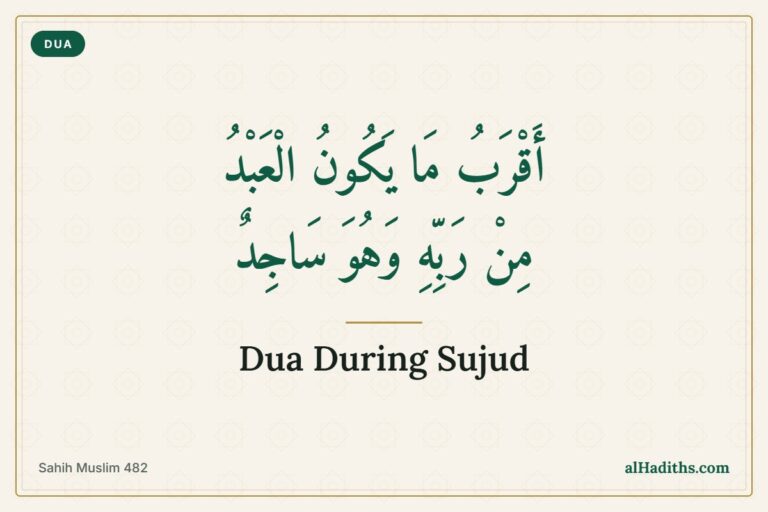
مَا يُصِيبُ الْمُسْلِمَ مِنْ نَصَبٍ وَلاَ وَصَبٍ وَلاَ هَمٍّ وَلاَ حُزْنٍ وَلاَ أَذًى وَلاَ غَمٍّ حَتَّى الشَّوْكَةِ يُشَاكُهَا، إِلاَّ كَفَّرَ اللَّهُ بِهَا مِنْ خَطَايَاهُ
“No fatigue, illness, worry, sadness, hurt or distress befalls a Muslim, even the prick of a thorn, except that Allah expiates some of his sins for it.”
Sahih al-Bukhari 5641 · Narrated by Abu Sa’id al-Khudri and Abu Hurairah · Translation adapted from Sunnah.com
Reflection: these duas do not replace the doctor, and they were never meant to. They change how we carry an illness: we take the medicine, we ask the One who makes it work, and we know that even the pain itself is not wasted.
Questions people ask
Is there a dua for pain to say 7 times?
Yes. In Sahih Muslim 2202, the Prophet ﷺ taught placing your hand on the pain, saying “Bismillah” three times, then “A’udhu billahi wa qudratihi min sharri ma ajidu wa uhadhir” seven times. The well-known wording with “bi ‘izzatillahi” (by the might of Allah) is in Sunan Abi Dawud 3891, graded Sahih (al-Albani), where he was told to wipe the place with his right hand seven times.
Can I make a dua for healing for someone who is not with me?
These hadith describe visiting and touching the sick, but asking Allah to heal anyone, near or far, is a general dua. Changing a pronoun (for example “ishfiha” for a woman) is an adaptation, not wording stated in the hadith. For specific questions, ask a qualified local scholar.
Is the dua of a sick person like the dua of the angels?
A narration says to ask a sick person to pray for you because their dua is like that of the angels. It is in Sunan Ibn Majah 1441, graded Da’if (Darussalam), so it is not used here.
Does making dua mean I should not see a doctor?
No. The HadeethEnc explanation of the healing dua notes that medicine and doctors are means, and Allah is the One who heals through them. Make dua and follow your doctor’s advice.
Key lessons
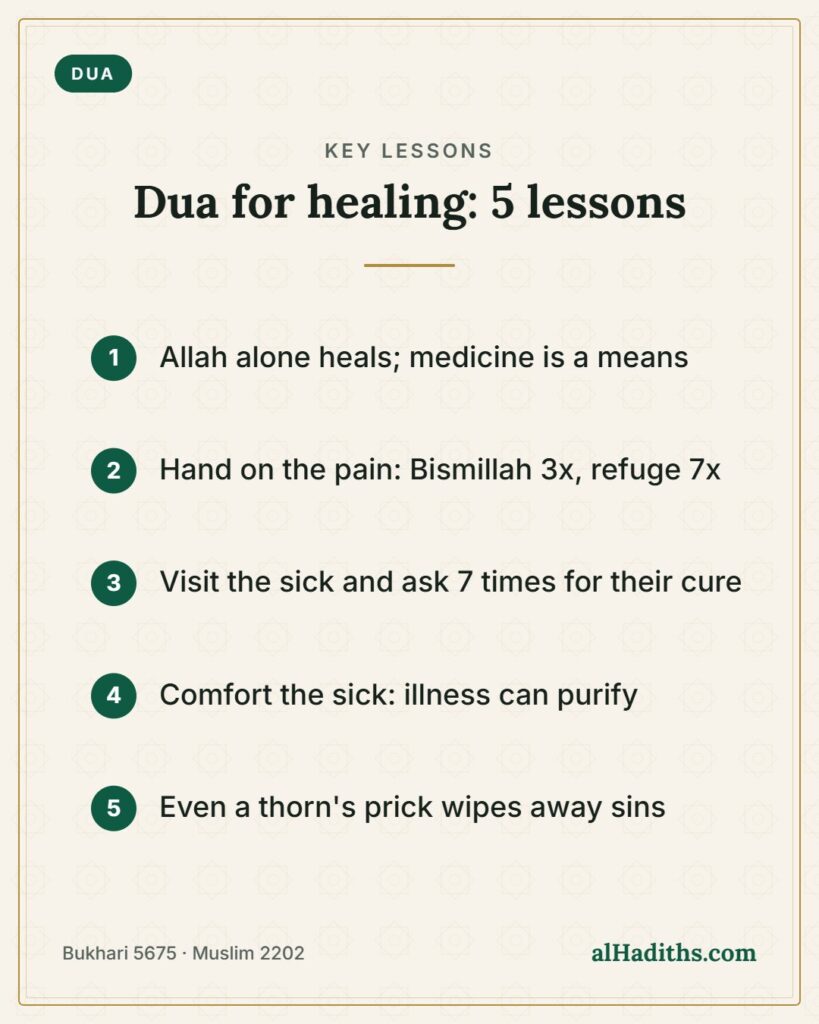
- Allah alone is the Healer; doctors and medicine are means.
- For pain, put your hand on it: Bismillah three times, then the refuge words seven times.
- When you visit the sick, ask Allah the Mighty seven times to cure them.
- Comfort the sick with “La ba’s, tahurun in sha’ Allah”.
- Illness, even a thorn’s prick, wipes away sins for the patient believer.
Part of our Dua series: see all our dua articles in one place.
May Allah grant complete healing to everyone reading this who is unwell, and to those they are caring for.
Save this to Pinterest so you can say it for someone who is unwell
Share the reward. Send this article to someone who needs it today — teaching a hadith or dua can become a lasting good deed for you, in shaa Allah.