Dua for Parents: 3 Duas From the Quran and What the Hadith Add
Contents
Parents spend years asking Allah for their children. A dua for parents is one of the ways we can return that, whether they are with us or have passed away. Allah Himself taught us the words in the Quran. This guide gives three Quran duas for parents in Arabic with their meaning, and the authentic hadith that show what our duas can still do for them.
At a glance
- Count: 3 Quran duas and 2 hadith
- Sources: The Quran (17:24, 14:41, 71:28), Sunan Ibn Majah
- Grade: Quran; Hasan (Darussalam) for Ibn Majah 3660 and 3664
- Topic: Making dua for living and deceased parents
- One thing today: Say “Rabbir-hamhuma kama rabbayani saghira” after your next salah
The Prophet ﷺ warned that a person whose parents reach old age, one or both, and who still does not enter Jannah through serving them, has truly lost (Muslim 2551). HadeethEnc explains that dutifulness to parents, especially in their old age and weakness, is one of the means of entering Paradise. Praying for them is part of that duty.
1. The best-known dua for parents: Rabbir-hamhuma
In Surah Al-Isra, Allah tells us how to treat parents in old age, and ends with the words to say for them:
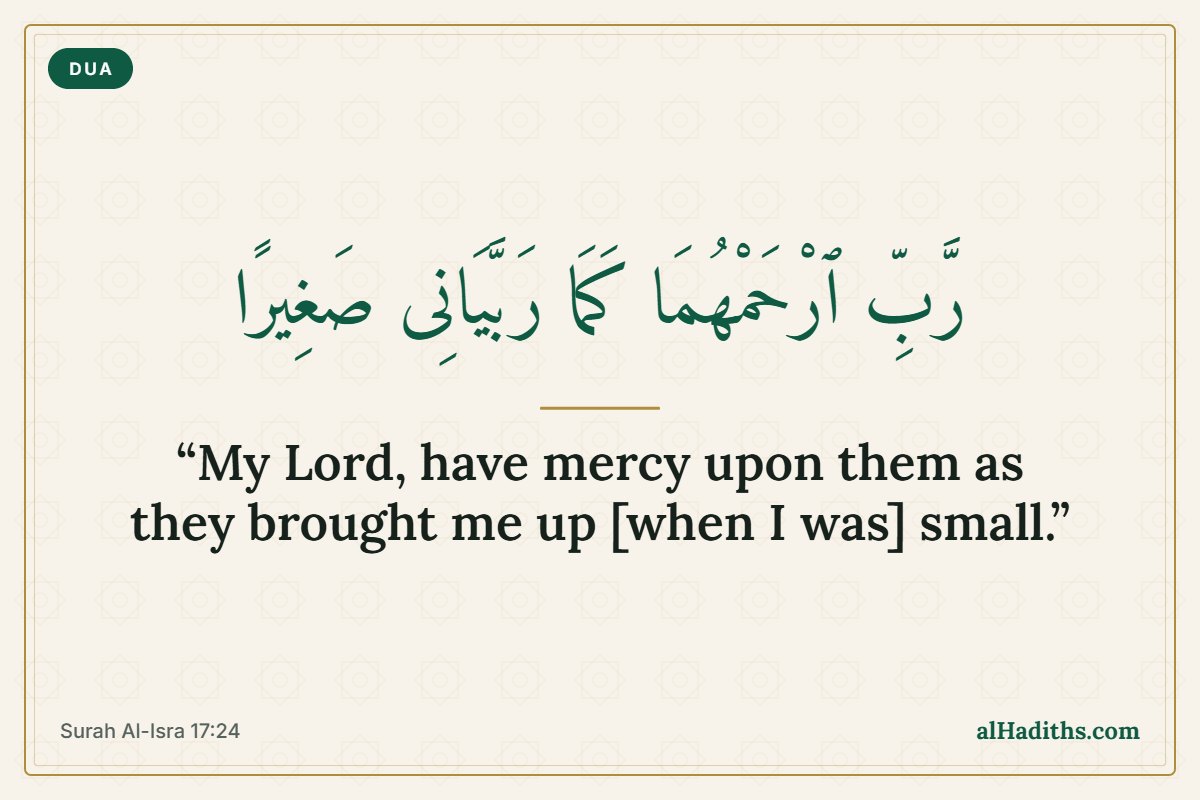
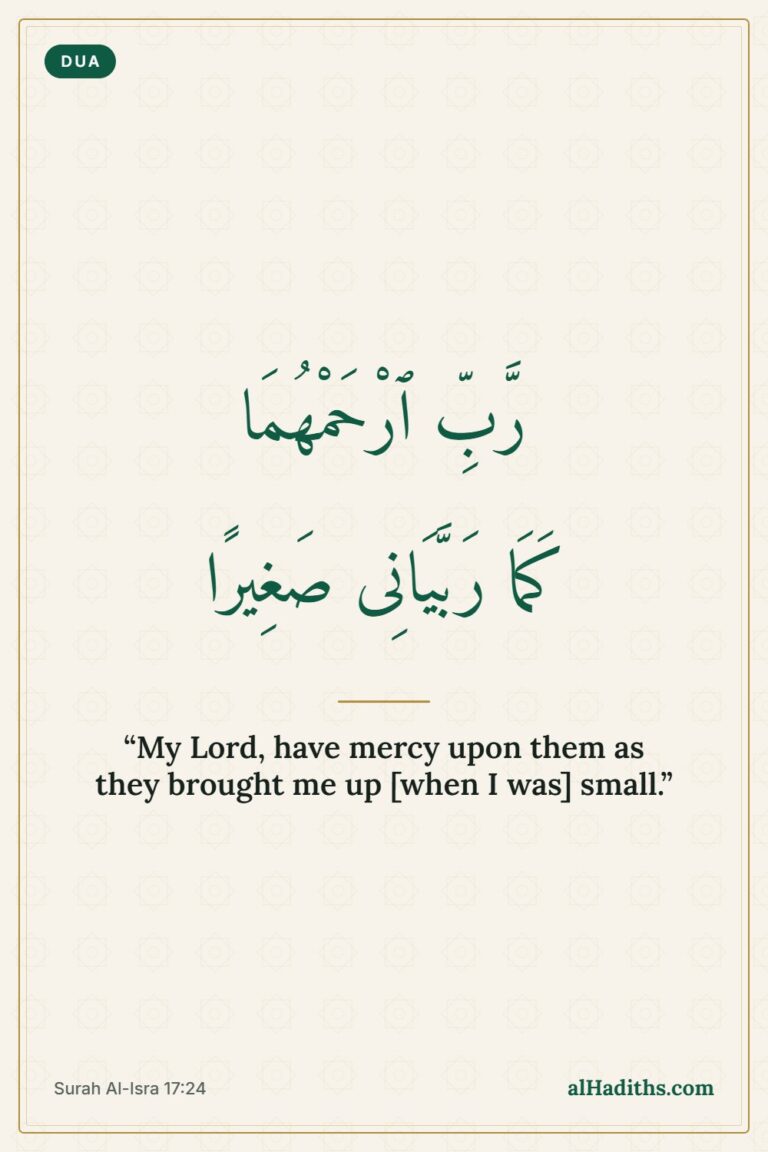
وَٱخْفِضْ لَهُمَا جَنَاحَ ٱلذُّلِّ مِنَ ٱلرَّحْمَةِ وَقُل رَّبِّ ٱرْحَمْهُمَا كَمَا رَبَّيَانِى صَغِيرًا
“And lower to them the wing of humility out of mercy and say, ‘My Lord, have mercy upon them as they brought me up [when I was] small.’”
Surah Al-Isra 17:24 · Translation: Saheeh International, from Quran.com
The dua itself is the end of the verse: Rabbir-hamhuma kama rabbayani saghira, “My Lord, have mercy upon them as they brought me up when I was small.” It asks for mercy in proportion to their care, and it comes straight after the command to lower ourselves to them in humility.
Try this: make it a habit to say it once after each obligatory salah, so it is said five times a day without extra effort.
2. Ibrahim’s dua: forgive me and my parents
Prophet Ibrahim (peace be upon him) asked Allah for forgiveness for himself, his parents and all believers:
رَبَّنَا ٱغْفِرْ لِى وَلِوَٰلِدَىَّ وَلِلْمُؤْمِنِينَ يَوْمَ يَقُومُ ٱلْحِسَابُ
“Our Lord, forgive me and my parents and the believers the Day the account is established.”
Surah Ibrahim 14:41 · Translation: Saheeh International, from Quran.com
Transliteration: Rabbanagh-fir li wa li-walidayya wa lil-mu’minina yawma yaqumul-hisab. It looks ahead to the Day of Judgement, the day when forgiveness matters most for us and for them.
Try this: say it in your sujud, the position in which the Prophet ﷺ said a servant is closest to his Lord, so make dua in it (Muslim 482).
3. Nuh’s dua for his parents and every believer
Prophet Nuh (peace be upon him) made a dua that begins with himself and his parents, then widens to his household and all believing men and women:
رَّبِّ ٱغْفِرْ لِى وَلِوَٰلِدَىَّ وَلِمَن دَخَلَ بَيْتِىَ مُؤْمِنًا وَلِلْمُؤْمِنِينَ وَٱلْمُؤْمِنَـٰتِ وَلَا تَزِدِ ٱلظَّـٰلِمِينَ إِلَّا تَبَارًۢا
“My Lord, forgive me and my parents and whoever enters my house a believer and the believing men and believing women. And do not increase the wrongdoers except in destruction.”
Surah Nuh 71:28 · Translation: Saheeh International, from Quran.com
Transliteration of the dua part: Rabbigh-fir li wa li-walidayya wa li-man dakhala baytiya mu’minan wa lil-mu’minina wal-mu’minat. It is a good model: start with your parents, then include your home and the whole ummah.
Try this: when you pray for your parents, add one more person: a grandparent, a friend’s parent who has died, or someone who taught you.
4. Your istighfar can raise their rank in Jannah
Abu Hurayrah (may Allah be pleased with him) narrated that the Messenger of Allah ﷺ said:
إِنَّ الرَّجُلَ لَتُرْفَعُ دَرَجَتُهُ فِي الْجَنَّةِ فَيَقُولُ أَنَّى هَذَا فَيُقَالُ بِاسْتِغْفَارِ وَلَدِكَ لَكَ
“A man will be raised in rank in Paradise and will say: ‘Where did this come from?’ And it will be said: ‘From your child’s seeking forgiveness for you.’”
Ibn Majah 3660 · Hasan (Darussalam) · Narrated by Abu Hurayrah · Translation adapted from Sunnah.com
The Arabic word walad covers a son or a daughter. Together with the well-known hadith that a righteous child who prays for a parent is one of three deeds that continue after death (Muslim 1631), it shows that our duas keep reaching them.
Try this: add “Allahummagh-fir li-walidayya” (O Allah, forgive my parents) to the istighfar you already say each day.
5. Honouring your parents after they die
Abu Usayd Malik ibn Rabi‘ah (may Allah be pleased with him) said that a man asked the Prophet ﷺ whether there was any way left to honour his parents after their death. He replied:
نَعَمْ الصَّلاَةُ عَلَيْهِمَا وَالاِسْتِغْفَارُ لَهُمَا وَإِيفَاءٌ بِعُهُودِهِمَا مِنْ بَعْدِ مَوْتِهِمَا وَإِكْرَامُ صَدِيقِهِمَا وَصِلَةُ الرَّحِمِ الَّتِي لاَ تُوصَلُ إِلاَّ بِهِمَا
“Yes: offering the funeral prayer for them, praying for forgiveness for them, fulfilling their promises after their death, honouring their friends, and upholding the ties of kinship which you would not have were it not for them.”
Ibn Majah 3664 · Hasan (Darussalam) · Narrated by Abu Usayd Malik ibn Rabi‘ah · Translation adapted from Sunnah.com
Note on its grading: Sunnah.com lists Ibn Majah 3664 as Hasan (Darussalam), while the same hadith in Abu Dawud 5142 is listed as Da‘if (al-Albani). We use the Hasan grade here; the duas in the verses above stand on their own whatever the grade of this hadith.
Try this: visit or call one of your late parent’s old friends or relatives this month, and pray for your parent the same day.
Bringing it together
The Quran gives the words, and the hadith show the reach: mercy asked for them while they are alive, forgiveness asked for them after they die, and good deeds done in their name through their friends and family.
Reflection: “As they brought me up when I was small” is a humbling line to say. It reminds us that we are asking Allah to repay a debt we cannot repay ourselves: the nights they stayed awake, the duas they made that we never heard. A parent who is gone cannot add a single good deed to their record, but a child can still send them dua every day.
Questions people ask
Is there a dua for parents’ health?
We have not found an authentic dua in the hadith made only for a parent’s health. You can ask Allah for their health in your own words, and when a parent is ill, the dua the Prophet ﷺ said for the sick can be said for them; see our dua for healing.
What is the dua for parents who passed away?
The Quran duas above can be said for parents who have died, especially “Rabbanagh-fir li wa li-walidayya…” (14:41) and Nuh’s dua (71:28). A child’s istighfar can raise a parent’s rank in Jannah (Ibn Majah 3660), and a righteous child’s dua is one of the deeds that continue after death (Muslim 1631). For the janazah, see the dua for the deceased.
Can I make dua for my parents in my own language?
Dua is speaking to Allah, and outside the prayer you can ask in any language. Inside the prayer, scholars differ on duas in a language other than Arabic, so ask a qualified local scholar. Learning the Quran duas above in Arabic lets you say them anywhere.
Key lessons
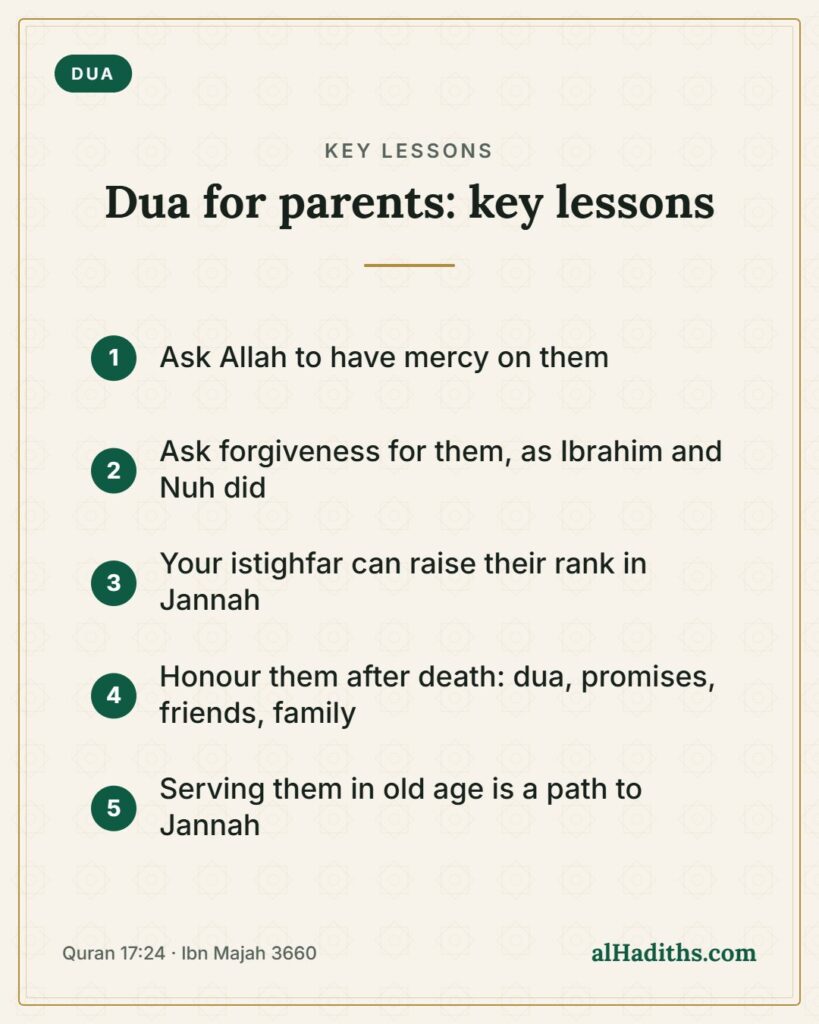
- Allah taught us to ask mercy for our parents: “Rabbir-hamhuma kama rabbayani saghira” (17:24).
- Ibrahim and Nuh, peace be upon them, asked forgiveness for their parents (14:41, 71:28).
- A child’s istighfar can raise a parent’s rank in Jannah (Ibn Majah 3660).
- We can still honour parents after death: dua, keeping their promises, honouring their friends and relatives.
Part of our Dua series: see all our dua articles in one place.
Rabbir-hamhuma kama rabbayani saghira: may Allah have mercy on your parents and mine, the living and the departed.
Save this to Pinterest so you can keep these duas for your parents close.
Share the reward. Send this article to someone who needs it today — teaching a hadith or dua can become a lasting good deed for you, in shaa Allah.