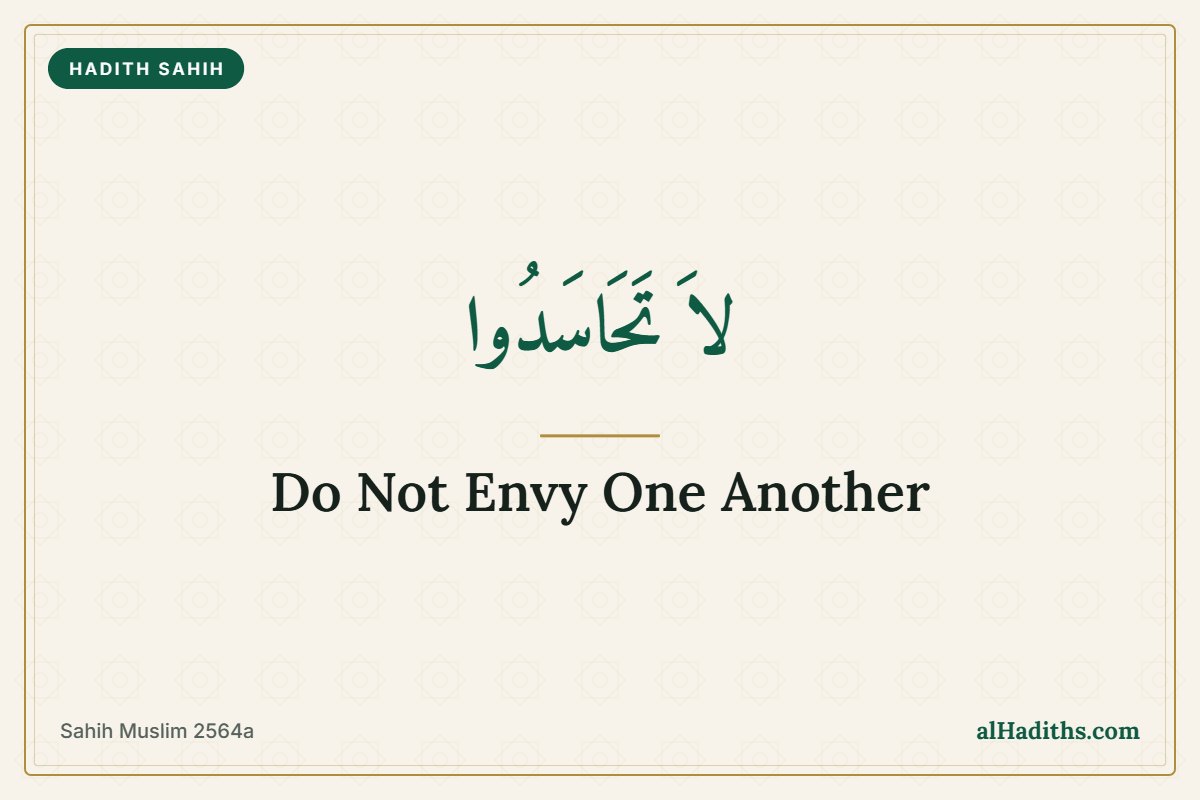
Do Not Envy One Another: Hadith 35 of an-Nawawi
“Piety is here,” said the Prophet ﷺ, and he pointed to his chest three times. He said it in the middle of a hadith about how Muslims should treat one another, which begins with the words do not envy one another. This is Hadith 35 of Imam an-Nawawi’s collection, and almost every line of it is about the heart.
At a glance
- Source: Sahih Muslim 2564a; also Hadith 35 of an-Nawawi’s 40
- Narrated by: Abu Hurairah (may Allah be pleased with him)
- Grade: Sahih (Muslim)
- Topic: Envy, contempt and the rights of Muslim brotherhood
- Put it into practice: Today, when you feel envy, make a sincere dua for that person instead
The hadith
Abu Hurairah (may Allah be pleased with him) reported that the Messenger of Allah ﷺ said:
لاَ تَحَاسَدُوا وَلاَ تَنَاجَشُوا وَلاَ تَبَاغَضُوا وَلاَ تَدَابَرُوا وَلاَ يَبِعْ بَعْضُكُمْ عَلَى بَيْعِ بَعْضٍ وَكُونُوا عِبَادَ اللَّهِ إِخْوَانًا . الْمُسْلِمُ أَخُو الْمُسْلِمِ لاَ يَظْلِمُهُ وَلاَ يَخْذُلُهُ وَلاَ يَحْقِرُهُ . التَّقْوَى هَا هُنَا . وَيُشِيرُ إِلَى صَدْرِهِ ثَلاَثَ مَرَّاتٍ
“Don’t nurse grudge and don’t bid him out for raising the price and don’t nurse aversion or enmity and don’t enter into a transaction when the others have entered into that transaction and be as fellow-brothers and servants of Allah. A Muslim is the brother of a Muslim. He neither oppresses him nor humiliates him nor looks down upon him. The piety is here, (and while saying so) he pointed towards his chest thrice.”
Sahih Muslim 2564a · Narrated by Abu Hurairah · Translation from Sunnah.com
Then he said:
بِحَسْبِ امْرِئٍ مِنَ الشَّرِّ أَنْ يَحْقِرَ أَخَاهُ الْمُسْلِمَ كُلُّ الْمُسْلِمِ عَلَى الْمُسْلِمِ حَرَامٌ دَمُهُ وَمَالُهُ وَعِرْضُهُ
“It is a serious evil for a Muslim that he should look down upon his brother Muslim. All things of a Muslim are inviolable for his brother in faith: his blood, his wealth and his honour.”
Sahih Muslim 2564a · Narrated by Abu Hurairah · Translation from Sunnah.com
The text in an-Nawawi’s 40 on Sunnah.com also has “nor does he lie to him”. The wording above is Sahih Muslim’s, which does not have that phrase. Sunnah.com’s translation of Muslim renders the first prohibition as “don’t nurse grudge”; HadeethEnc translates the same Arabic word as “do not envy one another”.
What “do not envy one another” means
Based on the explanation in HadeethEnc, the hadith begins with five things to avoid:
- Envy: wishing that someone else loses a blessing they have.
- Raising prices by false bidding: bidding on something you do not want to buy, only to help the seller or harm the buyer.
- Hating one another: HadeethEnc notes this does not include hatred for the sake of Allah, which it describes as a duty of faith.
- Turning your backs: abandoning and cutting off one another.
- Undercutting in trade: telling someone who has just bought an item that you have the same thing cheaper, or better for the same price.
Then comes the positive command: be brothers, servants of Allah. HadeethEnc explains that this brotherhood means not wronging a fellow Muslim, not leaving him alone when he is wronged and you could help, and not looking down on him, which comes from arrogance in the heart. All of a Muslim is sacred to another: his blood, his property and his honor, as in Hadith 14.
“Piety is here”
HadeethEnc explains that taqwa lives in the heart: knowing Allah and being mindful of Him. A person with taqwa in his heart will not belittle another Muslim, and wrong outward behavior points to weakness of taqwa inside.
Is it envy to want what someone else has?
Not always. HadeethEnc distinguishes envy from ghibtah: wishing to have something like another person’s blessing without wanting them to lose it. Ghibtah is allowed, and it can push us to compete in good things. The blameworthy envy is wishing the blessing were taken away from them.
Allah reminds the believers of the same brotherhood:
إِنَّمَا ٱلْمُؤْمِنُونَ إِخْوَةٌ فَأَصْلِحُوا۟ بَيْنَ أَخَوَيْكُمْ ۚ وَٱتَّقُوا۟ ٱللَّهَ لَعَلَّكُمْ تُرْحَمُونَ
“The believers are but brothers, so make settlement between your brothers. And fear Allāh that you may receive mercy.”
Surah Al-Hujurat 49:10 · Translation: Saheeh International, from Quran.com
Reflection: notice how this hadith begins with envy and ends with contempt, and how the Prophet ﷺ pointed to his chest in between. Both start quietly, as a feeling no one else can see. Long before they become a harsh word or an unfair deal, they are a small thing in the heart, and that is the best place to deal with them.
How to put it into practice
The hadith does not give a routine, so these are suggestions:
- Turn envy into dua. When someone’s blessing stings, ask Allah to bless them more, and to give you good as well.
- Practice contentment with what Allah has given you; see qana’ah, the cure for envy.
- Be honest in buying and selling. No fake bids, and no stealing another seller’s customer after a deal is made.
- Reach out to someone you have drifted from, instead of turning your back.
- Check your words about others. Mockery and looking down on people are signs of a heart that needs work; love for your brother what you love for yourself.
For rulings on specific trade practices, please ask a qualified local scholar.
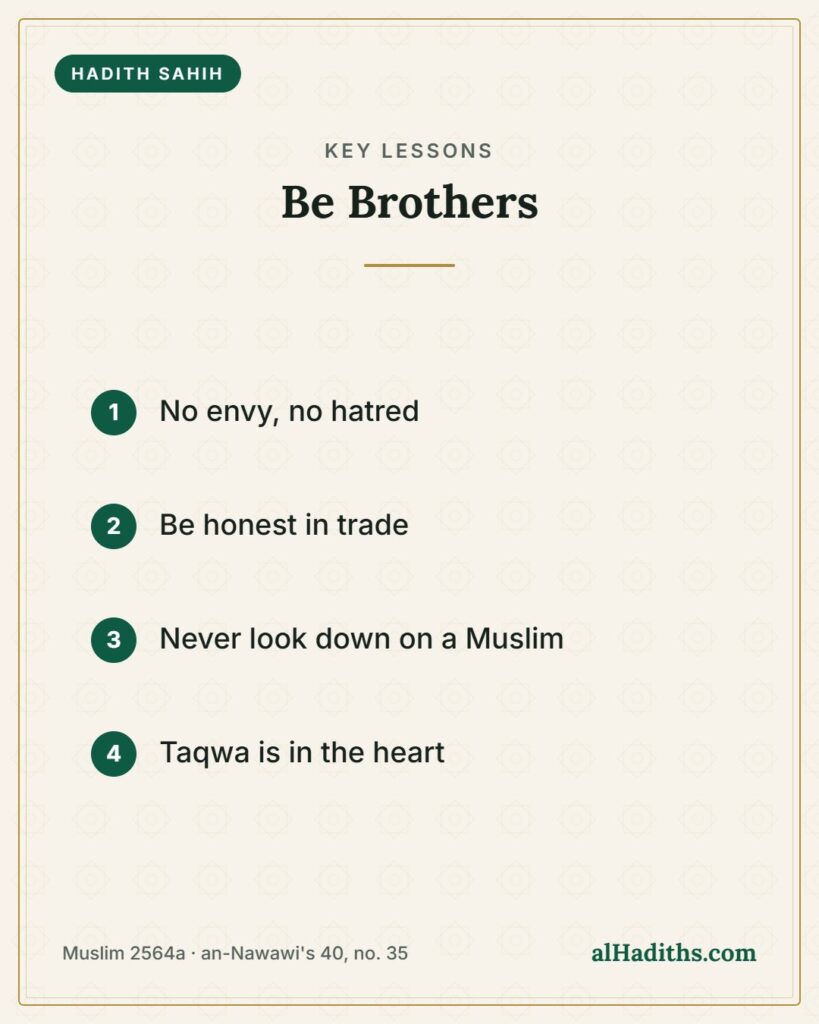
Key lessons
- Do not envy, hate or turn away from one another.
- Be honest in trade: no false bids, no undercutting.
- A Muslim does not wrong, abandon or look down on his brother.
- Taqwa is in the heart.
- A Muslim’s blood, property and honor are sacred.
Questions people ask
What does “taqwa is here” mean?
The Prophet ﷺ pointed to his chest three times while saying it. HadeethEnc explains that taqwa, knowing Allah and being mindful of Him, lies in the heart, and that a heart with taqwa will not look down on other Muslims (HadeethEnc).
Is it envy to wish I had what someone else has?
Wishing for something like another person’s blessing, without wanting them to lose it, is called ghibtah and is allowed. Envy is wishing their blessing were taken away from them (HadeethEnc).
Is this hadith authentic?
Yes. It is in Sahih Muslim 2564a, narrated by Abu Hurairah, and Imam an-Nawawi included it as Hadith 35 of his 40.
One thing to do today: think of one person whose blessings you find hard to see, and make a sincere dua for them by name.
Save this to Pinterest so you can come back to this hadith later.
Share the reward. Send this article to someone who needs it today — teaching a hadith or dua can become a lasting good deed for you, in shaa Allah.