Prophet Nuh (Noah) in the Hadith: His Warning and Witness
Contents
Who was Noah in Islam? The Quran tells the story of the ark and the flood, but the Prophet ﷺ added details we would not know otherwise: what people will call Nuh on the Day of Resurrection, who will testify for him, how idol worship began among his people, and the last advice he gave his son. Here are five authentic hadith about Prophet Nuh (Noah), peace be upon him, with their sources.
At a glance
- Hadith: 5, plus 2 Quran verses
- Collections: Sahih al-Bukhari, Sahih Muslim, al-Adab al-Mufrad
- Grade: Sahih (al-Bukhari and Muslim; al-Albani for al-Adab al-Mufrad 548)
- Topic: Prophet Nuh (Noah) in the hadith
- Do it today: Say La ilaha illallah and Subhanallahi wa bihamdihi, the two things Nuh told his son to hold on to
1. The first messenger to the people of the earth
In the long hadith of intercession, Abu Hurairah (may Allah be pleased with him) reported that the Prophet ﷺ described people on the Day of Resurrection going from prophet to prophet for help. After Adam sends them on, they come to Nuh:
فَيَأْتُونَ نُوحًا فَيَقُولُونَ يَا نُوحُ أَنْتَ أَوَّلُ الرُّسُلِ إِلَى الأَرْضِ وَسَمَّاكَ اللَّهُ عَبْدًا شَكُورًا اشْفَعْ لَنَا إِلَى رَبِّكَ أَلاَ تَرَى مَا نَحْنُ فِيهِ أَلاَ تَرَى مَا قَدْ بَلَغَنَا فَيَقُولُ لَهُمْ إِنَّ رَبِّي قَدْ غَضِبَ الْيَوْمَ غَضَبًا لَمْ يَغْضَبْ قَبْلَهُ مِثْلَهُ وَلَنْ يَغْضَبَ بَعْدَهُ مِثْلَهُ وَإِنَّهُ قَدْ كَانَتْ لِي دَعْوَةٌ دَعَوْتُ بِهَا عَلَى قَوْمِي نَفْسِي نَفْسِي
“They will come to Noah and say: ‘O Noah, you are the first of the Messengers (sent) to the earth, and Allah named you a grateful servant. Intercede for us with your Lord. Do you not see what (trouble) we are in? Do you not see what has befallen us?’ He will say to them: ‘My Lord is angry today as He has never been angry before, and will never be angry like it afterwards. I had one supplication, and I made it against my people. Myself, myself!’”
Sahih Muslim 194a · Narrated by Abu Hurairah · Translation adapted from Sunnah.com
Two titles stand out: the first of the Messengers sent to the earth, and “a grateful servant”. The second is the name Allah Himself gives Nuh in the Quran:
ذُرِّيَّةَ مَنْ حَمَلْنَا مَعَ نُوحٍ ۚ إِنَّهُۥ كَانَ عَبْدًا شَكُورًا
“O descendants of those We carried [in the ship] with Noah. Indeed, he was a grateful servant.”
Surah al-Isra 17:3 · Translation: Saheeh International, from Quran.com
Even so, Nuh will say “myself, myself”, worried about the supplication he once made against his people. On that Day even the greatest prophets are anxious, and the hadith ends with the people coming to our Prophet ﷺ.
Try this: thank Allah today for one specific blessing, by name. Allah called Nuh a grateful servant, and gratitude is something we can practise.
2. Nuh on the Day of Judgment: our ummah as his witness
Abu Sa‘id al-Khudri (may Allah be pleased with him) reported that the Messenger of Allah ﷺ said:
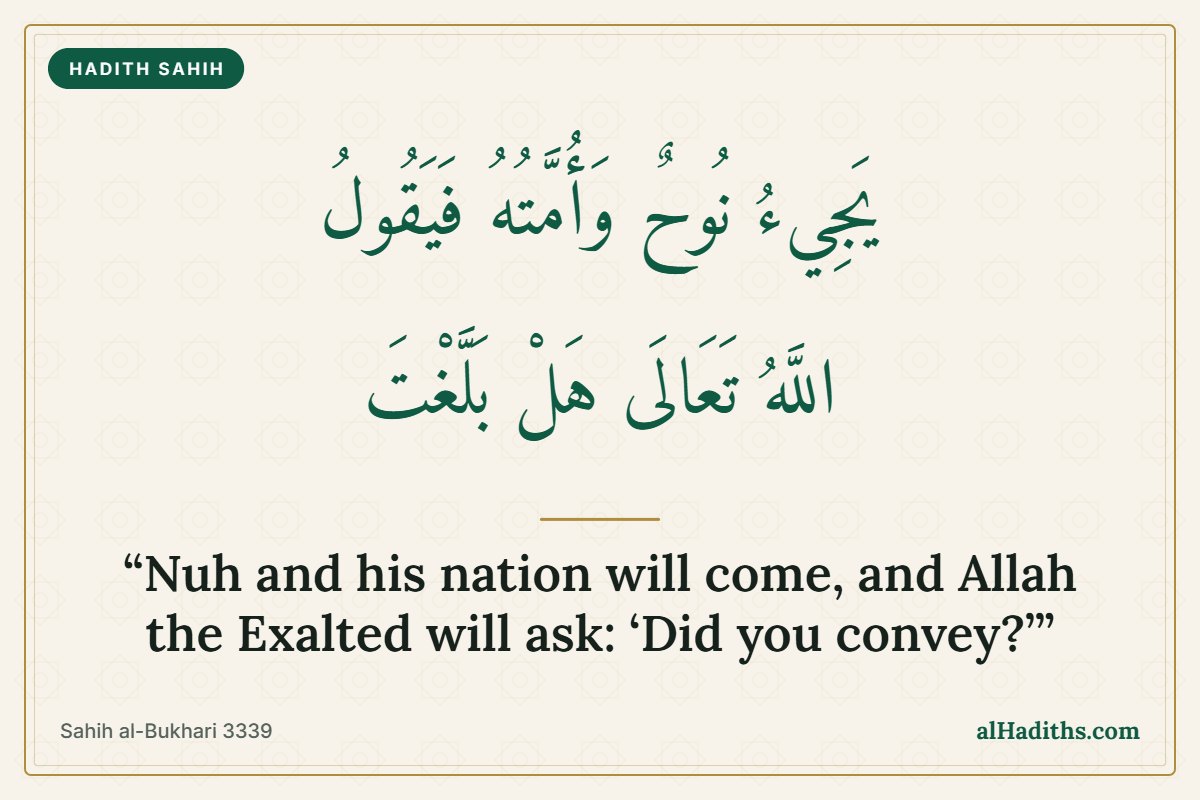
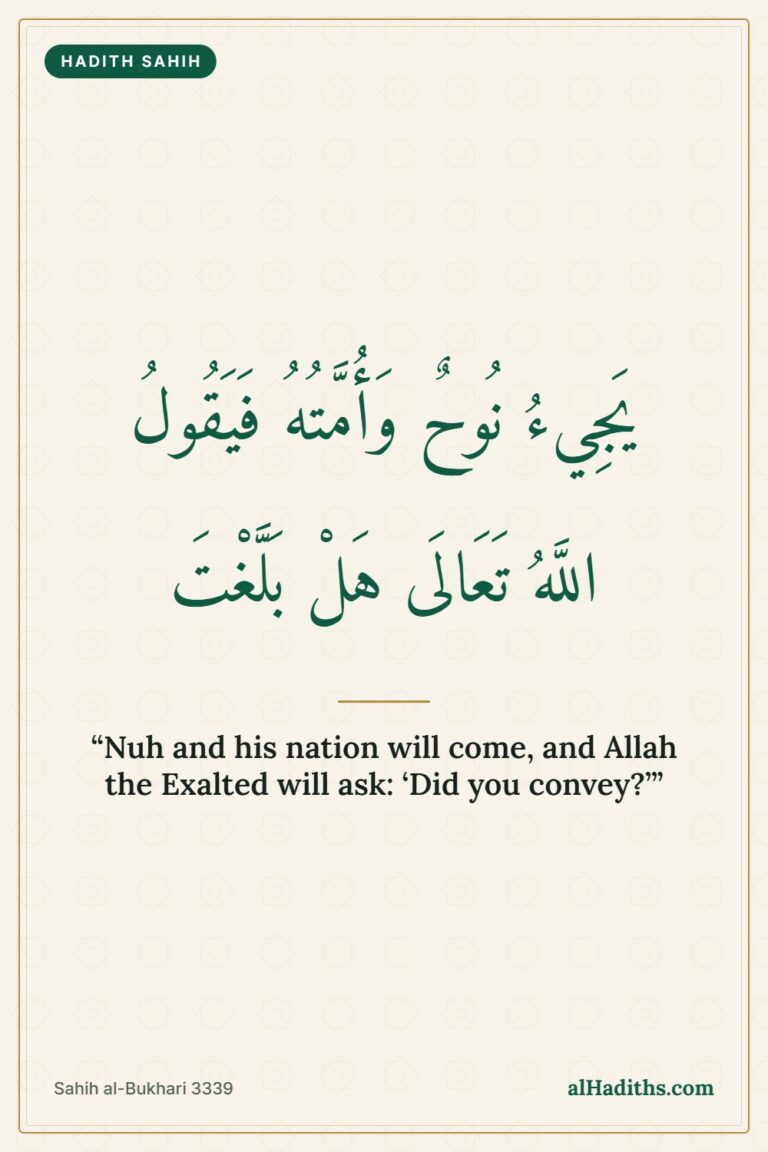
يَجِيءُ نُوحٌ وَأُمَّتُهُ فَيَقُولُ اللَّهُ تَعَالَى هَلْ بَلَّغْتَ فَيَقُولُ نَعَمْ، أَىْ رَبِّ. فَيَقُولُ لأُمَّتِهِ هَلْ بَلَّغَكُمْ فَيَقُولُونَ لاَ، مَا جَاءَنَا مِنْ نَبِيٍّ. فَيَقُولُ لِنُوحٍ مَنْ يَشْهَدُ لَكَ فَيَقُولُ مُحَمَّدٌ صلى الله عليه وسلم وَأُمَّتُهُ، فَنَشْهَدُ أَنَّهُ قَدْ بَلَّغَ، وَهْوَ قَوْلُهُ جَلَّ ذِكْرُهُ {وَكَذَلِكَ جَعَلْنَاكُمْ أُمَّةً وَسَطًا لِتَكُونُوا شُهَدَاءَ عَلَى النَّاسِ} وَالْوَسَطُ الْعَدْلُ
“Noah and his nation will come (on the Day of Resurrection), and Allah the Exalted will ask (Noah), ‘Did you convey (the Message)?’ He will reply, ‘Yes, O my Lord!’ Then He will ask his nation, ‘Did he convey (My Message) to you?’ They will reply, ‘No, no prophet came to us.’ Then He will ask Noah, ‘Who will testify for you?’ He will reply, ‘Muhammad ﷺ and his nation.’ So we will testify that he conveyed (the Message). That is the Statement of Allah: ‘Thus We have made you a just nation that you may be witnesses over mankind’ (2:143), and al-wasat means the just.”
Sahih al-Bukhari 3339 (also 7349) · Narrated by Abu Sa‘id al-Khudri · Translation adapted from Sunnah.com
After centuries of calling them, Nuh’s own people will deny that anyone ever came to them. His witnesses will be the Prophet ﷺ and his ummah: people who never saw Nuh, but believed what Allah told them about him. The Prophet ﷺ tied this to the verse that calls this ummah a just nation, witnesses over mankind.
Try this: read the story of Nuh in Surah Hud (11:25–49) this week, so you know the story you will one day testify to.
3. He warned his people about the Dajjal
Ibn ‘Umar (may Allah be pleased with them both) reported that the Prophet ﷺ stood among the people, praised Allah as He deserves, then mentioned the Dajjal and said:
إِنِّي لأُنْذِرُكُمُوهُ، وَمَا مِنْ نَبِيٍّ إِلاَّ أَنْذَرَهُ قَوْمَهُ، لَقَدْ أَنْذَرَ نُوحٌ قَوْمَهُ، وَلَكِنِّي أَقُولُ لَكُمْ فِيهِ قَوْلاً لَمْ يَقُلْهُ نَبِيٌّ لِقَوْمِهِ، تَعْلَمُونَ أَنَّهُ أَعْوَرُ، وَأَنَّ اللَّهَ لَيْسَ بِأَعْوَرَ
“I warn you against him, and there was no prophet but warned his people against him. Noah warned his people against him. But I will tell you something about him that no prophet told his people: you should know that he is one-eyed, and Allah is not one-eyed.”
Sahih al-Bukhari 3337 · Narrated by Ibn ‘Umar · Translation adapted from Sunnah.com
The trial of the Dajjal is so great that every prophet warned his people about it, and the Prophet ﷺ names Nuh among them. He then gave his own ummah a sign the earlier prophets did not: the Dajjal is one-eyed, and Allah is not. We gather the authentic hadith about him in Who Is the Dajjal in Islam? HadeethEnc explains a similar narration in the same way (HadeethEnc 3110).
Try this: in the last sitting of every prayer, ask Allah’s protection from the trial of the Dajjal, as the Prophet ﷺ taught in the dua after tashahhud.
4. How idol worship began among the people of Nuh
Surah Nuh names five idols of his people (71:23). Explaining them, Ibn ‘Abbas (may Allah be pleased with them both) said the following. These are the words of a Companion, recorded by al-Bukhari in his commentary on Surah Nuh, not a saying of the Prophet ﷺ:
أَسْمَاءُ رِجَالٍ صَالِحِينَ مِنْ قَوْمِ نُوحٍ، فَلَمَّا هَلَكُوا أَوْحَى الشَّيْطَانُ إِلَى قَوْمِهِمْ أَنِ انْصِبُوا إِلَى مَجَالِسِهِمُ الَّتِي كَانُوا يَجْلِسُونَ أَنْصَابًا، وَسَمُّوهَا بِأَسْمَائِهِمْ فَفَعَلُوا فَلَمْ تُعْبَدْ حَتَّى إِذَا هَلَكَ أُولَئِكَ وَتَنَسَّخَ الْعِلْمُ عُبِدَتْ
“(These were) the names of righteous men from the people of Noah. When they died, Satan inspired their people to set up statues at the places where they used to sit and to name the statues after them. They did so, but the statues were not worshipped until those people had died and knowledge was forgotten; then they were worshipped.”
Sahih al-Bukhari 4920 · Words of Ibn ‘Abbas · Translation adapted from Sunnah.com
Wadd, Suwa‘, Yaghuth, Ya‘uq and Nasr did not start as strange gods. They were righteous men. The statues began as reminders, and only after the people who made them had died, and knowledge was forgotten, did later generations worship them. Shirk crept in slowly, through love of good people taken too far.
Try this: love and respect righteous people, living or dead, but direct every dua and every act of worship to Allah alone.
5. Nuh’s last advice to his son
‘Abdullah ibn ‘Amr (may Allah be pleased with them both) reported that the Prophet ﷺ told his Companions what Nuh said to his son as death came to him:
إِنَّ نَبِيَّ اللهِ نُوحًا صلى الله عليه وسلم لَمَّا حَضَرَتْهُ الْوَفَاةُ قَالَ لِابْنِهِ: إِنِّي قَاصٌّ عَلَيْكَ الْوَصِيَّةَ، آمُرُكَ بِاثْنَتَيْنِ، وَأَنْهَاكَ عَنِ اثْنَتَيْنِ: آمُرُكَ بِلاَ إِلَهَ إِلاَّ اللَّهُ، فَإِنَّ السَّمَاوَاتِ السَّبْعَ وَالأَرَضِينَ السَّبْعَ، لَوْ وُضِعْنَ فِي كِفَّةٍ وَوُضِعَتْ لاَ إِلَهَ إِلاَّ اللَّهُ فِي كِفَّةٍ لَرَجَحَتْ بِهِنَّ، وَلَوْ أَنَّ السَّمَاوَاتِ السَّبْعَ وَالأَرَضِينَ السَّبْعَ كُنَّ حَلْقَةً مُبْهَمَةً لَقَصَمَتْهُنَّ لاَ إِلَهَ إِلاَّ اللَّهُ، وَسُبْحَانَ اللهِ وَبِحَمْدِهِ، فَإِنَّهَا صَلاَةُ كُلِّ شَيْءٍ، وَبِهَا يُرْزَقُ كُلُّ شَيْءٍ، وَأَنْهَاكَ عَنِ الشِّرْكِ وَالْكِبْرِ
“When death came to the Prophet of Allah Nuh ﷺ, he said to his son: ‘I am going to give you my final advice. I command you to do two things and I forbid you two things. I command you to say La ilaha illallah (there is no god but Allah), for if the seven heavens and the seven earths were placed in one pan of a scale and La ilaha illallah in the other, it would outweigh them. And if the seven heavens and the seven earths were a closed ring, La ilaha illallah and Subhanallahi wa bihamdihi (glory be to Allah and His is the praise) would break it. It is the prayer of everything, and by it everything is given its provision. And I forbid you shirk (associating others with Allah) and pride.’”
Al-Adab Al-Mufrad 548 · Sahih (al-Albani, as-Silsilah as-Sahihah 134) · Narrated by ‘Abdullah ibn ‘Amr · Translation adapted from Sunnah.com
A note on its grade: Sunnah.com shows no grade for this hadith. Shaykh al-Albani graded it Sahih in as-Silsilah as-Sahihah (no. 134), and Shaykh Shu‘ayb al-Arna’ut graded the same report in Musnad Ahmad (7101) Sahih (source). The Sunnah.com translation leaves out the part about the scale, so we completed it from the Arabic.
Two commands and two warnings: hold on to La ilaha illallah and Subhanallahi wa bihamdihi, and stay away from shirk and pride. In the rest of the narration the Companions asked what pride is. The Prophet ﷺ said it is not fine clothes or good sandals, but rejecting the truth and looking down on people.
Try this: say “Subhanallahi wa bihamdihi” 100 times today. Its reward has its own authentic hadith: see SubhanAllahi wa Bihamdihi 100 Times.
Bringing it together: Noah in Islam
The Quran gives the number that the hadith build on:
وَلَقَدْ أَرْسَلْنَا نُوحًا إِلَىٰ قَوْمِهِۦ فَلَبِثَ فِيهِمْ أَلْفَ سَنَةٍ إِلَّا خَمْسِينَ عَامًا فَأَخَذَهُمُ ٱلطُّوفَانُ وَهُمْ ظَـٰلِمُونَ
“And We certainly sent Noah to his people, and he remained among them a thousand years minus fifty years, and the flood seized them while they were wrongdoers.”
Surah al-‘Ankabut 29:14 · Translation: Saheeh International, from Quran.com
Reflection: 950 years of calling people, and only a few believed. Yet the hadith remember Nuh for his gratitude, his warning and his last words about tawhid. The results were never his to control; conveying the message was. That is a comfort for any parent, teacher or friend who keeps giving good advice and sees little change.
Questions people ask
How long did Prophet Nuh live?
The Quran says Nuh stayed among his people “a thousand years minus fifty years” before the flood (29:14). His full age is not given in any authentic hadith we know of, so we leave it at what the Quran says.
Did Prophet Nuh fast every day of his life?
A narration in Sunan Ibn Majah 1714 says Nuh fasted all year except the two Eids, but it is graded Da’if (Darussalam), so we have not used it. For voluntary fasting, the authentic hadith point to the fast of Dawud: read The Best Type of Fasting.
Is the story of the mother and her child in the flood authentic?
A story says that if Allah had shown mercy to anyone from Nuh’s people, it would have been a mother who lifted her child above the water. It is in al-Hakim’s Mustadrak, but its chain is weak: it rests on Musa ibn Ya‘qub az-Zam‘i alone, and Ibn Kathir called it a strange (gharib) report (grading). We have not used it.
Key lessons
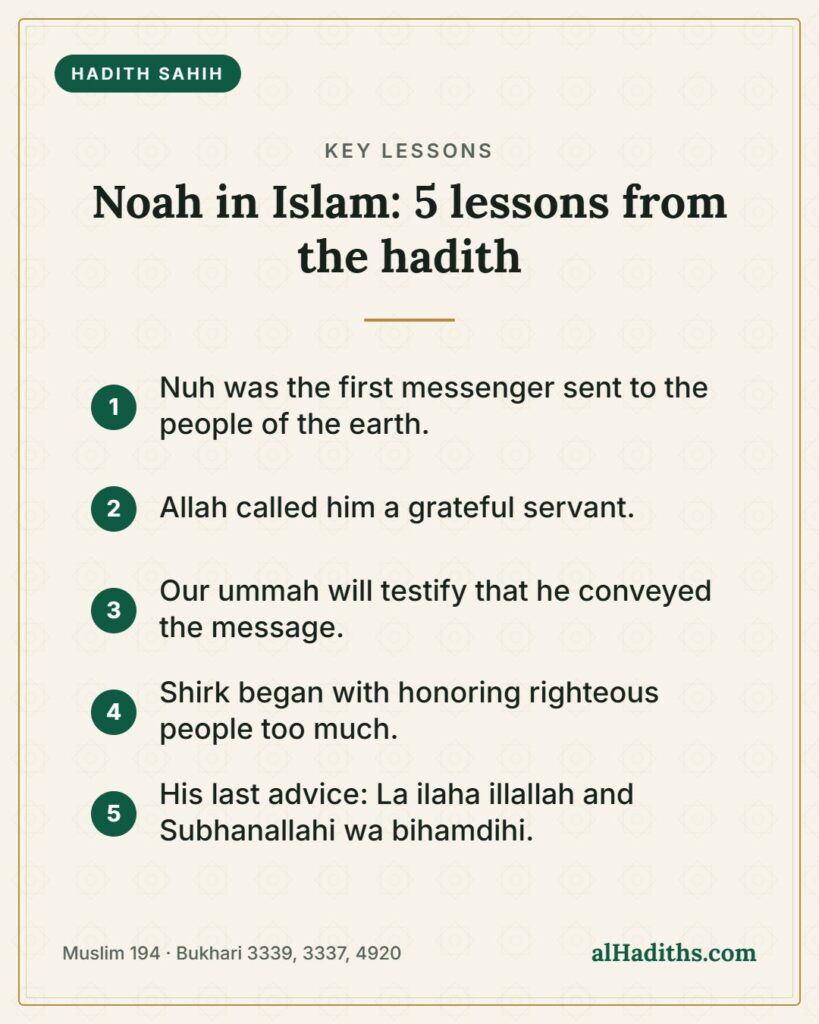
- Nuh was the first messenger sent to the people of the earth, and Allah called him a grateful servant.
- On the Day of Judgment the Prophet ﷺ and his ummah will testify that Nuh conveyed the message.
- Nuh warned his people about the Dajjal, like every prophet after him.
- Idol worship among his people began with statues of righteous men, once knowledge was forgotten.
- His last advice to his son: La ilaha illallah and Subhanallahi wa bihamdihi, and no shirk or pride.
Part of our Prophets in the Hadith series: see all our articles on the prophets in one place.
Nuh’s last words to his son were about La ilaha illallah. May Allah make those our last words too, and count us among the ummah that bears witness for His messengers.
Save this to Pinterest so you can come back to these hadith about Prophet Nuh
Share the reward. Send this article to someone who needs it today — teaching a hadith or dua can become a lasting good deed for you, in shaa Allah.