What Happens in the Grave? Barzakh in the Authentic Hadith
Contents
What happens in the grave after the last person walks away? The Quran calls this stage barzakh: a barrier between this life and the Day of Resurrection. We cannot see it, so we only know what Allah and His Messenger ﷺ told us. This article answers the question with the authentic hadith, step by step, and stops where they stop.
At a glance
- Short answer: After burial, two angels come and ask the dead person about their Lord, their religion and the Prophet ﷺ. The believer answers and is shown his place in Paradise; the one who doubted cannot answer and is punished until the Resurrection.
- Note: Barzakh is part of the unseen. We take its details only from authentic texts.
- Evidence: Quran 23:99–100; Bukhari 1338, 1379, 216; Tirmidhi 1071; Abu Dawud 4753; Muslim 2867
- Grade: Sahih (Bukhari, Muslim); Sahih (al-Albani) for Abu Dawud 4753; Hasan (Darussalam) for Tirmidhi 1071
- Do it today: Seek refuge from the punishment of the grave in your salah, before the salam
What is barzakh in Islam?
The word comes from the Quran. Allah describes a person who, at death, begs to be sent back:
حَتَّىٰٓ إِذَا جَآءَ أَحَدَهُمُ ٱلْمَوْتُ قَالَ رَبِّ ٱرْجِعُونِ لَعَلِّىٓ أَعْمَلُ صَـٰلِحًا فِيمَا تَرَكْتُ ۚ كَلَّآ ۚ إِنَّهَا كَلِمَةٌ هُوَ قَآئِلُهَا ۖ وَمِن وَرَآئِهِم بَرْزَخٌ إِلَىٰ يَوْمِ يُبْعَثُونَ
[For such is the state of the disbelievers] until, when death comes to one of them, he says, “My Lord, send me back That I might do righteousness in that which I left behind.” No! It is only a word he is saying; and behind them is a barrier until the Day they are resurrected.
Surah Al-Mu’minun 23:99–100 · Translation: Saheeh International, from Quran.com
“Barrier” here is barzakh in the Arabic. It has two sides: no one can go back to this world, and the Resurrection has not come yet. Everyone who dies, believer or not, passes through it. The hadith below describe what happens there.
He hears their footsteps, and two angels come
Anas ibn Malik (may Allah be pleased with him) reported this from the Prophet ﷺ.
الْعَبْدُ إِذَا وُضِعَ فِي قَبْرِهِ، وَتُوُلِّيَ وَذَهَبَ أَصْحَابُهُ حَتَّى إِنَّهُ لَيَسْمَعُ قَرْعَ نِعَالِهِمْ، أَتَاهُ مَلَكَانِ فَأَقْعَدَاهُ فَيَقُولاَنِ لَهُ مَا كُنْتَ تَقُولُ فِي هَذَا الرَّجُلِ مُحَمَّدٍ صلى الله عليه وسلم فَيَقُولُ أَشْهَدُ أَنَّهُ عَبْدُ اللَّهِ وَرَسُولُهُ. فَيُقَالُ انْظُرْ إِلَى مَقْعَدِكَ مِنَ النَّارِ، أَبْدَلَكَ اللَّهُ بِهِ مَقْعَدًا مِنَ الْجَنَّةِ ـ قَالَ النَّبِيُّ صلى الله عليه وسلم فَيَرَاهُمَا جَمِيعًا ـ وَأَمَّا الْكَافِرُ ـ أَوِ الْمُنَافِقُ ـ فَيَقُولُ لاَ أَدْرِي، كُنْتُ أَقُولُ مَا يَقُولُ النَّاسُ. فَيُقَالُ لاَ دَرَيْتَ وَلاَ تَلَيْتَ. ثُمَّ يُضْرَبُ بِمِطْرَقَةٍ مِنْ حَدِيدٍ ضَرْبَةً بَيْنَ أُذُنَيْهِ، فَيَصِيحُ صَيْحَةً يَسْمَعُهَا مَنْ يَلِيهِ إِلاَّ الثَّقَلَيْنِ
The Prophet ﷺ said, “When a human being is laid in his grave and his companions return and he even hears their footsteps, two angels come to him and make him sit and ask him: What did you use to say about this man, Muhammad? He will say: I testify that he is Allah’s slave and His Apostle. Then it will be said to him, ‘Look at your place in the Hell-Fire. Allah has given you a place in Paradise instead of it.’” The Prophet ﷺ added, “The dead person will see both his places. But a non-believer or a hypocrite will say to the angels, ‘I do not know, but I used to say what the people used to say!’ It will be said to him, ‘Neither did you know nor did you take the guidance (by reciting the Qur’an).’ Then he will be hit with an iron hammer between his two ears, and he will cry and that cry will be heard by whatever approaches him except human beings and jinns.”
Sahih al-Bukhari 1338 · Narrated by Anas · Translation adapted from Sunnah.com
The questioning begins while the mourners are still walking away. Notice what decides the answer: not cleverness, but what a person truly believed. The one who only repeated “what the people used to say” has nothing to say.
The three questions in the grave
Al-Bara’ ibn ‘Azib (may Allah be pleased with him) was at a funeral when the Prophet ﷺ sat by the open grave and described the questioning in more detail.
وَيَأْتِيهِ مَلَكَانِ فَيُجْلِسَانِهِ فَيَقُولاَنِ لَهُ : مَنْ رَبُّكَ فَيَقُولُ : رَبِّيَ اللَّهُ. فَيَقُولاَنِ لَهُ : مَا دِينُكَ فَيَقُولُ : دِينِي الإِسْلاَمُ. فَيَقُولاَنِ لَهُ : مَا هَذَا الرَّجُلُ الَّذِي بُعِثَ فِيكُمْ قَالَ فَيَقُولُ : هُوَ رَسُولُ اللَّهِ صلى الله عليه وسلم. فَيَقُولاَنِ : وَمَا يُدْرِيكَ فَيَقُولُ : قَرَأْتُ كِتَابَ اللَّهِ فَآمَنْتُ بِهِ وَصَدَّقْتُ
“Two angels will come to him, make him sit up and ask him: Who is your Lord? He will reply: My Lord is Allah. They will ask him: What is your religion? He will reply: My religion is Islam. They will ask him: What is your opinion about the man who was sent on a mission among you? He will reply: He is the Messenger of Allah ﷺ. They will ask: Who made you aware of this? He will reply: I read Allah’s Book, believed in it, and considered it true.”
Sunan Abi Dawud 4753 · Sahih (al-Albani) · Narrated by al-Bara’ ibn ‘Azib · Translation adapted from Sunnah.com (one segment of a long hadith)
Who is your Lord, what is your religion, who is your Prophet: three short questions. The believer’s last answer shows where his certainty came from. He read Allah’s Book and believed it. In the same hadith, the disbeliever can only say “Alas, alas, I do not know” to each question.
Munkar and Nakir: the two angels
Abu Hurairah (may Allah be pleased with him) reported the names of the two angels and what follows the questions.
إِذَا قُبِرَ الْمَيِّتُ - أَوْ قَالَ أَحَدُكُمْ أَتَاهُ مَلَكَانِ أَسْوَدَانِ أَزْرَقَانِ يُقَالُ لأَحَدِهِمَا الْمُنْكَرُ وَالآخَرُ النَّكِيرُ فَيَقُولاَنِ مَا كُنْتَ تَقُولُ فِي هَذَا الرَّجُلِ فَيَقُولُ مَا كَانَ يَقُولُ هُوَ عَبْدُ اللَّهِ وَرَسُولُهُ أَشْهَدُ أَنْ لاَ إِلَهَ إِلاَّ اللَّهُ وَأَنَّ مُحَمَّدًا عَبْدُهُ وَرَسُولُهُ. فَيَقُولاَنِ قَدْ كُنَّا نَعْلَمُ أَنَّكَ تَقُولُ هَذَا. ثُمَّ يُفْسَحُ لَهُ فِي قَبْرِهِ سَبْعُونَ ذِرَاعًا فِي سَبْعِينَ ثُمَّ يُنَوَّرُ لَهُ فِيهِ ثُمَّ يُقَالُ لَهُ نَمْ. فَيَقُولُ أَرْجِعُ إِلَى أَهْلِي فَأُخْبِرُهُمْ فَيَقُولاَنِ نَمْ كَنَوْمَةِ الْعَرُوسِ الَّذِي لاَ يُوقِظُهُ إِلاَّ أَحَبُّ أَهْلِهِ إِلَيْهِ. حَتَّى يَبْعَثَهُ اللَّهُ مِنْ مَضْجَعِهِ ذَلِكَ. وَإِنْ كَانَ مُنَافِقًا قَالَ سَمِعْتُ النَّاسَ يَقُولُونَ فَقُلْتُ مِثْلَهُ لاَ أَدْرِي. فَيَقُولاَنِ قَدْ كُنَّا نَعْلَمُ أَنَّكَ تَقُولُ ذَلِكَ. فَيُقَالُ لِلأَرْضِ الْتَئِمِي عَلَيْهِ. فَتَلْتَئِمُ عَلَيْهِ. فَتَخْتَلِفُ فِيهَا أَضْلاَعُهُ فَلاَ يَزَالُ فِيهَا مُعَذَّبًا حَتَّى يَبْعَثَهُ اللَّهُ مِنْ مَضْجَعِهِ ذَلِكَ
The Messenger of Allah ﷺ said: “When the deceased, or he said when one of you, is buried, two angels, black and blue (eyed), come to him. One of them is called Al-Munkar, and the other An-Nakir. They say: ‘What did you used to say about this man?’ So he says what he was saying (before death): ‘He is Allah’s slave and His Messenger. I testify that none has the right to be worshipped but Allah and that Muhammad is His slave and His Messenger.’ So they say: ‘We knew that you would say this.’ Then his grave is expanded to seventy by seventy cubits, then it is illuminated for him. Then it is said to him: ‘Sleep.’ So he says: ‘Can I return to my family to inform them?’ They say: ‘Sleep as a newlywed, whom none awakens but the dearest of his family,’ until Allah resurrects him from his resting place. If he was a hypocrite he would say: ‘I heard people saying something, so I said the same; I do not know.’ So they say: ‘We knew you would say that.’ So the earth is told: ‘Constrict him.’ So it constricts around him, squeezing his ribs together. He continues being punished like that until Allah resurrects him from his resting place.”
Jami‘ at-Tirmidhi 1071 · Hasan (Darussalam) · Narrated by Abu Hurairah · Translation adapted from Sunnah.com (typos fixed)
This is where hope and warning sit side by side. For the believer, the grave becomes wide and full of light, and he sleeps like a bride or groom on their wedding night. For the hypocrite, it closes in. At-Tirmidhi graded the hadith hasan gharib and noted that ‘Ali, Zayd ibn Thabit, Ibn ‘Abbas, al-Bara’, Anas, ‘A’ishah and others also reported hadith on the punishment of the grave.
Shown his place, morning and evening
‘Abdullah ibn ‘Umar (may Allah be pleased with him) reported this from the Messenger of Allah ﷺ.
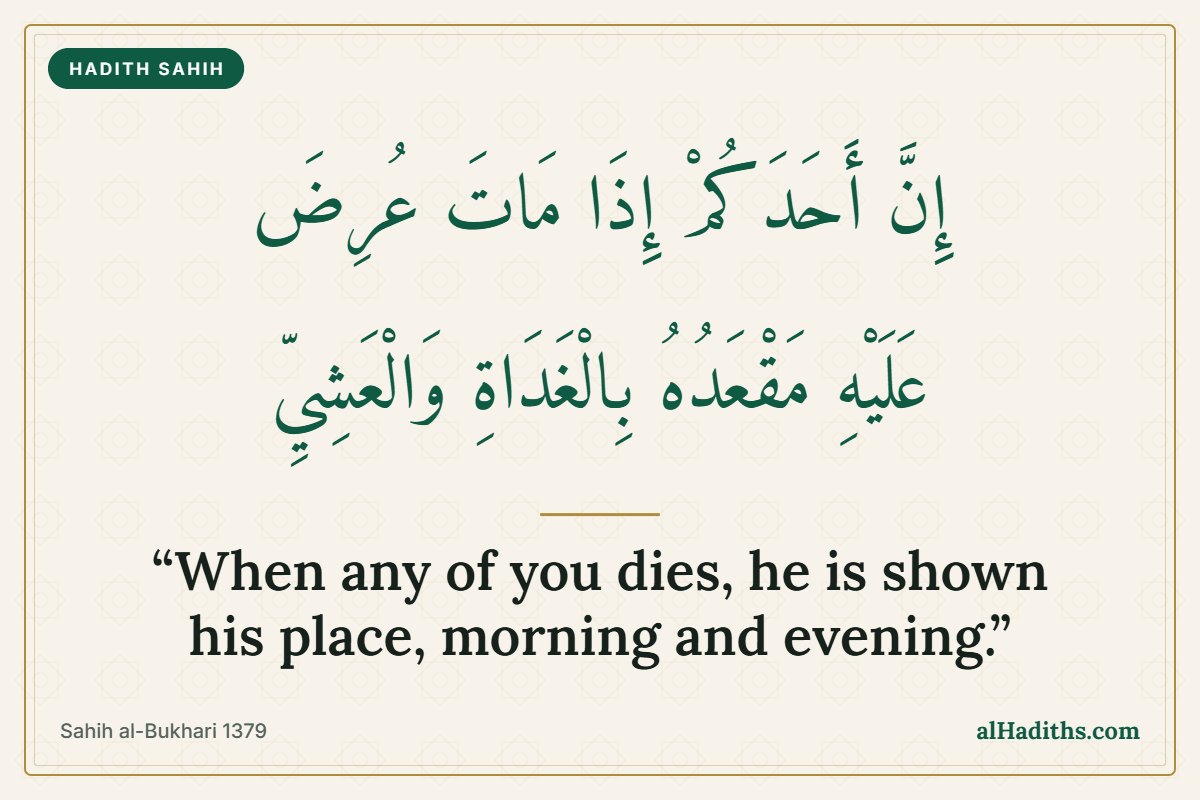
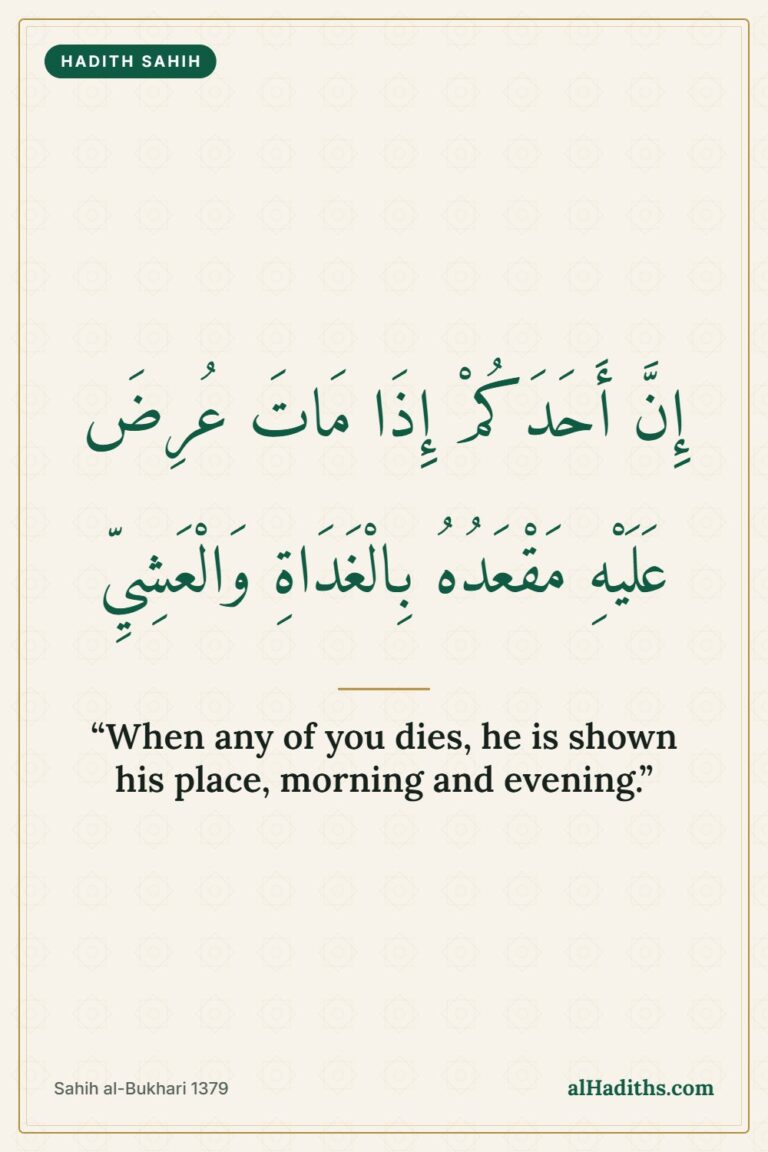
إِنَّ أَحَدَكُمْ إِذَا مَاتَ عُرِضَ عَلَيْهِ مَقْعَدُهُ بِالْغَدَاةِ وَالْعَشِيِّ، إِنْ كَانَ مِنْ أَهْلِ الْجَنَّةِ فَمِنْ أَهْلِ الْجَنَّةِ، وَإِنْ كَانَ مِنْ أَهْلِ النَّارِ فَمِنْ أَهْلِ النَّارِ، فَيُقَالُ هَذَا مَقْعَدُكَ حَتَّى يَبْعَثَكَ اللَّهُ يَوْمَ الْقِيَامَةِ
Allah’s Messenger ﷺ said, “When anyone of you dies, he is shown his place both in the morning and in the evening. If he is one of the people of Paradise, he is shown his place in it, and if he is from the people of the Hell-Fire, he is shown his place therein. Then it is said to him, ‘This is your place till Allah resurrects you on the Day of Resurrection.’”
Sahih al-Bukhari 1379 · Narrated by ‘Abdullah ibn ‘Umar · Translation adapted from Sunnah.com
Barzakh is a time of waiting. Twice a day the dead see where they are going, and for the believer that sight is a joy that lasts until the Resurrection.
Two sins the Prophet ﷺ named
Ibn ‘Abbas (may Allah be pleased with him) reported what the Prophet ﷺ said when he passed two graves.
مَرَّ النَّبِيُّ صلى الله عليه وسلم بِحَائِطٍ مِنْ حِيطَانِ الْمَدِينَةِ أَوْ مَكَّةَ، فَسَمِعَ صَوْتَ إِنْسَانَيْنِ يُعَذَّبَانِ فِي قُبُورِهِمَا، فَقَالَ النَّبِيُّ صلى الله عليه وسلم يُعَذَّبَانِ، وَمَا يُعَذَّبَانِ فِي كَبِيرٍ ، ثُمَّ قَالَ بَلَى، كَانَ أَحَدُهُمَا لاَ يَسْتَتِرُ مِنْ بَوْلِهِ، وَكَانَ الآخَرُ يَمْشِي بِالنَّمِيمَةِ
Once the Prophet ﷺ, while passing through one of the graveyards of Medina or Mecca, heard the voices of two persons who were being tortured in their graves. The Prophet ﷺ said, “These two persons are being tortured not for a major sin (to avoid).” The Prophet ﷺ then added, “Yes! (they are being tortured for a major sin). Indeed, one of them never saved himself from being soiled with his urine while the other used to go about with calumnies (to make enmity between friends).”
Sahih al-Bukhari 216 · Narrated by Ibn ‘Abbas · Translation adapted from Sunnah.com (trimmed before the palm-leaf part)
HadeethEnc explains that these sins are not hard to avoid, yet they are serious in the sight of Allah: carelessness about purity from urine, and spreading tales to cause trouble between people. It adds that the Prophet ﷺ placing palm stalks on the two graves was particular to him, because Allah had told him their state.
Seek refuge from the punishment of the grave
Abu Sa’id al-Khudri reported from Zayd ibn Thabit (may Allah be pleased with them) that the Prophet ﷺ passed some graves while riding, and his mount shied.
إِنَّ هَذِهِ الأُمَّةَ تُبْتَلَى فِي قُبُورِهَا فَلَوْلاَ أَنْ لاَ تَدَافَنُوا لَدَعَوْتُ اللَّهَ أَنْ يُسْمِعَكُمْ مِنْ عَذَابِ الْقَبْرِ الَّذِي أَسْمَعُ مِنْهُ. ثُمَّ أَقْبَلَ عَلَيْنَا بِوَجْهِهِ فَقَالَ تَعَوَّذُوا بِاللَّهِ مِنْ عَذَابِ النَّارِ. قَالُوا نَعُوذُ بِاللَّهِ مِنْ عَذَابِ النَّارِ فَقَالَ تَعَوَّذُوا بِاللَّهِ مِنْ عَذَابِ الْقَبْرِ. قَالُوا نَعُوذُ بِاللَّهِ مِنْ عَذَابِ الْقَبْرِ
He said: “These people are passing through the ordeal in the graves. If it were not the reason that you would stop burying (your dead) in the graves on listening to the torment in the grave which I am listening to, I would have certainly made you hear that.” Then turning his face towards us, he said: “Seek refuge with Allah from the torment of Hell.” They said: “We seek refuge with Allah from the torment of Hell.” He said: “Seek refuge with Allah from the torment of the grave.” They said: “We seek refuge with Allah from the torment of the grave.”
Sahih Muslim 2867 · Narrated by Zayd ibn Thabit, via Abu Sa’id al-Khudri · Translation adapted from Sunnah.com (trimmed)
The Prophet ﷺ did not leave his Companions with fear alone: he told them what to do with it. He also taught us to ask Allah, before the salam, for refuge “from the torment of the grave”, in the dua after tashahhud (Muslim 588a).
What the hadith don’t say
Because barzakh is unseen, people have filled it with stories. Popular details, such as the soul visiting its home for forty days, are not in these authentic hadith; where a detail comes only from weak reports, we leave it out. On whether the dead hear the living, the hadith mention the footsteps of those leaving (Bukhari 1338), and scholars differ on anything beyond that.
The other extreme is to deny the life of the grave altogether. That cannot stand with the Sahih hadith above, which many Companions reported. Some reports about Surah Al-Mulk and the grave are weak too; we sorted them in Surah Mulk benefits.
Reflection: the three questions are not a test we can cram for at the end. The believer answers because he lived with those answers. Every salah, every page of the Quran we read and believe, is part of the answer we are preparing now.
Questions people ask
What is barzakh?
Barzakh is the stage between death and the Day of Resurrection. The word means “barrier” and comes from Surah Al-Mu’minun 23:100.
Who are Munkar and Nakir?
They are the two angels who question the dead in the grave, named in Jami‘ at-Tirmidhi 1071, graded Hasan (Darussalam).
What are the three questions in the grave?
Who is your Lord? What is your religion? Who is this man who was sent among you? (Abu Dawud 4753, Sahih per al-Albani.)
How can I seek protection from the punishment of the grave?
The Prophet ﷺ told his Companions to seek refuge with Allah from it (Muslim 2867), and taught us to do so in every salah after the tashahhud (Muslim 588a). The two sins he named, carelessness with urine and spreading tales, are worth avoiding (Bukhari 216).
Key lessons on barzakh
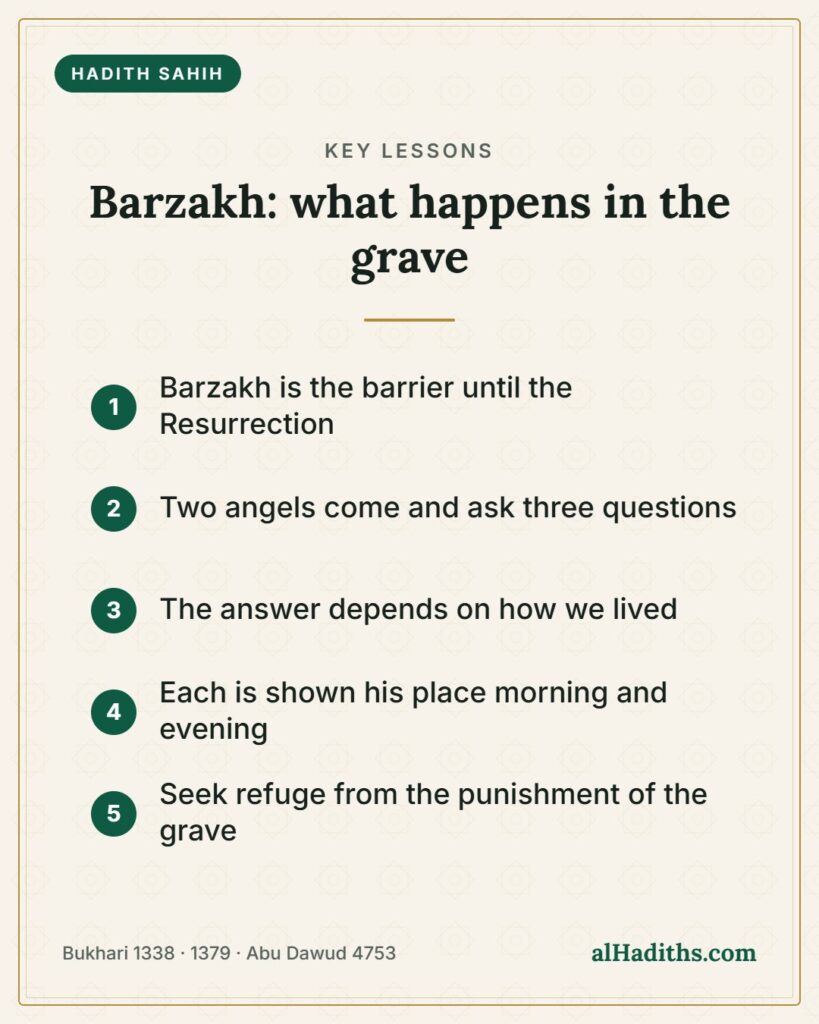
- Barzakh is the barrier between death and the Resurrection (Quran 23:99–100).
- Two angels come and ask about our Lord, our religion and the Prophet ﷺ (Bukhari 1338, Abu Dawud 4753).
- The believer’s grave is widened and lit until the Resurrection (Tirmidhi 1071).
- Each person is shown their place morning and evening (Bukhari 1379).
- Seek refuge with Allah from the punishment of the grave in every salah (Muslim 2867, 588a).
Tonight, in your last salah, pause after the tashahhud and ask Allah for refuge from the punishment of the grave, and for an easy answer when the questions come.
Save this to Pinterest so you can remember what the Prophet ﷺ taught about the grave
Share the reward. Send this article to someone who needs it today — teaching a hadith or dua can become a lasting good deed for you, in shaa Allah.