Dua for Forgiveness: 6 Authentic Duas From Quran and Sunnah
Contents
Everyone slips. What matters is turning back. If you are looking for a dua for forgiveness, the Prophet ﷺ himself showed the way: he said, “By Allah, I seek forgiveness from Allah and repent to Him more than seventy times a day” (Sahih al-Bukhari 6307). Here are six authentic duas for forgiveness from the Quran and Sunnah, with their Arabic and meaning.
At a glance
- Duas: 6 (2 from the Quran, 4 from the Sunnah)
- Collections: Quran, Bukhari, Muslim, Abu Dawud
- Grade: Quran; Sahih
- Topic: Seeking forgiveness (istighfar) and repentance
- Today: Say “Rabbighfir li wa tub ʿalayya” 100 times in one sitting
1. The dua of Adam and Hawwa
The first dua for forgiveness in human history came from our parents, Adam and Hawwa, after they ate from the tree:
قَالَا رَبَّنَا ظَلَمْنَآ أَنفُسَنَا وَإِن لَّمْ تَغْفِرْ لَنَا وَتَرْحَمْنَا لَنَكُونَنَّ مِنَ ٱلْخَـٰسِرِينَ
“Our Lord, we have wronged ourselves, and if You do not forgive us and have mercy upon us, we will surely be among the losers.”
Surah Al-A’raf 7:23 · Translation: Saheeh International, from Quran.com
They did not make excuses. They admitted the wrong, then asked for forgiveness and mercy. That is the heart of every sincere dua for forgiveness.
Try this: when you realize you have done wrong, start your dua by admitting it to Allah before asking.
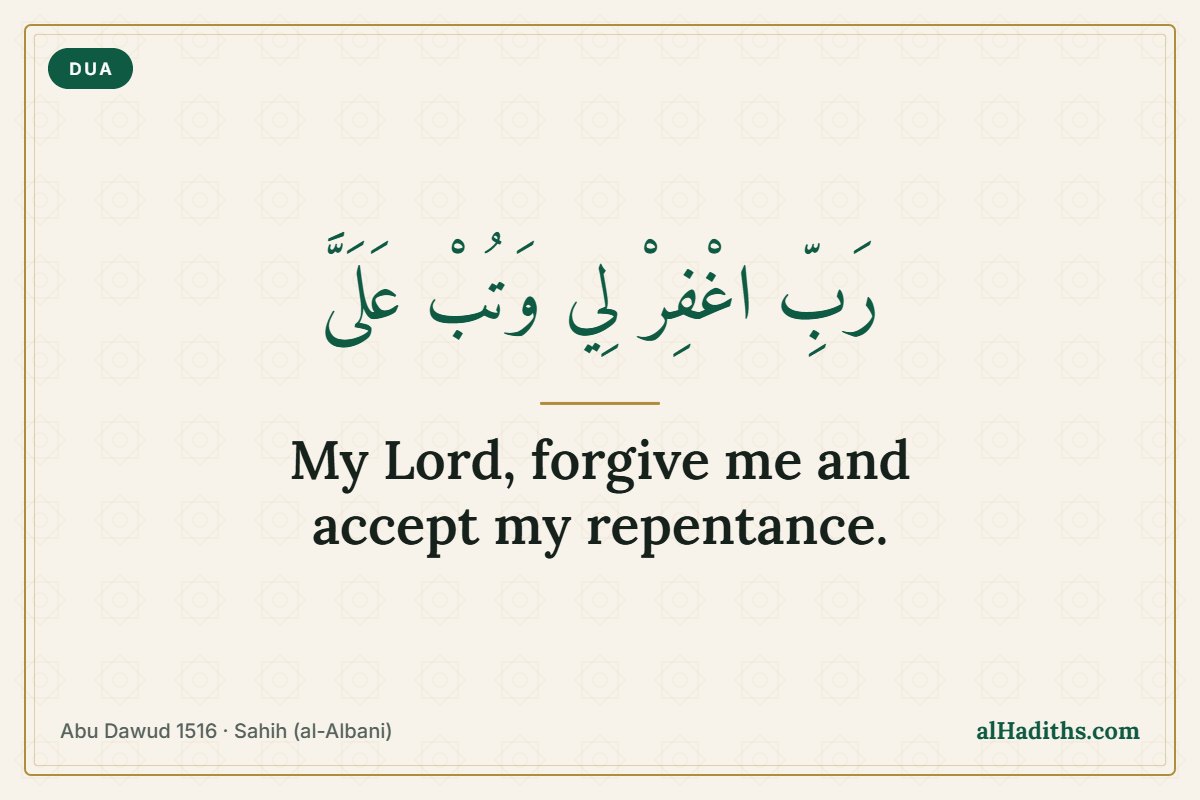
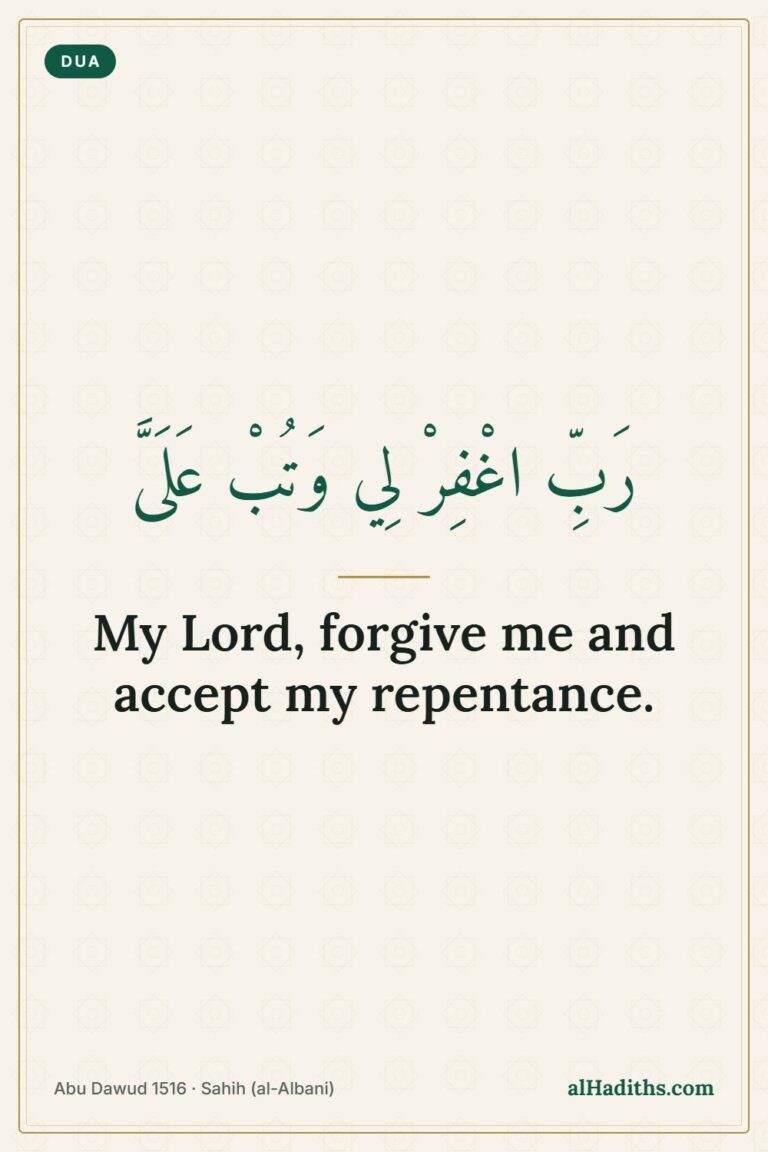
2. Rabbighfir li wa tub ʿalayya (100 times)
Abdullah ibn Umar (may Allah be pleased with him) said the companions would count the Prophet ﷺ saying this a hundred times in one sitting:
رَبِّ اغْفِرْ لِي وَتُبْ عَلَىَّ إِنَّكَ أَنْتَ التَّوَّابُ الرَّحِيمُ
Rabbighfir lī wa tub ʿalayya, innaka antat-Tawwābur-Raḥīm
“My Lord, forgive me and accept my repentance. You are the One who accepts repentance, the Most Merciful.”
Sunan Abi Dawud 1516 · Sahih (al-Albani) · Narrated by Ibn Umar · Translation adapted from Sunnah.com
It is short, easy to memorize, and it joins two things: forgiveness for what has passed and repentance that changes what comes next.
Try this: say it before you stand up from any gathering, even a short one.
3. Astaghfirullah al-ʿAzim: forgiven even if he fled the battle
Zayd, the freed slave of the Prophet ﷺ, heard him promise great forgiveness for these words:
مَنْ قَالَ أَسْتَغْفِرُ اللَّهَ الَّذِي لاَ إِلَهَ إِلاَّ هُوَ الْحَىُّ الْقَيُّومُ وَأَتُوبُ إِلَيْهِ غُفِرَ لَهُ وَإِنْ كَانَ فَرَّ مِنَ الزَّحْفِ
Astaghfirullāhal-ladhī lā ilāha illā huwal-Ḥayyul-Qayyūmu wa atūbu ilayh
“Whoever says, “I seek forgiveness from Allah, there is no god but He, the Ever-Living, the Sustainer, and I repent to Him,” will be forgiven, even if he fled from the battlefield.”
Sunan Abi Dawud 1517 · Sahih (al-Albani) · Narrated by Zayd, the freed slave of the Prophet ﷺ · Translation adapted from Sunnah.com
Fleeing from the battlefield is one of the major sins, yet the Prophet ﷺ said these words bring forgiveness even for that. At-Tirmidhi records a similar wording with “al-ʿAzim” (the Magnificent) added (Jami’ at-Tirmidhi 3577, Hasan, Darussalam).
Try this: make it your istighfar after each salah this week.
4. A dua for forgiveness of all sins
Abu Musa al-Ash’ari (may Allah be pleased with him) reported that the Prophet ﷺ used to make this comprehensive dua:
رَبِّ اغْفِرْ لِي خَطِيئَتِي وَجَهْلِي وَإِسْرَافِي فِي أَمْرِي كُلِّهِ، وَمَا أَنْتَ أَعْلَمُ بِهِ مِنِّي، اللَّهُمَّ اغْفِرْ لِي خَطَايَاىَ وَعَمْدِي وَجَهْلِي وَهَزْلِي، وَكُلُّ ذَلِكَ عِنْدِي، اللَّهُمَّ اغْفِرْ لِي مَا قَدَّمْتُ وَمَا أَخَّرْتُ وَمَا أَسْرَرْتُ وَمَا أَعْلَنْتُ، أَنْتَ الْمُقَدِّمُ، وَأَنْتَ الْمُؤَخِّرُ، وَأَنْتَ عَلَى كُلِّ شَىْءٍ قَدِيرٌ
Rabbighfir lī khaṭīʾatī wa jahlī wa isrāfī fī amrī kullih, wa mā anta aʿlamu bihi minnī. Allāhummaghfir lī khaṭāyāya wa ʿamdī wa jahlī wa hazlī, wa kullu dhālika ʿindī. Allāhummaghfir lī mā qaddamtu wa mā akhkhartu wa mā asrartu wa mā aʿlantu. Antal-Muqaddimu wa antal-Muʾakhkhiru wa anta ʿalā kulli shayʾin qadīr
“My Lord, forgive my sins, my ignorance and my excess in all my affairs, and what You know better than I. O Allah, forgive my mistakes, what I did on purpose, my ignorance and my joking, all of which I have done. O Allah, forgive what I did before and what I did after, what I hid and what I did openly. You are the One who brings forward and the One who holds back, and You have power over all things.”
Sahih al-Bukhari 6398 · Narrated by Abu Musa · Also in Sahih Muslim 2719 · Translation adapted from Sunnah.com
This is the dua to reach for when you are asking about forgiveness of all sins: it covers mistakes and deliberate sins, the hidden and the open, the past and the future.
Try this: read it slowly once tonight, pausing on each kind of sin it names.
5. The dua taught to new Muslims
Tariq al-Ashja’i (may Allah be pleased with him) reported that when someone accepted Islam, the Prophet ﷺ taught him to say:
اللَّهُمَّ اغْفِرْ لِي وَارْحَمْنِي وَاهْدِنِي وَارْزُقْنِي
Allāhummaghfir lī warḥamnī wahdinī warzuqnī
“O Allah, forgive me, have mercy on me, guide me and provide for me.”
Sahih Muslim 2697a · Narrated by Tariq ibn Ashyam al-Ashja’i · Translation adapted from Sunnah.com
Forgiveness comes first in the list. Another narration of the same hadith adds “wa ʿāfinī” (and grant me well-being).
Try this: teach it to your children or to a new Muslim friend. It is four short requests.
6. Forgiveness for us and those before us
Allah praises the believers who ask forgiveness for others, not only for themselves:
وَٱلَّذِينَ جَآءُو مِنۢ بَعْدِهِمْ يَقُولُونَ رَبَّنَا ٱغْفِرْ لَنَا وَلِإِخْوَٰنِنَا ٱلَّذِينَ سَبَقُونَا بِٱلْإِيمَـٰنِ وَلَا تَجْعَلْ فِى قُلُوبِنَا غِلًّا لِّلَّذِينَ ءَامَنُوا۟ رَبَّنَآ إِنَّكَ رَءُوفٌ رَّحِيمٌ
“And [there is a share for] those who come after them, saying, Our Lord, forgive us and our brothers who preceded us in faith and put not in our hearts [any] resentment toward those who have believed. Our Lord, indeed You are Kind and Merciful.”
Surah Al-Hashr 59:10 · Translation: Saheeh International, from Quran.com
Try this: add your parents and the Muslims who have passed away to your dua for forgiveness tonight.
Bringing it together
The Prophet ﷺ also taught the master dua of forgiveness, Sayyidul Istighfar, and Abu Bakr’s dua, “Allahumma inni zalamtu nafsi”. In the last ten nights of Ramadan he taught “Allahumma innaka ʿafuwwun”.
Words alone are not the whole of it. Imam an-Nawawi said repentance has three conditions: to give up the sin, to regret it, and to resolve firmly not to return to it (quoted by the Encyclopedia of Translated Prophetic Hadiths (HadeethEnc)).
Reflection: the one who was already forgiven still asked for forgiveness more than seventy times a day. If he never stopped asking, we have even more reason to keep asking.
What is the best dua for forgiveness?
The Prophet ﷺ called Sayyidul Istighfar “the best way of asking forgiveness” (Sahih al-Bukhari 6306). The short “Rabbighfir li wa tub ʿalayya” is easy to repeat many times a day (Sunan Abi Dawud 1516).
Is there a dua for forgiveness of all sins?
The dua in Sahih al-Bukhari 6398 asks forgiveness for every kind of sin: mistakes and deliberate ones, hidden and open, past and future. Allah forgives all sins for whoever sincerely repents; ask a qualified scholar about anything that involves other people’s rights.
Can I make dua for forgiveness for others?
Yes. Allah praises believers who say “Our Lord, forgive us and our brothers who preceded us in faith” (Quran 59:10). You can include your parents, family and all the Muslims.
Key lessons
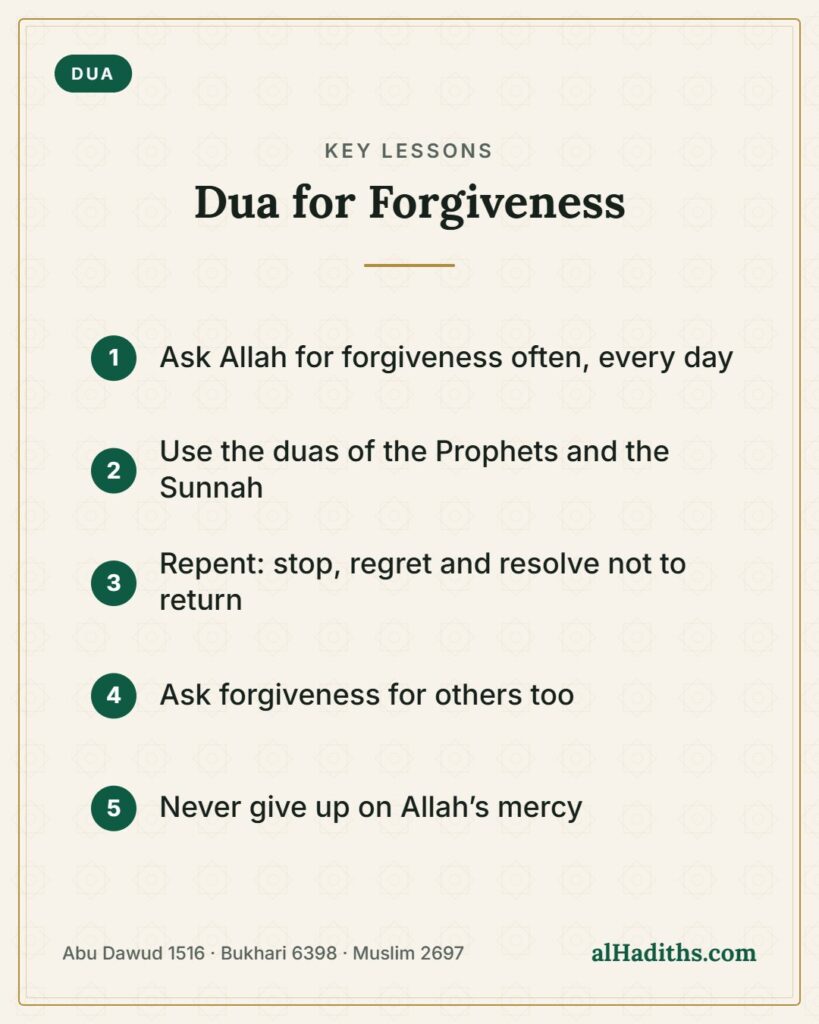
- Every dua for forgiveness starts with admitting the wrong, as Adam and Hawwa did.
- The Prophet ﷺ asked forgiveness often, sometimes a hundred times in one sitting.
- Short duas like “Rabbighfir li wa tub ʿalayya” are easy to repeat all day.
- Sincere repentance means stopping, regretting and resolving not to return.
- Asking forgiveness for others is praised in the Quran.
Part of our Dua series: see all our dua articles in one place.
Pick one of these duas for forgiveness and say it today, before you sleep.
Save this to Pinterest so you can keep these duas for forgiveness close
Share the reward. Send this article to someone who needs it today — teaching a hadith or dua can become a lasting good deed for you, in shaa Allah.