Doors of Good and Guarding the Tongue: Hadith 29 of an-Nawawi
Many of us keep careful count of our prayers and fasts, but rarely count our words. In Hadith 29 of Imam an-Nawawi’s collection, the Prophet ﷺ first shows Mu’adh ibn Jabal the doors of good, then takes hold of his own tongue and says: restrain this. This is the guard your tongue hadith, and it ties all our worship to what we say.
At a glance
- Source: Jami` at-Tirmidhi 2616 (Hadith 29 of an-Nawawi’s 40)
- Narrated by: Mu’adh ibn Jabal (may Allah be pleased with him)
- Grade: Hasan (Darussalam); at-Tirmidhi called it hasan sahih
- Topic: The pillars of Islam, the doors of good, and guarding the tongue
- Put it into practice: Before you speak today, ask: is this good, or should I stay quiet?
The hadith
Mu’adh ibn Jabal (may Allah be pleased with him) was traveling close to the Prophet ﷺ and asked him:
أَخْبِرْنِي بِعَمَلٍ يُدْخِلُنِي الْجَنَّةَ وَيُبَاعِدُنِي مِنَ النَّارِ “Inform me about an action by which I will be admitted into Paradise, and which will keep me far from the Fire.”
The Prophet ﷺ said that he had asked about something great, yet easy for whoever Allah makes it easy for: to worship Allah without associating anything with Him, establish the prayer, give zakah, fast Ramadan and perform Hajj. (These are the pillars of Islam; see the five pillars hadith.) Then he said:
أَلاَ أَدُلُّكَ عَلَى أَبْوَابِ الْخَيْرِ الصَّوْمُ جُنَّةٌ وَالصَّدَقَةُ تُطْفِئُ الْخَطِيئَةَ كَمَا يُطْفِئُ الْمَاءُ النَّارَ وَصَلاَةُ الرَّجُلِ مِنْ جَوْفِ اللَّيْلِ
“Shall I not guide you to the doors of good? Fasting is a shield, and charity extinguishes sins like water extinguishes fire – and a man’s praying in depths of the night.”
Jami` at-Tirmidhi 2616 · Narrated by Mu’adh ibn Jabal · Hasan (Darussalam) · Translation from Sunnah.com
Then he recited these two verses from Surah As-Sajdah:
تَتَجَافَىٰ جُنُوبُهُمْ عَنِ ٱلْمَضَاجِعِ يَدْعُونَ رَبَّهُمْ خَوْفًا وَطَمَعًا وَمِمَّا رَزَقْنَـٰهُمْ يُنفِقُونَ
“Their sides part [i.e., they arise] from [their] beds; they supplicate their Lord in fear and aspiration, and from what We have provided them, they spend.”
Surah As-Sajdah 32:16 · Translation: Saheeh International, from Quran.com
فَلَا تَعْلَمُ نَفْسٌ مَّآ أُخْفِىَ لَهُم مِّن قُرَّةِ أَعْيُنٍ جَزَآءًۢ بِمَا كَانُوا۟ يَعْمَلُونَ
“And no soul knows what has been hidden for them of comfort for eyes [i.e., satisfaction] as reward for what they used to do.”
Surah As-Sajdah 32:17 · Translation: Saheeh International, from Quran.com
Then he asked Mu’adh whether he should tell him the head of the whole matter, its pillar and its peak, and said:
رَأْسُ الأَمْرِ الإِسْلاَمُ وَعَمُودُهُ الصَّلاَةُ وَذِرْوَةُ سَنَامِهِ الْجِهَادُ
“The head of the matter is Islam, and its pillar is the Salat, and its hump is Jihad.”
Jami` at-Tirmidhi 2616 · Narrated by Mu’adh ibn Jabal · Hasan (Darussalam) · Translation from Sunnah.com
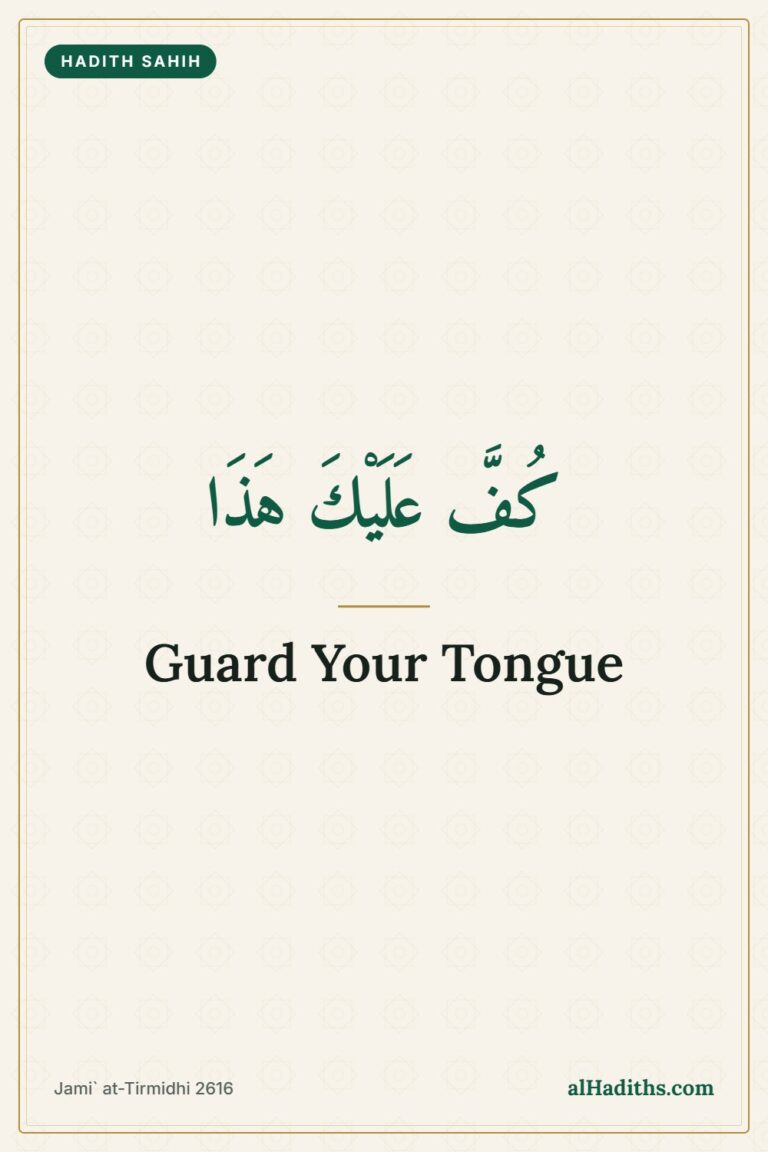
Finally he asked whether he should tell him what governs all of that. He took hold of his own tongue and said:
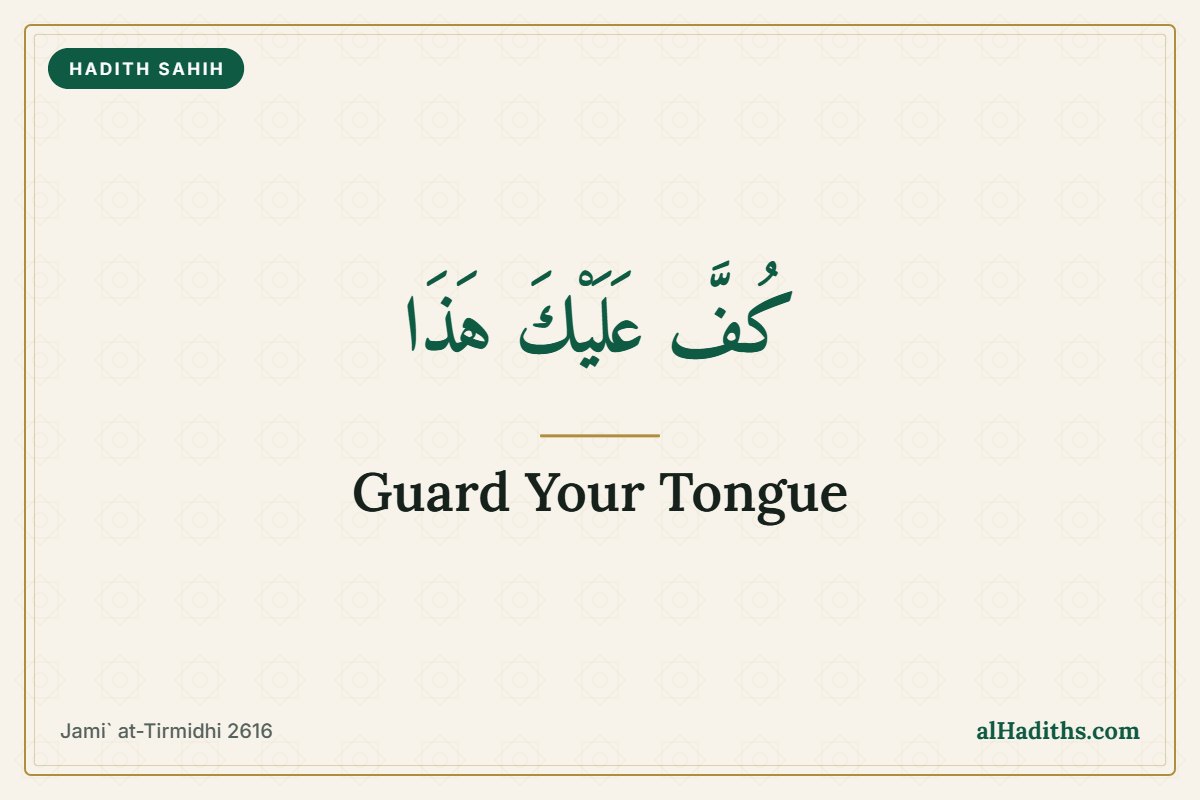
كُفَّ عَلَيْكَ هَذَا … وَهَلْ يَكُبُّ النَّاسَ فِي النَّارِ عَلَى وُجُوهِهِمْ أَوْ عَلَى مَنَاخِرِهِمْ إِلاَّ حَصَائِدُ أَلْسِنَتِهِمْ
“‘Restrain this.’ … ‘Are the people tossed into the Fire upon their faces, or upon their noses, except because of what their tongues have wrought?'”
Jami` at-Tirmidhi 2616 · Narrated by Mu’adh ibn Jabal · Hasan (Darussalam) · Translation adapted from Sunnah.com
In between, Mu’adh had asked whether we will really be held to account for what we say, and the Prophet ﷺ began his answer with the words “May your mother grieve your loss, O Mu’adh!” Imam an-Nawawi gives this hadith as Hadith 29 of his 40 Hadith.
The doors of good
The Encyclopedia of Translated Prophetic Hadiths (HadeethEnc) explains the three doors like this:
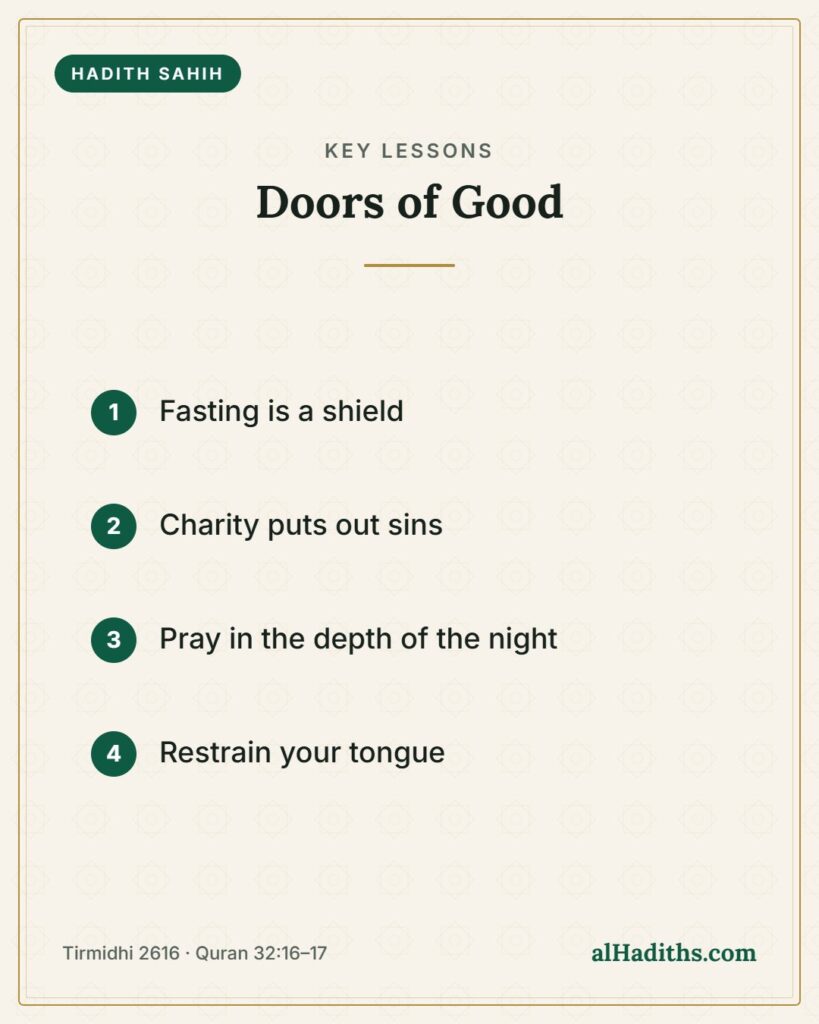
- Fasting is a shield: it protects from sin by weakening the desires that lead to it.
- Charity puts out sins after they are done and removes their traces, as water puts out fire.
- Prayer in the depth of the night: voluntary prayer in the last part of the night, with dhikr, Quran and dua. The verses the Prophet ﷺ recited describe exactly this, and the reward is a joy kept hidden for them.
HadeethEnc also explains the head, pillar and peak: the head is Islam, meaning the two testimonies of faith; the pillar is the prayer, because Islam cannot stand without it, just as a tent falls without its pole; and the peak is jihad, striving so that the word of Allah is highest. It adds that these extra doors show Allah’s mercy, since voluntary deeds after the obligatory ones bring a person closer to Him.
Guard your tongue: what the hadith means
- “Restrain this”: HadeethEnc explains that the Prophet ﷺ told Mu’adh to control his tongue and avoid speech that does not concern him.
- “May your mother grieve your loss”: this is not a curse. It is an Arabic expression used to make the listener pay attention to something important.
- “The harvest of their tongues”: HadeethEnc lists words of disbelief, slander, insults, backbiting, tale-bearing and false accusations as what can throw people on their faces into the Fire.
Among the benefits HadeethEnc lists: guarding the tongue against what harms one’s religion is obligatory, and controlling the tongue is the basis of all good.
Reflection: what stays with me is the order of the hadith. Mu’adh hears about the pillars, the doors of good, the night prayer and the peak of the religion, and only then is told what holds it all together. It is a reminder that a tongue left unchecked can quietly undo what our prayers and fasts have built.
How to put it into practice
The hadith does not set a number for these deeds, so these are suggestions:
- Pause before you speak or post, and ask whether it is good, true and needed.
- Keep a voluntary fast, such as Mondays and Thursdays or three days a month; see the best type of fasting.
- Give a small charity after a slip, hoping Allah wipes the sin away.
- Pray two rak’ahs at night, even a short prayer before you sleep or before Fajr.
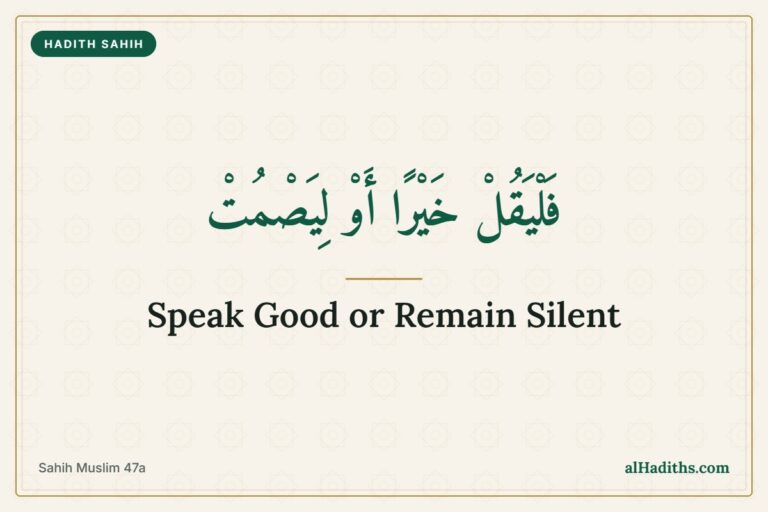
- Leave conversations that turn to backbiting; see speak good or remain silent.
Key lessons
- The pillars of Islam are the way to Jannah, and Allah makes them easy for whom He wills.
- Fasting, charity and the night prayer are doors of extra good.
- Prayer is the pillar of Islam.
- Guarding the tongue holds all of this together.
Questions people ask
What does “guard your tongue” mean in the hadith?
In Jami` at-Tirmidhi 2616 the Prophet ﷺ took hold of his tongue and told Mu’adh to restrain it. The Encyclopedia of Translated Prophetic Hadiths (HadeethEnc) explains this as controlling the tongue and avoiding speech that does not concern you.
What are the doors of good in the hadith of Mu’adh?
The Prophet ﷺ named three: fasting, which is a shield; charity, which puts out sins as water puts out fire; and a man’s prayer in the depth of the night.
What does “may your mother grieve your loss” mean?
HadeethEnc explains that it is not a curse but an Arabic expression used to draw attention to something important.
A question to reflect on: if your words today were weighed with your prayers, which would be heavier?
Save this to Pinterest so you can come back to this hadith later.
Share the reward. Send this article to someone who needs it today — teaching a hadith or dua can become a lasting good deed for you, in shaa Allah.