Dua of Prophet Yunus: Meaning, Benefits and When to Recite It
In the darkness of the sea, inside the belly of a whale, Prophet Yunus (peace be upon him) called out to Allah with a few short words, and Allah answered him. The Prophet ﷺ told us that any Muslim who makes the same dua of Prophet Yunus for any need will be answered too. Here is the dua, what it means, its benefits and when to recite it.
At a glance
- Source: Jami` at-Tirmidhi 3505; also Surah al-Anbiya 21:87–88
- Narrated by: Sa`d (may Allah be pleased with him)
- Grade: Sahih (Darussalam)
- Topic: Dua in distress, seeking forgiveness, asking Allah for any need
- Practise it: Memorise the one line and say it whenever you are struggling
The hadith
قَالَ رَسُولُ اللَّهِ صلى الله عليه وسلم “ دَعْوَةُ ذِي النُّونِ إِذْ دَعَا وَهُوَ فِي بَطْنِ الْحُوتِ لاَ إِلَهَ إِلاَّ أَنْتَ سُبْحَانَكَ إِنِّي كُنْتُ مِنَ الظَّالِمِينَ . فَإِنَّهُ لَمْ يَدْعُ بِهَا رَجُلٌ مُسْلِمٌ فِي شَيْءٍ قَطُّ إِلاَّ اسْتَجَابَ اللَّهُ لَهُ ” .
Ibrahim bin Muhammad bin Sa`d narrated from his father, from Sa`d that the Messenger of Allah (ﷺ) said: “The supplication of Dhun-Nun (Prophet Yunus) when he supplicated, while in the belly of the whale was: ‘There is none worthy of worship except You, Glory to You, Indeed, I have been of the transgressors. (Lā ilāha illā anta subḥānaka innī kuntu minaẓ-ẓālimīn)’ So indeed, no Muslim man supplicates with it for anything, ever, except Allah responds to him.”
Jami` at-Tirmidhi 3505 · Sahih (Darussalam) · Narrated by Sa`d
The dua of Prophet Yunus and its meaning
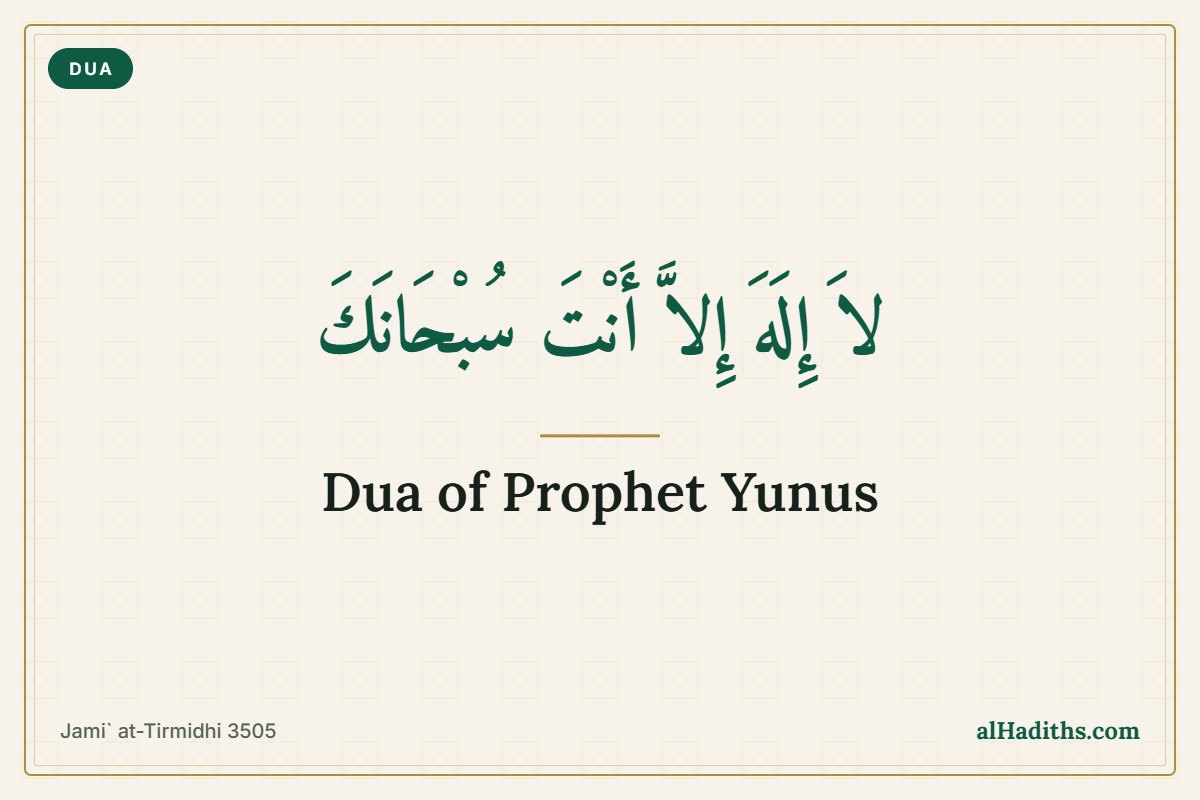
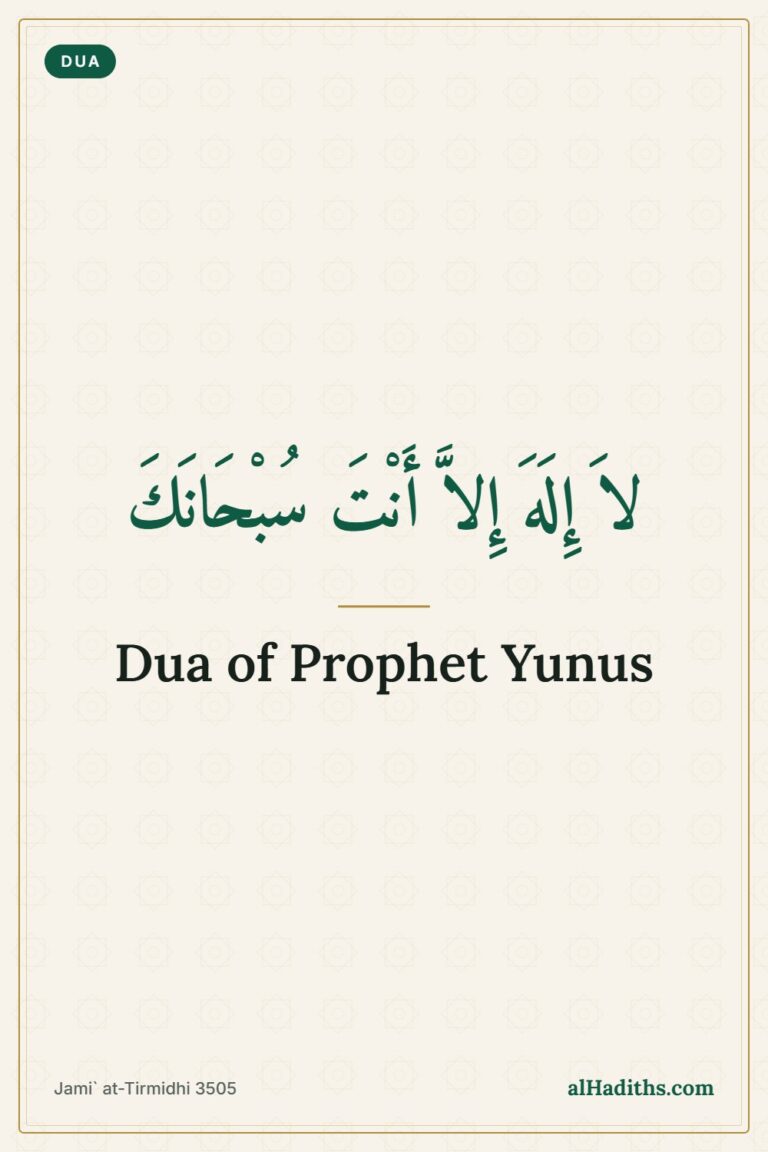
لاَ إِلَهَ إِلاَّ أَنْتَ سُبْحَانَكَ إِنِّي كُنْتُ مِنَ الظَّالِمِينَ
Lā ilāha illā anta subḥānaka innī kuntu minaẓ-ẓālimīn
“There is none worthy of worship except You, Glory to You, Indeed, I have been of the transgressors.”
The dua has three parts:
- Lā ilāha illā anta (لاَ إِلَهَ إِلاَّ أَنْتَ): “There is none worthy of worship except You.” He begins by affirming that only Allah can help him.
- Subḥānaka (سُبْحَانَكَ): “Glory to You.” He declares Allah free of any fault, even while he is in hardship.
- Innī kuntu minaẓ-ẓālimīn (إِنِّي كُنْتُ مِنَ الظَّالِمِينَ): “Indeed, I have been of the transgressors.” He admits his own wrong instead of blaming anyone else.
The benefits of the dua of Prophet Yunus
- Allah responds to it. The Prophet ﷺ said that no Muslim supplicates with it “for anything, ever, except Allah responds to him” (Jami` at-Tirmidhi 3505).
- It is for any need. The hadith says “for anything”, so it is not limited to one kind of problem.
- It brings relief from distress. Allah says He answered Yunus and “rescued him from anguish”, and then adds: “And so do We save the ˹true˺ believers” (Surah al-Anbiya 21:88).
- It teaches us how to ask. Before asking for anything, Yunus affirmed Allah’s oneness, glorified Him and owned up to his mistake. That is a beautiful model for every dua we make.
The story behind the dua in the Quran
Prophet Yunus (peace be upon him), also called Dhun-Nun, “the Man of the Whale”, left his people in anger. Allah tells us what happened next:
وَذَا ٱلنُّونِ إِذ ذَّهَبَ مُغَـٰضِبًا فَظَنَّ أَن لَّن نَّقْدِرَ عَلَيْهِ فَنَادَىٰ فِى ٱلظُّلُمَـٰتِ أَن لَّآ إِلَـٰهَ إِلَّآ أَنتَ سُبْحَـٰنَكَ إِنِّى كُنتُ مِنَ ٱلظَّـٰلِمِينَ
And ˹remember˺ when the Man of the Whale stormed off ˹from his city˺ in a rage, thinking We would not restrain him. Then in the ˹veils of˺ darkness he cried out, “There is no god ˹worthy of worship˺ except You. Glory be to You! I have certainly done wrong.”
Surah al-Anbiya 21:87 · Translation: Dr. Mustafa Khattab, The Clear Quran
And Allah’s answer in the very next verse:
فَٱسْتَجَبْنَا لَهُۥ وَنَجَّيْنَـٰهُ مِنَ ٱلْغَمِّ ۚ وَكَذَٰلِكَ نُـۨجِى ٱلْمُؤْمِنِينَ
So We answered his prayer and rescued him from anguish. And so do We save the ˹true˺ believers.
Surah al-Anbiya 21:88 · Translation: Dr. Mustafa Khattab, The Clear Quran
Reflection: What strikes me is that Yunus did not start by asking to be rescued. He started by saying who Allah is and admitting his own mistake, and the rescue came after that. When we feel trapped by our own problems, this dua reminds us to turn back to Allah first.
When to recite it
- In times of distress, just as Prophet Yunus called out from the darkness of the sea.
- When you need something from Allah. The Prophet ﷺ said it is answered “for anything”.
- When seeking forgiveness, because the dua ends by admitting our own wrong.
- In your sujud or after your prayers, as part of your own dua. The hadith does not fix a time or a number, so these are suggestions, not requirements.
Listen to the recitation
Key lessons
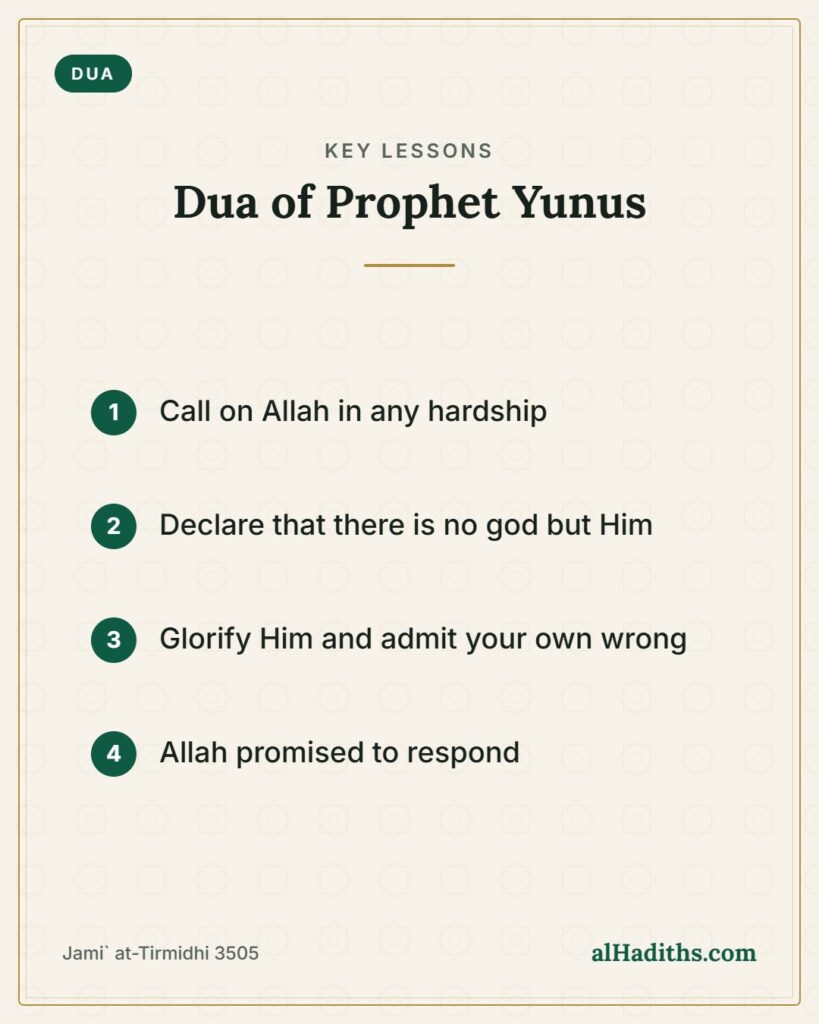
- No situation is too dark for Allah to hear you.
- The Prophet ﷺ promised that Allah responds to whoever makes this dua for any need (Jami` at-Tirmidhi 3505).
- Admitting our own wrongs is part of a sincere dua.
- Allah’s words “so do We save the ˹true˺ believers” (21:88) extend the promise to every believer.
Questions people ask
What are the benefits of the dua of Prophet Yunus?
The Prophet ﷺ said that no Muslim supplicates with it for anything, ever, except that Allah responds to him (Jami` at-Tirmidhi 3505, graded Sahih by Darussalam). In the Quran, Allah says He answered Yunus, rescued him from anguish, and saves the believers in the same way (Surah al-Anbiya 21:88).
How many times should I recite the dua of Yunus?
The hadith does not mention a number. You can say it whenever you need it, as often as you like. If you hear of a fixed number, it is not from this hadith.
Can I recite the dua of Yunus for any need?
Yes. The hadith says a Muslim who supplicates with it “for anything” will be answered. You can say the dua and then ask Allah for your need in your own words.
What does “inni kuntu minaz-zalimin” mean?
It means “Indeed, I have been of the transgressors” or “I have certainly done wrong”. Prophet Yunus was admitting his own mistake before Allah, which is part of what makes this dua so sincere.
One thing for today: memorise Lā ilāha illā anta subḥānaka innī kuntu minaẓ-ẓālimīn, so it is on your tongue the next time life feels dark. And teach it to your family, so they have it too.
Save this to Pinterest so you have the dua ready when you need it
Share the reward. Send this article to someone who needs it today — teaching a hadith or dua can become a lasting good deed for you, in shaa Allah.