Prophet Hud and Salih in the Hadith: The People of Aad and Thamud
Contents
Two Arab nations sit side by side in the Quran: ‘Ad, to whom Allah sent Prophet Hud, and Thamud, to whom He sent Prophet Salih. The authentic hadith add a few sharp details about the people of Aad and Thamud, and almost all of them are about one thing: how the Prophet ﷺ felt when he remembered them.
At a glance
- Hadith: 5, all from Sahih al-Bukhari, plus 2 Quran passages
- Grade: Sahih (Bukhari)
- Prophets: Hud (sent to ‘Ad) and Salih (sent to Thamud), Quran 7:65 and 7:73
- Topic: The wind, the ruins of al-Hijr and the she-camel
- One thing today: When you see dark clouds, think of both rain and punishment, and ask Allah for good
1. The wind that destroyed the people of Aad
Ibn ‘Abbas (may Allah be pleased with him) reported a short line in which the Prophet ﷺ set his own victory beside the end of ‘Ad.
نُصِرْتُ بِالصَّبَا، وَأُهْلِكَتْ عَادٌ بِالدَّبُورِ
“I have been given victory by the east wind (as-saba), and the people of ‘Ad were destroyed by the west wind (ad-dabur).”
Sahih al-Bukhari 3343 · Narrated by Ibn ‘Abbas · Translation adapted from Sunnah.com (also Bukhari 1035)
The same creation, wind, served one people and ended another. ‘Ad were known for their strength, yet the hadith needs only one word for how they fell: the west wind.
Take heed: strength, buildings and numbers did not protect ‘Ad. Only obedience to Allah protects.
2. Why clouds worried the Prophet ﷺ
‘A’ishah (may Allah be pleased with her) noticed that the Prophet ﷺ did not react to clouds the way other people did.
وَكَانَ إِذَا رَأَى غَيْمًا أَوْ رِيحًا عُرِفَ فِي وَجْهِهِ. قَالَتْ يَا رَسُولَ اللَّهِ إِنَّ النَّاسَ إِذَا رَأَوُا الْغَيْمَ فَرِحُوا، رَجَاءَ أَنْ يَكُونَ فِيهِ الْمَطَرُ، وَأَرَاكَ إِذَا رَأَيْتَهُ عُرِفَ فِي وَجْهِكَ الْكَرَاهِيَةُ. فَقَالَ يَا عَائِشَةُ مَا يُؤْمِنِّي أَنْ يَكُونَ فِيهِ عَذَابٌ عُذِّبَ قَوْمٌ بِالرِّيحِ، وَقَدْ رَأَى قَوْمٌ الْعَذَابَ فَقَالُوا {هَذَا عَارِضٌ مُمْطِرُنَا}
Whenever he saw clouds or wind, it showed on his face. She said, “O Messenger of Allah, when people see clouds they are glad, hoping for rain, yet when you see them I can see unease on your face.” He said: “O ‘A’ishah, what makes me safe that there is no punishment in it? A people were punished with the wind, and a people saw the punishment and said, ‘This is a cloud bringing us rain.’”
Sahih al-Bukhari 4829 · Narrated by ‘A’ishah · Translation adapted from Sunnah.com
The people he meant are ‘Ad. The Quran tells how they greeted the cloud that destroyed them:
فَلَمَّا رَأَوْهُ عَارِضًا مُّسْتَقْبِلَ أَوْدِيَتِهِمْ قَالُوا۟ هَـٰذَا عَارِضٌ مُّمْطِرُنَا ۚ بَلْ هُوَ مَا ٱسْتَعْجَلْتُم بِهِۦ ۖ رِيحٌ فِيهَا عَذَابٌ أَلِيمٌ
And when they saw it as a cloud approaching their valleys, they said, “This is a cloud bringing us rain!” Rather, it is that for which you were impatient: a wind, within it a painful punishment,
Surah al-Ahqaf 46:24 · Translation: Saheeh International, from Quran.com
The Prophet ﷺ knew the story, so a dark sky made him alert, not careless. Hope for rain and fear of punishment sat together in his heart.
Try this: the next time heavy clouds roll in, pause and ask Allah for the good in them.
3. The water of al-Hijr, the land of Thamud
On the way to Tabuk, the army camped at al-Hijr, the old home of Thamud. ‘Abdullah ibn ‘Umar (may Allah be pleased with him) reported what happened next. Al-Bukhari placed it in his chapter on “And to Thamud (We sent) their brother Salih”.
لَمَّا نَزَلَ الْحِجْرَ فِي غَزْوَةِ تَبُوكَ أَمَرَهُمْ أَنْ لاَ يَشْرَبُوا مِنْ بِئْرِهَا، وَلاَ يَسْتَقُوا مِنْهَا فَقَالُوا قَدْ عَجَنَّا مِنْهَا، وَاسْتَقَيْنَا. فَأَمَرَهُمْ أَنْ يَطْرَحُوا ذَلِكَ الْعَجِينَ وَيُهَرِيقُوا ذَلِكَ الْمَاءَ
When the Messenger of Allah ﷺ camped at al-Hijr during the expedition of Tabuk, he told them not to drink from its well or draw water from it. They said, “We have already kneaded dough with it and drawn water.” So he told them to throw away that dough and pour out that water.
Sahih al-Bukhari 3378 · Narrated by ‘Abdullah ibn ‘Umar · Translation adapted from Sunnah.com
The companions had already done the work: kneaded the dough and filled their water skins. The Prophet ﷺ still told them to throw it away. Nothing from that well was worth keeping.
Try this: when something is clearly off-limits, let it go even if you have already put effort into it.
4. Enter only weeping: the ruins of the people of Thamud
Ibn ‘Umar also reported what the Prophet ﷺ said as he passed the ruins.
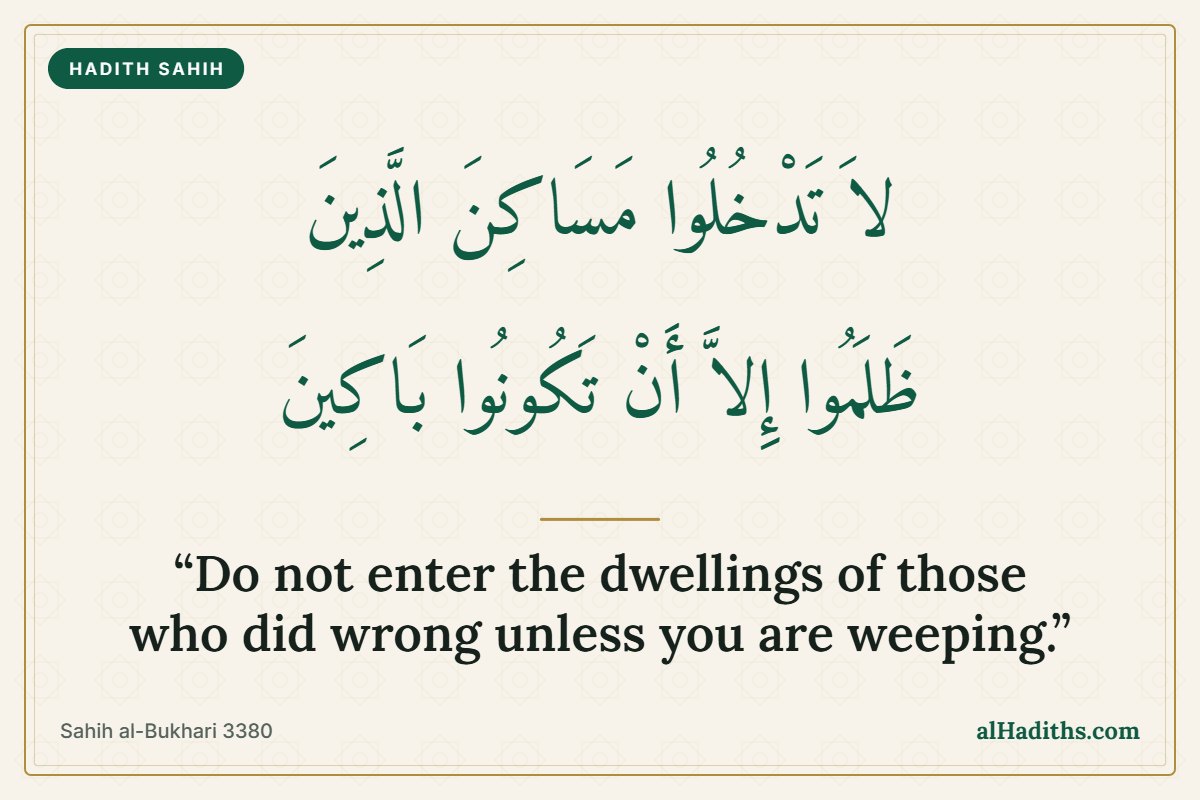
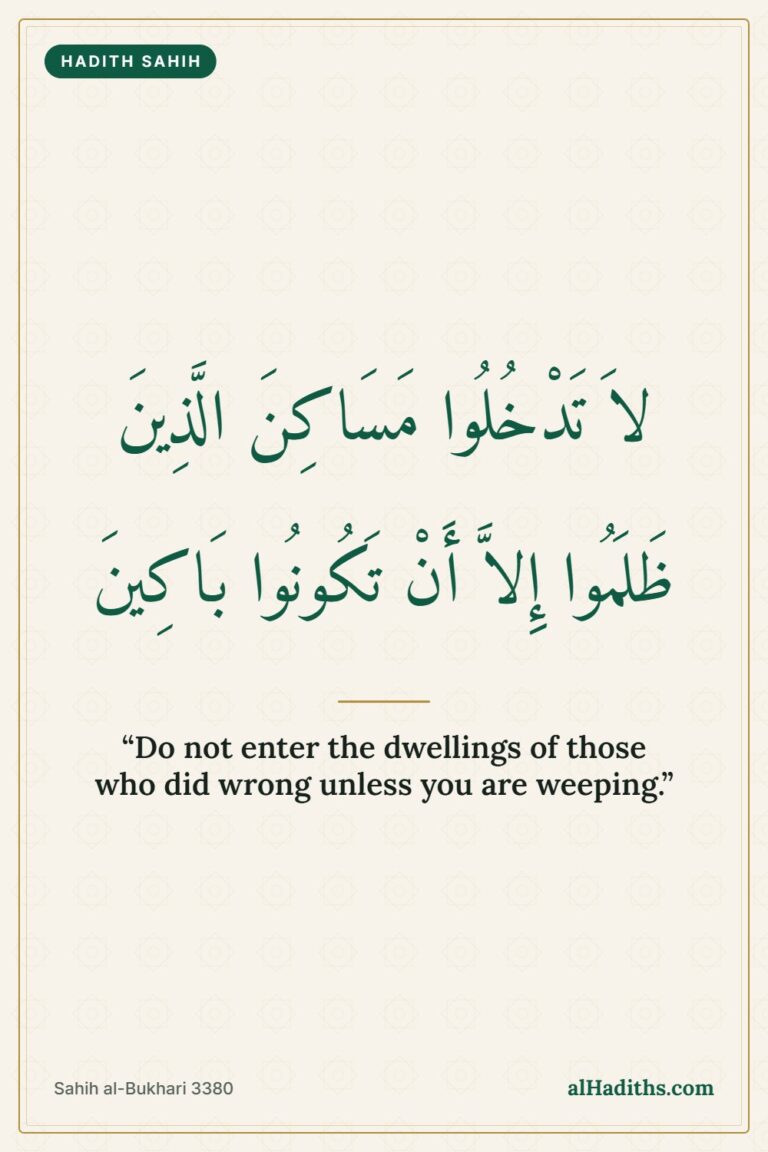
لَمَّا مَرَّ بِالْحِجْرِ قَالَ لاَ تَدْخُلُوا مَسَاكِنَ الَّذِينَ ظَلَمُوا إِلاَّ أَنْ تَكُونُوا بَاكِينَ، أَنْ يُصِيبَكُمْ مَا أَصَابَهُمْ. ثُمَّ تَقَنَّعَ بِرِدَائِهِ، وَهْوَ عَلَى الرَّحْلِ
When the Prophet ﷺ passed by al-Hijr, he said: “Do not enter the dwellings of those who did wrong unless you are weeping, lest what befell them befalls you.” Then he covered his head with his cloak while he was on his saddle.
Sahih al-Bukhari 3380 · Narrated by ‘Abdullah ibn ‘Umar · Translation adapted from Sunnah.com (also Muslim 2980)
These were not sights for a day trip. He covered his head and, in another version in Muslim, urged his mount on until he had passed the valley (Muslim 2980b). HadeethEnc explains the hadith as a warning to reflect on what happened to them and fear the same (HadeethEnc 66294).
Take heed: a place where people were punished is a lesson, not entertainment.
5. The she-camel and the man who hamstrung it
‘Abdullah ibn Zam‘ah (may Allah be pleased with him) heard the Prophet ﷺ speak about Thamud’s she-camel in a sermon. The sermon went on to other subjects, so the card below is trimmed to this part.
يَخْطُبُ وَذَكَرَ النَّاقَةَ وَالَّذِي عَقَرَ فَقَالَ رَسُولُ اللَّهِ صلى الله عليه وسلم {إِذِ انْبَعَثَ أَشْقَاهَا} انْبَعَثَ لَهَا رَجُلٌ عَزِيزٌ عَارِمٌ، مَنِيعٌ فِي رَهْطِهِ، مِثْلُ أَبِي زَمْعَةَ
He heard the Prophet ﷺ giving a sermon, and he mentioned the she-camel and the one who hamstrung it. The Messenger of Allah ﷺ said: “‘When the most wretched of them rose up’ (91:12): a strong, fierce man rose up for it, well protected among his clan, like Abu Zam‘ah.”
Sahih al-Bukhari 4942 · Narrated by ‘Abdullah ibn Zam‘ah · Translation adapted from Sunnah.com (trimmed)
The Quran finishes the story:
فَقَالَ لَهُمْ رَسُولُ ٱللَّهِ نَاقَةَ ٱللَّهِ وَسُقْيَـٰهَا فَكَذَّبُوهُ فَعَقَرُوهَا فَدَمْدَمَ عَلَيْهِمْ رَبُّهُم بِذَنۢبِهِمْ فَسَوَّىٰهَا
And the messenger of Allāh [i.e., Ṣāliḥ] said to them, “[Do not harm] the she-camel of Allāh or [prevent her from] her drink.” But they denied him and hamstrung her. So their Lord brought down upon them destruction for their sin and made it equal [upon all of them].
Surah ash-Shams 91:13–14 · Translation: Saheeh International, from Quran.com
One man did the deed, protected by his clan, and the whole people shared the punishment because they went along with it. The Prophet ﷺ compared him to a man his listeners knew well, Abu Zam‘ah.
Take heed: staying silent while wrong is done can make us part of it.
Bringing it together
Reflection: I notice that none of these hadith describe Hud or Salih themselves. They describe how the Prophet ﷺ carried their stories: watching the clouds, pouring away water, covering his head, warning from the minbar. Their stories were not old tales to him; they shaped how he lived.
Questions people ask
Who was Prophet Hud sent to?
Allah sent Hud to the people of ‘Ad (Quran 7:65 and 11:50). The authentic hadith we checked say nothing about his grave, his height or his family, so we leave those claims aside.
Is al-Hijr the same as Mada’in Salih?
Al-Hijr is the name the hadith use for the land of Thamud. It is widely identified with the ruins near al-Ula in Saudi Arabia, also called Hegra. Scholars discuss visiting it today; for a ruling, ask a qualified local scholar.
Are there authentic hadith about Prophet Shu‘ayb?
We found no authentic hadith on Sunnah.com that names Prophet Shu‘ayb. His story with the people of Madyan is told in the Quran (7:85–93 and 11:84–95). The popular line calling him “the orator of the prophets” is not in the authentic collections we checked.
Key lessons
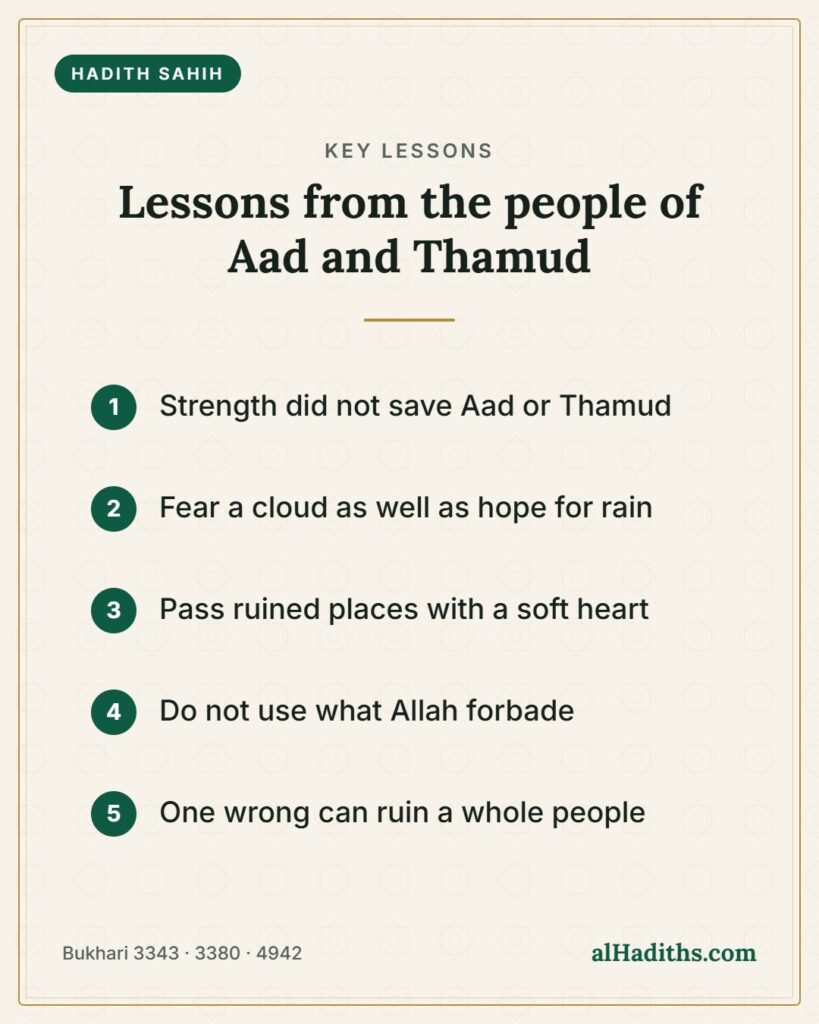
- ‘Ad and Thamud were strong, and their strength did not save them.
- The Prophet ﷺ met dark clouds with hope and fear together.
- He threw away water and dough from the land of Thamud.
- He told his companions to pass their ruins only weeping.
- One man struck the she-camel; a whole people who backed him were destroyed.
Part of our Prophets in the Hadith series: see all our articles on the prophets in one place.
May Allah make us people who learn from the stories of those before us, rather than people others learn from.
Save this to Pinterest so you can pass on the warning of Aad and Thamud
Share the reward. Send this article to someone who needs it today — teaching a hadith or dua can become a lasting good deed for you, in shaa Allah.