Backbiting in Islam: 6 Authentic Hadith on Ghibah and Gossip
Contents
A chat with friends, a family WhatsApp group, a quick “did you hear about…”. Backbiting in Islam is one of the easiest sins to fall into because it rarely feels like a sin at the time. The Prophet ﷺ defined it clearly, warned about it strongly, and showed us the reward for doing the opposite. Here are six authentic hadith on it.
At a glance
- Hadith: 6, plus Surah Al-Hujurat 49:12
- Collections: Sahih Muslim, Sahih al-Bukhari, Sunan Abi Dawud, Jami’ at-Tirmidhi
- Grade: Sahih or Hasan (graders named on each card)
- Topic: Backbiting (ghibah), slander and tale-carrying
- One thing to do today: Before you speak about someone who is absent, ask: would they dislike hearing this?
1. What backbiting is
Abu Hurairah (may Allah be pleased with him) narrated that the Messenger of Allah ﷺ asked his Companions:
أَتَدْرُونَ مَا الْغِيبَةُ. قَالُوا اللَّهُ وَرَسُولُهُ أَعْلَمُ. قَالَ ذِكْرُكَ أَخَاكَ بِمَا يَكْرَهُ. قِيلَ أَفَرَأَيْتَ إِنْ كَانَ فِي أَخِي مَا أَقُولُ قَالَ إِنْ كَانَ فِيهِ مَا تَقُولُ فَقَدِ اغْتَبْتَهُ وَإِنْ لَمْ يَكُنْ فِيهِ فَقَدْ بَهَتَّهُ
“Do you know what backbiting is?” They said, “Allah and His Messenger know best.” He said, “It is mentioning your brother in a way he dislikes.” It was said, “What if what I say is true of my brother?” He said, “If what you say is true of him, you have backbitten him. And if it is not true of him, you have slandered him.”
Sahih Muslim 2589 · Narrated by Abu Hurairah · Translation adapted from Sunnah.com
This one hadith closes the usual excuse, “but it’s true”. Being true is exactly what makes it backbiting; being false makes it something worse, slander (buhtan). The test is simple: would the person dislike hearing it?
Try this: next time you catch yourself saying “I’m only telling the truth”, stop and change the subject.
2. One word that could change the sea
Aisha (may Allah be pleased with her) narrated:
قُلْتُ لِلنَّبِيِّ صلى الله عليه وسلم حَسْبُكَ مِنْ صَفِيَّةَ كَذَا وَكَذَا قَالَ غَيْرُ مُسَدَّدٍ تَعْنِي قَصِيرَةً. فَقَالَ لَقَدْ قُلْتِ كَلِمَةً لَوْ مُزِجَتْ بِمَاءِ الْبَحْرِ لَمَزَجَتْهُ
I said to the Prophet ﷺ, “It is enough for you about Safiyyah that she is such and such” (a narrator said: meaning she was short). He said, “You have said a word which would change the sea if it were mixed in it.”
Sunan Abi Dawud 4875 · Sahih (al-Albani) · Narrated by Aisha · Translation adapted from Sunnah.com
It was a single remark about how someone looked, the kind of comment many of us would not even notice. Yet the Prophet ﷺ described it as strong enough to change the taste of the sea. A similar report is in Jami’ at-Tirmidhi 2502 (Sahih, Darussalam).
Try this: drop jokes about people’s looks, height, weight or accent, even “harmless” ones.
3. The punishment of backbiting
Anas ibn Malik (may Allah be pleased with him) narrated that the Messenger of Allah ﷺ said:
لَمَّا عُرِجَ بِي مَرَرْتُ بِقَوْمٍ لَهُمْ أَظْفَارٌ مِنْ نُحَاسٍ يَخْمِشُونَ وُجُوهَهُمْ وَصُدُورَهُمْ فَقُلْتُ مَنْ هَؤُلاَءِ يَا جِبْرِيلُ قَالَ هَؤُلاَءِ الَّذِينَ يَأْكُلُونَ لُحُومَ النَّاسِ وَيَقَعُونَ فِي أَعْرَاضِهِمْ
“When I was taken up to heaven, I passed by people who had nails of copper and were scratching their faces and their chests. I said, ‘Who are these people, O Jibril?’ He said, ‘These are the ones who ate people’s flesh and attacked their honor.’”
Sunan Abi Dawud 4878 · Sahih (al-Albani) · Narrated by Anas ibn Malik · Translation adapted from Sunnah.com
“Eating people’s flesh” is the Quran’s own picture of backbiting (49:12, below). Those who tore at others’ honor with their tongues are shown tearing at their own faces.
Take heed: the honor we damage in a few words is weighed far more heavily than it felt when we said them.
4. Do not chase people’s faults
Abu Barzah al-Aslami (may Allah be pleased with him) narrated that the Messenger of Allah ﷺ said:
يَا مَعْشَرَ مَنْ آمَنَ بِلِسَانِهِ وَلَمْ يَدْخُلِ الإِيمَانُ قَلْبَهُ لاَ تَغْتَابُوا الْمُسْلِمِينَ وَلاَ تَتَّبِعُوا عَوْرَاتِهِمْ فَإِنَّهُ مَنِ اتَّبَعَ عَوْرَاتِهِمْ يَتَّبِعِ اللَّهُ عَوْرَتَهُ وَمَنْ يَتَّبِعِ اللَّهُ عَوْرَتَهُ يَفْضَحْهُ فِي بَيْتِهِ
“O you who have believed with your tongues while faith has not entered your hearts! Do not backbite the Muslims and do not search out their faults. Whoever searches out their faults, Allah will search out his fault, and whoever Allah searches out his fault, He will disgrace him in his own house.”
Sunan Abi Dawud 4880 · Hasan Sahih (al-Albani) · Narrated by Abu Barzah al-Aslami · Translation adapted from Sunnah.com
Backbiting often starts with curiosity: scrolling through someone’s posts, asking around, digging. The hadith ties backbiting and fault-hunting together, and warns that the one who exposes others may be exposed by Allah.
Try this: when you hear about someone’s mistake, cover it rather than pass it on.
5. Carrying tales (namimah)
Hammam said they were with Hudhaifah (may Allah be pleased with him) when he was told that a man was carrying talk to Uthman. Hudhaifah said he heard the Prophet ﷺ say:
لاَ يَدْخُلُ الْجَنَّةَ قَتَّاتٌ
“A qattat (tale-carrier) will not enter Paradise.”
Sahih al-Bukhari 6056 · Narrated by Hudhaifah · Translation adapted from Sunnah.com
Backbiting talks about a person; tale-carrying takes what one person said and passes it to another to stir up trouble. The same hadith in Sahih Muslim 105a uses the word for a tale-bearer.
Try this: if someone tells you what another person said about you, don’t pass it back. Let it stop with you.
6. Defend your brother’s honor
Abu ad-Darda (may Allah be pleased with him) narrated that the Prophet ﷺ said:
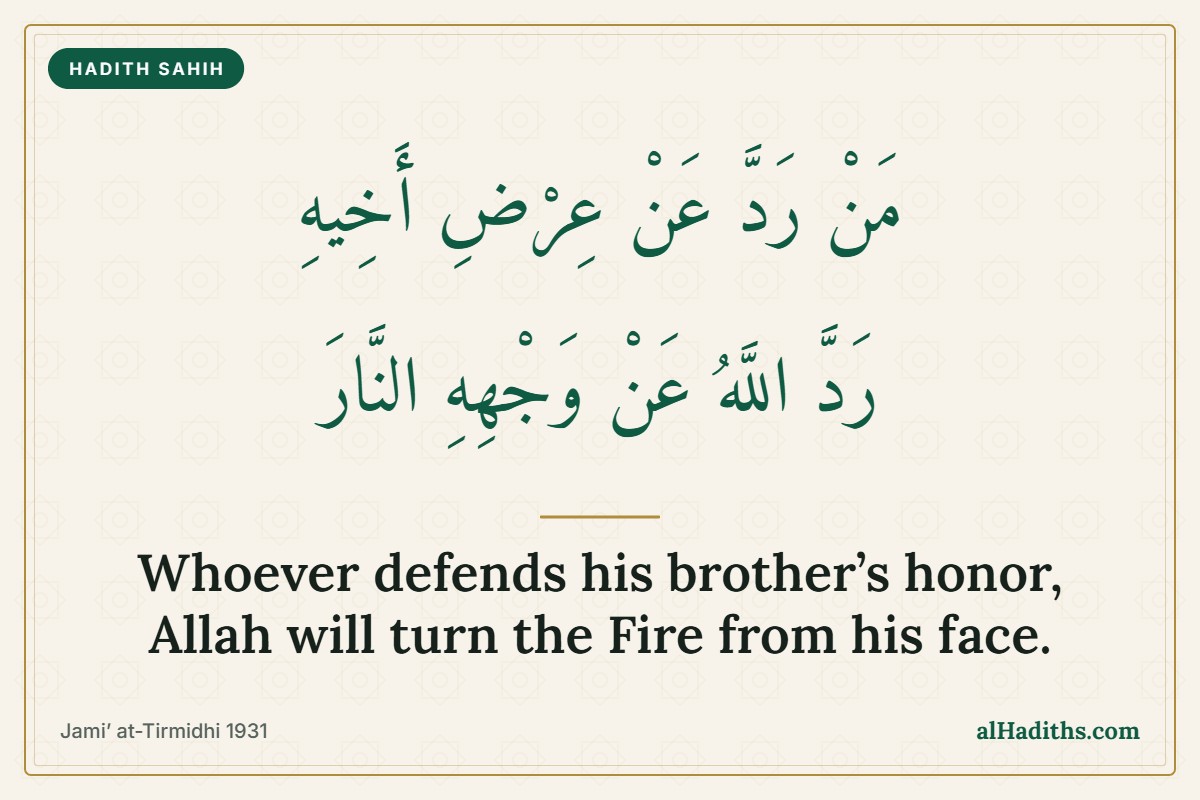
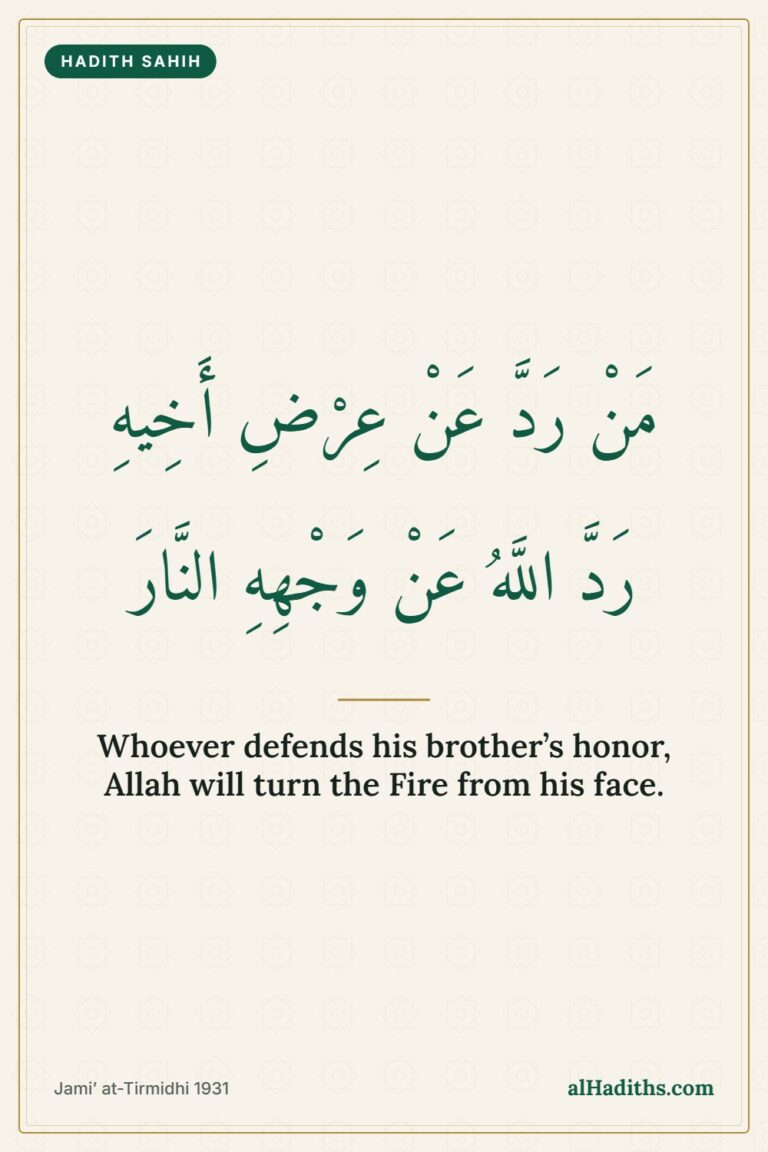
مَنْ رَدَّ عَنْ عِرْضِ أَخِيهِ رَدَّ اللَّهُ عَنْ وَجْهِهِ النَّارَ يَوْمَ الْقِيَامَةِ
“Whoever defends his brother’s honor, Allah will turn the Fire away from his face on the Day of Resurrection.”
Jami’ at-Tirmidhi 1931 · Hasan (Darussalam) · Narrated by Abu ad-Darda · Translation adapted from Sunnah.com
Staying silent is good; speaking up for the absent person is better. A short “let’s not talk about him while he isn’t here” can turn a sin into a reward.
Try this: prepare one line you can say when a conversation turns to backbiting, so you are ready next time.
Bringing it together: backbiting in Islam
Allah describes backbiting with an image no one can forget:
يَـٰٓأَيُّهَا ٱلَّذِينَ ءَامَنُوا۟ ٱجْتَنِبُوا۟ كَثِيرًا مِّنَ ٱلظَّنِّ إِنَّ بَعْضَ ٱلظَّنِّ إِثْمٌ ۖ وَلَا تَجَسَّسُوا۟ وَلَا يَغْتَب بَّعْضُكُم بَعْضًا ۚ أَيُحِبُّ أَحَدُكُمْ أَن يَأْكُلَ لَحْمَ أَخِيهِ مَيْتًا فَكَرِهْتُمُوهُ ۚ وَٱتَّقُوا۟ ٱللَّهَ ۚ إِنَّ ٱللَّهَ تَوَّابٌ رَّحِيمٌ
O you who have believed, avoid much [negative] assumption. Indeed, some assumption is sin. And do not spy or backbite each other. Would one of you like to eat the flesh of his brother when dead? You would detest it. And fear Allāh; indeed, Allāh is Accepting of Repentance and Merciful.
Surah Al-Hujurat 49:12 · Translation: Saheeh International, from Quran.com
Reflection: the verse ends with Allah accepting repentance and being merciful. None of us is free of this sin, but the door back is open: stop, ask Allah’s forgiveness, and where we can, make up for it by speaking well of the person we spoke against.
Questions people ask
Is it backbiting if what I say is true?
Yes. In Sahih Muslim 2589 the Prophet ﷺ said that if what you say is true of him, you have backbitten him, and if it is not true, you have slandered him.
What is the punishment for backbiting in Islam?
The Quran compares it to eating the flesh of one’s dead brother (49:12), and in Sunan Abi Dawud 4878 (Sahih, al-Albani) the Prophet ﷺ saw those who attacked people’s honor scratching their own faces and chests with nails of copper.
Is it ever allowed to talk about someone’s faults?
Scholars mention some cases, such as seeking help against injustice or giving honest advice when asked about someone before a marriage or a deal. These have conditions and limits, so ask a qualified local scholar about your own situation.
Key lessons
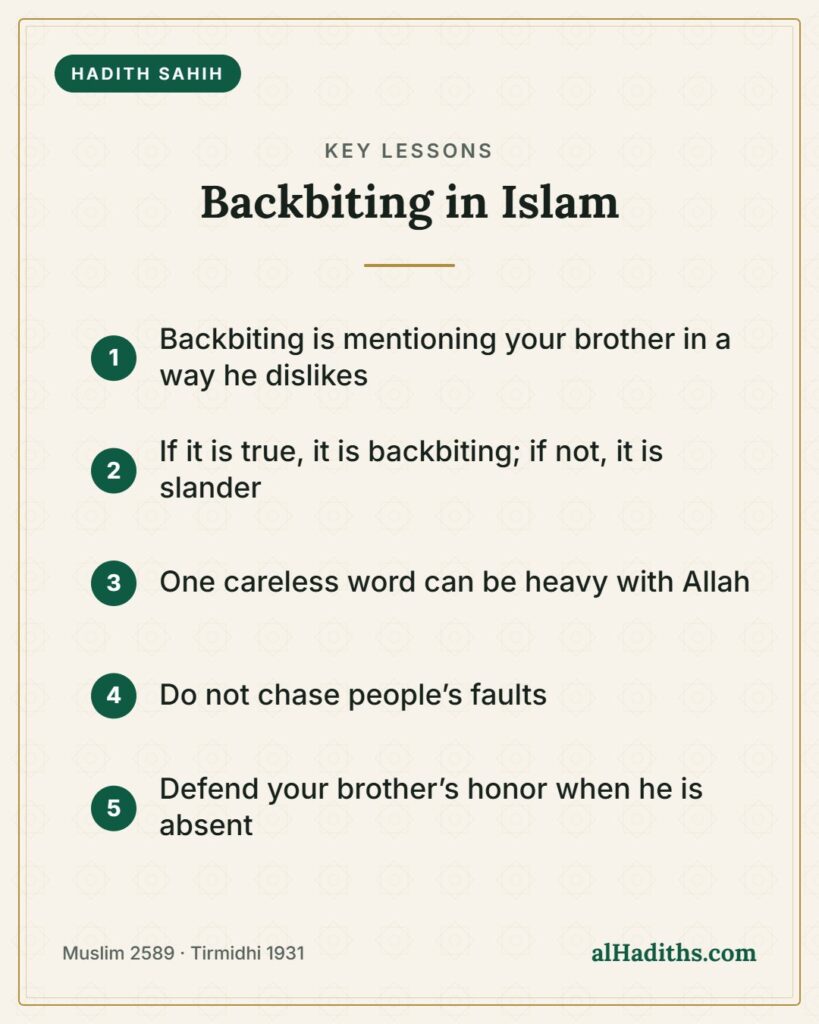
- Backbiting is mentioning your brother in a way he dislikes, even if it is true.
- A single remark about someone’s looks can be heavy in Allah’s sight.
- Searching out people’s faults invites Allah to expose our own.
- Tale-carrying is a separate, serious sin.
- Defending someone’s honor in their absence is a means of protection from the Fire.
Which conversation this week could you steer away from backbiting, or turn into a defence of someone who isn’t there?
Save this to Pinterest so you have these hadith on backbiting ready the next time a conversation turns.
Share the reward. Send this article to someone who needs it today — teaching a hadith or dua can become a lasting good deed for you, in shaa Allah.