Dhikr Meaning: What Is Dhikr in Islam? 6 Authentic Hadith
Contents
If you have ever asked what the word means, here is the dhikr meaning in one line: dhikr is the remembrance of Allah. The Arabic word means both to remember and to mention, so it covers what we hold in the heart and what we say with the tongue. Below are 6 authentic hadith that show what dhikr is, how it changes a person, and why the Prophet ﷺ called it the best of deeds.
At a glance
- Hadith: 6 authentic hadith + 2 Quran verses
- Collections: Sahih al-Bukhari, Sahih Muslim, Jami‘ at-Tirmidhi
- Grade: Sahih or Hasan
- Topic: Dhikr (remembrance of Allah)
- Today: Keep your tongue busy with one short dhikr while you walk, drive or wait
Dhikr meaning: what is dhikr in Islam?
In the Quran and the Sunnah, dhikr is any remembrance of Allah: praising Him, glorifying Him, declaring His oneness, thanking Him and calling on Him. Allah commands it directly:
يَـٰٓأَيُّهَا ٱلَّذِينَ ءَامَنُوا۟ ٱذْكُرُوا۟ ٱللَّهَ ذِكْرًا كَثِيرًا
“O you who have believed, remember Allāh with much remembrance”
Surah al-Ahzab 33:41 · Translation: Saheeh International, from Quran.com
The everyday words of dhikr are short: SubhanAllah (glory be to Allah), Alhamdulillah (all praise is for Allah), La ilaha illallah (there is no god but Allah) and Allahu Akbar (Allah is the Greatest). We explain them in the four heavy phrases of dhikr, and the Prophet ﷺ named the best of them in the best remembrance and supplication. You will find these terms, and many more, in our glossary of Islamic words.
Dhikr is wider than a list of phrases. In HadeethEnc’s explanation of Muslim 2676, the scholars note that dhikr can be with the tongue alone, the heart alone, or both together, which is the highest level. They also cite an-Nawawi: the virtue of dhikr is not limited to tasbih, tahlil, tahmid and takbir, because everyone who obeys Allah is, in that act, remembering Him.
1. The living and the dead
Abu Musa al-Ash‘ari (may Allah be pleased with him) narrated this short comparison from the Prophet ﷺ.
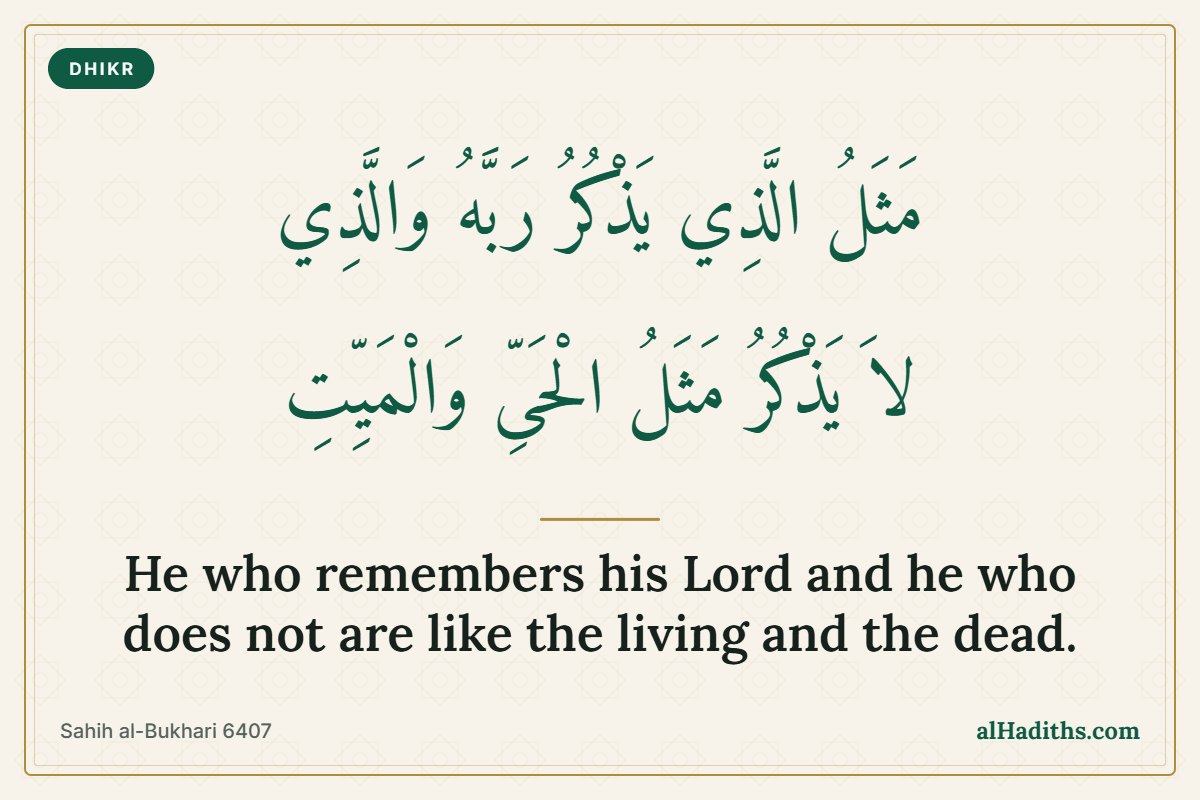
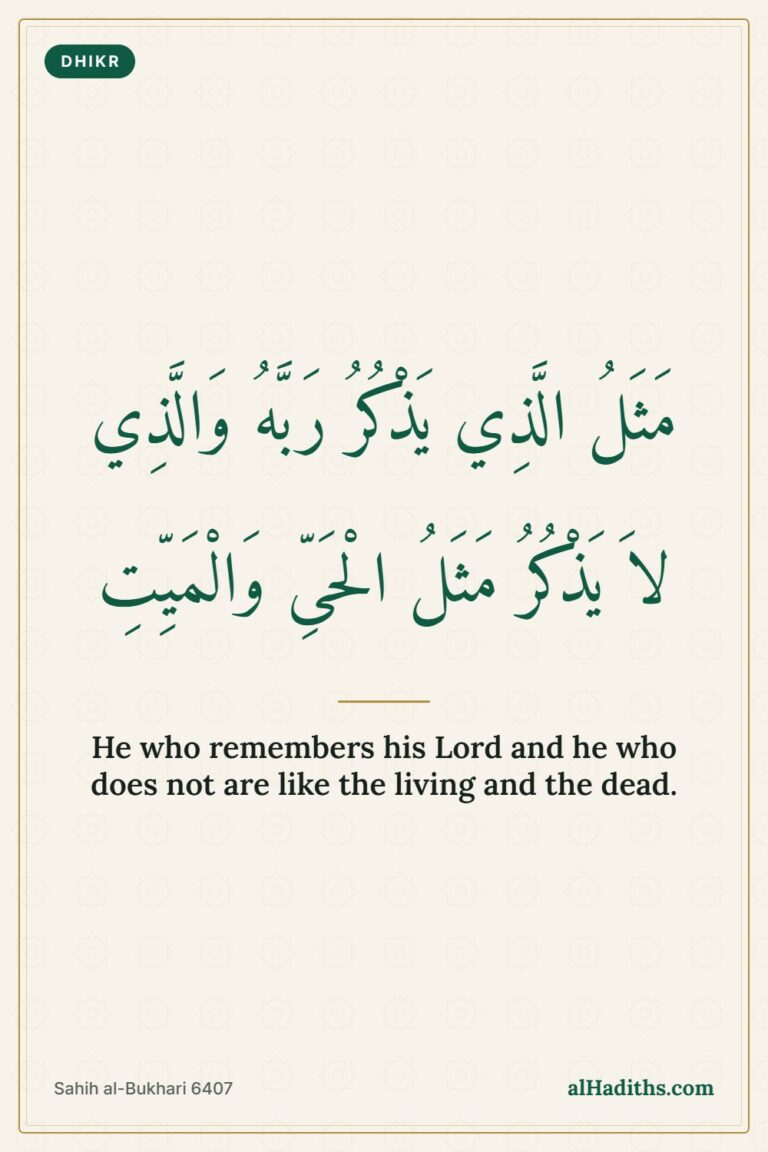
مَثَلُ الَّذِي يَذْكُرُ رَبَّهُ وَالَّذِي لاَ يَذْكُرُ مَثَلُ الْحَىِّ وَالْمَيِّتِ
“The example of the one who remembers his Lord and the one who does not remember Him is that of the living and the dead.”
Sahih al-Bukhari 6407 · Narrated by Abu Musa al-Ash‘ari · Translation adapted from Sunnah.com
A body without a soul is still there, but it has no life. HadeethEnc explains that the one who remembers Allah is like a living person, outwardly and inwardly, while the heedless one is like the dead. Its benefits add an-Nawawi’s point that a house should not be empty of the remembrance of Allah.
Try this: choose one room or one moment at home, such as after Maghrib, and make it a time when Allah is remembered aloud, even for two minutes.
2. Allah is with the one who remembers Him
Abu Hurayrah (may Allah be pleased with him) narrated this Hadith Qudsi, in which the Prophet ﷺ tells us what Allah says.
يَقُولُ اللَّهُ تَعَالَى أَنَا عِنْدَ ظَنِّ عَبْدِي بِي، وَأَنَا مَعَهُ إِذَا ذَكَرَنِي، فَإِنْ ذَكَرَنِي فِي نَفْسِهِ ذَكَرْتُهُ فِي نَفْسِي، وَإِنْ ذَكَرَنِي فِي مَلأٍ ذَكَرْتُهُ فِي مَلأٍ خَيْرٍ مِنْهُمْ، وَإِنْ تَقَرَّبَ إِلَىَّ بِشِبْرٍ تَقَرَّبْتُ إِلَيْهِ ذِرَاعًا، وَإِنْ تَقَرَّبَ إِلَىَّ ذِرَاعًا تَقَرَّبْتُ إِلَيْهِ بَاعًا، وَإِنْ أَتَانِي يَمْشِي أَتَيْتُهُ هَرْوَلَةً
“Allah the Exalted says: ‘I am as My slave thinks I am, and I am with him when he remembers Me. If he remembers Me in himself, I remember him in Myself; and if he remembers Me in a group of people, I remember him in a group that is better than them. If he comes one span nearer to Me, I go one cubit nearer to him; if he comes one cubit nearer to Me, I go the length of two outstretched arms nearer to him; and if he comes to Me walking, I go to him running.’”
Sahih al-Bukhari 7405 · Narrated by Abu Hurayrah · Translation adapted from Sunnah.com
This is the heart of the dhikr meaning: when we remember Allah, He remembers us. HadeethEnc explains that Allah is with the one who remembers Him through mercy, success, guidance, care and support, and that His reward always exceeds the small step the slave takes towards Him.
Try this: when you feel alone or worried, remember Allah quietly in your heart and then with your tongue, trusting that He is with you as you do.
3. Angels surround the gatherings of dhikr
Al-Agharr Abu Muslim reported that Abu Hurayrah and Abu Sa‘id al-Khudri (may Allah be pleased with them) both bore witness that the Prophet ﷺ said:
لاَ يَقْعُدُ قَوْمٌ يَذْكُرُونَ اللَّهَ عَزَّ وَجَلَّ إِلاَّ حَفَّتْهُمُ الْمَلاَئِكَةُ وَغَشِيَتْهُمُ الرَّحْمَةُ وَنَزَلَتْ عَلَيْهِمُ السَّكِينَةُ وَذَكَرَهُمُ اللَّهُ فِيمَنْ عِنْدَهُ
“No people sit remembering Allah, the Mighty and Majestic, except that the angels surround them, mercy covers them, tranquility descends upon them, and Allah mentions them among those who are with Him.”
Sahih Muslim 2700a · Narrated by Abu Hurayrah and Abu Sa‘id al-Khudri · Translation adapted from Sunnah.com
Four gifts are named here: the company of angels, mercy, tranquility, and being mentioned by Allah. Dhikr is something we can do alone, but this hadith shows the special reward of doing it together, in a circle of learning, a family gathering or after salah in the masjid.
Try this: sit with your family for five minutes this week to read a few verses of the Quran or say the morning or evening dhikr together.
4. The mufarridun have gone ahead
Abu Hurayrah narrated that the Prophet ﷺ was travelling on the road to Makkah and passed a mountain called Jumdan. He said:
سِيرُوا هَذَا جُمْدَانُ سَبَقَ الْمُفَرِّدُونَ قَالُوا وَمَا الْمُفَرِّدُونَ يَا رَسُولَ اللَّهِ قَالَ الذَّاكِرُونَ اللَّهَ كَثِيرًا وَالذَّاكِرَاتُ
“Move on, this is Jumdan. The mufarridun have gone ahead.” They said, “And who are the mufarridun, O Messenger of Allah?” He said, “The men and women who remember Allah much.”
Sahih Muslim 2676 · Narrated by Abu Hurayrah · Translation adapted from Sunnah.com
HadeethEnc explains that the Prophet ﷺ likened those who remember Allah much to Jumdan, a mountain standing on its own, because they move ahead of others to the highest ranks of Paradise. The same words close a famous verse, Surah al-Ahzab 33:35, which promises them forgiveness and a great reward.
Try this: link a short dhikr to something you already do many times a day, such as unlocking your phone or waiting at a traffic light.
5. Keep your tongue moist with dhikr
‘Abdullah ibn Busr (may Allah be pleased with him) narrated that a man came to the Prophet ﷺ feeling overwhelmed.
يَا رَسُولَ اللَّهِ إِنَّ شَرَائِعَ الإِسْلاَمِ قَدْ كَثُرَتْ عَلَىَّ فَأَخْبِرْنِي بِشَيْءٍ أَتَشَبَّثُ بِهِ. قَالَ لاَ يَزَالُ لِسَانُكَ رَطْبًا مِنْ ذِكْرِ اللَّهِ
“O Messenger of Allah, the laws of Islam have become too many for me, so tell me of something that I can hold on to.” He said: “Let your tongue never stop being moist with the remembrance of Allah.”
Jami‘ at-Tirmidhi 3375 · Hasan (Darussalam) · Narrated by ‘Abdullah ibn Busr · Translation adapted from Sunnah.com
The man was not asking to drop the obligations. He was asking for one easy deed he could keep up. HadeethEnc (which grades it Sahih) explains the answer: keep the tongue moving with remembrance at all times and in every state, with tasbih, praise, seeking forgiveness and dua.
Try this: pick one phrase, such as “SubhanAllah wa bihamdihi”, and repeat it on your commute instead of filling the silence with something else.
6. The best of deeds
Abu ad-Darda’ (may Allah be pleased with him) narrated that the Prophet ﷺ asked his Companions a question.
أَلاَ أُنَبِّئُكُمْ بِخَيْرِ أَعْمَالِكُمْ وَأَزْكَاهَا عِنْدَ مَلِيكِكُمْ وَأَرْفَعِهَا فِي دَرَجَاتِكُمْ وَخَيْرٌ لَكُمْ مِنْ إِنْفَاقِ الذَّهَبِ وَالْوَرِقِ وَخَيْرٌ لَكُمْ مِنْ أَنْ تَلْقَوْا عَدُوَّكُمْ فَتَضْرِبُوا أَعْنَاقَهُمْ وَيَضْرِبُوا أَعْنَاقَكُمْ. قَالُوا بَلَى. قَالَ ذِكْرُ اللَّهِ تَعَالَى
“Shall I not tell you of the best of your deeds, the purest of them with your Master, the highest of them in raising your ranks, better for you than spending gold and silver, and better for you than meeting your enemy and striking their necks while they strike yours?” They said: “Yes.” He said: “The remembrance of Allah, the Most High.”
Jami‘ at-Tirmidhi 3377 · Hasan (Darussalam) · Narrated by Abu ad-Darda’ · Translation adapted from Sunnah.com
The same hadith is in Sunan Ibn Majah 3790, also graded Hasan (Darussalam). It does not mean we leave charity or other duties; it shows how much weight a deed that costs no money and little effort can carry with Allah.
Try this: before you sleep tonight, count one good deed that cost you nothing: a few minutes of dhikr can be that deed.
Bringing it together
Allah describes what dhikr does for the believer’s heart:
ٱلَّذِينَ ءَامَنُوا۟ وَتَطْمَئِنُّ قُلُوبُهُم بِذِكْرِ ٱللَّهِ ۗ أَلَا بِذِكْرِ ٱللَّهِ تَطْمَئِنُّ ٱلْقُلُوبُ
“Those who have believed and whose hearts are assured by the remembrance of Allāh. Unquestionably, by the remembrance of Allāh hearts are assured.”
Surah ar-Ra‘d 13:28 · Translation: Saheeh International, from Quran.com
Reflection: I think many of us treat dhikr as something extra, for people with free time. These hadith turn that around. Dhikr is what keeps the heart alive, brings Allah’s company and His mention of us, and can carry more weight than gold. It asks very little: a moving tongue and a present heart.
Questions people ask
What is the dhikr meaning in English?
Dhikr is usually translated as “remembrance” or “mention” of Allah. It includes remembering Him in the heart and mentioning Him with the tongue, with words such as SubhanAllah, Alhamdulillah, La ilaha illallah and Allahu Akbar, and reciting the Quran.
What is the difference between dhikr, dua and istighfar?
Dhikr is remembering and praising Allah. Dua is asking Allah for something. Istighfar is asking Allah for forgiveness, which is both a dua and a form of remembrance; see our article on Sayyidul Istighfar. In daily life they often come together, as in the morning and evening adhkar.
Is zikir or dzikir the same as dhikr?
Yes. Zikir (Malay) and dzikir (Indonesian) are local spellings of the same Arabic word, dhikr. They mean the same thing: the remembrance of Allah.
Key lessons
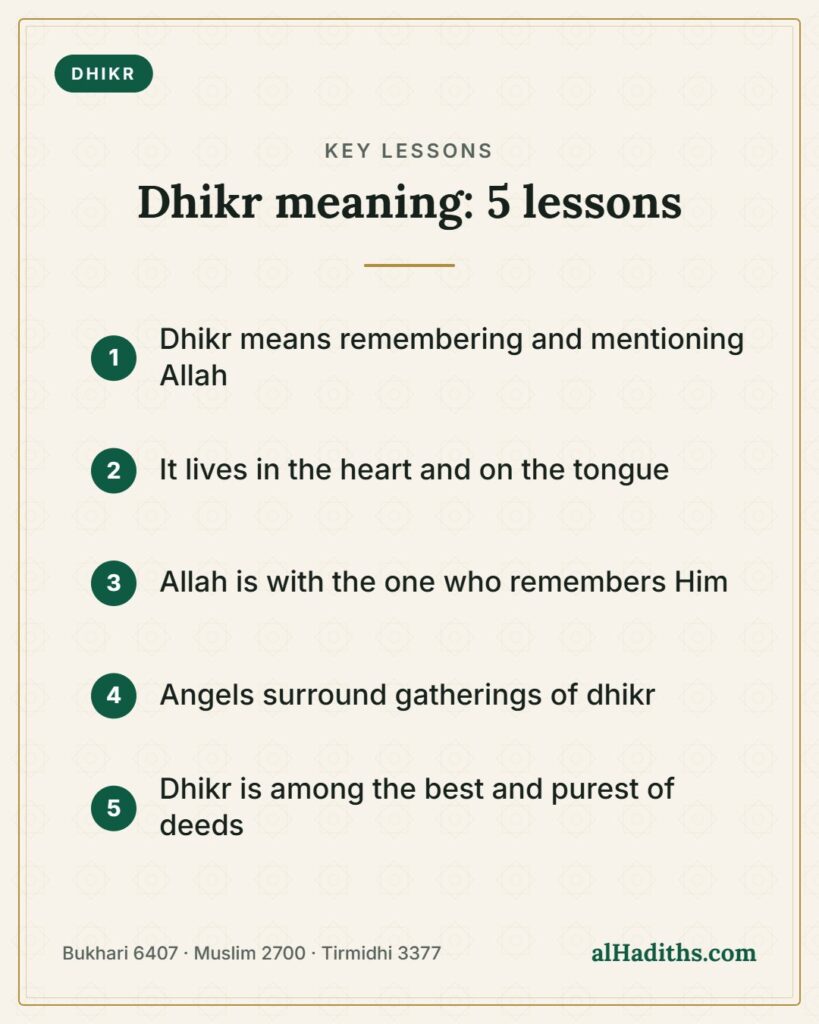
- The dhikr meaning is remembering and mentioning Allah, in the heart and on the tongue.
- The one who remembers Allah is like the living; the heedless one is like the dead.
- Allah is with the one who remembers Him and mentions him in a better gathering.
- Angels, mercy and tranquility surround those who sit together in dhikr.
- Dhikr is among the best and purest of deeds, and it costs nothing.
Part of our Dhikr series: see all our dhikr articles in one place.
A question to take with you: which moment of your day is still empty of the remembrance of Allah, and what short dhikr could fill it?
Save this to Pinterest so you can come back to these 6 hadith on dhikr.
Share the reward. Send this article to someone who needs it today — teaching a hadith or dua can become a lasting good deed for you, in shaa Allah.