Salatul Tasbeeh: How to Pray It and the Hadith Behind It
Contents
Salatul tasbeeh (also written salat al-tasbih), the “prayer of glorification”, is a voluntary prayer of four rak‘ahs in which a short dhikr is repeated 300 times. The Prophet ﷺ taught it to his uncle al-Abbas as a gift, and said that it is a means of forgiveness.
Below is the hadith from Sunan Abi Dawud with its Arabic from Sunnah.com, a simple table of where the 15s and 10s go, and an honest note on how scholars have graded it.
At a glance
- Source: Sunan Abi Dawud 1297; parallel in Jami‘ at-Tirmidhi 482
- Narrated by: Abdullah ibn Abbas (Tirmidhi: Abu Rafi‘)
- Grade: Sahih (al-Albani) on Sunnah.com; some scholars graded it weak (see the note below)
- Topic: A voluntary (nafl) prayer
- Practise it: Once a week, a month, a year, or at least once in your life
The hadith
Abdullah ibn Abbas (may Allah be pleased with him) narrated that the Prophet ﷺ said to his uncle al-Abbas ibn Abd al-Muttalib (may Allah be pleased with him):
يَا عَبَّاسُ يَا عَمَّاهُ أَلاَ أُعْطِيكَ أَلاَ أَمْنَحُكَ أَلاَ أَحْبُوكَ أَلاَ أَفْعَلُ بِكَ عَشْرَ خِصَالٍ إِذَا أَنْتَ فَعَلْتَ ذَلِكَ غَفَرَ اللَّهُ لَكَ ذَنْبَكَ أَوَّلَهُ وَآخِرَهُ قَدِيمَهُ وَحَدِيثَهُ خَطَأَهُ وَعَمْدَهُ صَغِيرَهُ وَكَبِيرَهُ سِرَّهُ وَعَلاَنِيَتَهُ عَشْرَ خِصَالٍ أَنْ تُصَلِّيَ أَرْبَعَ رَكَعَاتٍ تَقْرَأُ فِي كُلِّ رَكْعَةٍ فَاتِحَةَ الْكِتَابِ وَسُورَةً فَإِذَا فَرَغْتَ مِنَ الْقِرَاءَةِ فِي أَوَّلِ رَكْعَةٍ وَأَنْتَ قَائِمٌ قُلْتَ سُبْحَانَ اللَّهِ وَالْحَمْدُ لِلَّهِ وَلاَ إِلَهَ إِلاَّ اللَّهُ وَاللَّهُ أَكْبَرُ خَمْسَ عَشْرَةَ مَرَّةً ثُمَّ تَرْكَعُ فَتَقُولُهَا وَأَنْتَ رَاكِعٌ عَشْرًا ثُمَّ تَرْفَعُ رَأْسَكَ مِنَ الرُّكُوعِ فَتَقُولُهَا عَشْرًا ثُمَّ تَهْوِي سَاجِدًا فَتَقُولُهَا وَأَنْتَ سَاجِدٌ عَشْرًا ثُمَّ تَرْفَعُ رَأْسَكَ مِنَ السُّجُودِ فَتَقُولُهَا عَشْرًا ثُمَّ تَسْجُدُ فَتَقُولُهَا عَشْرًا ثُمَّ تَرْفَعُ رَأْسَكَ فَتَقُولُهَا عَشْرًا فَذَلِكَ خَمْسٌ وَسَبْعُونَ فِي كُلِّ رَكْعَةٍ تَفْعَلُ ذَلِكَ فِي أَرْبَعِ رَكَعَاتٍ إِنِ اسْتَطَعْتَ أَنْ تُصَلِّيَهَا فِي كُلِّ يَوْمٍ مَرَّةً فَافْعَلْ فَإِنْ لَمْ تَفْعَلْ فَفِي كُلِّ جُمُعَةٍ مَرَّةً فَإِنْ لَمْ تَفْعَلْ فَفِي كُلِّ شَهْرٍ مَرَّةً فَإِنْ لَمْ تَفْعَلْ فَفِي كُلِّ سَنَةٍ مَرَّةً فَإِنْ لَمْ تَفْعَلْ فَفِي عُمُرِكَ مَرَّةً
“O Abbas, O my uncle, shall I not give you, shall I not grant you, shall I not present to you, shall I not do for you ten things? If you do them, Allah will forgive you your sins, the first and the last, the old and the new, the unintended and the intended, the small and the great, the hidden and the open. Ten things: that you pray four rak‘ahs, reciting in each rak‘ah the Opening of the Book (al-Fatihah) and a surah. When you finish the recitation in the first rak‘ah, while standing, you say: Subhanallah, walhamdulillah, wa la ilaha illallah, wallahu akbar fifteen times. Then you bow and say it ten times while bowing. Then you raise your head from bowing and say it ten times. Then you go down in prostration and say it ten times while prostrating. Then you raise your head from prostration and say it ten times. Then you prostrate and say it ten times. Then you raise your head and say it ten times. That is seventy-five in each rak‘ah; you do that in four rak‘ahs. If you can pray it once every day, do so; if not, then once every Friday; if not, then once every month; if not, then once every year; if not, then once in your lifetime.”
Sunan Abi Dawud 1297 · Sahih (al-Albani) · Narrated by Abdullah ibn Abbas · Translation adapted from Sunnah.com
A similar narration comes through Abu Rafi‘ in Jami‘ at-Tirmidhi:
يَا عَمِّ أَلاَ أَصِلُكَ أَلاَ أَحْبُوكَ أَلاَ أَنْفَعُكَ. قَالَ بَلَى يَا رَسُولَ اللَّهِ. قَالَ يَا عَمِّ صَلِّ أَرْبَعَ رَكَعَاتٍ تَقْرَأُ فِي كُلِّ رَكْعَةٍ بِفَاتِحَةِ الْكِتَابِ وَسُورَةٍ فَإِذَا انْقَضَتِ الْقِرَاءَةُ فَقُلِ اللَّهُ أَكْبَرُ وَالْحَمْدُ لِلَّهِ وَسُبْحَانَ اللَّهِ وَلاَ إِلَهَ إِلاَّ اللَّهُ خَمْسَ عَشْرَةَ مَرَّةً قَبْلَ أَنْ تَرْكَعَ ثُمَّ ارْكَعْ فَقُلْهَا عَشْرًا ثُمَّ ارْفَعْ رَأْسَكَ فَقُلْهَا عَشْرًا ثُمَّ اسْجُدْ فَقُلْهَا عَشْرًا ثُمَّ ارْفَعْ رَأْسَكَ فَقُلْهَا عَشْرًا ثُمَّ اسْجُدِ الثَّانِيَةَ فَقُلْهَا عَشْرًا ثُمَّ ارْفَعْ رَأْسَكَ فَقُلْهَا عَشْرًا قَبْلَ أَنْ تَقُومَ فَتِلْكَ خَمْسٌ وَسَبْعُونَ فِي كُلِّ رَكْعَةٍ وَهِيَ ثَلاَثُمِائَةٍ فِي أَرْبَعِ رَكَعَاتٍ فَلَوْ كَانَتْ ذُنُوبُكَ مِثْلَ رَمْلِ عَالِجٍ لَغَفَرَهَا اللَّهُ لَكَ
“O uncle, shall I not keep ties with you, shall I not give you, shall I not benefit you?” He said, “Yes, O Messenger of Allah.” He said, “O uncle, pray four rak‘ahs, reciting in each rak‘ah the Opening of the Book and a surah. When the recitation is finished, say: Allahu akbar, walhamdulillah, wa subhanallah, wa la ilaha illallah fifteen times before you bow. Then bow and say it ten times, then raise your head and say it ten times, then prostrate and say it ten times, then raise your head and say it ten times, then prostrate the second time and say it ten times, then raise your head and say it ten times before you stand. That is seventy-five in every rak‘ah, three hundred in four rak‘ahs. Even if your sins were like the sands of ‘Alij, Allah would forgive them for you.”
Jami‘ at-Tirmidhi 482 · Sahih (Darussalam) · Narrated by Abu Rafi‘ · Translation adapted from Sunnah.com
Two more narrations are on Sunnah.com: Sunan Ibn Majah 1386 (Sahih, Darussalam) and Sunan Abi Dawud 1298 (Hasan Sahih, al-Albani).
How to pray salatul tasbeeh, step by step
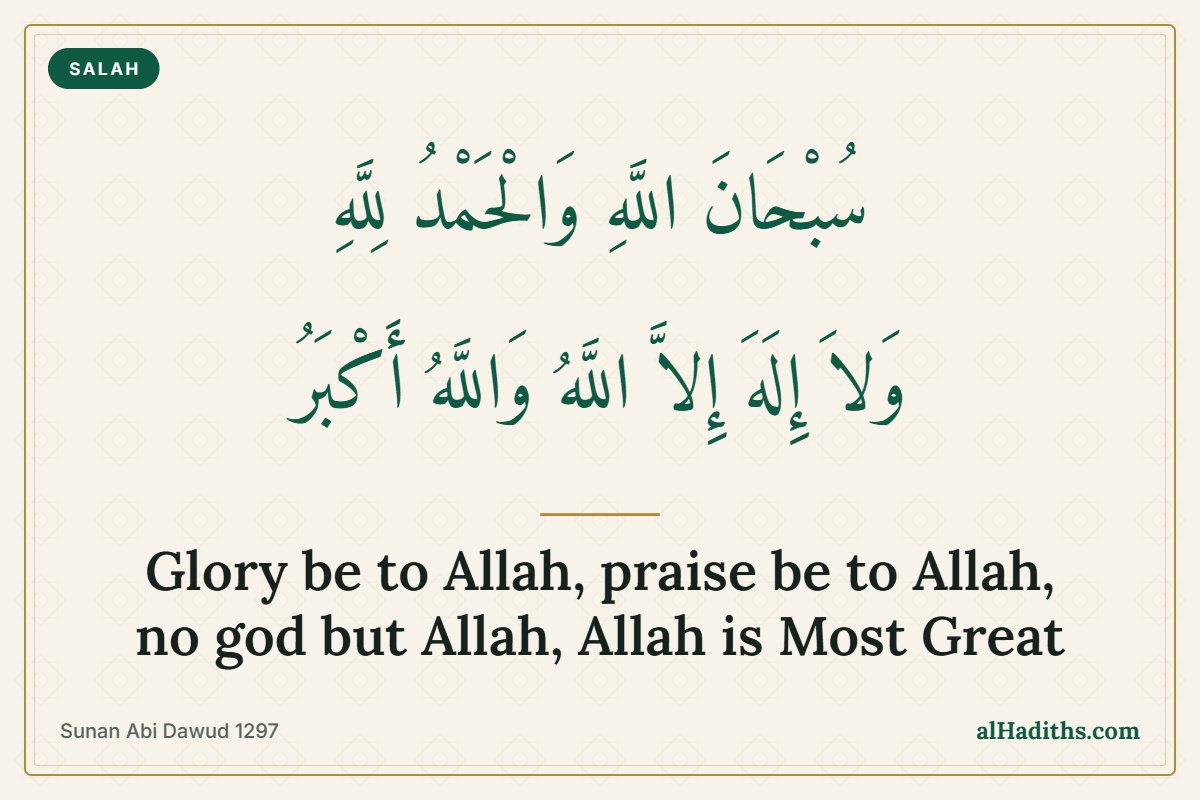
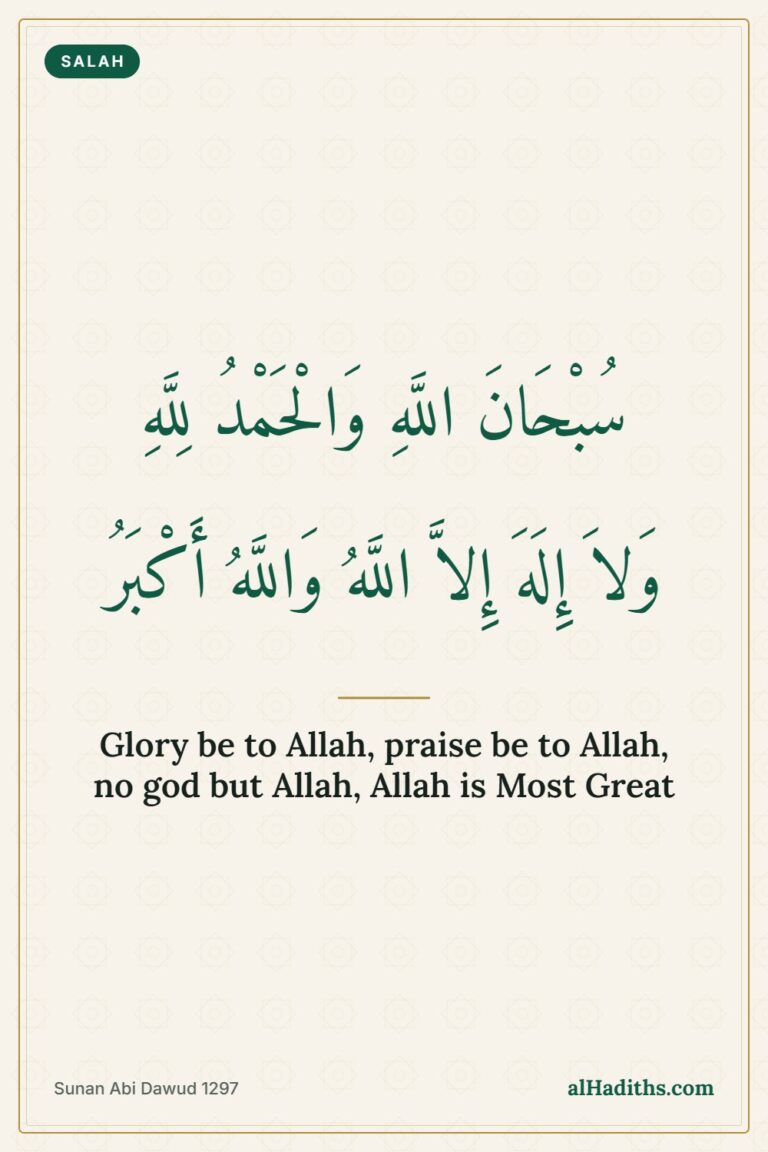
Exactly as described in Sunan Abi Dawud 1297. The dhikr in every step is: Subhanallah, walhamdulillah, wa la ilaha illallah, wallahu akbar (Glory be to Allah, praise be to Allah, there is no god but Allah, and Allah is Most Great).
| Step (in each rak‘ah) | Times |
|---|---|
| After reciting al-Fatihah and a surah, while standing | 15 |
| In ruku‘ (bowing) | 10 |
| Standing up from ruku‘ | 10 |
| First sujud (prostration) | 10 |
| Sitting up from the first sujud | 10 |
| Second sujud | 10 |
| Sitting up from the second sujud (before standing) | 10 |
| Total in one rak‘ah | 75 |
| Total in four rak‘ahs | 300 |
Repeat the same in all four rak‘ahs: 75 × 4 = 300. Apart from the tasbih, the prayer is like any other nafl prayer, with the usual words of ruku‘ and sujud, the tashahhud and the salam. The hadith does not say whether the four rak‘ahs are prayed with one or two salams, or at what time of day; ask a qualified scholar if you need those details.
A note on its grading
Sunnah.com today shows this hadith graded Sahih by al-Albani (Abu Dawud 1297) and Sahih by Darussalam (Tirmidhi 482), which is why we present it here. But this is a hadith on which scholars have long differed, and we want to be open about it:
- Imam at-Tirmidhi himself, after narrating it, called the narration of Abu Rafi‘ gharib (reported through a single chain), as shown under Tirmidhi 482.
- Scholars who accepted it include al-Hakim, Ibn Hajar and al-Albani; scholars who judged it weak include Imam Ahmad (who, Ibn Hajar reports, later changed his view), Ibn al-Jawzi and Ibn Taymiyyah. Both sides are listed in IslamWeb fatwa 83877.
- IslamQA (answer 145112) follows the view that the hadith is weak and the prayer is not a sunnah.
We are not in a position to settle this difference. If you are unsure whether to pray it, ask a qualified local scholar and follow the view you trust.
What it means
Reflection: what stands out in this hadith is the way the Prophet ﷺ offered it: “shall I not give you… shall I not grant you…”, as a gift from a nephew to his uncle. He then made it easy to keep: every day if you can, and if not, once a week, a month, a year, or once in a lifetime. The four phrases themselves are the same words he praised elsewhere as beloved to Allah. Whatever one concludes about the prayer, these words are worth filling our days with.
How to practise it
- Learn the four phrases by heart first: Subhanallah, walhamdulillah, wa la ilaha illallah, wallahu akbar.
- Keep the table above open on your phone the first few times, or count on your fingers.
- Choose a time when you are not rushed; the prayer takes roughly 20 to 30 minutes at a calm pace (our estimate).
- Pick a realistic frequency from the hadith: once a week, once a month or once a year.
- If you miss a count, the hadith does not say what to do; ask a scholar rather than worrying.
Questions people ask
How often should salatul tasbeeh be prayed?
The hadith gives a range: every day if you can, otherwise every Friday, then every month, every year, or at least once in your lifetime (Sunan Abi Dawud 1297).
Can salatul tasbeeh be prayed in congregation?
The hadith describes the Prophet ﷺ teaching it to one person to pray, and does not mention praying it in congregation. Scholars differ on doing it in jama‘ah, so ask a qualified local scholar.
Is the salatul tasbeeh hadith sahih?
Sunnah.com shows it graded Sahih (al-Albani) and Sahih (Darussalam), but some major scholars judged it weak. See our note on its grading above for sources on both views.
Key lessons
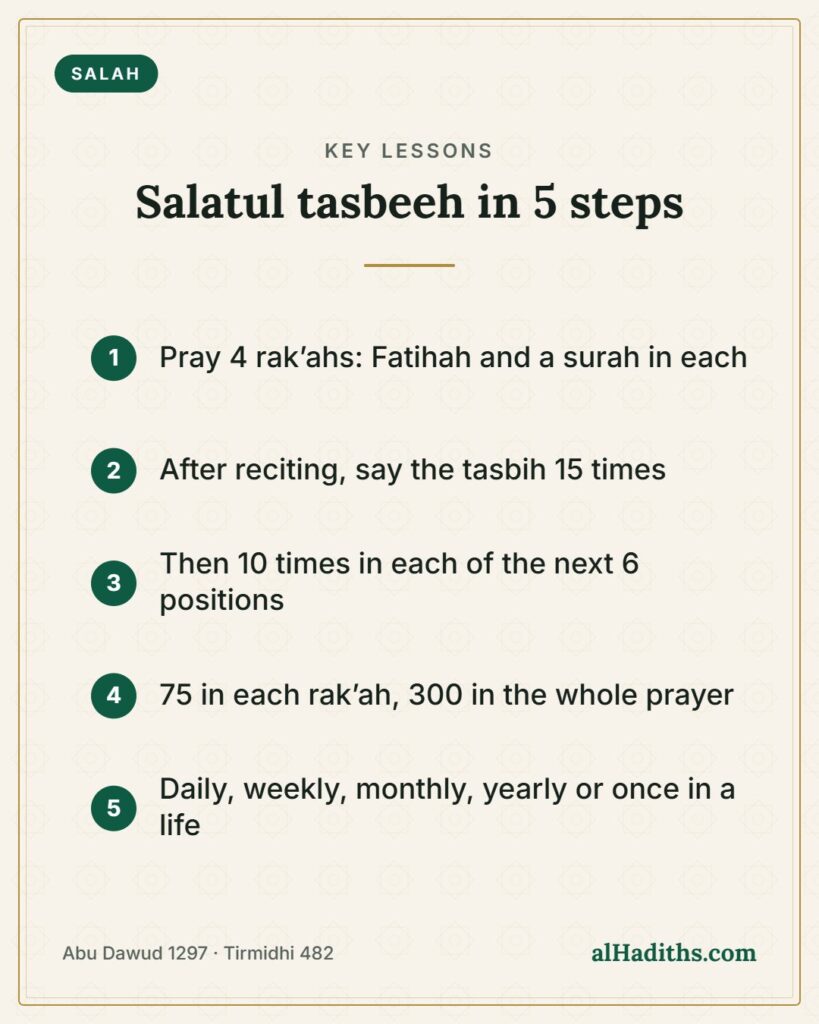
- Salatul tasbeeh is four rak‘ahs with Fatihah and a surah in each.
- The tasbih is said 15 times after recitation and 10 times in each of the next six positions.
- That is 75 in each rak‘ah and 300 in the whole prayer.
- The Prophet ﷺ made it flexible: daily, weekly, monthly, yearly or once in a lifetime.
- Scholars differ on its grading, so follow a qualified scholar you trust.
Part of our Salah series: see all our salah articles in one place.
Even on days you do not pray it, those four phrases are a gift you can open at any moment: say them ten times now, before you close this page.
Save this to Pinterest so you can follow the steps of salatul tasbeeh when you pray it.
Share the reward. Send this article to someone who needs it today — teaching a hadith or dua can become a lasting good deed for you, in shaa Allah.