Hadith About Arrogance: 6 Authentic Hadith on Pride
Contents
Arrogance rarely announces itself. It hides in a dismissive reply, in refusing to admit we were wrong, in quietly feeling better than someone else. That is why every hadith about arrogance in this article is worth reading slowly: the Prophet ﷺ described pride very precisely, and he also told us what it is not.
Here are six authentic hadith on arrogance (kibr) and pride, with their Arabic from Sunnah.com, plus one verse of the Quran on how a humble person walks through the world.
At a glance
- Hadith: 6 authentic narrations + 1 Quran verse
- Collections: Sahih Muslim, Sahih al-Bukhari, Jami‘ at-Tirmidhi, Sunan Abi Dawud
- Grade: Sahih (Bukhari and Muslim); Tirmidhi 2492 Hasan (Darussalam); Abu Dawud 4895 Sahih (al-Albani)
- Topic: Arrogance (kibr), pride and humility
- Do it today: Admit one mistake to someone, plainly and without excuses
1. What arrogance really is
Abdullah ibn Mas‘ud (may Allah be pleased with him) reported that the Prophet ﷺ said:
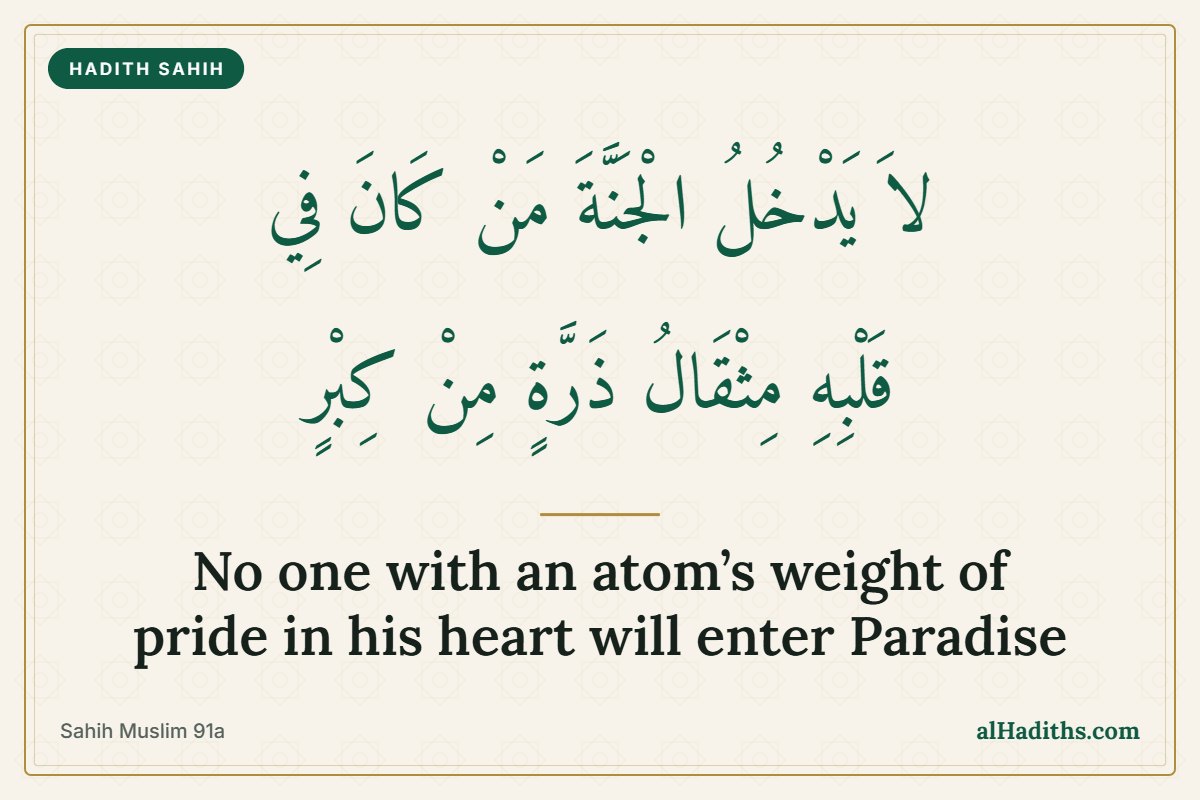
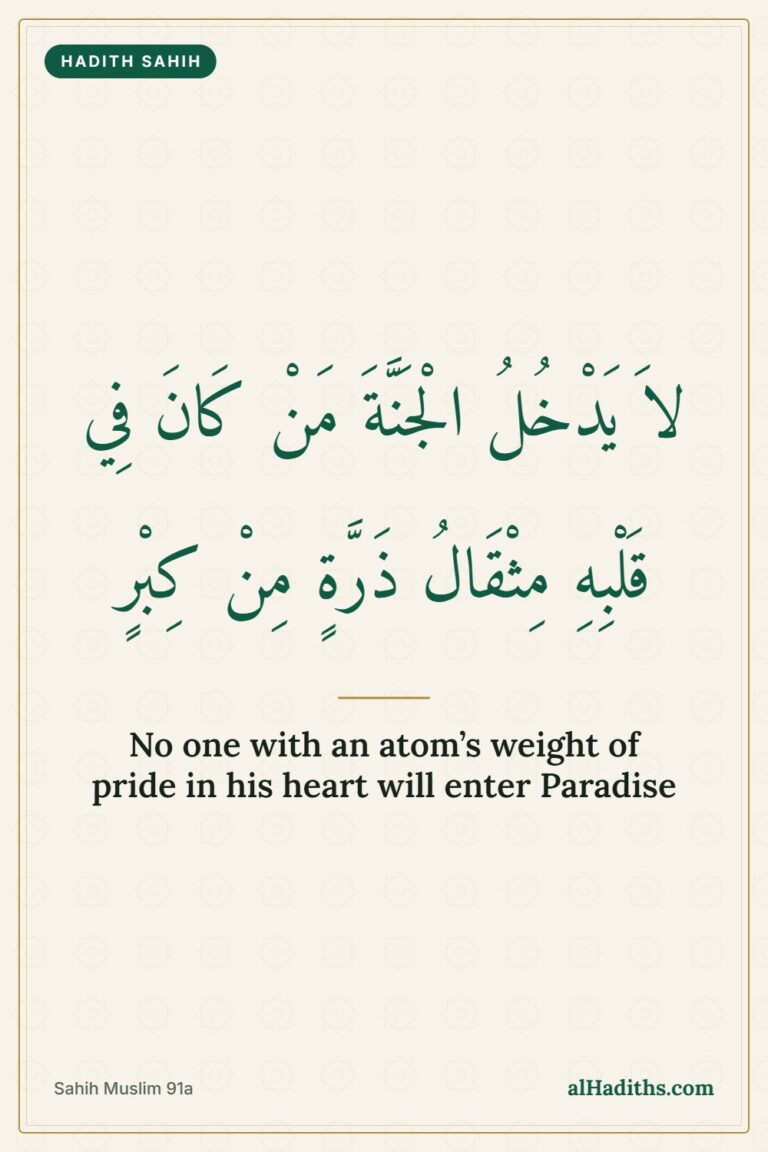
لاَ يَدْخُلُ الْجَنَّةَ مَنْ كَانَ فِي قَلْبِهِ مِثْقَالُ ذَرَّةٍ مِنْ كِبْرٍ. قَالَ رَجُلٌ إِنَّ الرَّجُلَ يُحِبُّ أَنْ يَكُونَ ثَوْبُهُ حَسَنًا وَنَعْلُهُ حَسَنَةً. قَالَ إِنَّ اللَّهَ جَمِيلٌ يُحِبُّ الْجَمَالَ الْكِبْرُ بَطَرُ الْحَقِّ وَغَمْطُ النَّاسِ
“No one who has an atom’s weight of pride in his heart will enter Paradise.” A man said, “A man likes his clothes to be nice and his shoes to be nice.” He said, “Allah is beautiful and He loves beauty. Pride is rejecting the truth and looking down on people.”
Sahih Muslim 91a · Narrated by Abdullah ibn Mas‘ud · Translation adapted from Sunnah.com
This is the key hadith about arrogance, because it gives a definition. Pride is not wearing good clothes; it is two things: batar al-haqq, rejecting the truth when it does not suit us, and ghamt an-nas, belittling people. The warning is serious: even the smallest amount of it in the heart.
Try this: the next time someone corrects you with something true, say “you’re right” before anything else.
2. Greatness belongs to Allah alone
Abu Sa‘id al-Khudri and Abu Hurayrah (may Allah be pleased with them) reported that the Prophet ﷺ said that Allah, Mighty and Majestic, says:
الْعِزُّ إِزَارُهُ وَالْكِبْرِيَاءُ رِدَاؤُهُ فَمَنْ يُنَازِعُنِي عَذَّبْتُهُ
“Might is His lower garment and pride is His cloak. Whoever contends with Me over them, I will punish him.”
Sahih Muslim 2620 · Narrated by Abu Sa‘id al-Khudri and Abu Hurayrah · Translation adapted from Sunnah.com
In this hadith qudsi, might and majesty are described as Allah’s own garments. A proud person is, in effect, trying to wear what belongs only to Allah. That is why arrogance is not just bad manners: it is a sin against Allah’s right.
Try this: when you feel proud of an achievement, say “alhamdulillah” and remember who gave it to you.
3. Dragging the garment out of pride
Abdullah ibn Umar (may Allah be pleased with him) reported that the Prophet ﷺ said:
مَنْ جَرَّ ثَوْبَهُ خُيَلاَءَ لَمْ يَنْظُرِ اللَّهُ إِلَيْهِ يَوْمَ الْقِيَامَةِ. قَالَ أَبُو بَكْرٍ يَا رَسُولَ اللَّهِ إِنَّ أَحَدَ شِقَّىْ إِزَارِي يَسْتَرْخِي، إِلاَّ أَنْ أَتَعَاهَدَ ذَلِكَ مِنْهُ. فَقَالَ النَّبِيُّ صلى الله عليه وسلم لَسْتَ مِمَّنْ يَصْنَعُهُ خُيَلاَءَ
“Whoever drags his garment out of pride, Allah will not look at him on the Day of Resurrection.” Abu Bakr said, “O Messenger of Allah, one side of my lower garment slips down unless I keep watch over it.” The Prophet ﷺ said, “You are not one of those who do it out of pride.”
Sahih al-Bukhari 5784 · Narrated by Abdullah ibn Umar · Translation adapted from Sunnah.com
The warning is tied to the intention: “out of pride”. Abu Bakr (may Allah be pleased with him) was worried, and the Prophet ﷺ reassured him because his heart was free of it. Scholars discuss the rulings on the length of garments in detail; for those, ask a qualified scholar. The lesson for everyone is that what we wear can become a way of showing off.
Try this: before posting a photo of something new, ask yourself honestly whether the aim is to share or to be admired.
4. The people of Paradise and the people of the Fire
Harithah ibn Wahb al-Khuza‘i (may Allah be pleased with him) said that he heard the Prophet ﷺ say:
أَلاَ أُخْبِرُكُمْ بِأَهْلِ الْجَنَّةِ كُلُّ ضَعِيفٍ مُتَضَعِّفٍ لَوْ أَقْسَمَ عَلَى اللَّهِ لأَبَرَّهُ، أَلاَ أُخْبِرُكُمْ بِأَهْلِ النَّارِ كُلُّ عُتُلٍّ جَوَّاظٍ مُسْتَكْبِرٍ
“Shall I not tell you about the people of Paradise? Every weak person who is looked down upon, who, if he swore by Allah, Allah would fulfil it. Shall I not tell you about the people of the Fire? Every violent, harsh and arrogant person.”
Sahih al-Bukhari 4918 · Narrated by Harithah ibn Wahb al-Khuza‘i · Translation adapted from Sunnah.com
The contrast is striking: the people others look down on can be honored by Allah, while the arrogant are described among the people of the Fire. It turns the world’s measures of status upside down.
Take heed: people we overlook may be dearer to Allah than we are. Treat them that way.
5. How the proud will be gathered
Amr ibn Shu‘ayb narrated from his father, from his grandfather, that the Prophet ﷺ said:
يُحْشَرُ الْمُتَكَبِّرُونَ يَوْمَ الْقِيَامَةِ أَمْثَالَ الذَّرِّ فِي صُوَرِ الرِّجَالِ يَغْشَاهُمُ الذُّلُّ مِنْ كُلِّ مَكَانٍ فَيُسَاقُونَ إِلَى سِجْنٍ فِي جَهَنَّمَ يُسَمَّى بُولَسَ تَعْلُوهُمْ نَارُ الأَنْيَارِ يُسْقَوْنَ مِنْ عُصَارَةِ أَهْلِ النَّارِ طِينَةِ الْخَبَالِ
“The proud will be gathered on the Day of Resurrection like tiny particles in the form of men, covered by humiliation from every side. They will be driven to a prison in Hell called Bulas, the fire of fires rising over them, and they will be given to drink the drippings of the people of the Fire, the mud of derangement.”
Jami‘ at-Tirmidhi 2492 · Hasan (Darussalam) · Narrated by Abdullah ibn Amr (via Amr ibn Shu‘ayb) · Translation adapted from Sunnah.com
Those who made themselves big in this world will be made small, “like tiny particles”, on the Day of Resurrection. The punishment matches the sin: the one who looked down on others will be humiliated in front of all.
Take heed: no status, wealth or follower count is worth this exchange.
6. The cure: be humble
Iyad ibn Himar al-Mujashi‘i (may Allah be pleased with him) reported that the Prophet ﷺ said:
إِنَّ اللَّهَ أَوْحَى إِلَىَّ أَنْ تَوَاضَعُوا حَتَّى لاَ يَبْغِيَ أَحَدٌ عَلَى أَحَدٍ وَلاَ يَفْخَرَ أَحَدٌ عَلَى أَحَدٍ
“Allah has revealed to me that you should be humble, so that no one wrongs another and no one boasts over another.”
Sunan Abi Dawud 4895 · Sahih (al-Albani) · Narrated by Iyad ibn Himar · Translation adapted from Sunnah.com
Humility (tawadu‘) is the opposite of arrogance, and this hadith shows its social effect: when people are humble, they stop oppressing and boasting over one another. The Prophet ﷺ also said that no one humbles himself for Allah except that Allah raises him; we explain that hadith in Charity Does Not Decrease Wealth.
Try this: do one small task today that you usually leave to others, like clearing the table or serving guests.
Bringing together the hadith about arrogance
Luqman’s advice to his son in the Quran describes what humility looks like in daily life:
وَلَا تُصَعِّرْ خَدَّكَ لِلنَّاسِ وَلَا تَمْشِ فِى ٱلْأَرْضِ مَرَحًا ۖ إِنَّ ٱللَّهَ لَا يُحِبُّ كُلَّ مُخْتَالٍ فَخُورٍ
“And do not turn your cheek [in contempt] toward people and do not walk through the earth exultantly. Indeed, Allāh does not like everyone self-deluded and boastful.”
Surah Luqman 31:18 · Translation: Saheeh International, from Quran.com
Reflection: arrogance is hard to see in ourselves because it always feels justified: I really am right, I really did work harder. The definition in hadith 1 gives a simple test. Do I accept the truth when it comes from someone I don’t like? Do I look down on anyone? If the honest answer is yes, that is the atom’s weight we need to work on.
Questions people ask
Is liking nice clothes a sign of arrogance?
No. When a man asked exactly this, the Prophet ﷺ said, “Allah is beautiful and He loves beauty,” and defined pride as rejecting the truth and looking down on people (Sahih Muslim 91a).
What is the difference between confidence and arrogance?
This is our reflection, not a ruling: confidence is trusting the abilities Allah gave you while staying open to correction; arrogance, as Muslim 91a defines it, is rejecting the truth and belittling others. A confident person can say “I was wrong”; an arrogant one cannot.
What is the opposite of arrogance in Islam?
Humility (tawadu‘). The Prophet ﷺ said that Allah revealed to him that we should be humble so that no one wrongs or boasts over another (Sunan Abi Dawud 4895, Sahih, al-Albani).
Key lessons
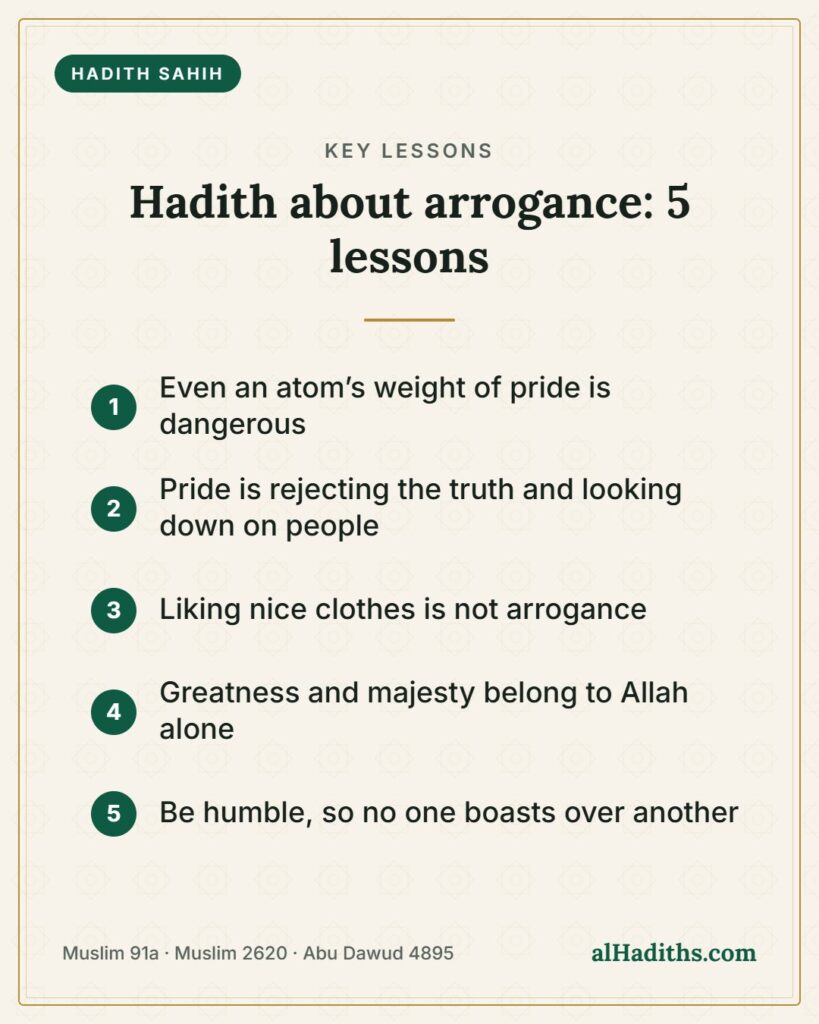
- Even an atom’s weight of pride in the heart is a serious danger (Muslim 91a).
- Pride is rejecting the truth and looking down on people, not loving beauty.
- Might and majesty belong to Allah alone (Muslim 2620).
- The arrogant are described among the people of the Fire (Bukhari 4918).
- The cure is humility, so that no one wrongs or boasts over another (Abu Dawud 4895).
Ask yourself one question tonight: was there a moment today when I rejected something true, or looked down on someone? If so, put it right tomorrow.
Save this to Pinterest so you can come back to these hadith about arrogance.
Share the reward. Send this article to someone who needs it today — teaching a hadith or dua can become a lasting good deed for you, in shaa Allah.