Prayer After Wudu: Bilal’s Footsteps in Paradise
Contents
Most of us make wudu several times a day and go straight back to what we were doing. Bilal (may Allah be pleased with him) did something small after every one, and the Prophet ﷺ heard his footsteps in Paradise because of it. That habit is the prayer after wudu: a short voluntary prayer, usually two rak‘ahs, prayed right after you purify yourself. Here is the authentic hadith behind it and how to make it part of your day.
At a glance
- Source: Sahih Muslim 2458 and Sahih al-Bukhari 1149
- Narrated by: Abu Hurairah (may Allah be pleased with him)
- Grade: Sahih (Bukhari, Muslim)
- Topic: Praying after every wudu, and what to say after wudu
- Practise it: After your next wudu, pray two rak‘ahs before you get up
The hadith of Bilal and the prayer after wudu
Abu Hurairah reported that at the time of the Fajr prayer, the Prophet ﷺ turned to Bilal and asked him:
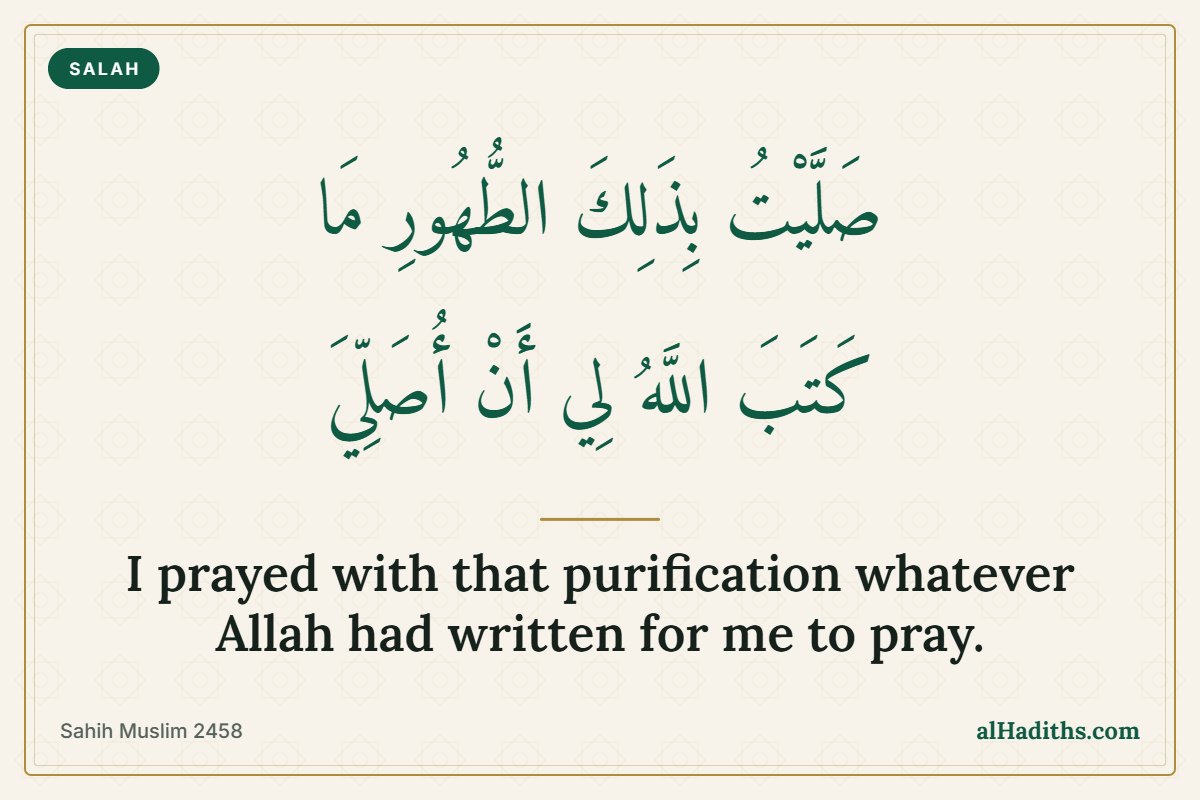
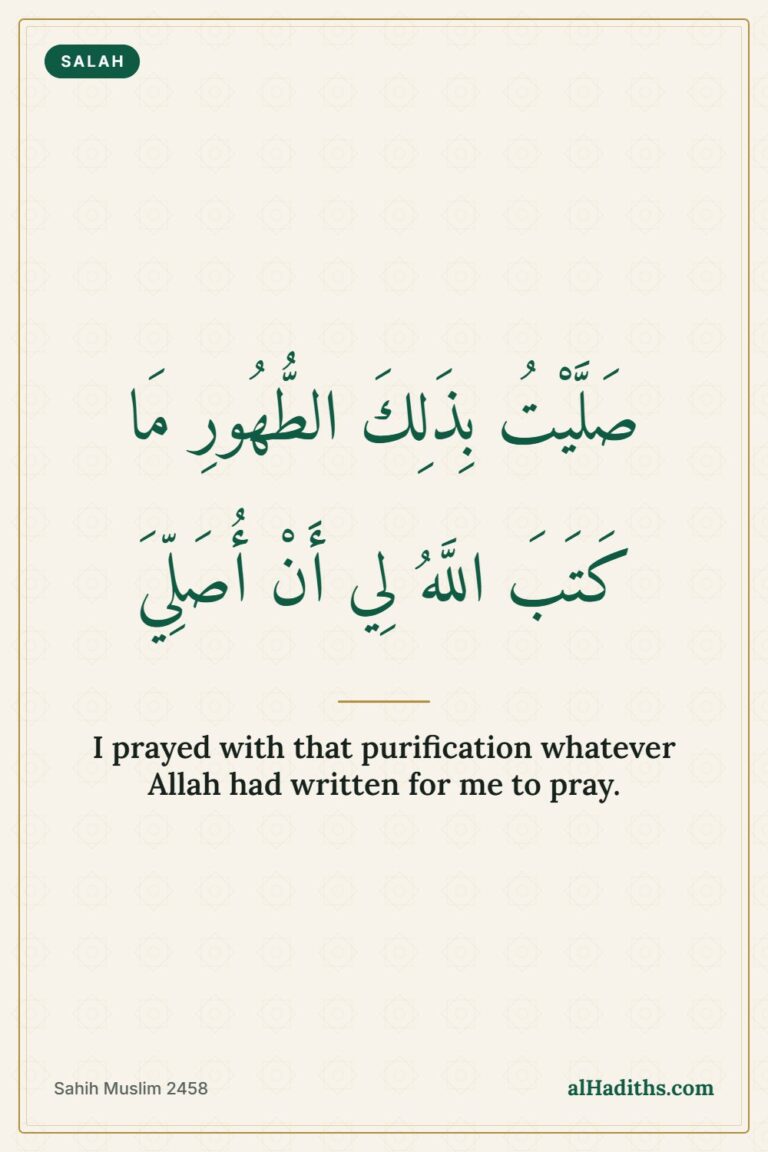
يَا بِلاَلُ حَدِّثْنِي بِأَرْجَى عَمَلٍ عَمِلْتَهُ عِنْدَكَ فِي الإِسْلاَمِ مَنْفَعَةً فَإِنِّي سَمِعْتُ اللَّيْلَةَ خَشْفَ نَعْلَيْكَ بَيْنَ يَدَىَّ فِي الْجَنَّةِ. قَالَ بِلاَلٌ مَا عَمِلْتُ عَمَلاً فِي الإِسْلاَمِ أَرْجَى عِنْدِي مَنْفَعَةً مِنْ أَنِّي لاَ أَتَطَهَّرُ طُهُورًا تَامًّا فِي سَاعَةٍ مِنْ لَيْلٍ وَلاَ نَهَارٍ إِلاَّ صَلَّيْتُ بِذَلِكَ الطُّهُورِ مَا كَتَبَ اللَّهُ لِي أَنْ أُصَلِّيَ
“O Bilal, tell me of the deed you have done in Islam that you have the most hope in, for last night I heard the sound of your footsteps ahead of me in Paradise.” Bilal said: “I have not done any deed in Islam that I have more hope in than this: I never purify myself completely, at any hour of the night or day, except that I pray with that purification whatever Allah has written for me to pray.”
Sahih Muslim 2458 · Narrated by Abu Hurairah · Also Sahih al-Bukhari 1149 · Translation adapted from Sunnah.com
Bilal did not name a great fast or a long night of worship. He named a habit that took a few minutes each time, kept up day and night.
What the hadith means
The Encyclopedia of Translated Prophetic Hadiths (HadeethEnc) explains that the Prophet ﷺ saw this in a dream, and the dreams of prophets are true. Bilal’s answer was that whenever his wudu broke, he renewed it and prayed as much voluntary prayer as he could with it. Among the benefits it draws: praying after each wudu is a deed with a great reward, and it is recommended to pray after every wudu.
Notice the words “whatever Allah has written for me to pray.” The hadith does not fix a number. Bilal prayed what he was able to, and another narration, below, says he saw it as two rak‘ahs he owed Allah.
Reflection: wudu already washes away sins, as the hadith on how to make wudu shows. Bilal simply refused to let that fresh, clean moment pass without using it for prayer. It costs a few minutes, and it turns an ordinary routine into worship.
“I owed Allah two rak‘ahs”
In a narration from Buraydah (may Allah be pleased with him) in Jami‘ at-Tirmidhi, the Prophet ﷺ asked Bilal how he had gone ahead of him into Paradise, and Bilal explained:
فَقَالَ بِلاَلٌ يَا رَسُولَ اللَّهِ مَا أَذَّنْتُ قَطُّ إِلاَّ صَلَّيْتُ رَكْعَتَيْنِ وَمَا أَصَابَنِي حَدَثٌ قَطُّ إِلاَّ تَوَضَّأْتُ عِنْدَهَا وَرَأَيْتُ أَنَّ لِلَّهِ عَلَىَّ رَكْعَتَيْنِ. فَقَالَ رَسُولُ اللَّهِ صلى الله عليه وسلم بِهِمَا
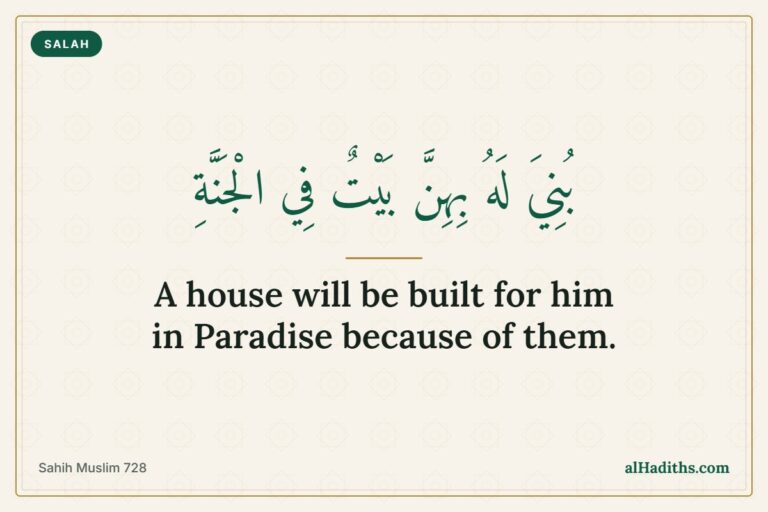
Bilal said: “O Messenger of Allah, I have never called the adhan except that I prayed two rak‘ahs, and whenever I lost my wudu, I made wudu straight away and felt that I owed Allah two rak‘ahs.” The Messenger of Allah ﷺ said: “It is because of these two.”
Jami‘ at-Tirmidhi 3689 · Hasan (Darussalam) · Narrated by Buraydah · Translation adapted from Sunnah.com
This narration names the number most people know: two rak‘ahs. It also shows Bilal’s mindset. He did not treat the prayer as an extra he might skip, but as something he owed Allah each time he renewed his wudu.
Two rak‘ahs with heart and face
‘Uqbah ibn ‘Amir (may Allah be pleased with him) was looking after camels when he came back and found the Prophet ﷺ speaking to the people. He caught these words:
مَا مِنْ مُسْلِمٍ يَتَوَضَّأُ فَيُحْسِنُ وُضُوءَهُ ثُمَّ يَقُومُ فَيُصَلِّي رَكْعَتَيْنِ مُقْبِلٌ عَلَيْهِمَا بِقَلْبِهِ وَوَجْهِهِ إِلاَّ وَجَبَتْ لَهُ الْجَنَّةُ
“There is no Muslim who makes wudu and does it well, then stands and prays two rak‘ahs, facing them with his heart and his face, except that Paradise becomes due for him.”
Sahih Muslim 234 · Narrated by ‘Uqbah ibn ‘Amir · Translation adapted from Sunnah.com
“Heart and face” means the body is still and turned to the qiblah, and the mind is with the prayer too. Our article on khushu in salah has more on keeping your focus.
What to say after wudu
Many people who search for the “prayer after wudu” are looking for the words to say once wudu is finished. In the same hadith, ‘Umar ibn al-Khattab (may Allah be pleased with him) told ‘Uqbah that the Prophet ﷺ had said, just before he arrived:
مَا مِنْكُمْ مِنْ أَحَدٍ يَتَوَضَّأُ فَيُبْلِغُ – أَوْ فَيُسْبِغُ – الْوُضُوءَ ثُمَّ يَقُولُ أَشْهَدُ أَنْ لاَ إِلَهَ إِلاَّ اللَّهُ وَأَنَّ مُحَمَّدًا عَبْدُ اللَّهِ وَرَسُولُهُ إِلاَّ فُتِحَتْ لَهُ أَبْوَابُ الْجَنَّةِ الثَّمَانِيَةُ يَدْخُلُ مِنْ أَيِّهَا شَاءَ
“There is none among you who makes wudu and does it completely, then says: Ashhadu an la ilaha illallah, wa anna Muhammadan ‘abdullahi wa rasuluh (I bear witness that there is no god but Allah, and that Muhammad is the servant of Allah and His Messenger), except that the eight gates of Paradise are opened for him, and he may enter by whichever of them he wishes.”
Sahih Muslim 234 · Narrated by ‘Uqbah ibn ‘Amir, from ‘Umar · Translation adapted from Sunnah.com
HadeethEnc’s explanation of this hadith says the testimony cleanses the heart of shirk, just as the water of wudu cleanses the body. So a full routine is: make wudu well, say the shahadah, then pray two rak‘ahs.
How to pray the prayer after wudu
The hadith keep it simple. Here is what they describe, with suggestions marked as suggestions:
- Make wudu well. Every hadith here starts with wudu “done well” or “complete.”
- Say the shahadah. “Ashhadu an la ilaha illallah, wa anna Muhammadan ‘abdullahi wa rasuluh,” as in Sahih Muslim 234.
- Pray two rak‘ahs. Bilal saw two as what he owed Allah; the Bukhari and Muslim wording says he prayed “whatever Allah had written” for him, so more is fine.
- Keep your heart and face on the prayer. No set surahs are named, so recite what you know, slowly.
- Make it a habit, not a one-off. Bilal did it after every wudu, “at any hour of the night or day.” A suggestion: start with the wudu before Zuhr or Isha, when you are less rushed.
Scholars differ on praying it at the times when voluntary prayer is disliked (such as after Fajr and after Asr), so ask a qualified local scholar if that applies to you.
Questions people ask
Is it sunnah to pray 2 rakat after wudu?
The Prophet ﷺ praised Bilal for it and told him his footsteps were in Paradise because of it (Sahih Muslim 2458, Jami‘ at-Tirmidhi 3689). HadeethEnc lists praying after every wudu as recommended. It is a voluntary prayer, not an obligatory one.
How many rak‘ahs is the prayer after wudu?
Two is the number in Sahih Muslim 234 and in Bilal’s words in Tirmidhi 3689. The wording in Bukhari and Muslim says Bilal prayed “whatever Allah had written” for him, so you can pray more.
What should I say after wudu?
The shahadah: “Ashhadu an la ilaha illallah, wa anna Muhammadan ‘abdullahi wa rasuluh,” from Sahih Muslim 234. A longer version with “Allahumma-j‘alni minat-tawwabin…” is in Jami‘ at-Tirmidhi 55, which Sunnah.com shows as graded Da‘if (Darussalam), so it is not used here.
Is tahiyatul wudu the same as tahiyyatul masjid?
No. Tahiyatul wudu is the prayer after wudu, wherever you are. Tahiyyatul masjid is the two rak‘ahs when you enter a mosque. Whether one set of two rak‘ahs can count for both is a fiqh question, so ask a qualified local scholar.
Key lessons
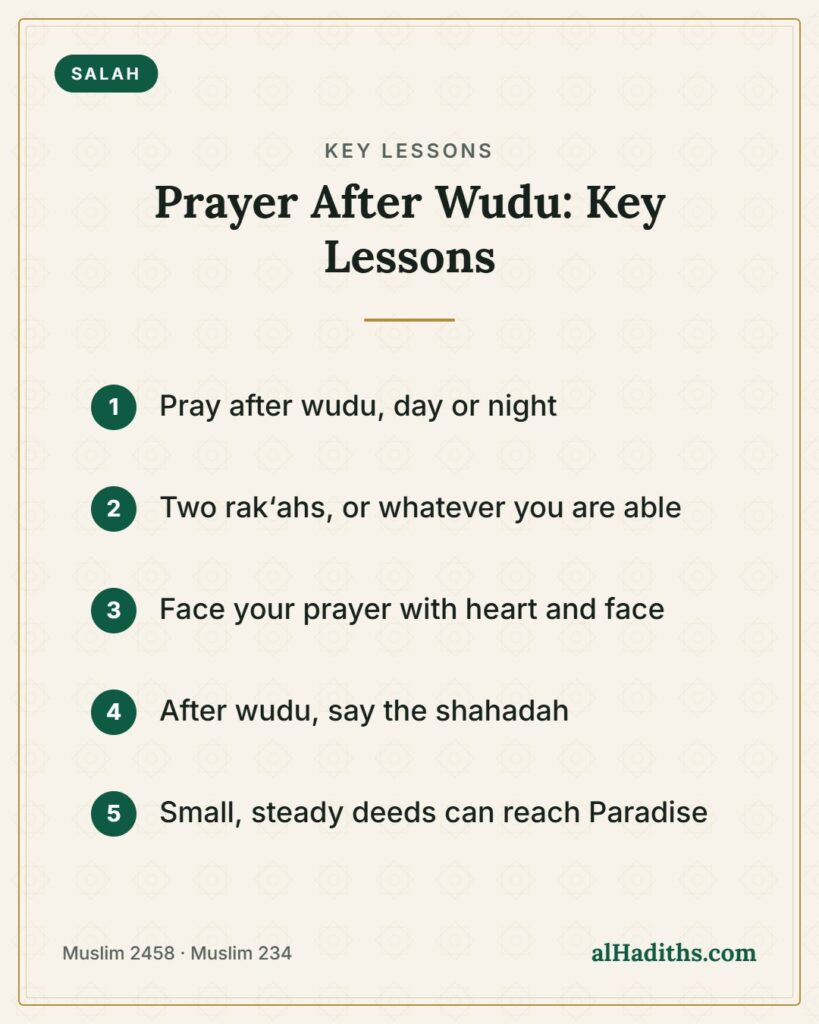
- Bilal’s footsteps were heard in Paradise because of a small, steady habit.
- Pray after wudu, two rak‘ahs or whatever you can, day or night.
- Face the prayer with your heart and your face.
- After wudu, say the shahadah: the eight gates of Paradise are opened.
- Treat it as something you “owe Allah,” as Bilal did.
Part of our Salah series: see all our salah articles in one place.
Your next wudu is a few hours away at most. When you finish it, stay a little longer, say the shahadah, and pray two rak‘ahs. It may be the deed you hope in most.
Save this to Pinterest so you can turn every wudu into a small act of worship
Share the reward. Send this article to someone who needs it today — teaching a hadith or dua can become a lasting good deed for you, in shaa Allah.