The Man Who Killed 100 People Hadith: Story and Lessons
Contents
Can someone who has done terrible things still turn back to Allah? The man who killed 100 people hadith answers that question with one of the most hopeful stories the Prophet ﷺ told about the people before us. A man killed ninety-nine people, then a hundredth, and still found the door of repentance open.
At a glance
- Source: Sahih Muslim 2766a (also Sahih al-Bukhari 3470)
- Narrated by: Abu Sa‘id al-Khudri
- Grade: Sahih (in both Bukhari and Muslim)
- Topic: Repentance and hope in Allah’s mercy
- Practise it: Take one real step today away from a sin you keep returning to
The man who killed 100 people hadith: ninety-nine and a monk
Abu Sa‘id al-Khudri (may Allah be pleased with him) reported that the Prophet ﷺ said:
كَانَ فِيمَنْ كَانَ قَبْلَكُمْ رَجُلٌ قَتَلَ تِسْعَةً وَتِسْعِينَ نَفْسًا فَسَأَلَ عَنْ أَعْلَمِ أَهْلِ الأَرْضِ فَدُلَّ عَلَى رَاهِبٍ فَأَتَاهُ فَقَالَ إِنَّهُ قَتَلَ تِسْعَةً وَتِسْعِينَ نَفْسًا فَهَلْ لَهُ مِنَ تَوْبَةٍ فَقَالَ لاَ. فَقَتَلَهُ فَكَمَّلَ بِهِ مِائَةً
“There was a person before you who had killed ninety-nine persons and then asked about the most learned person on earth. He was directed to a monk. He came to him and told him that he had killed ninety-nine persons and asked whether there was any chance for his repentance to be accepted. He said: ‘No.’ So he killed him too, and with him completed one hundred.”
Sahih Muslim 2766a · Narrated by Abu Sa‘id al-Khudri · Translation adapted from Sunnah.com
Some people search for this story as “the man who killed 99 people”. Both are right: he had killed ninety-nine when he set out, and the monk became the hundredth. The monk was devoted to worship, but he answered a question of knowledge without knowledge, and his harsh answer pushed a desperate man further into sin.
The scholar’s answer: who can stand in the way?
The man did not give up. He asked again, and this time he was sent to someone with knowledge.
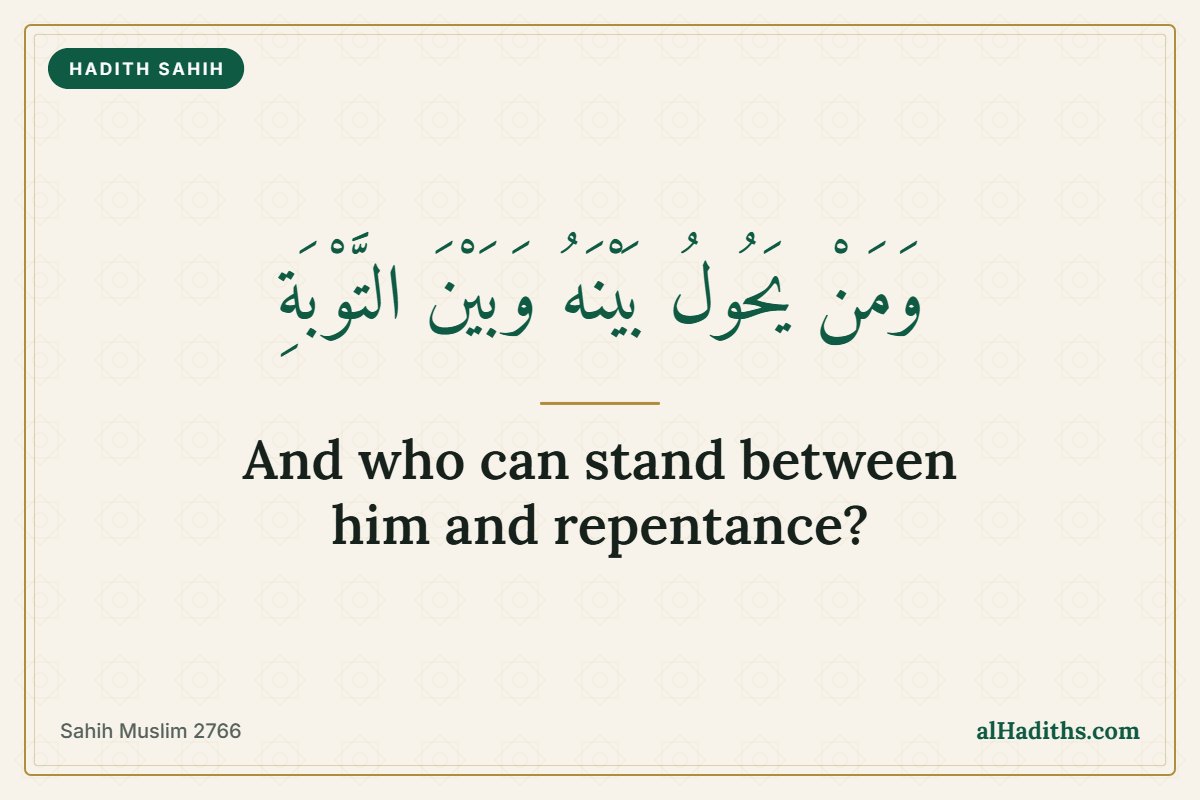
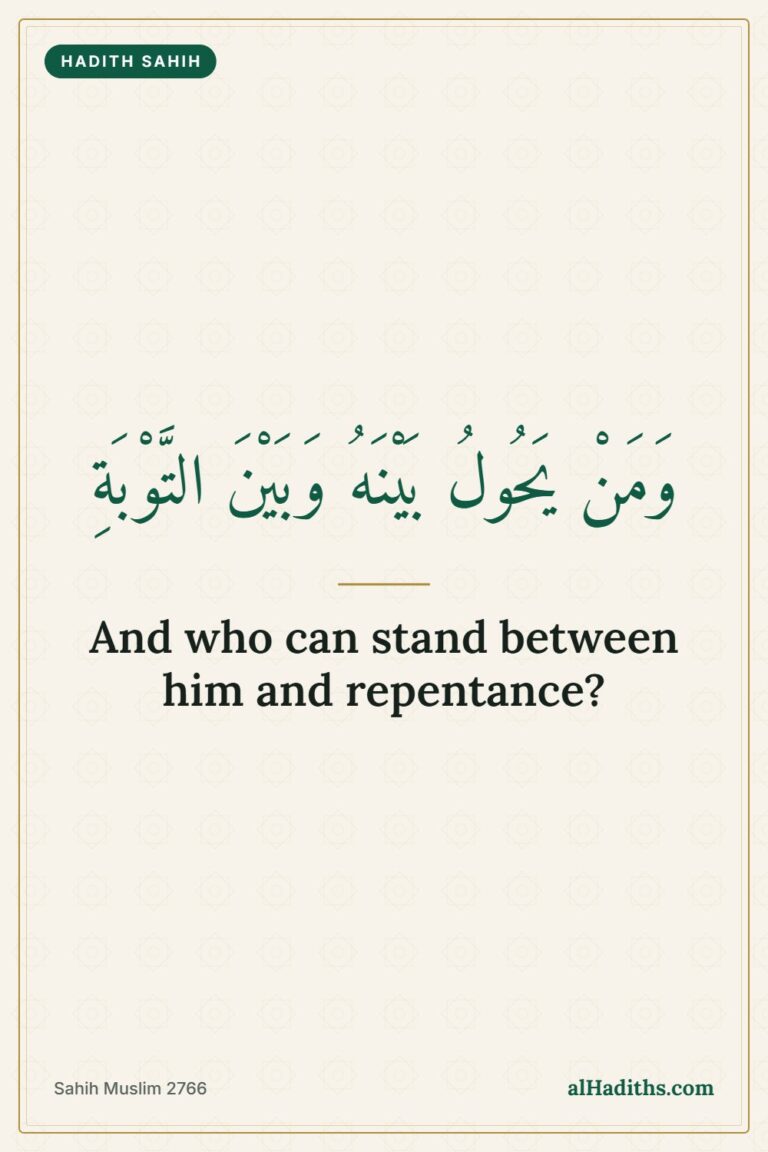
ثُمَّ سَأَلَ عَنْ أَعْلَمِ أَهْلِ الأَرْضِ فَدُلَّ عَلَى رَجُلٍ عَالِمٍ فَقَالَ إِنَّهُ قَتَلَ مِائَةَ نَفْسٍ فَهَلْ لَهُ مِنْ تَوْبَةٍ فَقَالَ نَعَمْ وَمَنْ يَحُولُ بَيْنَهُ وَبَيْنَ التَّوْبَةِ انْطَلِقْ إِلَى أَرْضِ كَذَا وَكَذَا فَإِنَّ بِهَا أُنَاسًا يَعْبُدُونَ اللَّهَ فَاعْبُدِ اللَّهَ مَعَهُمْ وَلاَ تَرْجِعْ إِلَى أَرْضِكَ فَإِنَّهَا أَرْضُ سَوْءٍ
“He then asked about the most learned person on earth and was directed to a scholar. He told him that he had killed one hundred persons and asked whether there was any chance for his repentance to be accepted. He said: ‘Yes. And who can stand between him and repentance? Go to such and such land; there are people there who worship Allah, so worship Allah with them, and do not return to your land, for it is an evil land.’”
Sahih Muslim 2766a · Narrated by Abu Sa‘id al-Khudri · Translation adapted from Sunnah.com
The scholar did two things. He opened the door (“who can stand between him and repentance?”), and he gave practical advice: leave the place that kept him in sin and go where people worship Allah. Repentance here is not only a feeling; it is a change of direction.
Death on the road and the angels’ dispute
He set off at once. He never reached the town.
فَانْطَلَقَ حَتَّى إِذَا نَصَفَ الطَّرِيقَ أَتَاهُ الْمَوْتُ فَاخْتَصَمَتْ فِيهِ مَلاَئِكَةُ الرَّحْمَةِ وَمَلاَئِكَةُ الْعَذَابِ فَقَالَتْ مَلاَئِكَةُ الرَّحْمَةِ جَاءَ تَائِبًا مُقْبِلاً بِقَلْبِهِ إِلَى اللَّهِ. وَقَالَتْ مَلاَئِكَةُ الْعَذَابِ إِنَّهُ لَمْ يَعْمَلْ خَيْرًا قَطُّ
“So he went away, and he had hardly covered half the way when death came to him. The angels of mercy and the angels of punishment disputed over him. The angels of mercy said: ‘He came repentant, turning to Allah with his heart.’ The angels of punishment said: ‘He has never done any good at all.’”
Sahih Muslim 2766a · Narrated by Abu Sa‘id al-Khudri · Translation adapted from Sunnah.com
Both groups of angels described him truthfully. He had no record of good deeds to show. What he had was a heart that had turned and feet that were moving.
Measured by one span
Allah sent a judge to settle the matter.
فَأَتَاهُمْ مَلَكٌ فِي صُورَةِ آدَمِيٍّ فَجَعَلُوهُ بَيْنَهُمْ فَقَالَ قِيسُوا مَا بَيْنَ الأَرْضَيْنِ فَإِلَى أَيَّتِهِمَا كَانَ أَدْنَى فَهُوَ لَهُ. فَقَاسُوهُ فَوَجَدُوهُ أَدْنَى إِلَى الأَرْضِ الَّتِي أَرَادَ فَقَبَضَتْهُ مَلاَئِكَةُ الرَّحْمَةِ
“Then an angel came to them in the form of a man, and they made him judge between them. He said: ‘Measure the distance between the two lands; whichever he is nearer to, he belongs to it.’ They measured it and found him nearer to the land he had set out for, so the angels of mercy took him.”
Sahih Muslim 2766a · Narrated by Abu Sa‘id al-Khudri · Translation adapted from Sunnah.com
Sahih al-Bukhari’s shorter wording adds a detail that shows how this happened: Allah Himself brought the good land closer and pushed the old one away.
فَأَدْرَكَهُ الْمَوْتُ فَنَاءَ بِصَدْرِهِ نَحْوَهَا، فَاخْتَصَمَتْ فِيهِ مَلاَئِكَةُ الرَّحْمَةِ وَمَلاَئِكَةُ الْعَذَابِ، فَأَوْحَى اللَّهُ إِلَى هَذِهِ أَنْ تَقَرَّبِي. وَأَوْحَى اللَّهُ إِلَى هَذِهِ أَنْ تَبَاعَدِي. وَقَالَ قِيسُوا مَا بَيْنَهُمَا. فَوُجِدَ إِلَى هَذِهِ أَقْرَبُ بِشِبْرٍ، فَغُفِرَ لَهُ
“Death overtook him on the way. While dying, he turned his chest towards that village, and the angels of mercy and the angels of punishment quarrelled about him. Allah ordered this village to come closer and that village to move away, and said: ‘Measure the distance between them.’ He was found one span closer to the village he was going to, so he was forgiven.”
Sahih al-Bukhari 3470 · Narrated by Abu Sa‘id al-Khudri · Translation adapted from Sunnah.com
What the story teaches
The explanation on HadeethEnc (hadith 4310) draws out these lessons: worship without sound knowledge can lead to harsh, mistaken answers, so serious questions should go to people of knowledge; repentance stays open even for a very grave record when the regret is sincere; leaving a harmful setting for righteous company is part of real change; and sincere movement toward good counts, even when the journey is not finished.
The Quran makes the same promise to those who turn back after the worst sins:
إِلَّا مَن تَابَ وَءَامَنَ وَعَمِلَ عَمَلًا صَـٰلِحًا فَأُو۟لَـٰٓئِكَ يُبَدِّلُ ٱللَّهُ سَيِّـَٔاتِهِمْ حَسَنَـٰتٍ ۗ وَكَانَ ٱللَّهُ غَفُورًا رَّحِيمًا
“Except for those who repent, believe and do righteous work. For them Allāh will replace their evil deeds with good. And ever is Allāh Forgiving and Merciful.”
Surah Al-Furqan 25:70 · Translation: Saheeh International, from Quran.com
Reflection: I notice that the man was saved by distance, not by deeds. He had no time to pray, fast or give charity. What tipped the scale was the direction he was walking. Many of us wait to feel “good enough” before we turn back. This story says: start walking, and leave the rest to Allah.
What the story doesn’t say
- It does not make killing or any sin small. The story is told to show the size of Allah’s mercy, not to lighten the crime.
- It does not say repentance can wait. He set out the moment he was told, and death still came halfway.
- It does not deal with the worldly side: courts, punishments, or the rights of the victims’ families. Those are matters of law that scholars discuss in detail, so ask a qualified scholar if you need a ruling.
Questions people ask
Is the man who killed 99 people the same story?
Yes. He had killed ninety-nine people when he asked the monk, then killed the monk and made it one hundred. Sahih Muslim 2766 and Sahih al-Bukhari 3470 tell the same story.
Can a murderer repent in Islam?
This hadith and the Quran (Al-Furqan 25:68–70) show that Allah accepts sincere repentance even from the gravest sins. The details of what repentance requires toward the victims and their families are discussed by scholars, so ask a qualified local scholar about a real situation.
Why did the monk say there was no repentance?
The explanation on HadeethEnc says he was a worshipper with little knowledge who judged the sin too great to forgive. The scholar, who had knowledge, gave the right answer.
Key lessons
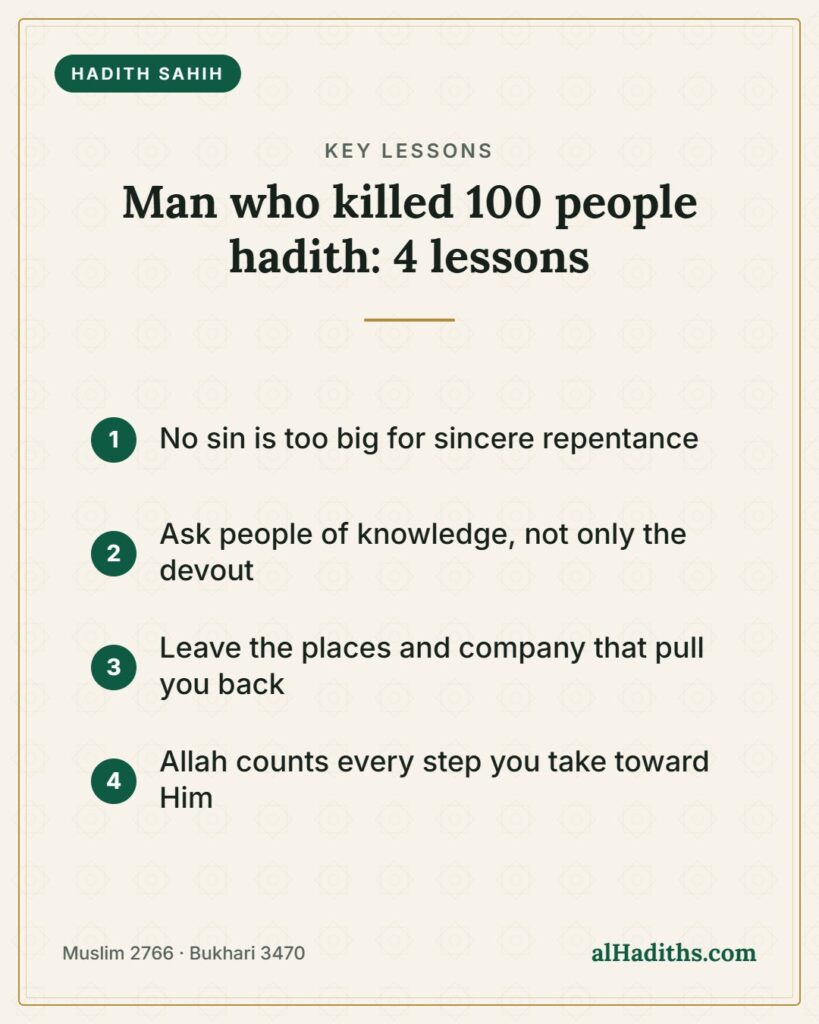
- No sin is too big for sincere repentance to Allah.
- Take questions of religion to people of knowledge.
- Leave the places and company that keep pulling you back.
- Allah counts the steps you take toward Him, even unfinished ones.
If there is a sin you think is too big, read the scholar’s question again: who can stand between you and repentance? Then take one step today.
Save this to Pinterest so you can come back to it on the days you feel too far gone
Share the reward. Send this article to someone who needs it today — teaching a hadith or dua can become a lasting good deed for you, in shaa Allah.