Dua for Sleeping and Waking Up: Bismika Allahumma Amutu wa Ahya
Contents
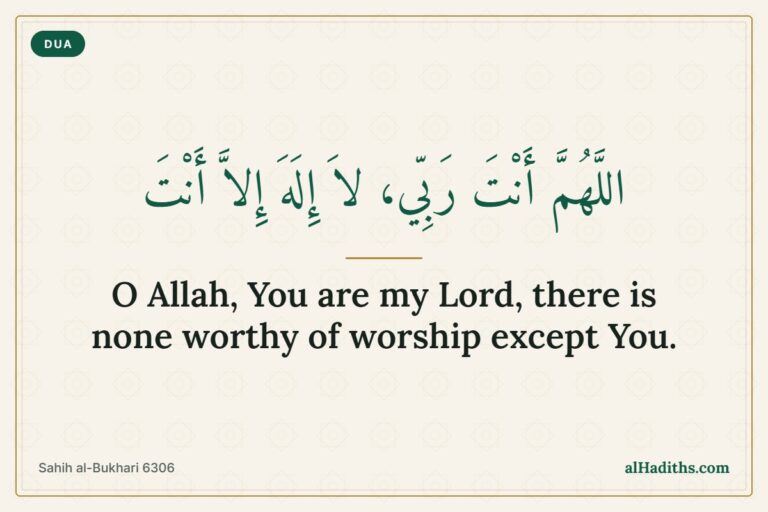
The last thing many of us do at night is check a phone. The Prophet ﷺ ended his day with a few short words instead. This is the dua for sleeping he said every night, the dua he said on waking up, and the other bedtime duas he taught his Companions, all from Sahih al-Bukhari and Sahih Muslim.
At a glance
- Source: Sahih al-Bukhari 6324 (also Bukhari 6312 and Muslim 2711)
- Narrated by: Hudhayfah ibn al-Yaman
- Grade: Sahih (al-Bukhari)
- Topic: The dua before sleeping and after waking up
- Practise it: Say it as you lie down tonight, and praise Allah when you wake
The dua for sleeping
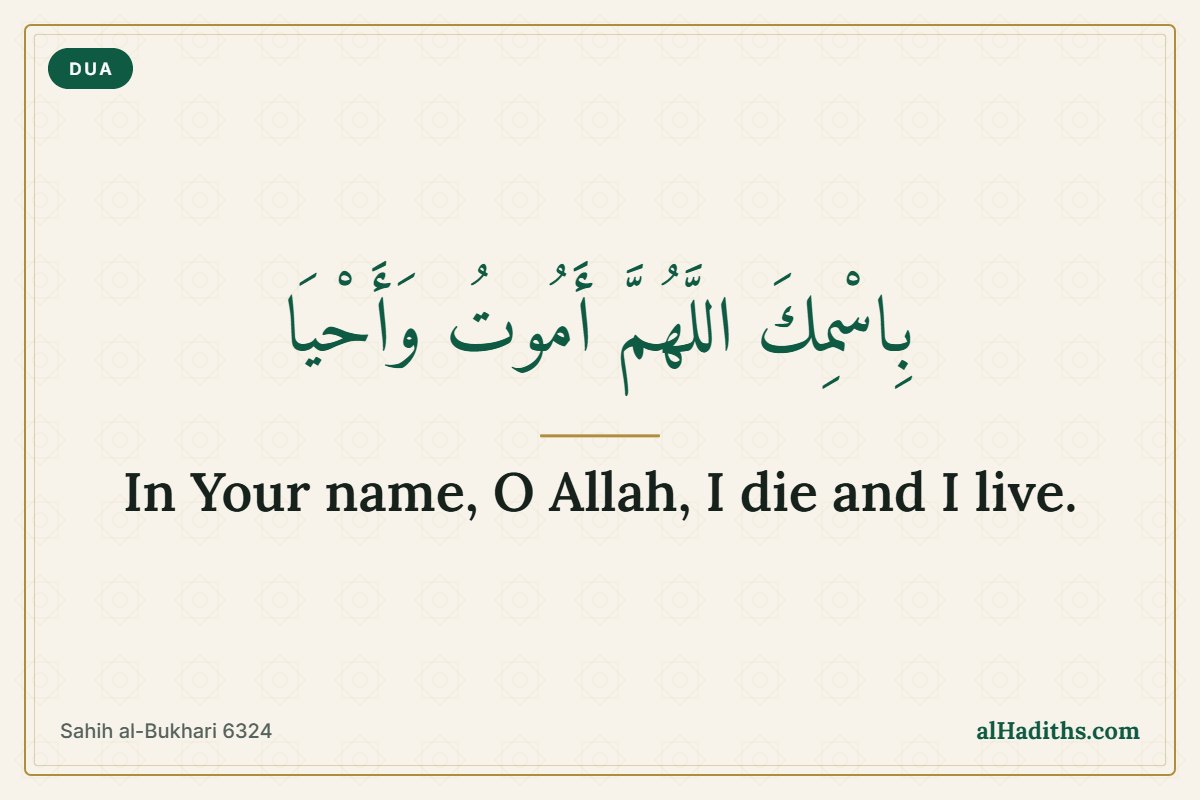
Hudhayfah ibn al-Yaman (may Allah be pleased with him) described what the Prophet ﷺ said each night. When he wanted to sleep, he would say:
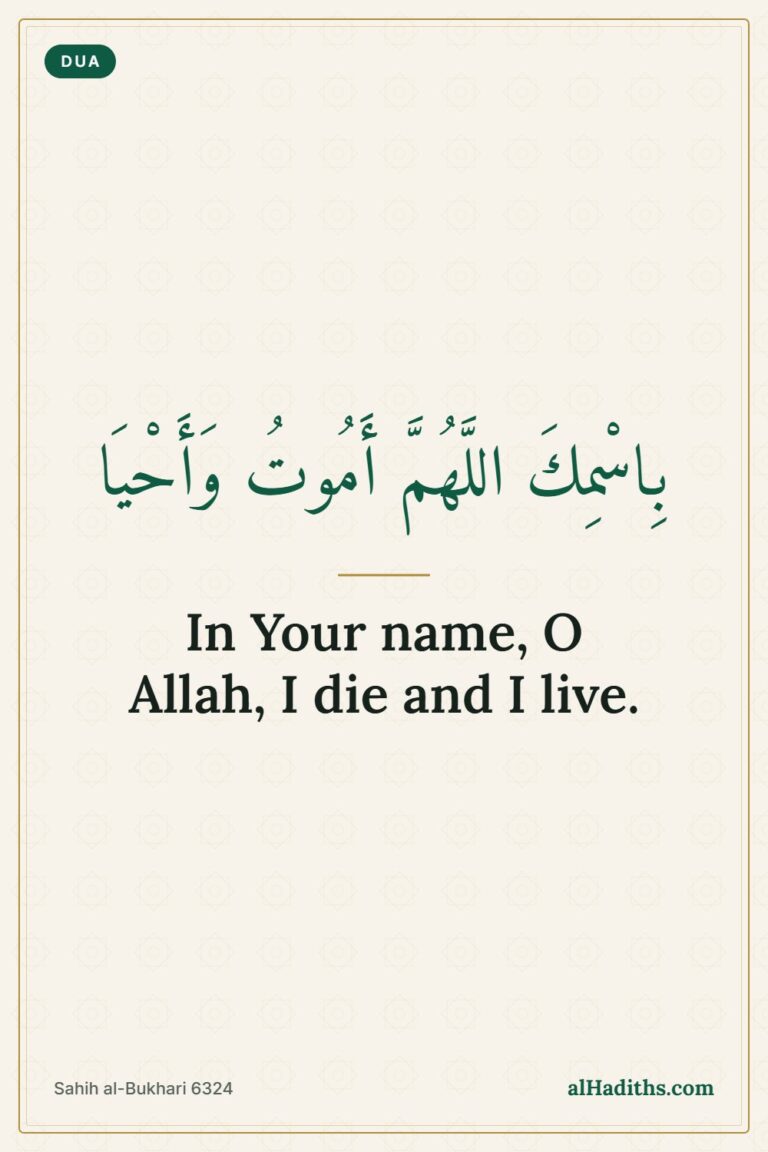
بِاسْمِكَ اللَّهُمَّ أَمُوتُ وَأَحْيَا
Bismika Allahumma amutu wa ahya
“In Your name, O Allah, I die and I live.”
Bukhari 6324 · Narrated by Hudhayfah · Translation adapted from Sunnah.com
It is one of the shortest duas in the Sunnah, so it is easy to learn tonight. Al-Bukhari also records it in Bukhari 6312 from Hudhayfah too, worded without “Allahumma”.
In the same hadith, Hudhayfah said that when the Prophet ﷺ woke up from his sleep, he would say:
الْحَمْدُ لِلَّهِ الَّذِي أَحْيَانَا بَعْدَ مَا أَمَاتَنَا، وَإِلَيْهِ النُّشُورُ
Al-hamdu lillahil-ladhi ahyana ba‘da ma amatana, wa ilayhin-nushur
“All praise is for Allah, who gave us life after He had caused us to die, and to Him is the resurrection.”
Bukhari 6324 · Narrated by Hudhayfah · Translation adapted from Sunnah.com
So the night opens and closes with Allah’s name: the first words before sleep and the first words after it.
Another Companion, al-Bara’ ibn ‘Azib (may Allah be pleased with him), reported the same bedtime dua with the words in the other order:
اللَّهُمَّ بِاسْمِكَ أَحْيَا وَبِاسْمِكَ أَمُوتُ
Allahumma bismika ahya wa bismika amut
“O Allah, in Your name I live and in Your name I die.”
Muslim 2711 · Narrated by al-Bara’ ibn ‘Azib · Translation adapted from Sunnah.com
Both wordings are authentic. Al-Bara’ also reported the same waking dua in this hadith, so whichever wording you learn, you are following the Sunnah.
What it means
The dua calls sleep a kind of death, and waking a return to life. The Quran describes sleep in the same way:
ٱللَّهُ يَتَوَفَّى ٱلْأَنفُسَ حِينَ مَوْتِهَا وَٱلَّتِى لَمْ تَمُتْ فِى مَنَامِهَا ۖ فَيُمْسِكُ ٱلَّتِى قَضَىٰ عَلَيْهَا ٱلْمَوْتَ وَيُرْسِلُ ٱلْأُخْرَىٰٓ إِلَىٰٓ أَجَلٍ مُّسَمًّى ۚ إِنَّ فِى ذَٰلِكَ لَـَٔايَـٰتٍ لِّقَوْمٍ يَتَفَكَّرُونَ
“Allāh takes the souls at the time of their death, and those that do not die [He takes] during their sleep. Then He keeps those for which He has decreed death and releases the others for a specified term. Indeed in that are signs for a people who give thought.”
Surah Az-Zumar 39:42 · Translation: Saheeh International, from Quran.com
Every night Allah takes our souls, and every morning He sends most of them back. One night He will keep a soul and not return it, and none of us knows which night that will be.
Reflection: “In Your name I die and I live” is a whole life in six words. We lie down with nothing in our hands, unable to guard ourselves, and we hand ourselves to Allah. Waking up is then not something we earned: it is a gift, so the first word of the day is praise. A tired person can still say this dua, and it turns the most ordinary act of the day into remembrance of Allah.
More bedtime duas from the Sunnah
The Prophet ﷺ taught his Companions two longer bedtime duas as well. They are useful on nights when you have a little more time.
1. Dust off the bed, then entrust your soul to Allah
Abu Hurayrah (may Allah be pleased with him) narrated that the Prophet ﷺ said:
إِذَا أَوَى أَحَدُكُمْ إِلَى فِرَاشِهِ فَلْيَنْفُضْ فِرَاشَهُ بِدَاخِلَةِ إِزَارِهِ، فَإِنَّهُ لاَ يَدْرِي مَا خَلَفَهُ عَلَيْهِ، ثُمَّ يَقُولُ بِاسْمِكَ رَبِّ وَضَعْتُ جَنْبِي، وَبِكَ أَرْفَعُهُ، إِنْ أَمْسَكْتَ نَفْسِي فَارْحَمْهَا، وَإِنْ أَرْسَلْتَهَا فَاحْفَظْهَا بِمَا تَحْفَظُ بِهِ عِبَادَكَ الصَّالِحِينَ
“When any of you goes to bed, let him dust off his bed with the inside edge of his lower garment, for he does not know what has come onto it after he left it. Then let him say: ‘In Your name, my Lord, I lay down my side, and by You I raise it. If You take my soul, have mercy on it, and if You send it back, protect it with that by which You protect Your righteous servants.’”
Bukhari 6320 · Narrated by Abu Hurayrah · Translation adapted from Sunnah.com
Transliteration of the dua: Bismika rabbi wada‘tu janbi, wa bika arfa‘uh, in amsakta nafsi farhamha, wa in arsaltaha fahfazha bima tahfazu bihi ‘ibadakas-salihin. HadeethEnc’s explanation notes that the dua is full surrender, since a sleeping person has no power over his own soul, and that dusting the bed reflects the care Islam gives to cleanliness and health.
2. The dua of surrender: the last words before sleep
Al-Bara’ ibn ‘Azib (may Allah be pleased with him) narrated that the Messenger of Allah ﷺ said to him:
إِذَا أَتَيْتَ مَضْجَعَكَ فَتَوَضَّأْ وَضُوءَكَ لِلصَّلاَةِ، ثُمَّ اضْطَجِعْ عَلَى شِقِّكَ الأَيْمَنِ، وَقُلِ اللَّهُمَّ أَسْلَمْتُ وَجْهِي إِلَيْكَ، وَفَوَّضْتُ أَمْرِي إِلَيْكَ، وَأَلْجَأْتُ ظَهْرِي إِلَيْكَ، رَغْبَةً وَرَهْبَةً إِلَيْكَ، لاَ مَلْجَأَ وَلاَ مَنْجَا مِنْكَ إِلاَّ إِلَيْكَ، آمَنْتُ بِكِتَابِكَ الَّذِي أَنْزَلْتَ، وَبِنَبِيِّكَ الَّذِي أَرْسَلْتَ. فَإِنْ مُتَّ مُتَّ عَلَى الْفِطْرَةِ، فَاجْعَلْهُنَّ آخِرَ مَا تَقُولُ
“When you go to your bed, perform wudu as you do for the prayer, then lie down on your right side and say: ‘O Allah, I submit myself to You, I entrust my affairs to You, and I lean on You for support, out of hope in You and fear of You. There is no refuge and no escape from You except to You. I believe in Your Book which You revealed, and in Your Prophet whom You sent.’ If you then die, you will die upon the fitrah (upon Islam), so make these the last words you say.”
Bukhari 6311 · Narrated by al-Bara’ ibn ‘Azib · Translation adapted from Sunnah.com
When al-Bara’ repeated it to memorize it, he said “and in Your Messenger whom You sent”. The Prophet ﷺ corrected him: “No, and in Your Prophet whom You sent.” So the exact wording of a dua the Prophet ﷺ taught matters, and it is worth learning it as he said it.
How to practise it
- Start with the short dua: say “Bismika Allahumma amutu wa ahya” as you lie down tonight. The hadith gives no number of times, so once is the Sunnah as reported.
- Put the waking dua where you will see it, such as on your phone’s lock screen, so it becomes your first words in the morning.
- When you have the energy, add the Sunnah steps in Bukhari 6311 and 6320: wudu, dusting off the bed, and lying on your right side.
- Make the dua of surrender your last words, as the Prophet ﷺ advised al-Bara’.
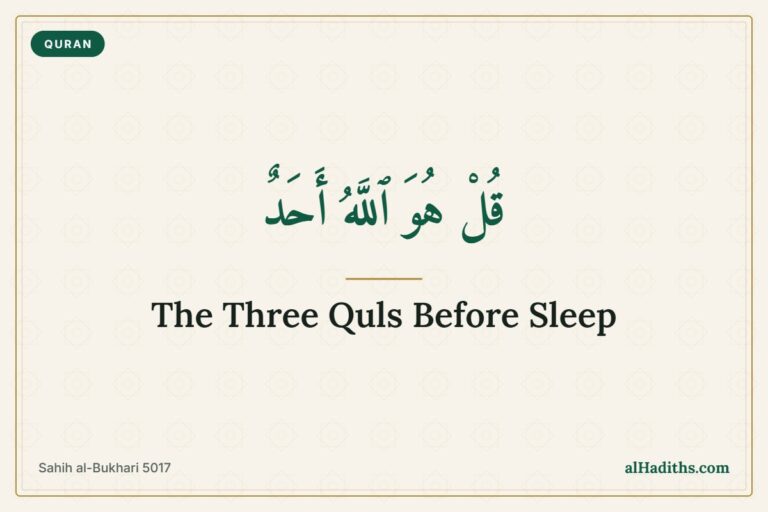
- Pair these duas with the three short surahs the Prophet ﷺ recited before sleeping (see Related reading below).
Questions people ask
What is the dua before sleeping and after waking up?
Before sleeping: “Bismika Allahumma amutu wa ahya” (In Your name, O Allah, I die and I live). After waking up: “Al-hamdu lillahil-ladhi ahyana ba‘da ma amatana, wa ilayhin-nushur” (All praise is for Allah, who gave us life after He had caused us to die, and to Him is the resurrection). Both are in Sahih al-Bukhari 6324.
Is it “amutu wa ahya” or “ahya wa amut”?
Both are authentic. Hudhayfah narrated “Bismika Allahumma amutu wa ahya” (Bukhari 6324), and al-Bara’ narrated “Allahumma bismika ahya wa bismika amut” (Muslim 2711).
What should be the last words before sleeping?
The Prophet ﷺ told al-Bara’ to make the dua of surrender (“Allahumma aslamtu wajhi ilayk…”) the last words he said before sleeping, and said that if he died that night, he would die upon the fitrah (Bukhari 6311).
Did the Prophet ﷺ put his hand under his cheek when sleeping?
Yes. Hudhayfah narrated that the Prophet ﷺ put his hand under his head and said “Allahumma qini ‘adhabaka yawma tajma‘u (or tab‘athu) ‘ibadak” (O Allah, protect me from Your punishment on the Day You gather or resurrect Your servants): Tirmidhi 3398, Sahih (Darussalam). Abu Dawud’s version from Hafsah adds “three times”, but al-Albani graded it Sahih without those words (Abu Dawud 5045).
Key lessons
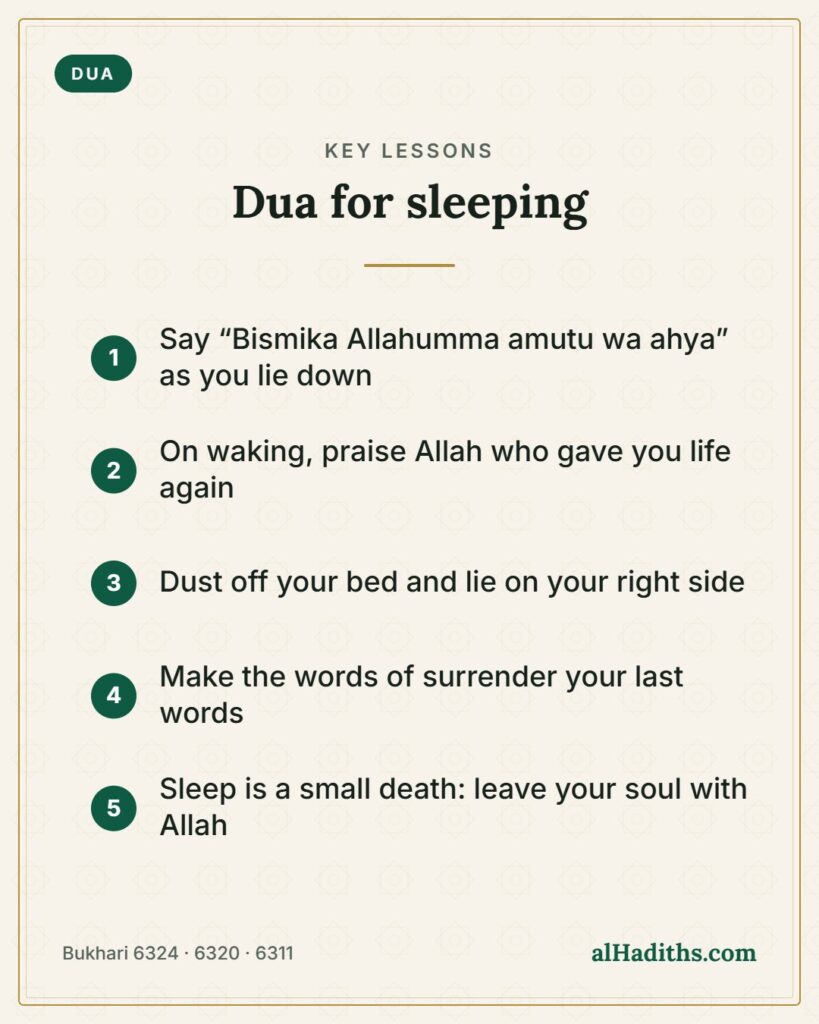
- The dua for sleeping is short: “Bismika Allahumma amutu wa ahya”.
- The first words of the day are praise for the life Allah returned to us.
- Two wordings are authentic, from Hudhayfah and from al-Bara’.
- The Sunnah adds wudu, dusting the bed, lying on the right side and the dua of surrender.
- Sleep is a small death, a nightly reminder to be ready to meet Allah.
Part of our Dua series: see all our dua articles in one place.
Tonight, before the light goes out, try just six words: Bismika Allahumma amutu wa ahya. Then see if “Al-hamdu lillah” can be the first thing you say tomorrow.
Save this to Pinterest so you can find this bedtime dua again tonight.
Share the reward. Send this article to someone who needs it today — teaching a hadith or dua can become a lasting good deed for you, in shaa Allah.