Surah Waqiah Benefits: Is the Poverty Hadith Authentic?
Contents
Search for Surah Waqiah benefits and you will find the same promise again and again: recite it every night and you will never be poor. Many of us were taught this as children, and some recite it after ‘Isha for that reason. But is that promise really from the Prophet ﷺ? Here is what the scholars of hadith said about it, and what is authentic about Surah Al-Waqi’ah.
At a glance
- Short answer: The hadith “whoever recites al-Waqi’ah every night will never be afflicted by poverty” is weak
- Graded by: Weak (al-Albani); al-Munawi called it munkar
- What is authentic: Al-Waqi’ah is one of the surahs that turned the Prophet’s ﷺ hair gray (Tirmidhi 3297, Sahih)
- Still true: Reciting it, like any Quran, is rewarded letter by letter
- Do it today: Recite al-Waqi’ah to reflect on the Day it describes, and seek rizq with the authentic duas
The popular claim: “never afflicted by poverty”
The narration says: “Whoever recites Surah al-Waqi’ah every night will never be afflicted by poverty.” It is attributed to ‘Abdullah ibn Mas’ud (may Allah be pleased with him), who is said to have told his daughters to recite it every night. Al-Bayhaqi recorded it in Shu’ab al-Iman.
Its grade: weak. Islamweb’s fatwa on reading surahs for special purposes states that al-Albani graded it weak in his collection of weak hadith. A second Islamweb fatwa, on the merit of Surah Al-Waqi’ah, reports that al-Munawi called it munkar (rejected), and that al-Albani also graded weak the related wording “teach your women Surah Al-Waqi’ah, for it brings wealth”. Because it is not established, we do not give it an Arabic card here.
Scholars differ on acting upon a weak hadith in matters of virtue: some allowed it with conditions, as the first Islamweb fatwa mentions, and others did not. What they agree on is that a weak narration should not be passed on as a certain promise of the Prophet ﷺ.
What is authentic: Surah Waqiah benefits in the Sahih hadith
Ibn ‘Abbas (may Allah be pleased with him) reported a question Abu Bakr (may Allah be pleased with him) asked the Prophet ﷺ.
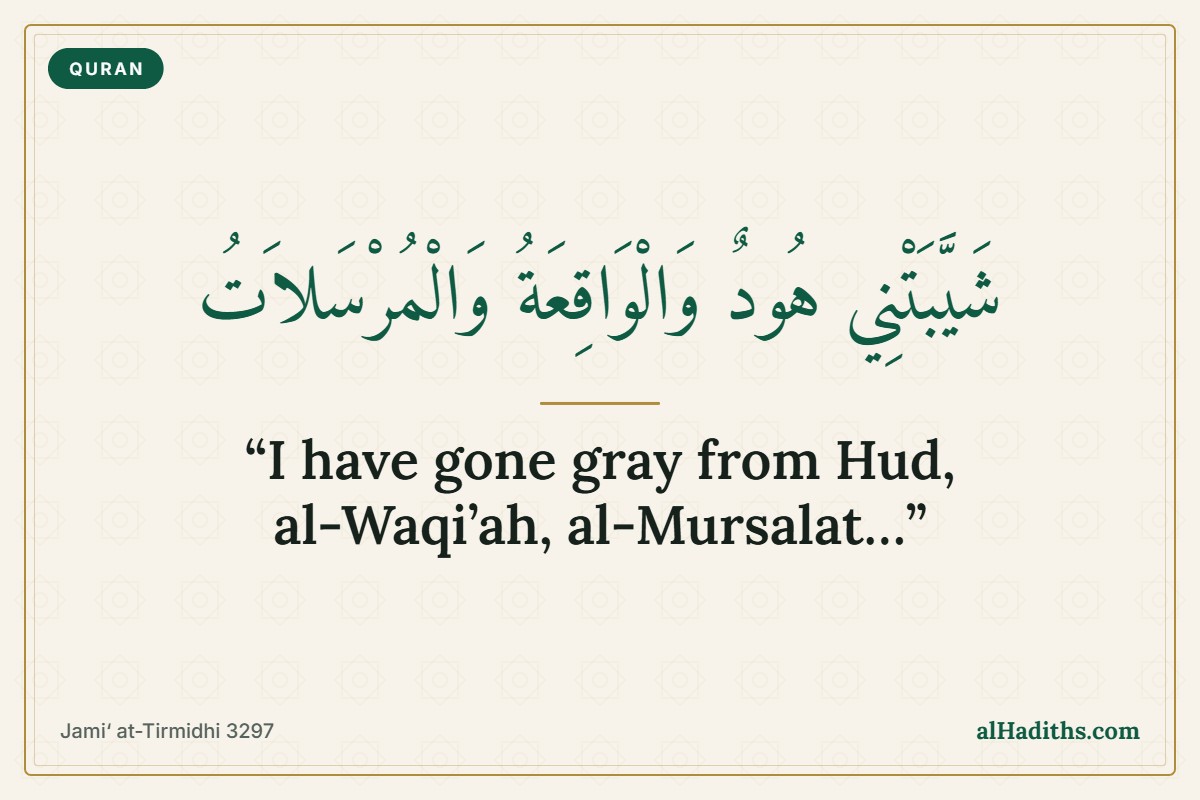
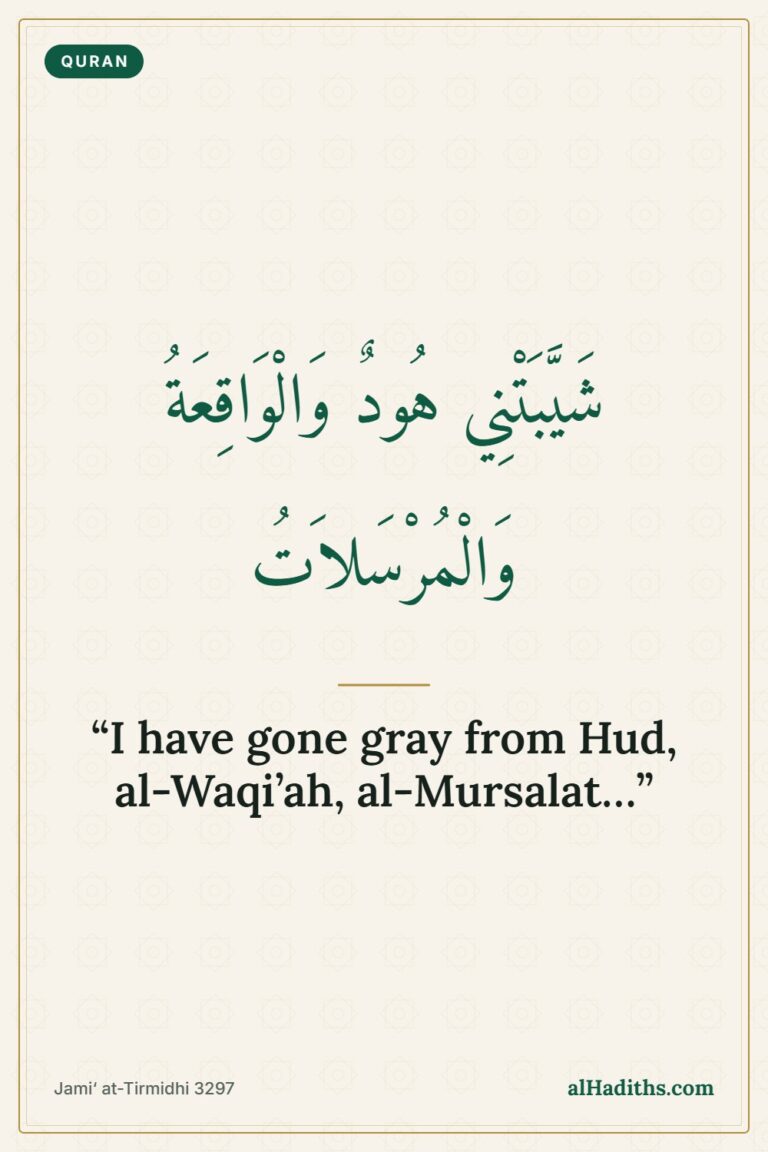
يَا رَسُولَ اللَّهِ قَدْ شِبْتَ. قَالَ شَيَّبَتْنِي هُودٌ وَالْوَاقِعَةُ وَالْمُرْسَلاَتُ وَ عمَّ يَتَسَاءَلُونَ وَإذَا الشَّمْسُ كُوِّرَتْ
“Abu Bakr said: ‘O Messenger of Allah! You have become gray.’ He said: ‘I have gone gray from (Surat) Hud, Al-Waqi‘ah, Al-Mursalat and ‘Amma Yatasa’alun and Idhash-Shamsu Kuwwirat.’”
Jami‘ at-Tirmidhi 3297 · Sahih (Darussalam) · Narrated by Ibn ‘Abbas · Translation adapted from Sunnah.com
This is the real weight of al-Waqi’ah. It did not make the Prophet ﷺ rich; it made him gray, because of what it describes. Islamweb explains that these are the “sisters” of Surah Hud mentioned in another wording of the hadith: Hud, al-Waqi’ah, al-Mursalat, an-Naba’ and at-Takwir, all surahs about the Day of Judgment.
What Surah Al-Waqi’ah is about
The surah opens with the Event itself, the Day that no one will be able to deny:
إِذَا وَقَعَتِ ٱلْوَاقِعَةُ لَيْسَ لِوَقْعَتِهَا كَاذِبَةٌ خَافِضَةٌ رَّافِعَةٌ
When the Occurrence occurs, There is, at its occurrence, no denial. It will bring down [some] and raise up [others].
Surah Al-Waqi‘ah 56:1–3 · Translation: Saheeh International, from Quran.com
It then divides people into three groups: the foremost, the companions of the right and the companions of the left, and describes what each will meet. It reminds us that Allah creates, sends down rain and grows our crops, and near its end it describes the moment of death. A surah like this was meant to wake hearts, not only to fill pockets.
The reward of reciting it, like any Quran
You do not need the weak promise to recite al-Waqi’ah. Abu Umamah (may Allah be pleased with him) heard the Prophet ﷺ say this about the whole Quran:
اقْرَءُوا الْقُرْآنَ فَإِنَّهُ يَأْتِي يَوْمَ الْقِيَامَةِ شَفِيعًا لأَصْحَابِهِ
“Recite the Qur’an, for on the Day of Resurrection it will come as an intercessor for those who recite it.”
Sahih Muslim 804a · Narrated by Abu Umamah · Translation adapted from Sunnah.com (trimmed to the first sentence)
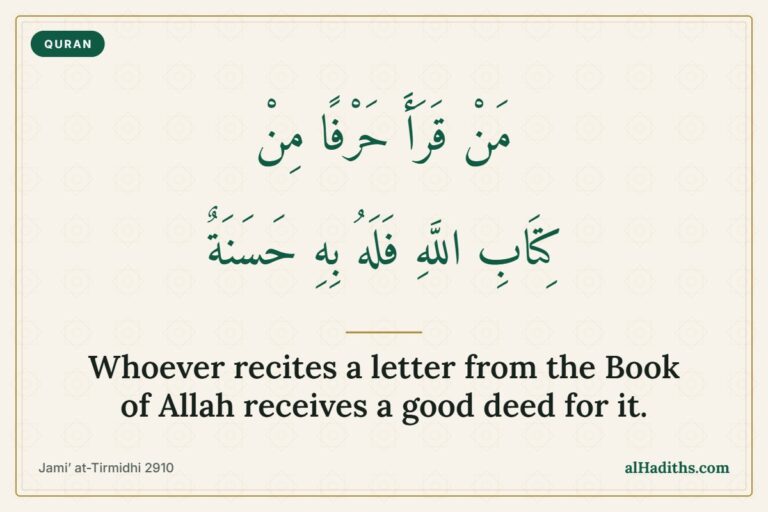
And every letter you recite earns ten rewards (Tirmidhi 2910, Hasan). We gathered these in our benefits of reciting Quran article. So reciting al-Waqi’ah every night is a good habit. The only problem is the reason we attach to it.
If you are worried about rizq
The fear of poverty is real, and the Prophet ﷺ gave us authentic words for it: a bedtime dua asking Allah to settle our debts and free us from poverty, and a dua for good, lawful provision. We collected them in Dua for Rizq: 4 Authentic Duas. Recite al-Waqi’ah for what it teaches, and ask for rizq with the duas the Prophet ﷺ himself made.
Reflection: I think the weak narration makes a heavy surah sound light. The Prophet ﷺ said al-Waqi’ah turned his hair gray, and we turned it into a charm for money. Reading it with its real meaning may do more for our hearts than any promise of wealth.
Questions people ask
Is the hadith about Surah Waqiah and poverty authentic?
No. The narration “whoever recites Surah al-Waqi’ah every night will never be afflicted by poverty” (al-Bayhaqi, Shu’ab al-Iman) was graded weak by al-Albani, and al-Munawi called it munkar.
When should I recite Surah Waqiah?
No authentic hadith sets a time for it. You can recite it at any time, at night or in the day, like any other part of the Quran.
What are the sisters of Surah Hud?
In Tirmidhi 3297 the Prophet ﷺ named Hud, al-Waqi’ah, al-Mursalat, ‘Amma Yatasa’alun (an-Naba’) and Idhash-Shamsu Kuwwirat (at-Takwir) as the surahs that turned his hair gray.
Is it wrong to recite Surah Waqiah for rizq?
Reciting the Quran is always rewarded. Scholars differ on acting upon weak hadith for virtues, so ask a qualified local scholar; but the promise should not be quoted as an authentic saying of the Prophet ﷺ.
Key lessons on Surah Waqiah benefits
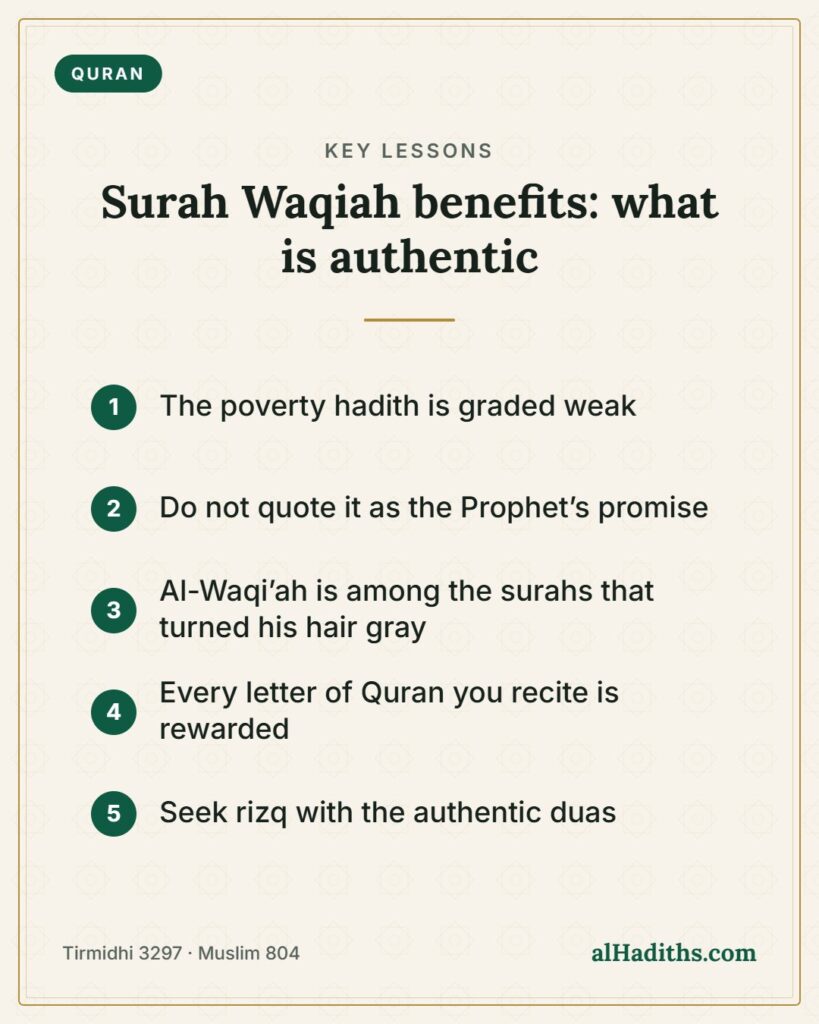
- The poverty narration about al-Waqi’ah is graded weak (al-Albani).
- Do not pass it on as a promise of the Prophet ﷺ.
- Al-Waqi’ah is one of the surahs that turned the Prophet’s ﷺ hair gray (Tirmidhi 3297).
- Reciting any part of the Quran is rewarded, and the Quran will intercede for its people (Muslim 804).
- For provision, use the authentic duas for rizq.
Part of our Weak Hadith series: see all our weak hadith articles in one place.
Tonight, if you recite al-Waqi’ah, read its meaning too, and ask yourself which of its three groups you are working to be among.
Save this to Pinterest so you can check what is authentic before you share it
Share the reward. Send this article to someone who needs it today — teaching a hadith or dua can become a lasting good deed for you, in shaa Allah.