Prophet Ayyub Story in the Hadith: Patience and Gold Locusts
Contents
Most of us know the prophet Ayyub story as a story of patience: a man touched by long hardship who kept turning to Allah. The authentic hadith add a scene about Ayyub and a shower of gold, and it teaches the other half of his character: gratitude.
At a glance
- Source: Sahih al-Bukhari 279 (also 3391 and 7493)
- Narrated by: Abu Hurayrah (may Allah be pleased with him)
- Grade: Sahih (al-Bukhari)
- Topic: Prophet Ayyub (Job), patience and gratitude
- Practise it: Make the dua of Ayyub in hardship, and thank Allah for small blessings in ease
The hadith of the gold locusts
The Prophet ﷺ told us this about Prophet Ayyub (peace be upon him):
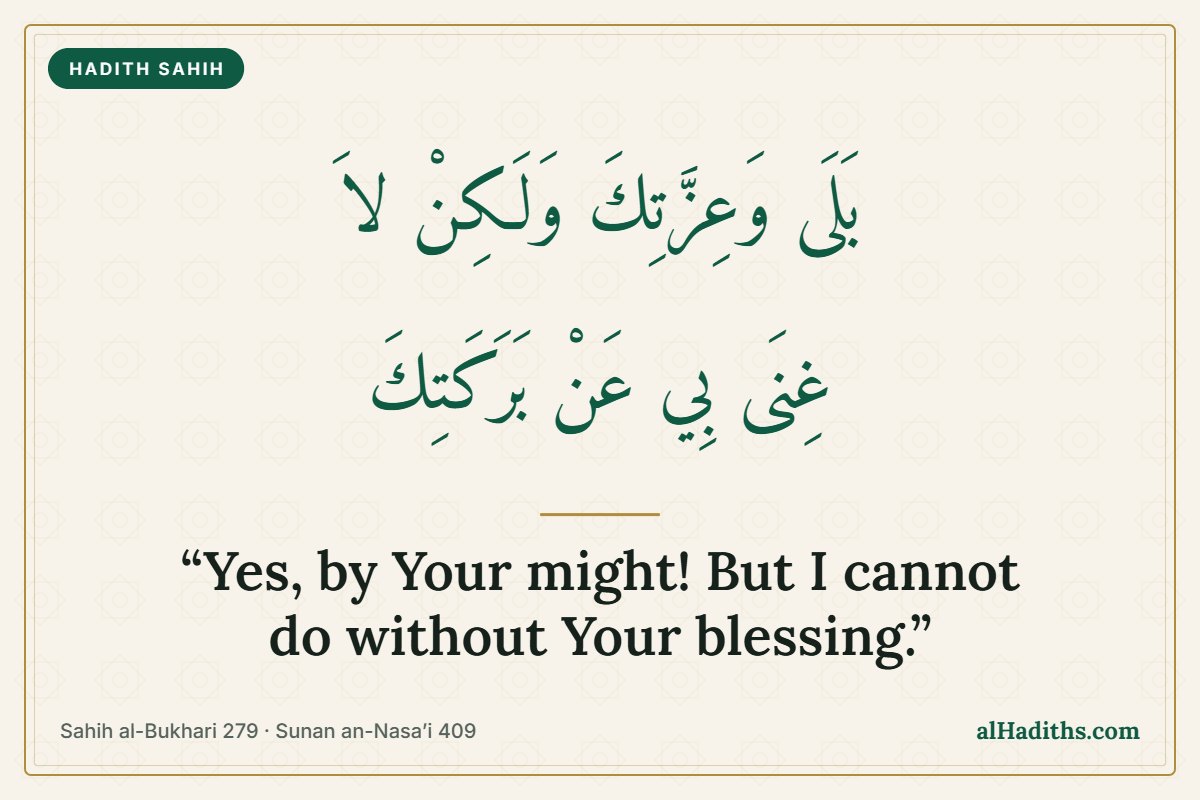
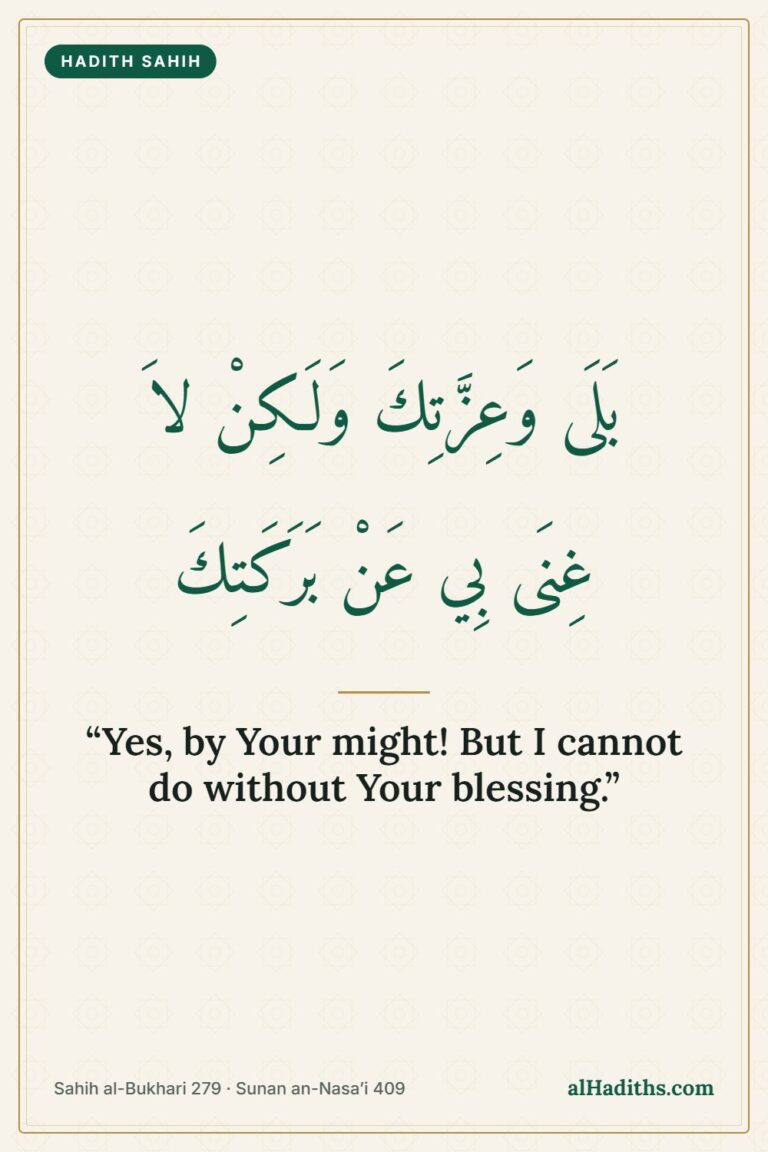
بَيْنَا أَيُّوبُ يَغْتَسِلُ عُرْيَانًا فَخَرَّ عَلَيْهِ جَرَادٌ مِنْ ذَهَبٍ، فَجَعَلَ أَيُّوبُ يَحْتَثِي فِي ثَوْبِهِ، فَنَادَاهُ رَبُّهُ يَا أَيُّوبُ، أَلَمْ أَكُنْ أَغْنَيْتُكَ عَمَّا تَرَى قَالَ بَلَى وَعِزَّتِكَ وَلَكِنْ لاَ غِنَى بِي عَنْ بَرَكَتِكَ
“While Ayyub was taking a bath naked, golden locusts began to fall on him, and Ayyub started gathering them in his garment. His Lord called him, ‘O Ayyub! Have I not made you rich enough not to need what you see?’ He replied, ‘Yes, by Your might! But I cannot do without Your blessing.’”
Sahih al-Bukhari 279 · Also Bukhari 3391 and 7493 · Narrated by Abu Hurayrah · Translation adapted from Sunnah.com
The same hadith is in Sunan an-Nasa’i through another chain:
بَيْنَمَا أَيُّوبُ عَلَيْهِ الصَّلاَةُ وَالسَّلاَمُ يَغْتَسِلُ عُرْيَانًا خَرَّ عَلَيْهِ جَرَادٌ مِنْ ذَهَبٍ فَجَعَلَ يَحْثِي فِي ثَوْبِهِ قَالَ فَنَادَاهُ رَبُّهُ عَزَّ وَجَلَّ يَا أَيُّوبُ أَلَمْ أَكُنْ أَغْنَيْتُكَ قَالَ بَلَى يَا رَبِّ وَلَكِنْ لاَ غِنَى بِي عَنْ بَرَكَاتِكَ
“While Ayyub, peace be upon him, was bathing naked, locusts of gold landed on him and he started to collect them in his garment. Then his Lord called him (saying): ‘O Ayyub, did I not make you rich?’ He said: ‘Yes, O Lord, but I cannot do without Your blessing.’”
Sunan an-Nasa’i 409 · Sahih (Darussalam) · Narrated by Abu Hurayrah · Translation from Sunnah.com
What it means
Allah had already made Ayyub rich, yet he gathered the gold that fell from the sky. According to HadeethEnc, he did not take it out of greed for this world, but because it was a blessing from his Lord, and no one can do without Allah’s blessing.
Reflection: A man known for his patience in hardship was just as careful with blessings. He treated a gift from Allah as something to gather and value, not something he already had “enough” of. Gratitude, for him, was the other half of patience.
The prophet Ayyub story in the Quran
The Quran tells us about his trial and his dua in two places. In Surah al-Anbiya:
۞ وَأَيُّوبَ إِذْ نَادَىٰ رَبَّهُۥٓ أَنِّى مَسَّنِىَ ٱلضُّرُّ وَأَنتَ أَرْحَمُ ٱلرَّٰحِمِينَ فَٱسْتَجَبْنَا لَهُۥ فَكَشَفْنَا مَا بِهِۦ مِن ضُرٍّ ۖ وَءَاتَيْنَـٰهُ أَهْلَهُۥ وَمِثْلَهُم مَّعَهُمْ رَحْمَةً مِّنْ عِندِنَا وَذِكْرَىٰ لِلْعَـٰبِدِينَ
“And [mention] Job, when he called to his Lord, ‘Indeed, adversity has touched me, and You are the most merciful of the merciful.’ So We responded to him and removed what afflicted him of adversity. And We gave him [back] his family and the like thereof with them as mercy from Us and a reminder for the worshippers [of Allāh].”
Surah al-Anbiya 21:83–84 · Translation: Saheeh International, from Quran.com
His dua is short: he names his hardship, then names Allah as “the most merciful of the merciful.” He does not complain about Allah; he complains to Allah. And Allah answered, giving back his family and as many again with them.
In Surah Sad, Allah tells more of how the cure came:
وَٱذْكُرْ عَبْدَنَآ أَيُّوبَ إِذْ نَادَىٰ رَبَّهُۥٓ أَنِّى مَسَّنِىَ ٱلشَّيْطَـٰنُ بِنُصْبٍ وَعَذَابٍ ٱرْكُضْ بِرِجْلِكَ ۖ هَـٰذَا مُغْتَسَلٌۢ بَارِدٌ وَشَرَابٌ وَوَهَبْنَا لَهُۥٓ أَهْلَهُۥ وَمِثْلَهُم مَّعَهُمْ رَحْمَةً مِّنَّا وَذِكْرَىٰ لِأُو۟لِى ٱلْأَلْبَـٰبِ وَخُذْ بِيَدِكَ ضِغْثًا فَٱضْرِب بِّهِۦ وَلَا تَحْنَثْ ۗ إِنَّا وَجَدْنَـٰهُ صَابِرًا ۚ نِّعْمَ ٱلْعَبْدُ ۖ إِنَّهُۥٓ أَوَّابٌ
“And remember Our servant Job, when he called to his Lord, ‘Indeed, Satan has touched me with hardship and torment.’ [So he was told], ‘Strike [the ground] with your foot; this is a [spring for a] cool bath and drink.’ And We granted him his family and a like [number] with them as mercy from Us and a reminder for those of understanding. [We said], ‘And take in your hand a bunch [of grass] and strike with it and do not break your oath.’ Indeed, We found him patient, an excellent servant. Indeed, he was one repeatedly turning back [to Allāh].”
Surah Sad 38:41–44 · Translation: Saheeh International, from Quran.com
Allah’s own description of him closes the passage: “We found him patient, an excellent servant.” The oath mentioned in verse 44 is explained by the scholars of tafsir in their books; the lesson we take here is that Allah praised his patience and his constant turning back to Him.
Why the prophets were tested the most
Sa‘d ibn Abi Waqqas (may Allah be pleased with him) asked the Prophet ﷺ which people are tested most severely. He said:
الأَنْبِيَاءُ ثُمَّ الأَمْثَلُ فَالأَمْثَلُ فَيُبْتَلَى الرَّجُلُ عَلَى حَسَبِ دِينِهِ فَإِنْ كَانَ دِينُهُ صُلْبًا اشْتَدَّ بَلاَؤُهُ وَإِنْ كَانَ فِي دِينِهِ رِقَّةٌ ابْتُلِيَ عَلَى حَسَبِ دِينِهِ فَمَا يَبْرَحُ الْبَلاَءُ بِالْعَبْدِ حَتَّى يَتْرُكَهُ يَمْشِي عَلَى الأَرْضِ مَا عَلَيْهِ خَطِيئَةٌ
“The Prophets, then those nearest to them, then those nearest to them. A man is tried according to his religion; if he is firm in his religion, then his trials are more severe, and if he is frail in his religion, then he is tried according to the strength of his religion. The servant shall continue to be tried until he is left walking upon the earth without any sins.”
Jami‘ at-Tirmidhi 2398 · Hasan (Darussalam) · Narrated by Sa‘d ibn Abi Waqqas (Sunnah.com’s English says “a man said”; the Arabic has Sa‘d asking) · Translation from Sunnah.com
Ayyub’s trial was not a sign that Allah was displeased with him. The hadith tells us the opposite: the strongest in faith carry the heaviest tests, and the tests wash away sins.
How to practise it
- In hardship, make the dua of Ayyub from Surah al-Anbiya 21:83. The Quran gives no number or time for it; say it whenever you need it.
- Complain to Allah, not about Him. Name your pain in your dua, then name His mercy.
- In ease, value small blessings. Ayyub was already rich and still said he could not do without Allah’s blessing.
- When someone you love is ill for a long time, remind them (gently) that the prophets were tested most, and that tests remove sins.
Questions people ask
What is the dua of Prophet Ayyub?
It is in Surah al-Anbiya 21:83: “Indeed, adversity has touched me, and You are the most merciful of the merciful.” Allah says in the next verse that He answered him and removed his hardship.
What is the hadith about Prophet Ayyub and the gold locusts?
In Sahih al-Bukhari 279, the Prophet ﷺ said that gold locusts fell on Ayyub while he was bathing and he gathered them. Allah asked if He had not made him rich enough, and Ayyub said he could never do without Allah’s blessing.
How long was Prophet Ayyub ill?
Neither the Quran nor the hadith in Sahih al-Bukhari and Sahih Muslim gives a number of years. Longer accounts with years and details come from stories outside these sources, so we have not used them here.
Did worms eat Prophet Ayyub’s body?
This detail is popular in stories about him, but it is not in the Quran or in the authentic hadith quoted here. We stay with what these sources say: he was touched by hardship, he was patient, and Allah cured him.
Key lessons
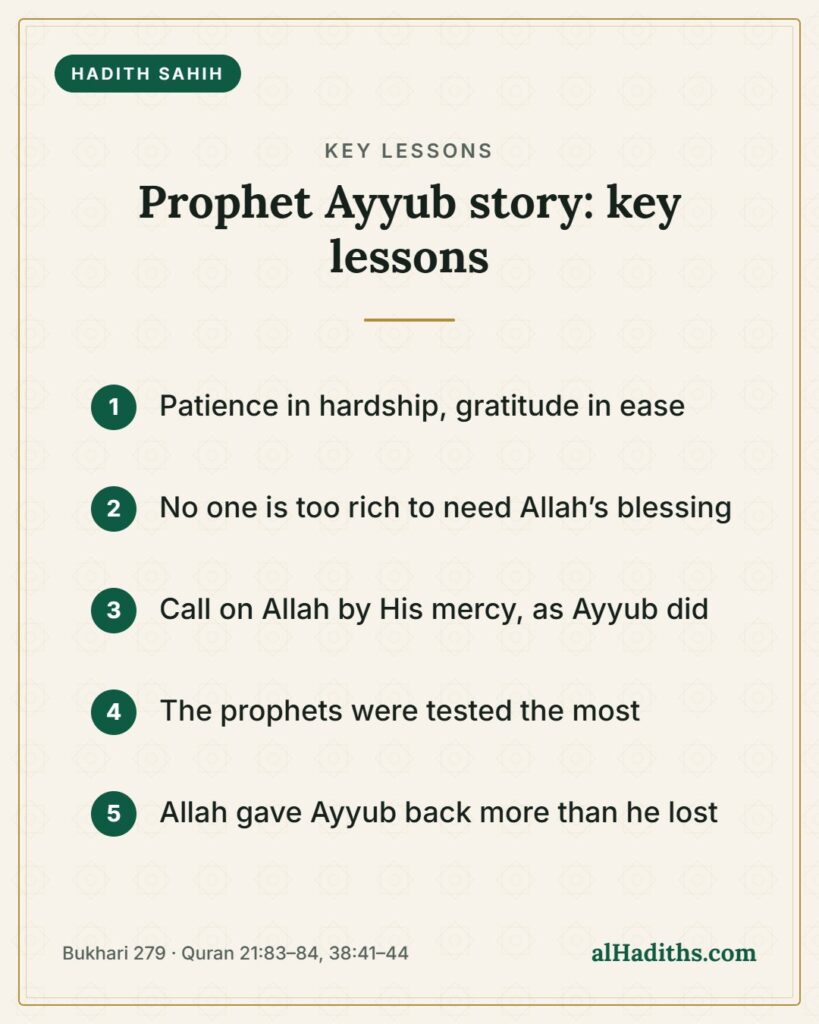
- Patience in hardship and gratitude in ease go together.
- No one becomes too rich to need Allah’s blessing.
- The dua of Ayyub calls on Allah by His mercy.
- The prophets were tested the most, and trials remove sins.
- Allah gave Ayyub back his family and more, as a mercy and a reminder.
Part of our Prophets in the Hadith series: see all our articles on the prophets in one place.
If you are going through something heavy today, try the words of Ayyub tonight. And if today is easy, thank Allah for one small blessing you might have overlooked.
Save this to Pinterest so you can remember the patience and gratitude of Prophet Ayyub
Share the reward. Send this article to someone who needs it today — teaching a hadith or dua can become a lasting good deed for you, in shaa Allah.