Dua for Debt: 2 Authentic Duas and 5 Hadith on Debt
Contents
Debt can sit on the heart day and night. If you are looking for a dua for debt, the Sunnah gives us two, both authentic, along with clear guidance on borrowing, repaying and forgiving. Here are 2 duas and 5 hadith on debt, each checked on Sunnah.com.
At a glance
- Hadith: 7 in total: 2 duas and 5 hadith on debt
- Collections: Sahih al-Bukhari, Sahih Muslim, Jami at-Tirmidhi
- Grade: Sahih (Bukhari, Muslim); Hasan (Darussalam) for the two from Tirmidhi
- Topic: Debt in the Sunnah: duas, warnings and mercy
- Do today: Say the dua from Tirmidhi 3563 once, and write down every debt you owe
This article shares what the hadith say. It gives no rulings on loans, cards or any financial product, and it is not financial advice. If debt is weighing on you, it is fine to get help from a financial counsellor as well as making dua, and to ask a qualified scholar about your own situation.
1. The dua for debt in Sahih al-Bukhari
Anas ibn Malik (may Allah be pleased with him) reported that the Prophet ﷺ used to say:
اللَّهُمَّ إِنِّي أَعُوذُ بِكَ مِنَ الْهَمِّ وَالْحَزَنِ، وَالْعَجْزِ وَالْكَسَلِ، وَالْجُبْنِ وَالْبُخْلِ، وَضَلَعِ الدَّيْنِ، وَغَلَبَةِ الرِّجَالِ
Allāhumma innī a‘ūdhu bika minal-hammi wal-ḥazan, wal-‘ajzi wal-kasal, wal-jubni wal-bukhl, wa ḍala‘id-dayn, wa ghalabatir-rijāl.
“O Allah! I seek refuge with You from worry and grief, from incapacity and laziness, from cowardice and miserliness, from being heavily in debt and from being overpowered by (other) men.”
Sahih al-Bukhari 6369 · Narrated by Anas ibn Malik · Translation adapted from Sunnah.com
This is the dua many people know as the dua for debt and anxiety, because worry, grief and heavy debt sit side by side in the same breath. The explanation of a closely related narration on HadeethEnc (5914) describes heavy debt as a stressful state in which the person feels helpless, a kind of defeat, while being overpowered by men is the same defeat without any right.
Try this: say this dua in the morning and evening, slowly, and let each pair of words remind you what you are asking Allah to protect you from.
2. A dua for debt as big as a mountain
Ali ibn Abi Talib (may Allah be pleased with him) was asked for help by a man who could not pay what he owed for his freedom. Ali said he would teach him words the Messenger of Allah ﷺ had taught him, and that even with a debt as large as the mountain of Sir, Allah would settle it for him. Then he said: “Say:”
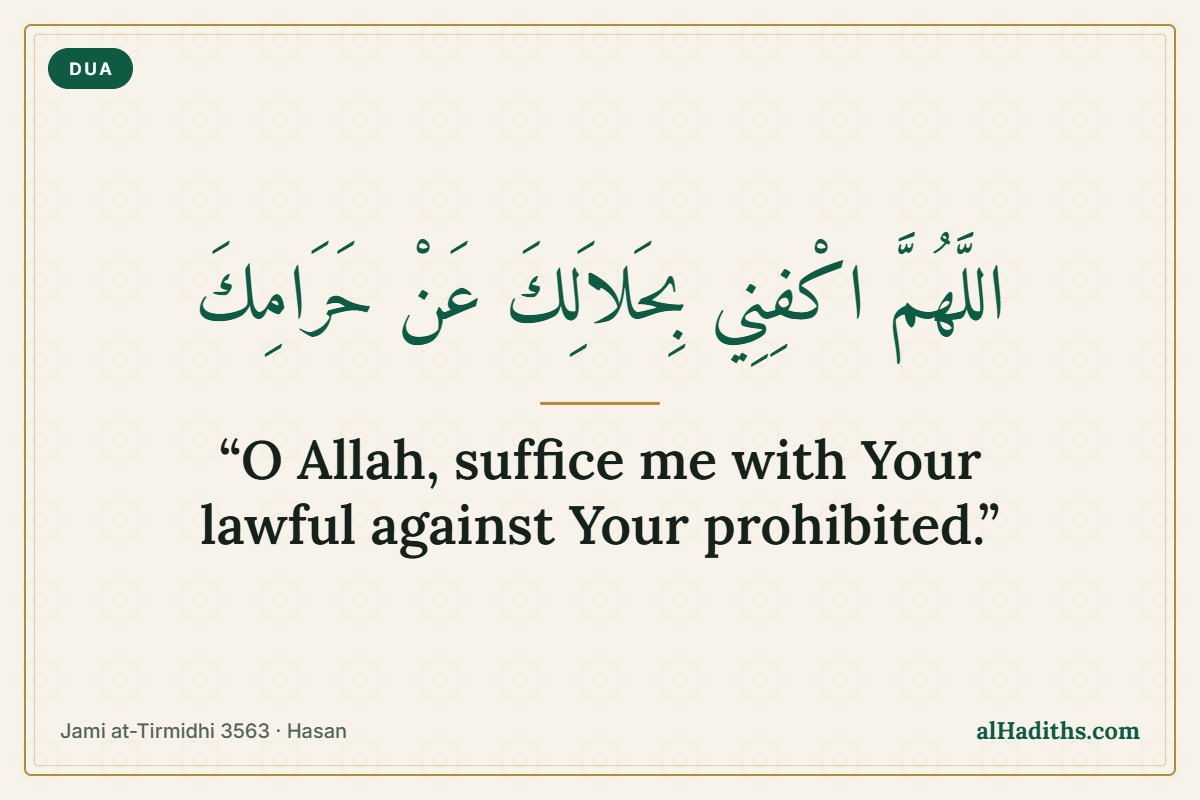
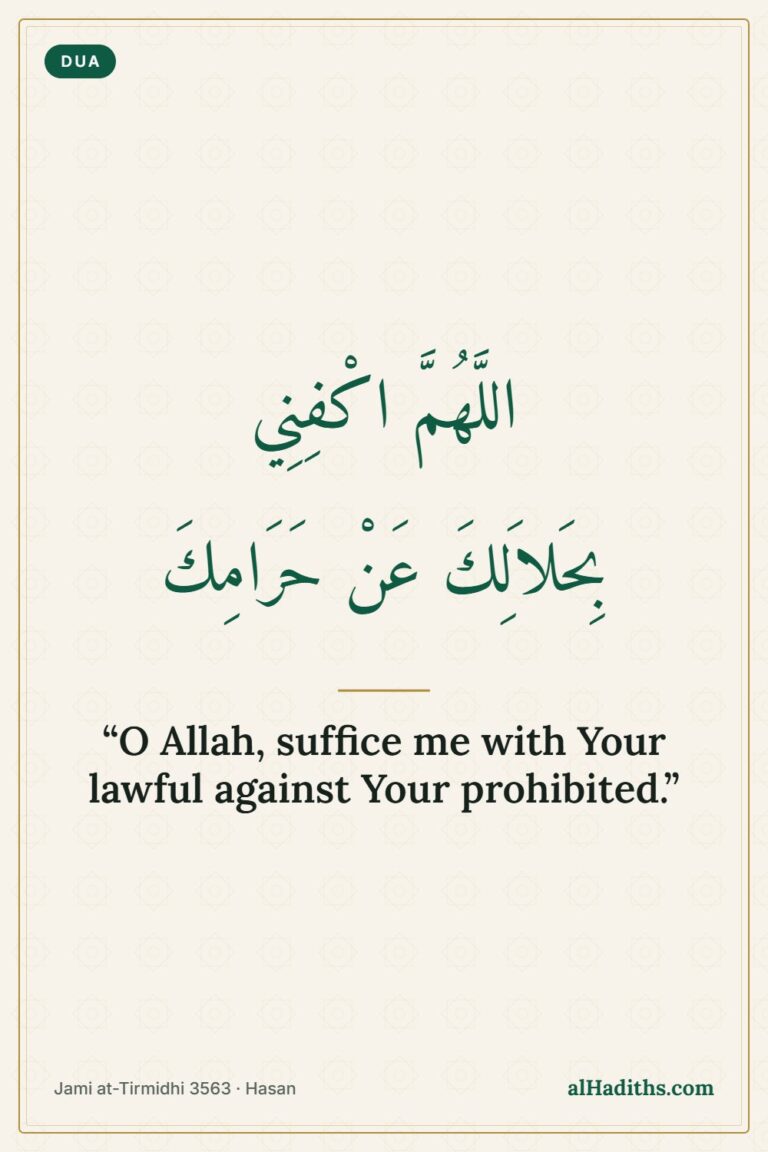
اللَّهُمَّ اكْفِنِي بِحَلاَلِكَ عَنْ حَرَامِكَ وَأَغْنِنِي بِفَضْلِكَ عَمَّنْ سِوَاكَ
Allāhummakfinī bi-ḥalālika ‘an ḥarāmika, wa aghninī bi-faḍlika ‘amman siwāk.
“O Allah, suffice me with Your lawful against Your prohibited, and make me independent, by Your bounty, of all those besides You.”
Jami at-Tirmidhi 3563 · Hasan (Darussalam) · Narrated by Ali ibn Abi Talib · Translation adapted from Sunnah.com
The words ask for two things: to be content with what is halal so that we never reach for what is haram, and to need no one but Allah. The explanation on HadeethEnc (5884) says that even a debt as great as a mountain would be paid off by Allah, freeing the person from its humiliation. We have added “by Your bounty” to the English, as the Arabic has this word.
Try this: learn this short dua by heart today. It is only a few words, and you can say it whenever a bill or a payment worries you.
3. Why he sought refuge from debt in salah
Aisha (may Allah be pleased with her) reported:
اللَّهُمَّ إِنِّي أَعُوذُ بِكَ مِنَ الْمَأْثَمِ وَالْمَغْرَمِ. فَقَالَ لَهُ قَائِلٌ مَا أَكْثَرَ مَا تَسْتَعِيذُ يَا رَسُولَ اللَّهِ مِنَ الْمَغْرَمِ قَالَ إِنَّ الرَّجُلَ إِذَا غَرِمَ حَدَّثَ فَكَذَبَ وَوَعَدَ فَأَخْلَفَ
Allah’s Messenger ﷺ used to invoke Allah in the prayer saying, “O Allah, I seek refuge with You from all sins, and from being in debt.” Someone said, “O Allah’s Messenger! (I see you) very often you seek refuge with Allah from being in debt.” He replied, “If a person is in debt, he tells lies when he speaks, and breaks his promises when he promises.”
Sahih al-Bukhari 2397 · Narrated by Aisha · Translation adapted from Sunnah.com
Debt is not only about money. The Prophet ﷺ pointed to what it can do to our character: excuses that turn into lies, and dates that turn into broken promises. That is why he asked for protection from it inside his prayer.
Try this: if you cannot pay on time, tell the lender honestly before the date, instead of giving a promise you know you cannot keep.
4. Borrow with the intention to repay
Abu Hurairah (may Allah be pleased with him) reported that the Prophet ﷺ said:
مَنْ أَخَذَ أَمْوَالَ النَّاسِ يُرِيدُ أَدَاءَهَا أَدَّى اللَّهُ عَنْهُ، وَمَنْ أَخَذَ يُرِيدُ إِتْلاَفَهَا أَتْلَفَهُ اللَّهُ
“Whoever takes the money of the people with the intention of repaying it, Allah will repay it on his behalf, and whoever takes it in order to spoil it, then Allah will spoil him.”
Sahih al-Bukhari 2387 · Narrated by Abu Hurairah · Translation from Sunnah.com
This hadith about debt is full of hope for the honest borrower. The intention at the start matters: the one who borrows meaning to pay it back has Allah’s help with it, and the one who borrows meaning to waste it has a warning.
Try this: before you borrow anything, even a small amount from a friend, make a clear intention to repay and decide when.
5. The soul is held by its debt
Abu Hurairah (may Allah be pleased with him) also reported that the Messenger of Allah ﷺ said:
نَفْسُ الْمُؤْمِنِ مُعَلَّقَةٌ بِدَيْنِهِ حَتَّى يُقْضَى عَنْهُ
“The believer’s soul is suspended by his debt until it is settled for him.”
Jami at-Tirmidhi 1078 · Hasan (Darussalam) · Narrated by Abu Hurairah · Translation from Sunnah.com
Debt does not end at death. It stays until it is paid, so it is one of the first things families take care of from what a person leaves behind. A short, simple record of what we owe makes this much easier for the people we love.
Try this: keep a written note of your debts and where to find it, and tell one trusted family member.
6. Even the martyr is not forgiven debt
Abdullah ibn Amr ibn al-As (may Allah be pleased with him) reported that the Messenger of Allah ﷺ said:
يُغْفَرُ لِلشَّهِيدِ كُلُّ ذَنْبٍ إِلاَّ الدَّيْنَ
“All the sins of a shahid (martyr) are forgiven except debt.”
Sahih Muslim 1886 · Narrated by Abdullah ibn Amr ibn al-As · Translation adapted from Sunnah.com
Few deeds are greater than giving one’s life for Allah, yet a debt still remains. It is owed to a person, and that person’s right is not wiped away. This shows how seriously the Sunnah treats what we owe to others.
Try this: look for one small debt you can settle this week, even a borrowed book or a promised amount to a friend.
7. The merchant who let his debtors off
Abu Hurairah (may Allah be pleased with him) reported that the Prophet ﷺ said:
كَانَ تَاجِرٌ يُدَايِنُ النَّاسَ، فَإِذَا رَأَى مُعْسِرًا قَالَ لِفِتْيَانِهِ تَجَاوَزُوا عَنْهُ، لَعَلَّ اللَّهَ أَنْ يَتَجَاوَزَ عَنَّا، فَتَجَاوَزَ اللَّهُ عَنْهُ
“There was a merchant who used to lend the people, and whenever his debtor was in straitened circumstances, he would say to his employees, ‘Forgive him so that Allah may forgive us.’ So, Allah forgave him.”
Sahih al-Bukhari 2078 · Narrated by Abu Hurairah · Translation from Sunnah.com
The other side of debt is the lender. The explanation on HadeethEnc (3753) says this could mean giving the debtor more time, not pressing him, or accepting less than the full amount, all hoping that Allah would overlook his own sins.
Try this: if someone owes you and is struggling, give them more time, or let some of it go, with the intention that Allah forgives you.
Bringing it together: the hadith about debt and the Quran
The Quran gives the same mercy to the lender in one verse:
وَإِن كَانَ ذُو عُسْرَةٍ فَنَظِرَةٌ إِلَىٰ مَيْسَرَةٍ ۚ وَأَن تَصَدَّقُوا۟ خَيْرٌ لَّكُمْ ۖ إِن كُنتُمْ تَعْلَمُونَ
“And if someone is in hardship, then [let there be] postponement until [a time of] ease. But if you give [from your right as] charity, then it is better for you, if you only knew.”
Surah al-Baqarah 2:280 · Translation: Saheeh International, from Quran.com
Put together, the hadith about debt draw a balanced picture. The borrower is warned: debt is serious enough to follow a person past death. But he is also given hope: two duas, and Allah’s help for the one who means to repay. The lender is given a way to earn forgiveness by being gentle.
Reflection: I notice that neither dua asks for more money. One asks for protection from worry, laziness and the weight of debt; the other asks for contentment with the halal and freedom from needing people. Perhaps the relief starts in the heart before it reaches the bank balance.
Questions people ask
Is there a dua for debt and anxiety?
Yes. The dua in Sahih al-Bukhari 6369 seeks refuge from worry and grief and from being heavily in debt in the same words, so it covers both. It is authentic and is in Sahih al-Bukhari.
What happens if you die with debt?
The Prophet ﷺ said the believer’s soul is suspended by his debt until it is settled (Jami at-Tirmidhi 1078, Hasan). In Sahih al-Bukhari 2289, he did not lead the funeral prayer of a man who died in debt with nothing left to pay it, until someone took the debt on. For questions about a relative’s estate, please ask a qualified scholar.
Is the dua of Abu Umamah for debt authentic?
The story of Abu Umamah sitting in the mosque, worried about his debts, is in Sunan Abi Dawud 1555, graded Da’if (weak) by al-Albani. We have not used it here. The same words of refuge are found authentically in Sahih al-Bukhari 6369 above.
Is it wrong to delay paying back a debt?
The Prophet ﷺ said that delay in repaying debts by a wealthy person is injustice (Sahih al-Bukhari 2400). That is about someone who is able to pay. For your own case, please ask a qualified scholar.
Key lessons
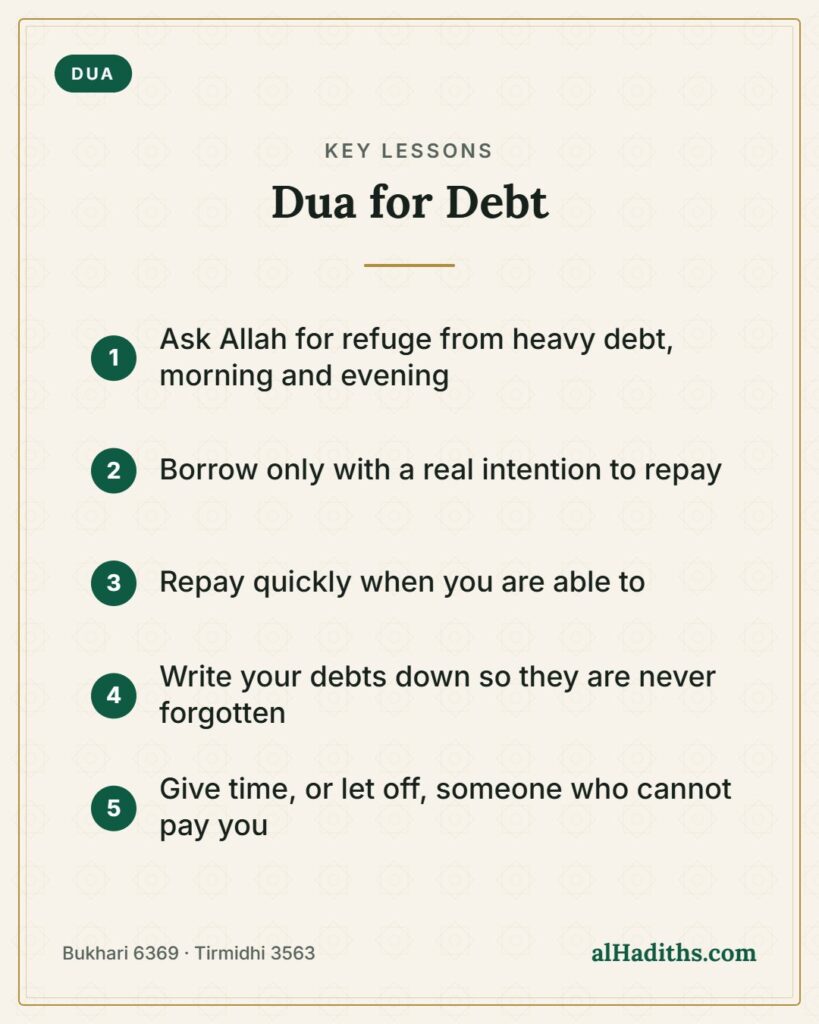
- Say the dua from Sahih al-Bukhari 6369 for worry, grief and heavy debt.
- Learn the short dua from Tirmidhi 3563 and say it when money worries you.
- Borrow only with a sincere intention to repay, and keep your word on dates.
- Write your debts down and tell someone you trust where to find the record.
- If someone owes you and is struggling, give them time or let some of it go.
Part of our Dua series: see all our dua articles in one place.
May Allah settle the debts of everyone reading this, free our hearts from worry, and make us content with what is halal.
Save this to Pinterest so both duas for debt are ready when you need them.
Share the reward. Send this article to someone who needs it today — teaching a hadith or dua can become a lasting good deed for you, in shaa Allah.