Prophet Dawud and Sulayman in the Hadith: David and Solomon
Contents
If you want to know about David in Islam, the clearest place to start is what the Prophet ﷺ himself said about him. Prophet Dawud (David, peace be upon him) was a king and a prophet, yet he lived from the work of his own hands. His son, Prophet Sulayman (Solomon, peace be upon him), was given a kingdom like no one after him. Here are six authentic hadith about the two of them, father and son.
This article is part of our series on the prophets in the hadith, after Prophet Musa and Prophet Nuh. We use only authentic hadith and the Quran, not the stories from earlier scriptures that are often told about them.
At a glance
- Hadith: 6 authentic hadith
- Collections: Sahih al-Bukhari, Sunan an-Nasa’i
- Grade: Sahih (Bukhari); Sahih (Darussalam) for Nasa’i 693
- Topic: Prophet Dawud (David) and Prophet Sulayman (Solomon)
- Do it today: Eat from money you earned honestly, and say “in sha Allah” about your plans
1. Dawud ate from the work of his own hands
Al-Miqdam ibn Ma‘dikarib (may Allah be pleased with him) reported this from the Prophet ﷺ.
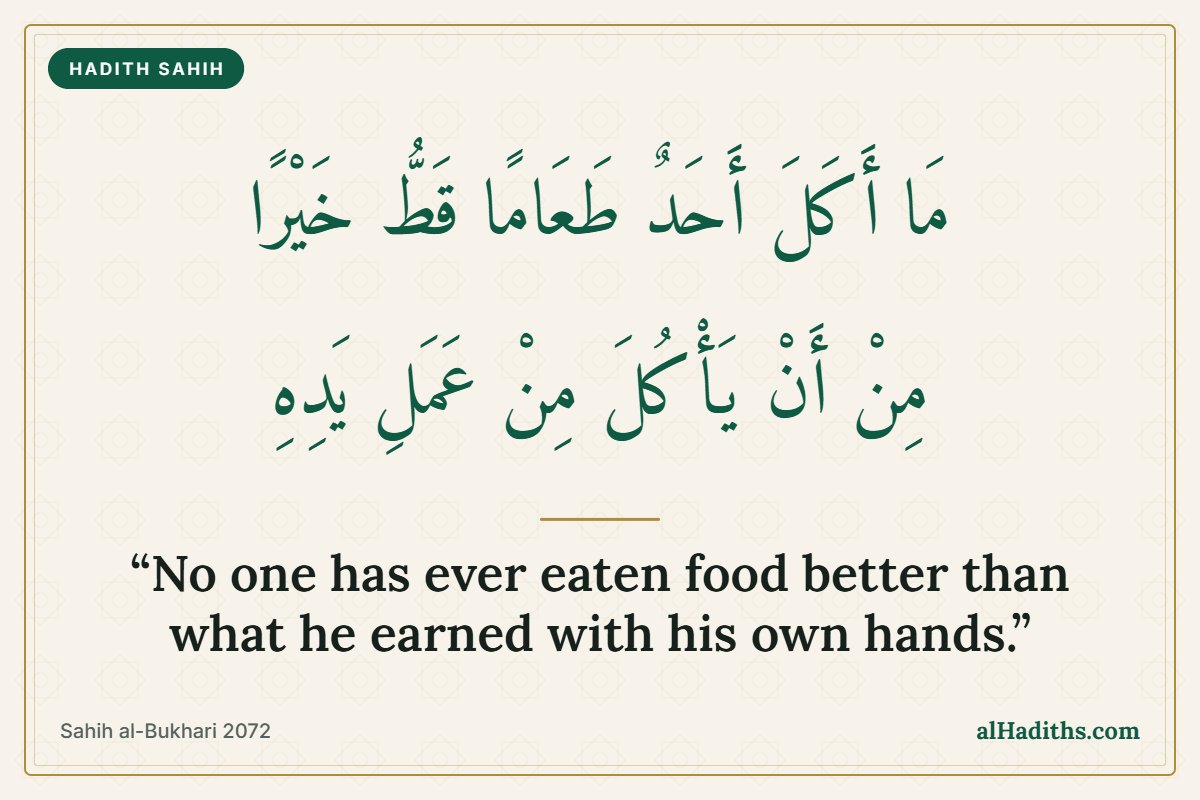
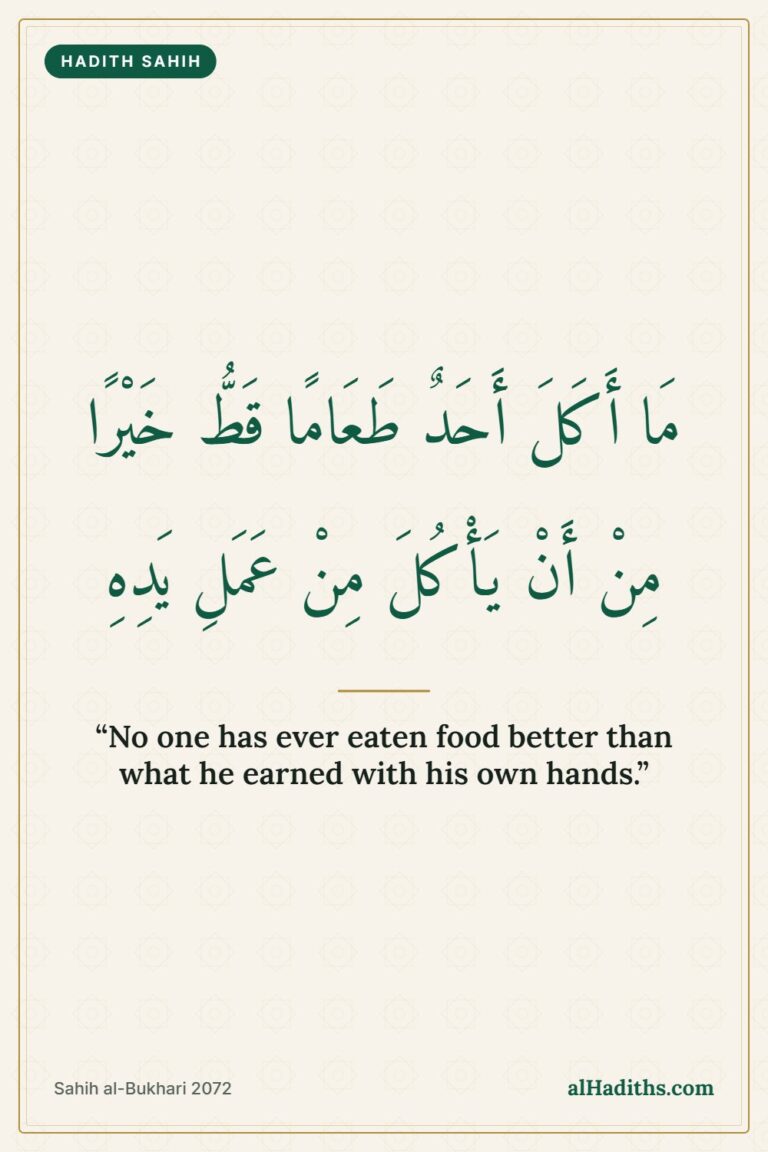
مَا أَكَلَ أَحَدٌ طَعَامًا قَطُّ خَيْرًا مِنْ أَنْ يَأْكُلَ مِنْ عَمَلِ يَدِهِ، وَإِنَّ نَبِيَّ اللَّهِ دَاوُدَ ـ عَلَيْهِ السَّلاَمُ ـ كَانَ يَأْكُلُ مِنْ عَمَلِ يَدِهِ
The Prophet ﷺ said, “Nobody has ever eaten a better meal than that which one has earned by working with one’s own hands. The Prophet of Allah, David, used to eat from the earnings of his manual labor.”
Sahih al-Bukhari 2072 · Narrated by al-Miqdam · Translation adapted from Sunnah.com
Dawud was a king with wealth and power, and he still chose to eat from what his own hands made. HadeethEnc explains that he was a craftsman who made armor, and that the prophets worked for their living, whether in a craft, farming or herding sheep. If a king and a prophet did this, no honest work is beneath us.
Try this: the next time your work feels small, remember that the Prophet ﷺ praised food earned by one’s own hands above any other.
2. Recitation was made easy for Dawud
Abu Hurairah (may Allah be pleased with him) reported another detail about Dawud.
خُفِّفَ عَلَى دَاوُدَ ـ عَلَيْهِ السَّلاَمُ ـ الْقُرْآنُ، فَكَانَ يَأْمُرُ بِدَوَابِّهِ فَتُسْرَجُ، فَيَقْرَأُ الْقُرْآنَ قَبْلَ أَنْ تُسْرَجَ دَوَابُّهُ، وَلاَ يَأْكُلُ إِلاَّ مِنْ عَمَلِ يَدِهِ
The Prophet ﷺ said, “The reciting of the Zabur (i.e. Psalms) was made easy for David. He used to order that his riding animals be saddled, and would finish reciting the Zabur before they were saddled. And he would never eat except from the earnings of his manual work.”
Sahih al-Bukhari 3417 · Narrated by Abu Hurairah · Translation from Sunnah.com (the Arabic says “al-Qur’an”, here meaning his recitation of the scripture)
Allah gave Dawud the Zabur, and the Quran says, “and to David We gave the book [of Psalms]” (Surah Al-Isra 17:55). In the time it took to saddle his animals, he could recite it. This was a gift from Allah, and it came together with the same simple life: he still ate only from his own work.
Try this: use a small gap in your day, like waiting for a ride, to recite a few verses you know by heart.
3. Sulayman and the two mothers
Abu Hurairah (may Allah be pleased with him) reported this story that the Prophet ﷺ told about Dawud and Sulayman.
كَانَتِ امْرَأَتَانِ مَعَهُمَا ابْنَاهُمَا جَاءَ الذِّئْبُ فَذَهَبَ بِابْنِ إِحْدَاهُمَا، فَقَالَتْ صَاحِبَتُهَا إِنَّمَا ذَهَبَ بِابْنِكِ. وَقَالَتِ الأُخْرَى إِنَّمَا ذَهَبَ بِابْنِكِ. فَتَحَاكَمَتَا إِلَى دَاوُدَ، فَقَضَى بِهِ لِلْكُبْرَى فَخَرَجَتَا عَلَى سُلَيْمَانَ بْنِ دَاوُدَ فَأَخْبَرَتَاهُ. فَقَالَ ائْتُونِي بِالسِّكِّينِ أَشُقُّهُ بَيْنَهُمَا. فَقَالَتِ الصُّغْرَى لاَ تَفْعَلْ يَرْحَمُكَ اللَّهُ، هُوَ ابْنُهَا. فَقَضَى بِهِ لِلصُّغْرَى
“There were two women, each of whom had a child with her. A wolf came and took away the child of one of them, whereupon the other said, ‘It has taken your child.’ The first said, ‘But it has taken your child.’ So they both carried the case before David who judged that the living child be given to the elder lady. So both of them went to Solomon bin David and informed him (of the case). He said, ‘Bring me a knife so as to cut the child into two pieces and distribute it between them.’ The younger lady said, ‘May Allah be merciful to you! Don’t do that, for it is her (i.e. the other lady’s) child.’ So he gave the child to the younger lady.”
Sahih al-Bukhari 3427 · Narrated by Abu Hurairah · Translation adapted from Sunnah.com (trimmed to the story)
Sulayman never meant to harm the child. HadeethEnc explains that he used this to find the truth: the real mother would rather lose her son to another woman than see him hurt, and her mercy showed who she was. Dawud judged by what was in front of him, and Sulayman was given an understanding of the case. Both were prophets, and both judged with care.
Try this: when two people tell you different stories, look for the signs of who truly cares before you decide.
4. Sulayman’s three requests at Bayt al-Maqdis
‘Abdullah ibn ‘Amr (may Allah be pleased with him) reported what Sulayman asked for when he finished building Bayt al-Maqdis in Jerusalem.
أَنَّ سُلَيْمَانَ بْنَ دَاوُدَ صلى الله عليه وسلم لَمَّا بَنَى بَيْتَ الْمَقْدِسِ سَأَلَ اللَّهَ عَزَّ وَجَلَّ خِلاَلاً ثَلاَثَةً سَأَلَ اللَّهَ عَزَّ وَجَلَّ حُكْمًا يُصَادِفُ حُكْمَهُ فَأُوتِيَهُ وَسَأَلَ اللَّهَ عَزَّ وَجَلَّ مُلْكًا لاَ يَنْبَغِي لأَحَدٍ مِنْ بَعْدِهِ فَأُوتِيَهُ وَسَأَلَ اللَّهَ عَزَّ وَجَلَّ حِينَ فَرَغَ مِنْ بِنَاءِ الْمَسْجِدِ أَنْ لاَ يَأْتِيَهُ أَحَدٌ لاَ يَنْهَزُهُ إِلاَّ الصَّلاَةُ فِيهِ أَنْ يُخْرِجَهُ مِنْ خَطِيئَتِهِ كَيَوْمِ وَلَدَتْهُ أُمُّهُ
The Messenger of Allah ﷺ said: “When Sulaiman bin Dawud finished building Bait Al-Maqdis, he asked Allah for three things: Judgement that was in harmony with His judgement, and he was given that. And he asked Allah for a dominion that no one after him would have, and he was given that. And when he finished building the Masjid he asked Allah, the Mighty and Sublime, that no one should come to it, intending only to pray there, but he would emerge free of sin as the day his mother bore him.”
Sunan an-Nasa’i 693 · Sahih (Darussalam) · Narrated by ‘Abdullah ibn ‘Amr · Translation from Sunnah.com
Look at what Sulayman asked for. First, to judge the way Allah judges. Then a kingdom no one after him would have. And last, forgiveness for others: for anyone who comes to that masjid only to pray. A king with everything still thought of the people who would come after him.
Try this: when you finish something good, make a dua that others benefit from it too.
5. The Prophet ﷺ remembered Sulayman’s dua
Abu Hurairah (may Allah be pleased with him) reported that the Prophet ﷺ spoke of Sulayman as his brother.
إِنَّ عِفْرِيتًا مِنَ الْجِنِّ تَفَلَّتَ الْبَارِحَةَ لِيَقْطَعَ عَلَىَّ صَلاَتِي، فَأَمْكَنَنِي اللَّهُ مِنْهُ، فَأَخَذْتُهُ، فَأَرَدْتُ أَنْ أَرْبُطَهُ عَلَى سَارِيَةٍ مِنْ سَوَارِي الْمَسْجِدِ حَتَّى تَنْظُرُوا إِلَيْهِ كُلُّكُمْ فَذَكَرْتُ دَعْوَةَ أَخِي سُلَيْمَانَ رَبِّ هَبْ لِي مُلْكًا لاَ يَنْبَغِي لأَحَدٍ مِنْ بَعْدِي. فَرَدَدْتُهُ خَاسِئًا
The Prophet ﷺ said, “A strong demon from the Jinns came to me yesterday suddenly, so as to spoil my prayer, but Allah enabled me to overpower him, and so I caught him and intended to tie him to one of the pillars of the Mosque so that all of you might see him, but I remembered the invocation of my brother Solomon: ‘And grant me a kingdom such as shall not belong to any other after me.’ (38.35) so I let him go cursed.”
Sahih al-Bukhari 3423 · Narrated by Abu Hurairah · Translation from Sunnah.com
Sulayman’s dua is in the Quran (Surah Sad 38:35), and Allah answered it: He gave him control over the jinn. The Prophet ﷺ had the chance to tie up a jinn, yet he let it go out of respect for what Allah had given his brother alone. The prophets honored one another.
Try this: speak of the earlier prophets the way the Prophet ﷺ did, with love and respect, as one family.
6. Sulayman and saying “in sha Allah”
Abu Hurairah (may Allah be pleased with him) reported a lesson the Prophet ﷺ drew from Sulayman’s life.
قَالَ سُلَيْمَانُ بْنُ دَاوُدَ لأَطُوفَنَّ اللَّيْلَةَ عَلَى سَبْعِينَ امْرَأَةً تَحْمِلُ كُلُّ امْرَأَةٍ فَارِسًا يُجَاهِدُ فِي سَبِيلِ اللَّهِ، فَقَالَ لَهُ صَاحِبُهُ إِنْ شَاءَ اللَّهُ. فَلَمْ يَقُلْ، وَلَمْ تَحْمِلْ شَيْئًا إِلاَّ وَاحِدًا سَاقِطًا إِحْدَى شِقَّيْهِ. فَقَالَ النَّبِيُّ صلى الله عليه وسلم لَوْ قَالَهَا لَجَاهَدُوا فِي سَبِيلِ اللَّهِ
The Prophet ﷺ said, “Solomon (the son of) David said, ‘Tonight I will sleep with seventy ladies each of whom will conceive a child who will be a knight fighting for Allah’s Cause.’ His companion said, ‘If Allah will.’ But Solomon did not say so; therefore none of those women got pregnant except one who gave birth to a half child.” The Prophet ﷺ further said, “If the Prophet Solomon had said it (i.e. ‘If Allah will’) he would have begotten children who would have fought in Allah’s Cause.”
Sahih al-Bukhari 3424 · Narrated by Abu Hurairah · Translation adapted from Sunnah.com (a stray quote mark removed)
Even a prophet’s plan, made for a good purpose, did not happen when he did not say “in sha Allah”. The Quran teaches the same: “And never say of anything, ‘Indeed, I will do that tomorrow,’ except [when adding], ‘If Allah wills’” (Surah Al-Kahf 18:23–24). Every plan we make depends on Allah.
Try this: when you say what you will do tomorrow, add “in sha Allah” and mean it.
Bringing it together: David in Islam
The Quran sums up what Allah gave Dawud: the mountains and birds praised Allah with him, and iron was made soft in his hands so he could make armor.
۞ وَلَقَدْ ءَاتَيْنَا دَاوُۥدَ مِنَّا فَضْلًا ۖ يَـٰجِبَالُ أَوِّبِى مَعَهُۥ وَٱلطَّيْرَ ۖ وَأَلَنَّا لَهُ ٱلْحَدِيدَ أَنِ ٱعْمَلْ سَـٰبِغَـٰتٍ وَقَدِّرْ فِى ٱلسَّرْدِ ۖ وَٱعْمَلُوا۟ صَـٰلِحًا ۖ إِنِّى بِمَا تَعْمَلُونَ بَصِيرٌ
“And We certainly gave David from Us bounty. [We said], ‘O mountains, repeat [Our] praises with him, and the birds [as well].’ And We made pliable for him iron, [Commanding him], ‘Make full coats of mail and calculate [precisely] the links, and work [all of you] righteousness. Indeed I, of what you do, am Seeing.’”
Surah Saba 34:10–11 · Translation: Saheeh International, from Quran.com
Put the verses next to the hadith and they agree: the armor Allah taught Dawud to make is the work of his hands that he lived from. Sulayman inherited a kingdom, judged with wisdom, made dua for others and learned to tie every plan to Allah’s will. You can also read about the fast of Dawud, the fast the Prophet ﷺ called the best.
Reflection: I find it striking that the two things the Prophet ﷺ mentioned most about Dawud are ordinary ones: he worked, and he recited. Wealth and a throne did not change either habit. Most of us will never be given a kingdom, but we can all keep those two.
Questions people ask
Is David a prophet in Islam?
Yes. Muslims believe Dawud (David) was a prophet and a king, and that Allah gave him the Zabur (Psalms), as the Quran says in Surah Al-Isra 17:55. The Prophet ﷺ called him “the Prophet of Allah, David” (Bukhari 2072).
What did Prophet Dawud do for a living?
He ate only from the work of his own hands (Bukhari 2072, 3417). The Quran says Allah made iron soft for him and taught him to make coats of armor (Surah Saba 34:10–11).
Was Sulayman the son of Dawud?
Yes. The hadith call him “Sulayman ibn Dawud” (Nasa’i 693, Bukhari 3427), and the Quran says “And Solomon inherited David” (Surah An-Naml 27:16).
What is the fast of Dawud?
Fasting one day and not fasting the next. The Prophet ﷺ called it the most beloved fast to Allah (Bukhari 1131). See our article on the best type of fasting.
Key lessons from Dawud and Sulayman
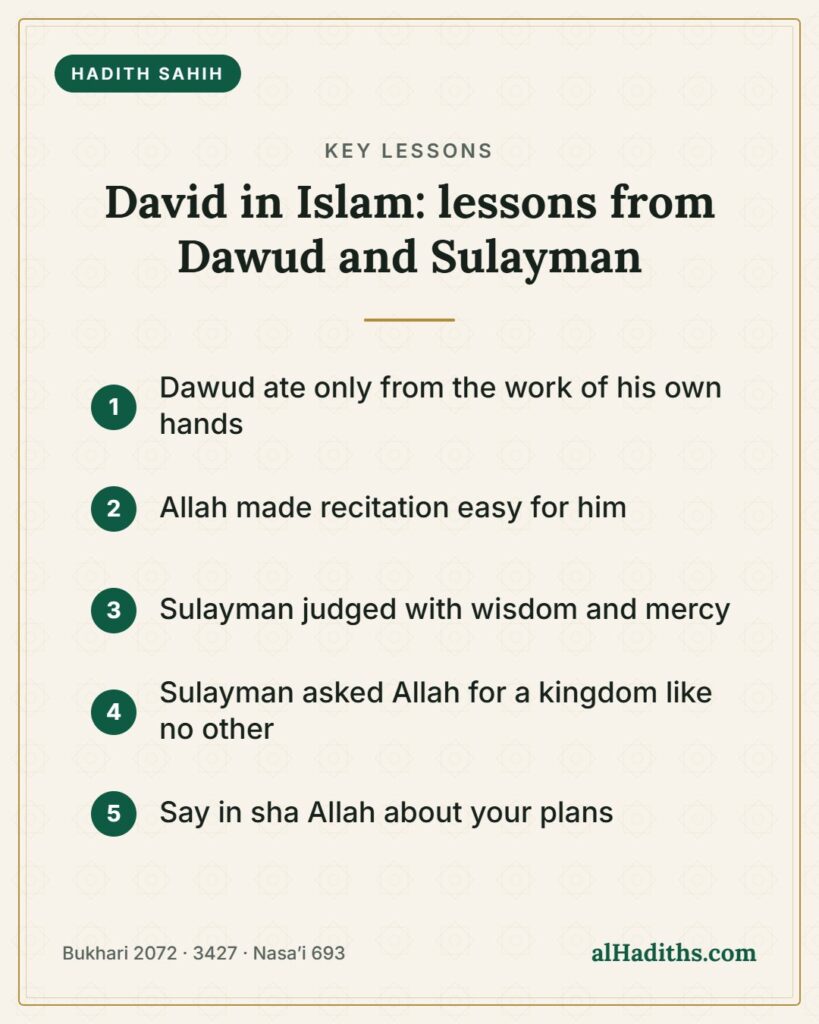
- Dawud, a king and a prophet, ate only from the work of his own hands (Bukhari 2072).
- Allah made recitation easy for Dawud (Bukhari 3417).
- Sulayman judged with wisdom, and a mother’s mercy revealed the truth (Bukhari 3427).
- Sulayman asked for right judgment, a unique kingdom and forgiveness for those who pray in Bayt al-Maqdis (Nasa’i 693).
- Say “in sha Allah” about your plans (Bukhari 3424, Quran 18:23–24).
Part of our Prophets in the Hadith series: see all our articles on the prophets in one place.
What is one honest piece of work you can do with your own hands this week, for Allah’s sake?
Save this to Pinterest so you can remember what the Prophet ﷺ taught about Dawud and Sulayman
Share the reward. Send this article to someone who needs it today — teaching a hadith or dua can become a lasting good deed for you, in shaa Allah.