Can You Cry When Someone Dies in Islam? What the Hadith Say
Contents
Someone you love has died, the tears will not stop, and a small voice asks whether this is allowed. Can you cry when someone dies in Islam? The short answer is yes, and the clearest proof is the Prophet ﷺ himself, who wept when his little son Ibrahim was dying.
Below are five authentic hadith that answer the question, what they forbid, and what they say about the worry that crying hurts the dead. Each hadith has its Arabic from Sunnah.com.
At a glance
- Short answer: Yes. Tears and a grieving heart are allowed; the Prophet ﷺ wept and called it mercy.
- Not allowed: Wailing, slapping the cheeks, tearing clothes and words of protest against Allah’s decree
- Evidence: 5 authentic hadith + Quran 35:18
- Grade: Sahih (Bukhari and Muslim)
- Do it today: If you are grieving, let the tears come, and say “Inna lillahi wa inna ilayhi raji‘un”
Can you cry when someone dies in Islam? What the Prophet ﷺ did
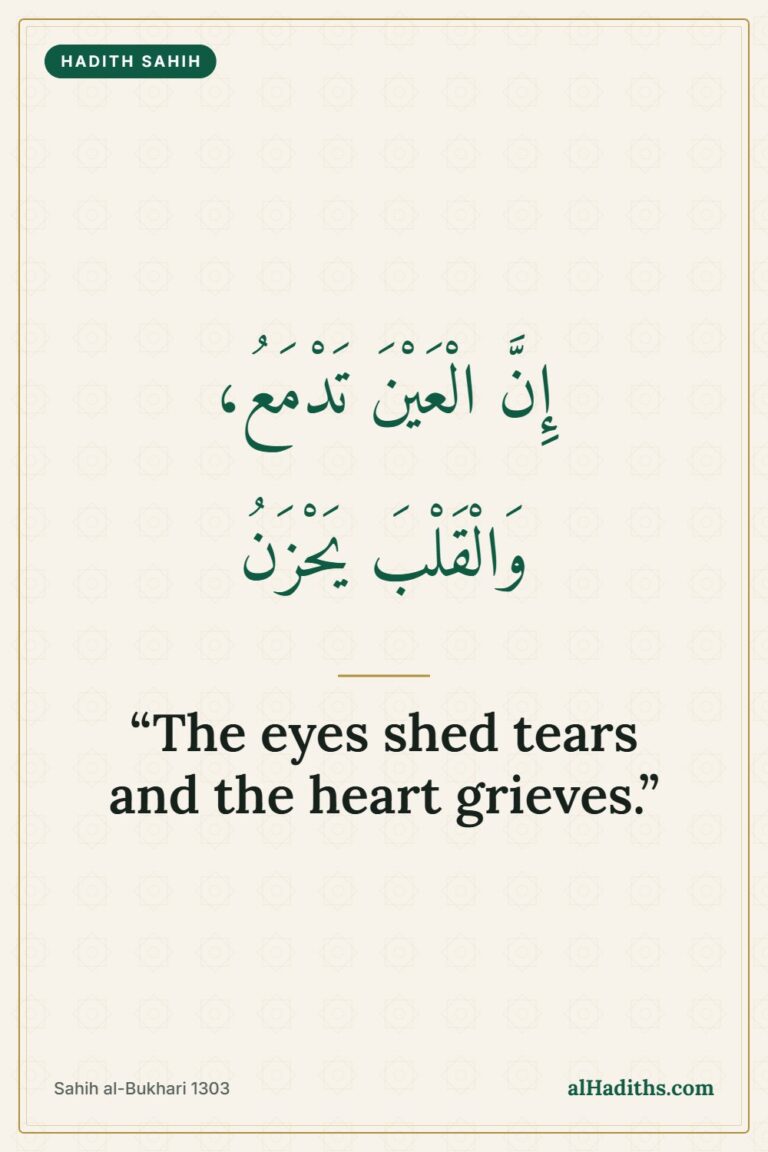
Anas ibn Malik (may Allah be pleased with him) was there when Ibrahim, the baby son of the Prophet ﷺ, was taking his last breaths. The eyes of the Prophet ﷺ filled with tears. ‘Abdur-Rahman ibn ‘Awf asked, “Even you, O Messenger of Allah?” He said, “O Ibn ‘Awf, this is mercy,” and then he said:
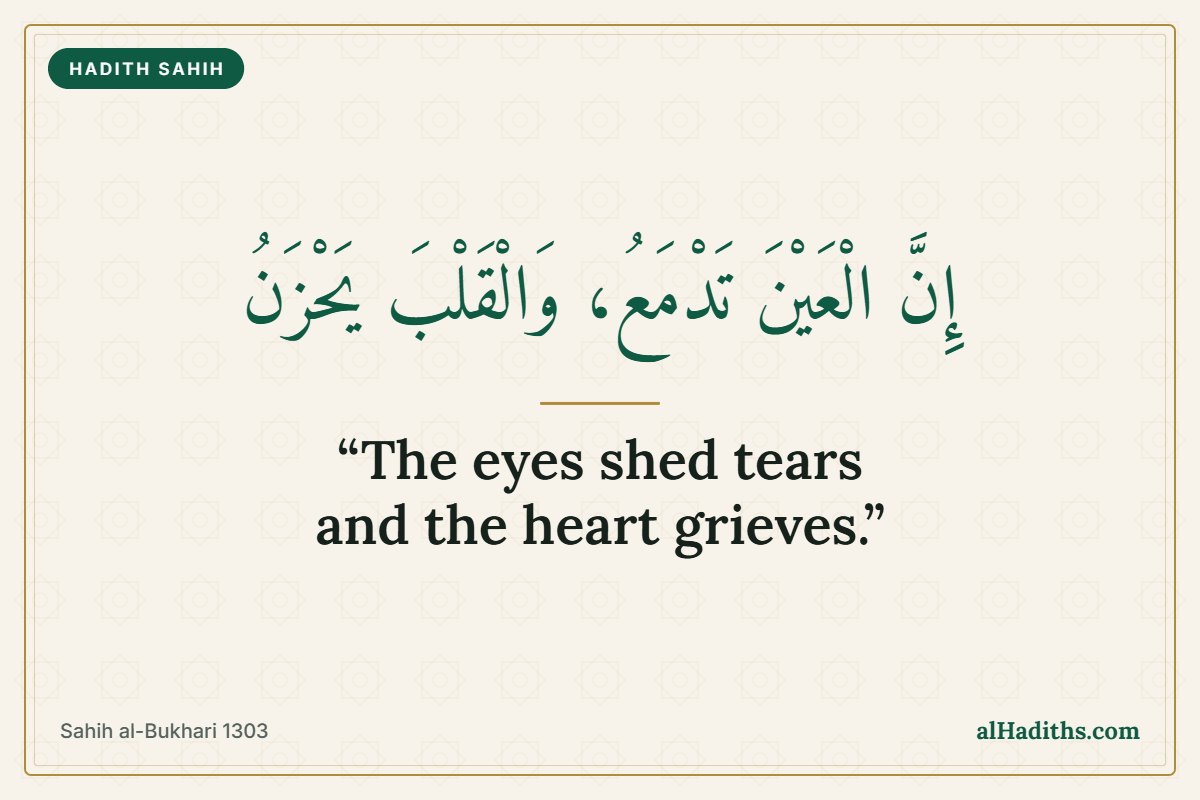
إِنَّ الْعَيْنَ تَدْمَعُ، وَالْقَلْبَ يَحْزَنُ، وَلاَ نَقُولُ إِلاَّ مَا يَرْضَى رَبُّنَا، وَإِنَّا بِفِرَاقِكَ يَا إِبْرَاهِيمُ لَمَحْزُونُونَ
“The eyes shed tears and the heart grieves, and we will not say except what pleases our Lord. O Ibrahim, indeed we are grieved by your separation.”
Sahih al-Bukhari 1303 · Narrated by Anas ibn Malik · Translation adapted from Sunnah.com
HadeethEnc explains that mercy does not contradict patience or belief in Allah’s decree. Patience is not a dry face. It is a tongue that stays with what pleases Allah while the eyes and the heart grieve.
Tears are a mercy Allah puts in the heart
Usamah ibn Zayd (may Allah be pleased with him) reported that a grandchild of the Prophet ﷺ was brought to him while dying, and his eyes overflowed with tears. Sa‘d ibn ‘Ubadah asked, “O Messenger of Allah, what is this?” He said:
هَذِهِ رَحْمَةٌ جَعَلَهَا اللَّهُ فِي قُلُوبِ عِبَادِهِ، وَإِنَّمَا يَرْحَمُ اللَّهُ مِنْ عِبَادِهِ الرُّحَمَاءَ
“This is mercy which Allah has placed in the hearts of His slaves, and Allah is merciful only to those of His slaves who are merciful.”
Sahih al-Bukhari 1284 · Narrated by Usamah ibn Zayd · Translation adapted from Sunnah.com
In the same hadith, before he came, the Prophet ﷺ sent his daughter a message of comfort: “Whatever Allah takes is His, and whatever He gives is His, and everything with Him has a fixed term, so let her be patient and hope for Allah’s reward.” Comfort and tears came from the same person.
What Allah holds us to account for: the tongue
‘Abdullah ibn ‘Umar (may Allah be pleased with them both) reported that the Prophet ﷺ visited Sa‘d ibn ‘Ubadah when he was very ill. The Prophet ﷺ wept, and when the people saw him weeping, they wept too. He said:
أَلاَ تَسْمَعُونَ إِنَّ اللَّهَ لاَ يُعَذِّبُ بِدَمْعِ الْعَيْنِ، وَلاَ بِحُزْنِ الْقَلْبِ، وَلَكِنْ يُعَذِّبُ بِهَذَا ـ وَأَشَارَ إِلَى لِسَانِهِ ـ أَوْ يَرْحَمُ وَإِنَّ الْمَيِّتَ يُعَذَّبُ بِبُكَاءِ أَهْلِهِ عَلَيْهِ
“Will you not listen? Allah does not punish for the tears of the eyes nor for the grief of the heart, but He punishes or shows mercy because of this” (and he pointed to his tongue). “And the deceased is punished for the wailing of his family over him.”
Sahih al-Bukhari 1304 · Narrated by ‘Abdullah ibn ‘Umar · Translation adapted from Sunnah.com
This hadith draws the line clearly. Tears and grief are not counted against anyone. What we say is: words of patience and dua bring mercy, while words of protest and wailing bring blame. The last sentence is explained below, in the section on whether crying hurts the dead.
What is not allowed: wailing and tearing clothes
‘Abdullah ibn Mas‘ud (may Allah be pleased with him) reported that the Prophet ﷺ said:
لَيْسَ مِنَّا مَنْ لَطَمَ الْخُدُودَ، وَشَقَّ الْجُيُوبَ، وَدَعَا بِدَعْوَى الْجَاهِلِيَّةِ
“He is not one of us who slaps the cheeks, tears the clothes and calls out with the calls of the Days of Ignorance.”
Sahih al-Bukhari 1294 · Narrated by ‘Abdullah ibn Mas‘ud · Translation adapted from Sunnah.com
Abu Malik al-Ash‘ari (may Allah be pleased with him) reported a stern warning about wailing, the loud lamenting that was a custom of the Days of Ignorance:
أَرْبَعٌ فِي أُمَّتِي مِنْ أَمْرِ الْجَاهِلِيَّةِ لاَ يَتْرُكُونَهُنَّ الْفَخْرُ فِي الأَحْسَابِ وَالطَّعْنُ فِي الأَنْسَابِ وَالاِسْتِسْقَاءُ بِالنُّجُومِ وَالنِّيَاحَةُ. وَقَالَ النَّائِحَةُ إِذَا لَمْ تَتُبْ قَبْلَ مَوْتِهَا تُقَامُ يَوْمَ الْقِيَامَةِ وَعَلَيْهَا سِرْبَالٌ مِنْ قَطِرَانٍ وَدِرْعٌ مِنْ جَرَبٍ
“There are four things among my Ummah from the Days of Ignorance which they will not give up: boasting about rank, insulting people’s lineage, seeking rain from the stars, and wailing.” And he said: “If the wailing woman does not repent before she dies, she will be made to stand on the Day of Resurrection wearing a garment of tar and a shirt of scabs.”
Sahih Muslim 934 · Narrated by Abu Malik al-Ash‘ari · Translation adapted from Sunnah.com
Notice the words “if she does not repent”. The door of tawbah is open. Grief that turned into wailing in a moment of shock can be followed by repentance, and Allah forgives.
Does crying hurt the dead?
Many people worry because of the words “the deceased is punished for the crying of his family over him”, narrated by ‘Umar and his son ‘Abdullah (may Allah be pleased with them). When Ibn ‘Abbas told ‘Aishah (may Allah be pleased with her) about this after ‘Umar’s death, she replied:
فَقَالَتْ رَحِمَ اللَّهُ عُمَرَ، وَاللَّهِ مَا حَدَّثَ رَسُولُ اللَّهِ صلى الله عليه وسلم إِنَّ اللَّهَ لَيُعَذِّبُ الْمُؤْمِنَ بِبُكَاءِ أَهْلِهِ عَلَيْهِ. وَلَكِنَّ رَسُولَ اللَّهِ صلى الله عليه وسلم قَالَ إِنَّ اللَّهَ لَيَزِيدُ الْكَافِرَ عَذَابًا بِبُكَاءِ أَهْلِهِ عَلَيْهِ. وَقَالَتْ حَسْبُكُمُ الْقُرْآنُ {وَلاَ تَزِرُ وَازِرَةٌ وِزْرَ أُخْرَى}
She said, “May Allah have mercy on ‘Umar. By Allah, the Messenger of Allah ﷺ did not say that Allah punishes a believer because of the weeping of his family over him. But the Messenger of Allah ﷺ said: ‘Allah increases the punishment of a disbeliever because of the weeping of his family over him.’” And she said, “The Quran is enough for you: ‘No burdened soul will bear another’s burden.’”
Sahih al-Bukhari 1288 · Narrated by Ibn ‘Abbas, reporting ‘Aishah · Translation adapted from Sunnah.com
The verse ‘Aishah recited is from Surah Fatir:
وَلَا تَزِرُ وَازِرَةٌ وِزْرَ أُخْرَىٰ ۚ وَإِن تَدْعُ مُثْقَلَةٌ إِلَىٰ حِمْلِهَا لَا يُحْمَلْ مِنْهُ شَىْءٌ وَلَوْ كَانَ ذَا قُرْبَىٰٓ ۗ إِنَّمَا تُنذِرُ ٱلَّذِينَ يَخْشَوْنَ رَبَّهُم بِٱلْغَيْبِ وَأَقَامُوا۟ ٱلصَّلَوٰةَ ۚ وَمَن تَزَكَّىٰ فَإِنَّمَا يَتَزَكَّىٰ لِنَفْسِهِۦ ۚ وَإِلَى ٱللَّهِ ٱلْمَصِيرُ
“And no bearer of burdens will bear the burden of another. And if a heavily laden soul calls [another] to [carry some of] its load, nothing of it will be carried, even if he should be a close relative. You can only warn those who fear their Lord unseen and have established prayer. And whoever purifies himself only purifies himself for [the benefit of] his soul. And to Allāh is the [final] destination.”
Surah Fatir 35:18 · Translation: Saheeh International, from Quran.com
The Companions understood the narration differently, and scholars after them tried to bring the narrations together. Imam al-Bukhari placed them under a chapter title saying the deceased is punished for wailing “if wailing was his custom” (Sahih al-Bukhari, Book of Funerals), meaning a person who approved of it or asked for it. Either way, the hadith are about wailing, not quiet tears. For a detailed answer, ask a qualified local scholar.
What the hadith don’t say
- They don’t say that tears show weak faith. The most patient of people wept.
- They don’t ask you to hide your grief or feel guilty for it.
- They don’t hold a believer responsible for wailing he never approved of, according to ‘Aishah and al-Bukhari’s chapter title.
- They don’t allow words of protest against Allah’s decree, however deep the pain.
Questions people ask
Does crying hurt the dead in Islam?
Quiet tears do not. The narrations about the deceased being punished are about wailing, and ‘Aishah explained them with the verse “No burdened soul will bear another’s burden” (Sahih al-Bukhari 1288). Scholars explain them in different ways, so ask a local scholar for the details.
Is it haram to cry loudly when someone dies?
The hadith separate tears from wailing: the Prophet ﷺ wept, but forbade slapping the cheeks, tearing clothes and the wailing of the Days of Ignorance (Bukhari 1294, Muslim 934). Where exactly crying becomes wailing is a question for a qualified scholar.
What should I say when someone dies?
Say what pleases Allah. The Prophet ﷺ said, “We will not say except what pleases our Lord” (Bukhari 1303), and sent the message, “Whatever Allah takes is His, and whatever He gives is His” (Bukhari 1284). Saying “Inna lillahi wa inna ilayhi raji‘un” comes from the Quran (2:156).
Key lessons
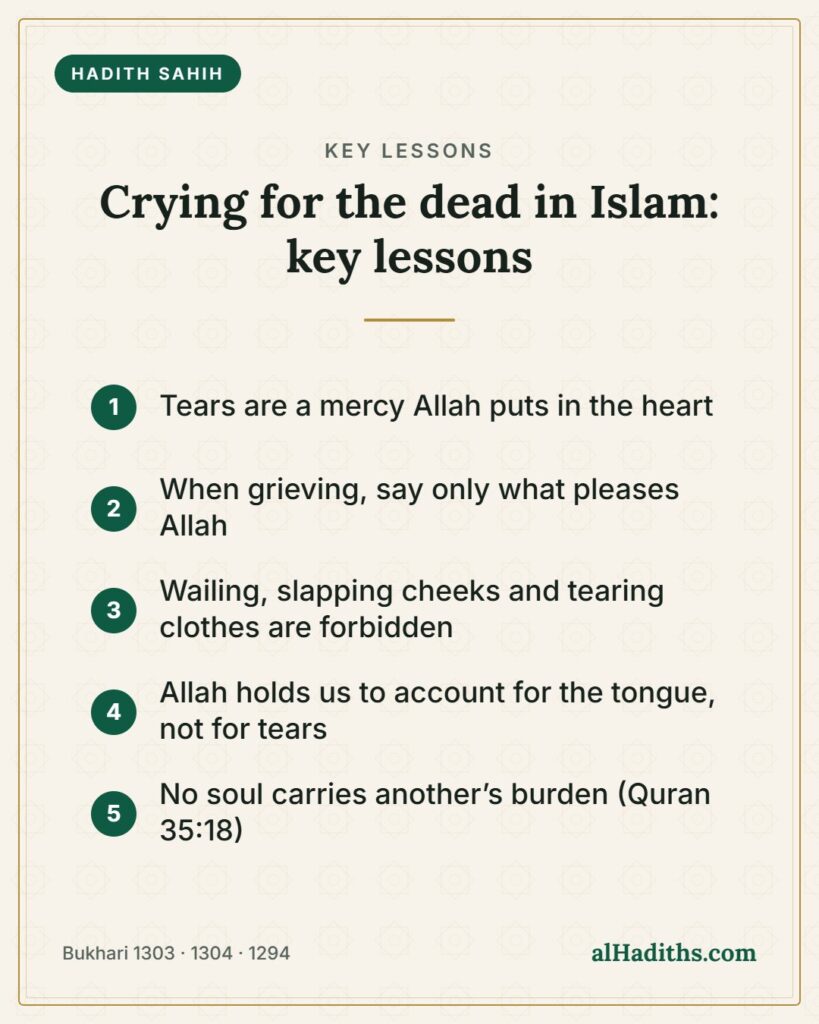
- The Prophet ﷺ wept when his son Ibrahim died and called his tears mercy (Bukhari 1303).
- Tears are a mercy Allah places in the hearts of His slaves (Bukhari 1284).
- Allah does not punish for tears or grief, but for what the tongue says (Bukhari 1304).
- Slapping the cheeks, tearing clothes and wailing are forbidden (Bukhari 1294, Muslim 934).
- ‘Aishah explained that no soul carries another’s burden (Bukhari 1288, Quran 35:18).
If you are reading this in grief, may Allah have mercy on the one you lost, fill your heart with patience, and reunite you in Jannah.
Save this to Pinterest so you can come back to these hadith when you or someone you love is grieving
Share the reward. Send this article to someone who needs it today — teaching a hadith or dua can become a lasting good deed for you, in shaa Allah.