Contents
The Prophet ﷺ often spoke about the prophets who came before him: how Adam was created, how Musa prayed, how Ayyub was patient, how Isa will return. This page gathers our prophets in the hadith series, told only from authentic hadith and the Quran.
Abu Hurayrah (may Allah be pleased with him) heard the Prophet ﷺ say:
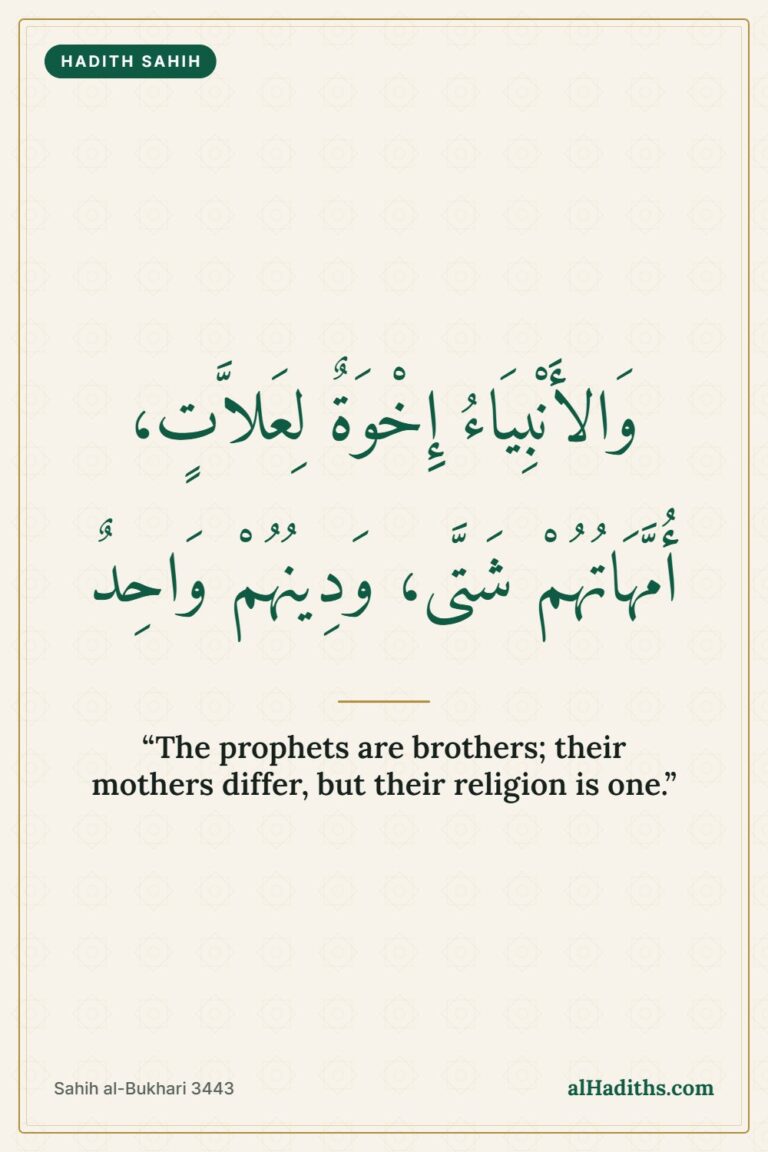
أَنَا أَوْلَى النَّاسِ بِعِيسَى ابْنِ مَرْيَمَ فِي الدُّنْيَا وَالآخِرَةِ، وَالأَنْبِيَاءُ إِخْوَةٌ لِعَلاَّتٍ، أُمَّهَاتُهُمْ شَتَّى، وَدِينُهُمْ وَاحِدٌ
“Both in this world and in the Hereafter, I am the nearest of all the people to Jesus, the son of Mary. The prophets are paternal brothers; their mothers are different, but their religion is one.”
Sahih al-Bukhari 3443 · Also Sahih Muslim 2365a · Narrated by Abu Hurayrah · Translation from Sunnah.com
One religion, many messengers. Reading their stories from the hadith shows how the same faith in Allah looked in very different lives. The articles below follow one path: their lives first, then their duas.
The prophets’ lives in the hadith
- Prophet Adam in the Hadith: his creation, his height and his repentance
- Lessons from Prophet Ibrahim: his message to this Ummah about the gardens of Jannah
- Prophet Yusuf in the Hadith: his honor, beauty and patience
- Prophet Musa in the Hadith: his patience, his prayer and his death
- The Fast of Prophet Dawud: the best voluntary fast, as the Prophet ﷺ described it
- Prophet Ayyub Story in the Hadith: patience in illness and gratitude for blessings
- Prophet Isa in the Hadith: his description and his return
Duas of the prophets
- Dua of Prophet Yunus: the dua from inside the whale, and the hadith on its virtue
- Dua of Musa: six duas of Prophet Musa from the Quran
- The dua of Ayyub: “adversity has touched me, and You are the most merciful of the merciful”
Latest prophets in the hadith articles
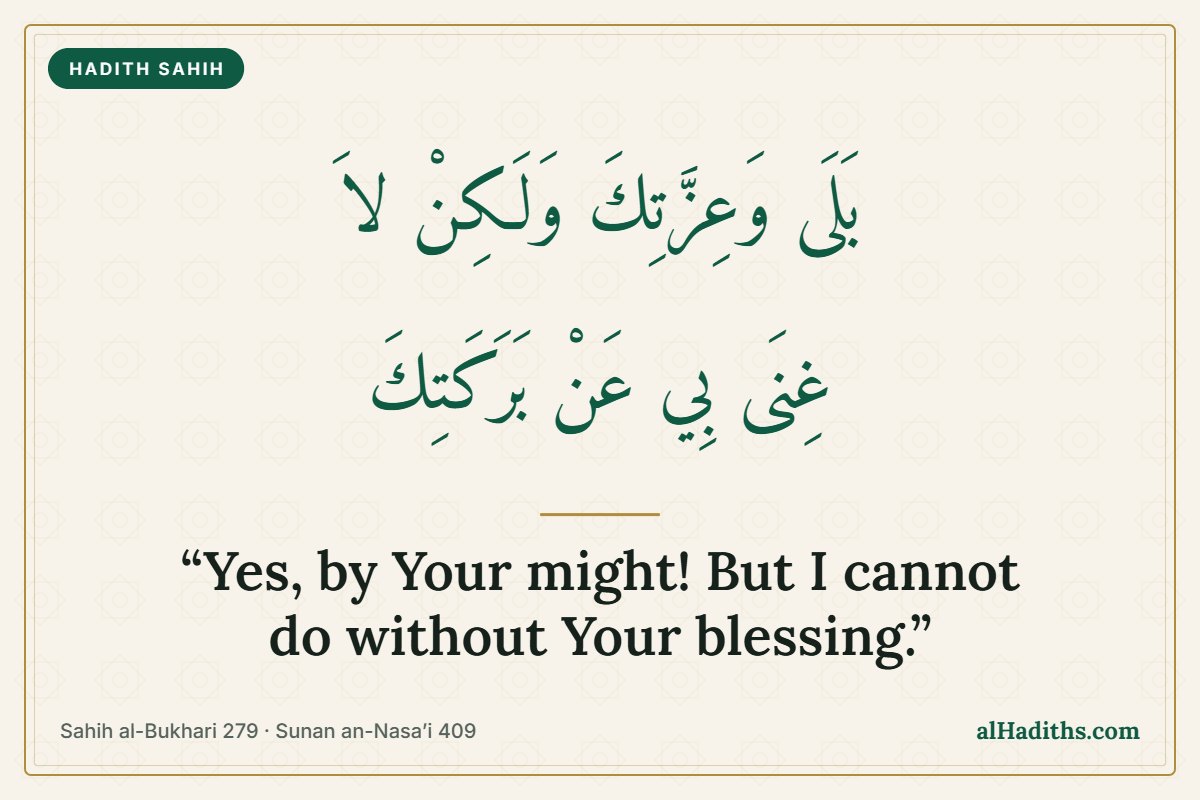
Prophet Ayyub Story in the Hadith: Patience and Gold Locusts
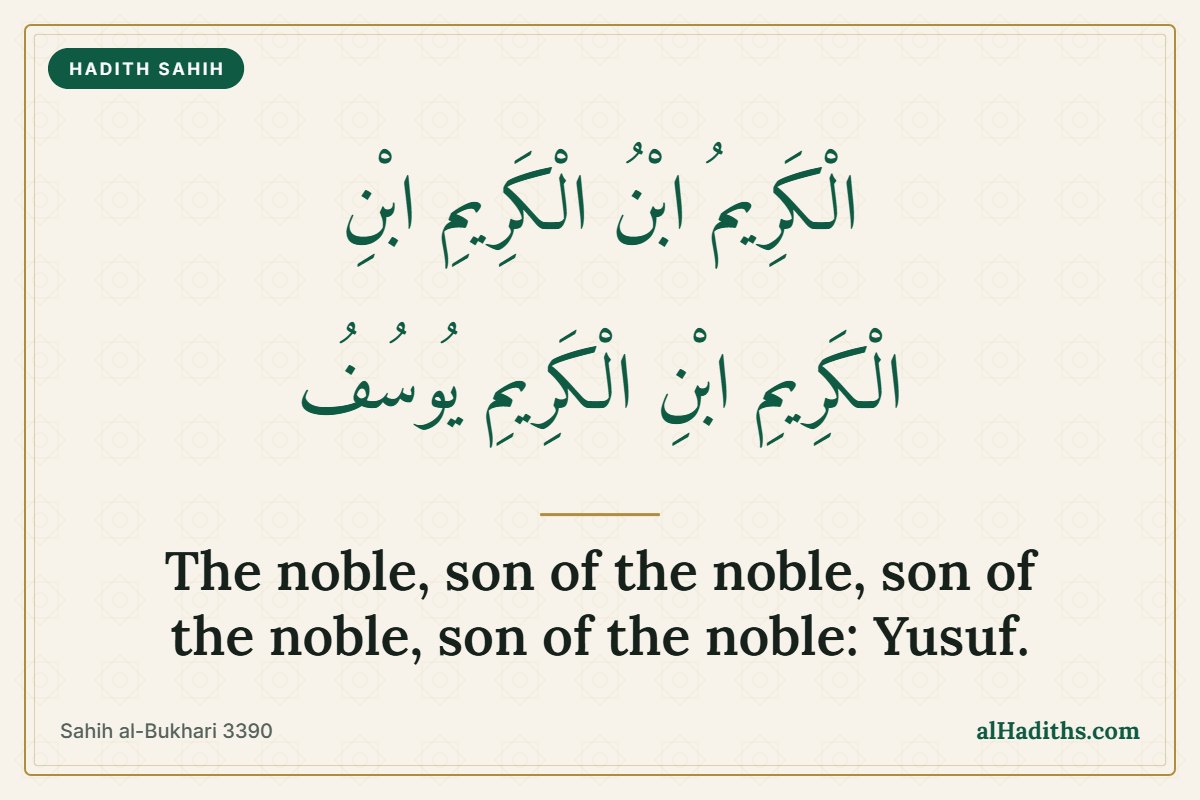
Prophet Yusuf in the Hadith: His Honor, Beauty and Patience
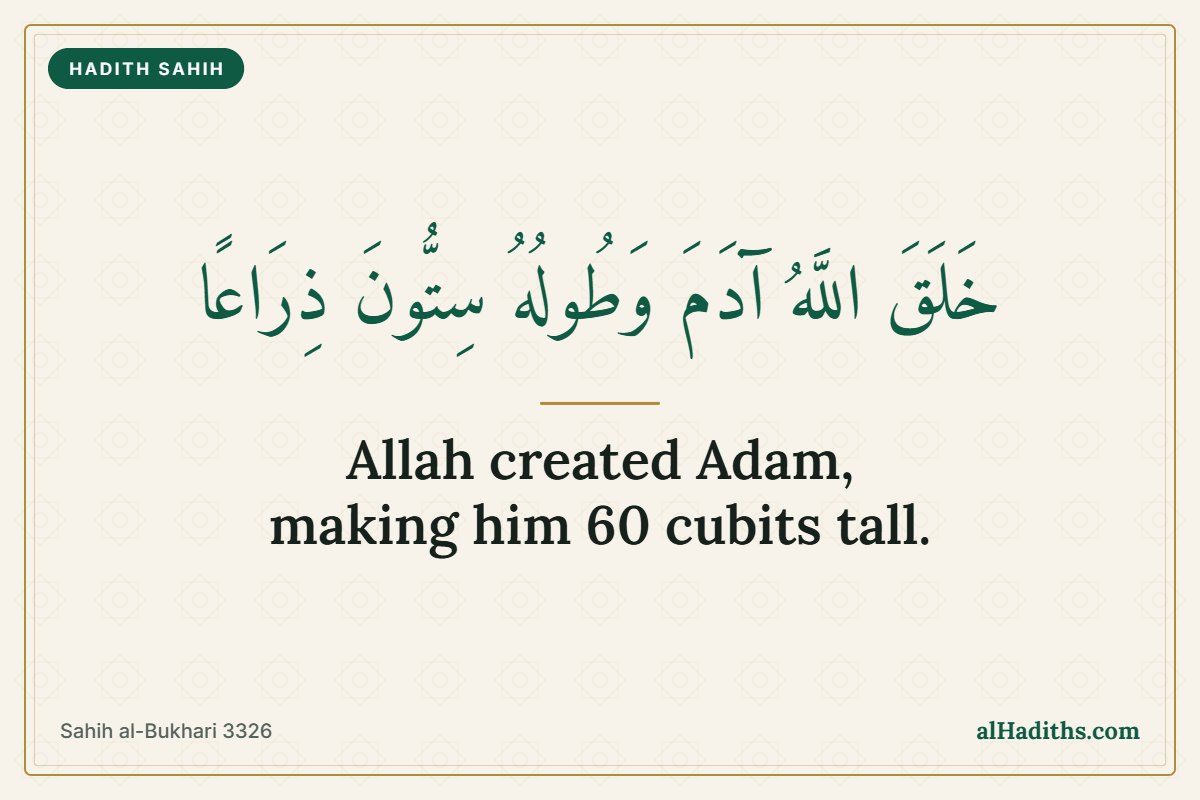
Prophet Adam in the Hadith: His Height, Creation and Repentance
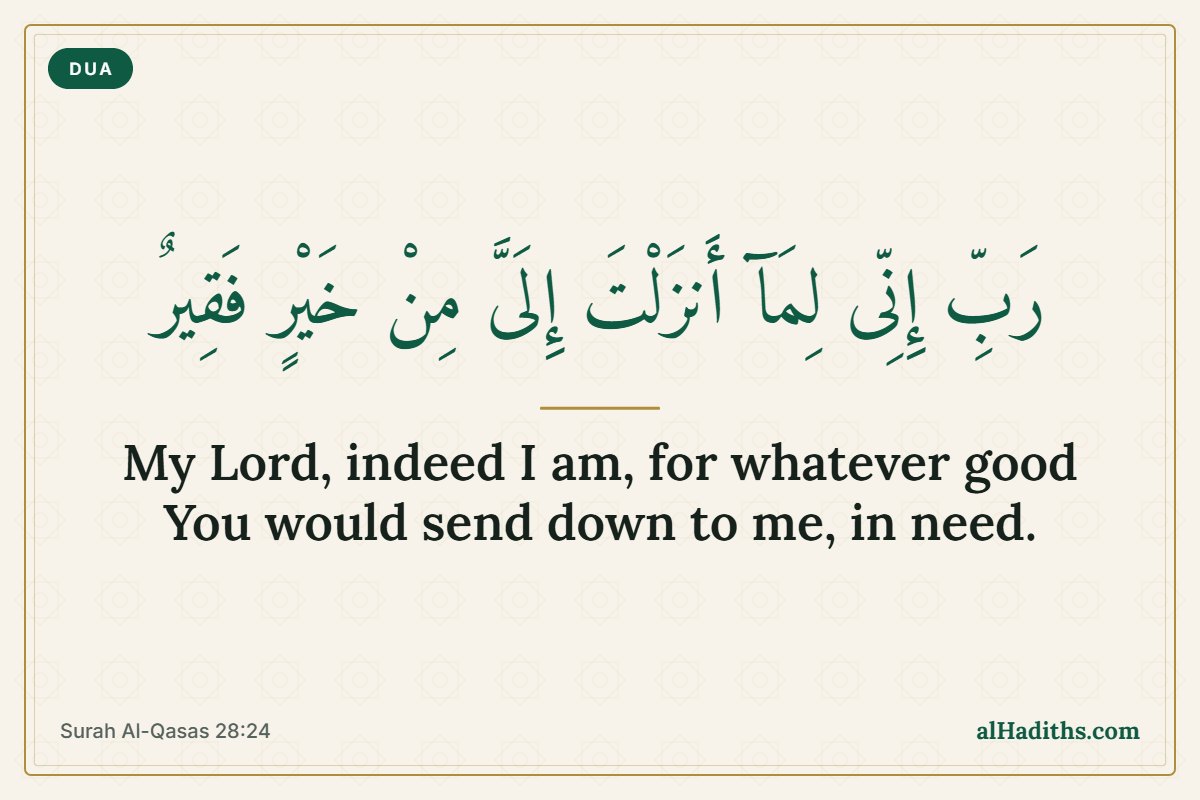
Dua of Musa: 6 Duas of Prophet Musa From the Quran
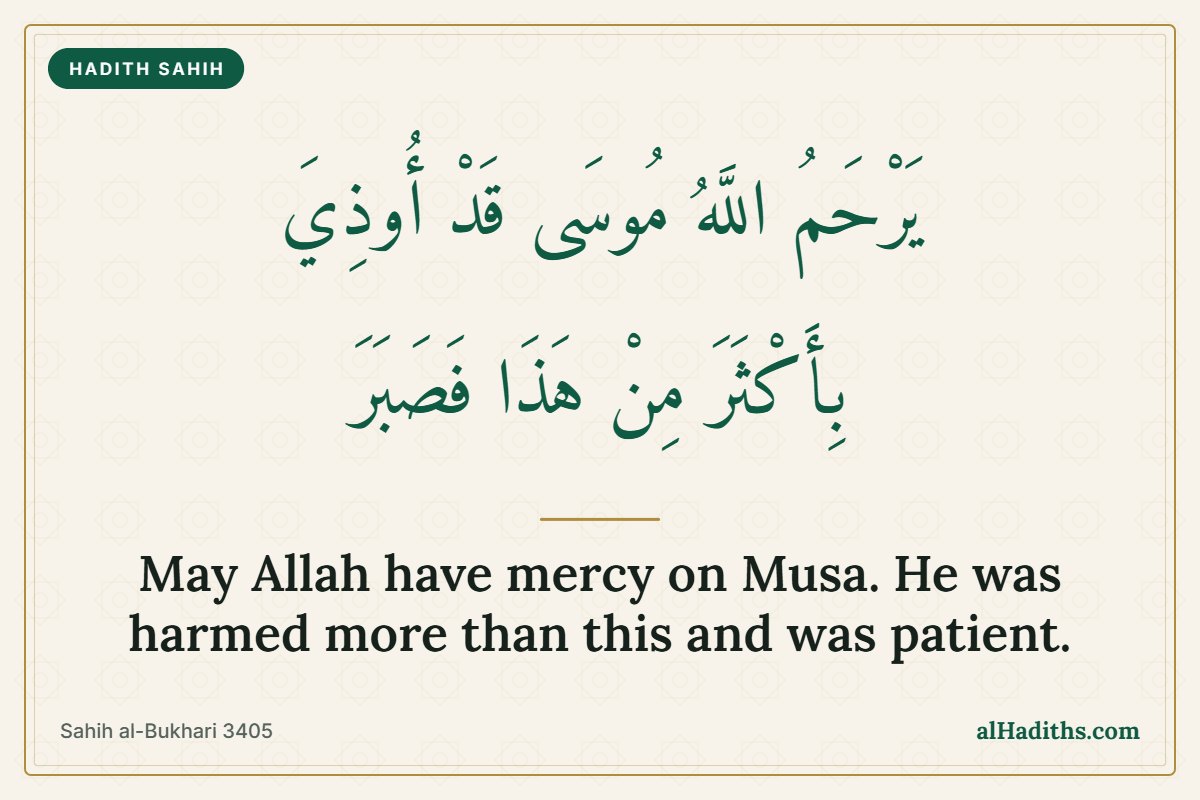
Prophet Musa in the Hadith: His Patience, Prayer and Death
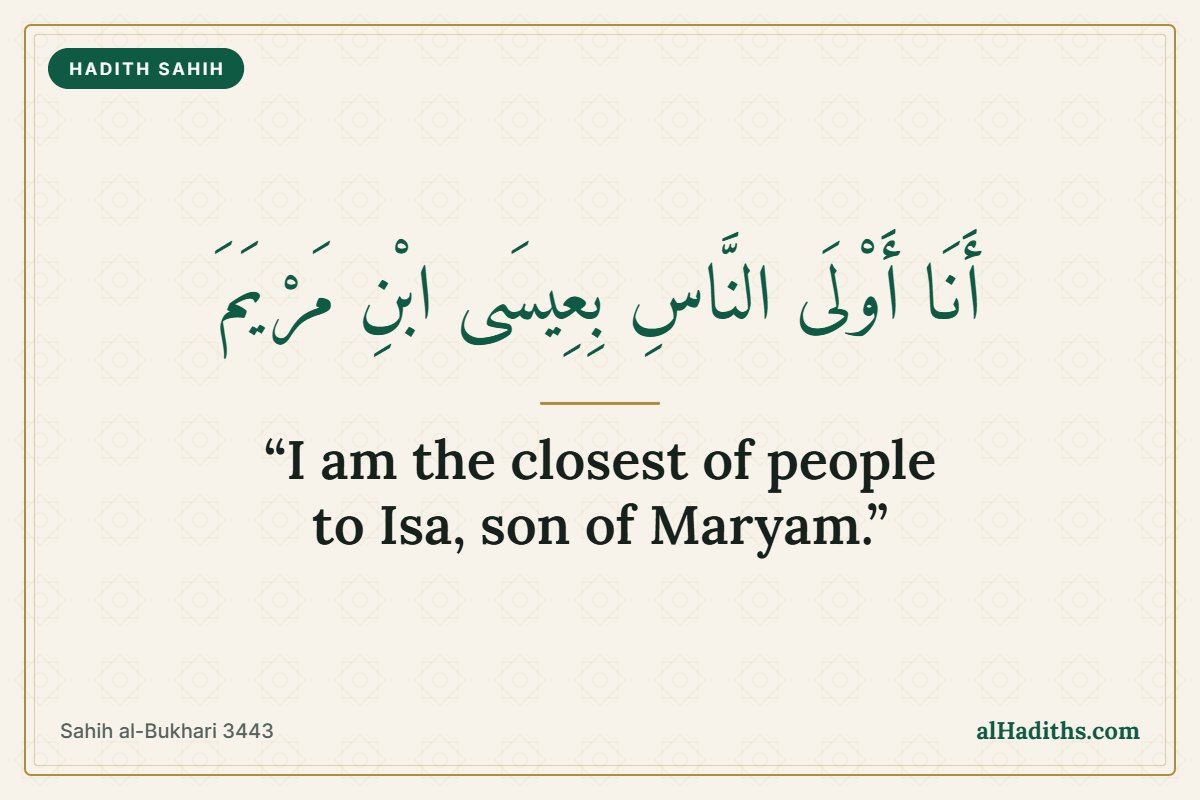
Prophet Isa in the Hadith: His Description and Return
New articles in this series appear here as they are published. To browse all of them, see every article in the Prophets in the Hadith series.
How we tell the prophets’ stories
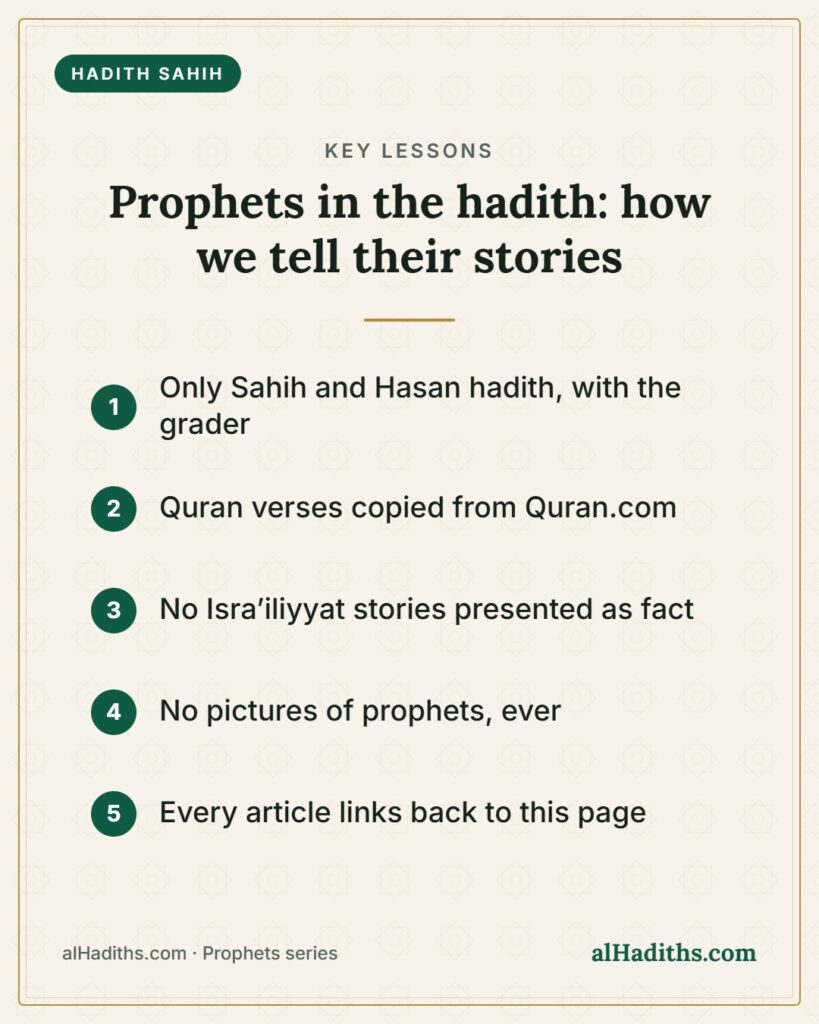
- Authentic sources only. Every hadith is Sahih or Hasan, checked on Sunnah.com with its grader named. Quran verses are copied from Quran.com.
- No Isra’iliyyat as fact. Many popular details about the prophets come from older stories without an authentic chain. When people ask about them, we say they are not in the authentic sources we use.
- No pictures of prophets. Our images show the words of the hadith, never a drawing of a prophet.
- No rulings. Where a story touches on fiqh, we point you to a qualified scholar.
To learn the grading terms, read What is a Sahih hadith? For stories the Prophet ﷺ told about other people of the past, see stories the Prophet ﷺ told.
Questions people ask
Which prophets are mentioned in the hadith?
Many. On this site so far we cover Adam, Ibrahim, Yusuf, Musa, Dawud, Ayyub, Yunus and Isa (peace be upon them), each from authentic hadith and the Quran. New articles are added to this page as they are published.
Are all stories about the prophets authentic?
No. The Quran and the authentic hadith tell us a great deal, but many popular details come from older stories without a reliable chain. We only present what the authentic sources say, and we label anything else clearly.
Why does the Prophet ﷺ call the prophets brothers?
In Sahih al-Bukhari 3443 he said the prophets are paternal brothers: their mothers are different, but their religion is one. They all called people to worship Allah alone.
Pick one prophet tonight and read his story with your family. Their lives were written down for us as a mercy and a reminder.
Save this to Pinterest so you can read the stories of the prophets from authentic sources
Share the reward. Send this article to someone who needs it today — teaching a hadith or dua can become a lasting good deed for you, in shaa Allah.