Prophet Musa in the Hadith: His Patience, Prayer and Death
Contents
Every day we pray five times, not fifty, and the hadith tell us Prophet Musa had a hand in that. These prophet musa hadith from Sahih al-Bukhari and Sahih Muslim show how the Prophet ﷺ spoke about Musa (Moses), peace be upon him: how he looked, the advice he gave on the Night Journey, his patience, his death and where he will stand on the Day of Judgment.
At a glance
- Hadith: 7
- Collections: Sahih al-Bukhari and Sahih Muslim
- Grade: All Sahih
- Topic: Prophet Musa (Moses) in the Sunnah
- One thing to do today: When someone hurts you, remember how the Prophet ﷺ remembered Musa’s patience
1. How the Prophet ﷺ described Musa
Abu Hurairah (may Allah be pleased with him) reported that the Prophet ﷺ said about the night of his Night Journey:
رَأَيْتُ مُوسَى وَإِذَا رَجُلٌ ضَرْبٌ رَجِلٌ، كَأَنَّهُ مِنْ رِجَالِ شَنُوءَةَ
“I saw Moses, and he was a slim man with lank hair, as if he were one of the men of Shanu’ah.”
Sahih al-Bukhari 3394 · Narrated by Abu Hurairah · Translation adapted from Sunnah.com
Shanu’ah was an Arab tribe the Companions knew well, so the comparison painted a clear picture for them. The same hadith goes on to describe Isa, which we cover in Prophet Isa in the Hadith.
Try this: when you read about Musa in the Quran, remember that the Prophet ﷺ saw him and described him to us.
2. Why we pray five times, not fifty
In the long hadith of the Night Journey, narrated by Abu Dharr (may Allah be pleased with him), the Prophet ﷺ described what happened after Allah first made fifty prayers obligatory:
فَرَجَعْتُ بِذَلِكَ حَتَّى مَرَرْتُ عَلَى مُوسَى فَقَالَ مَا فَرَضَ اللَّهُ لَكَ عَلَى أُمَّتِكَ قُلْتُ فَرَضَ خَمْسِينَ صَلاَةً. قَالَ فَارْجِعْ إِلَى رَبِّكَ، فَإِنَّ أُمَّتَكَ لاَ تُطِيقُ ذَلِكَ
“I returned with that until I passed by Moses, who asked, ‘What has Allah enjoined on your followers?’ I replied, ‘He has enjoined fifty prayers.’ Moses said, ‘Go back to your Lord, for your followers will not be able to bear it.’”
Sahih al-Bukhari 349 · Narrated by Abu Dharr (this part via Anas ibn Malik) · Translation adapted from Sunnah.com
The hadith continues: Musa sent him back again and again, the number was reduced each time, until Allah said they are five in number and fifty in reward. Musa knew his own people well, and he wanted ease for ours.
Try this: before each prayer today, remember that five is already a mercy. Guard them.
3. The day Allah saved Musa
‘Abdullah ibn ‘Abbas (may Allah be pleased with them both) reported:
أَنَّ النَّبِيَّ صلى الله عليه وسلم لَمَّا قَدِمَ الْمَدِينَةَ وَجَدَهُمْ يَصُومُونَ يَوْمًا، يَعْنِي عَاشُورَاءَ، فَقَالُوا هَذَا يَوْمٌ عَظِيمٌ، وَهْوَ يَوْمٌ نَجَّى اللَّهُ فِيهِ مُوسَى، وَأَغْرَقَ آلَ فِرْعَوْنَ، فَصَامَ مُوسَى شُكْرًا لِلَّهِ. فَقَالَ أَنَا أَوْلَى بِمُوسَى مِنْهُمْ. فَصَامَهُ وَأَمَرَ بِصِيَامِهِ
“When the Prophet ﷺ came to Medina, he found them fasting on a day, meaning ‘Ashura’. They said, ‘This is a great day: it is the day Allah saved Moses and drowned the people of Pharaoh, and Moses fasted it to thank Allah.’ The Prophet ﷺ said, ‘I am closer to Moses than they are.’ So he fasted it and ordered that it be fasted.”
Sahih al-Bukhari 3397 · Narrated by ‘Abdullah ibn ‘Abbas · Translation adapted from Sunnah.com
The Prophet ﷺ saw Musa’s victory as part of his own story. We explain the fast and the advice to add the 9th in Ashura: Why the Prophet ﷺ Fasted It.
Try this: mark the 10th of Muharram in your calendar now, so the day of Musa’s rescue does not pass you by.
4. Patience when people hurt you
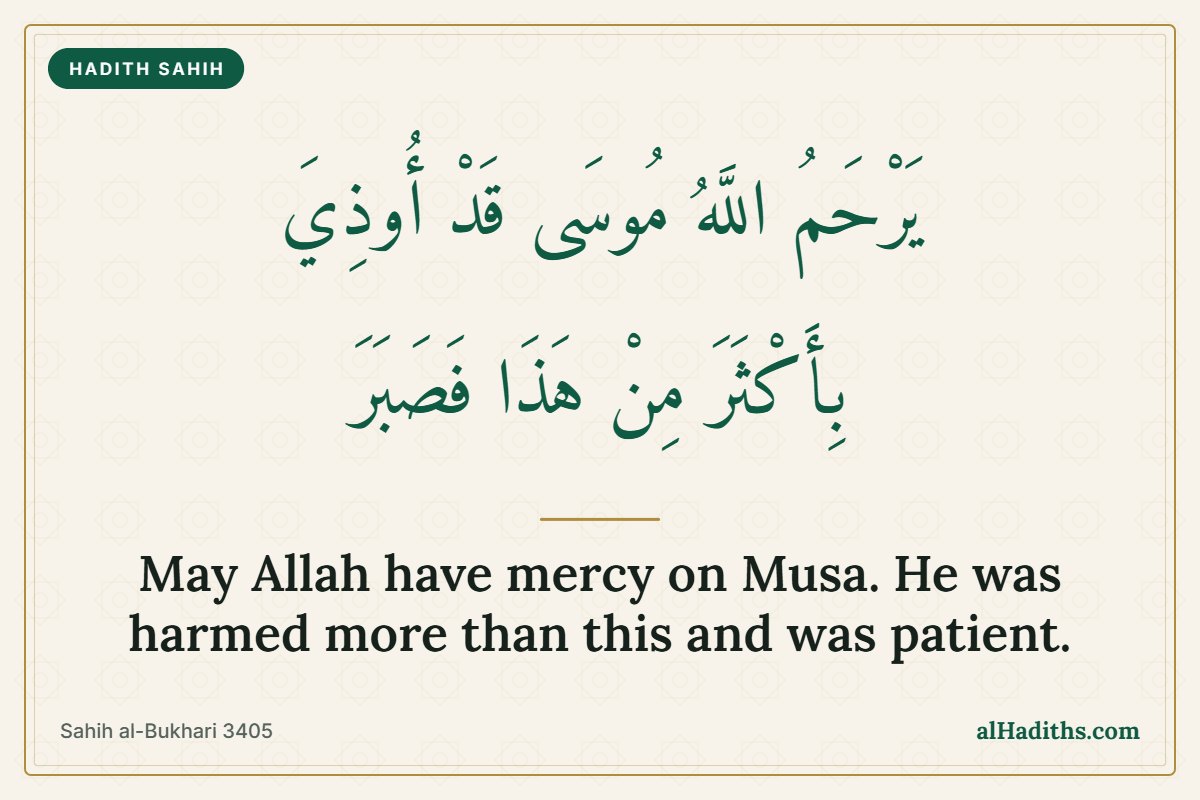
‘Abdullah ibn Mas‘ud (may Allah be pleased with him) said that a man criticized the way the Prophet ﷺ had shared out some wealth. When he heard of it, the Prophet ﷺ became so angry that it showed on his face, and then he said:
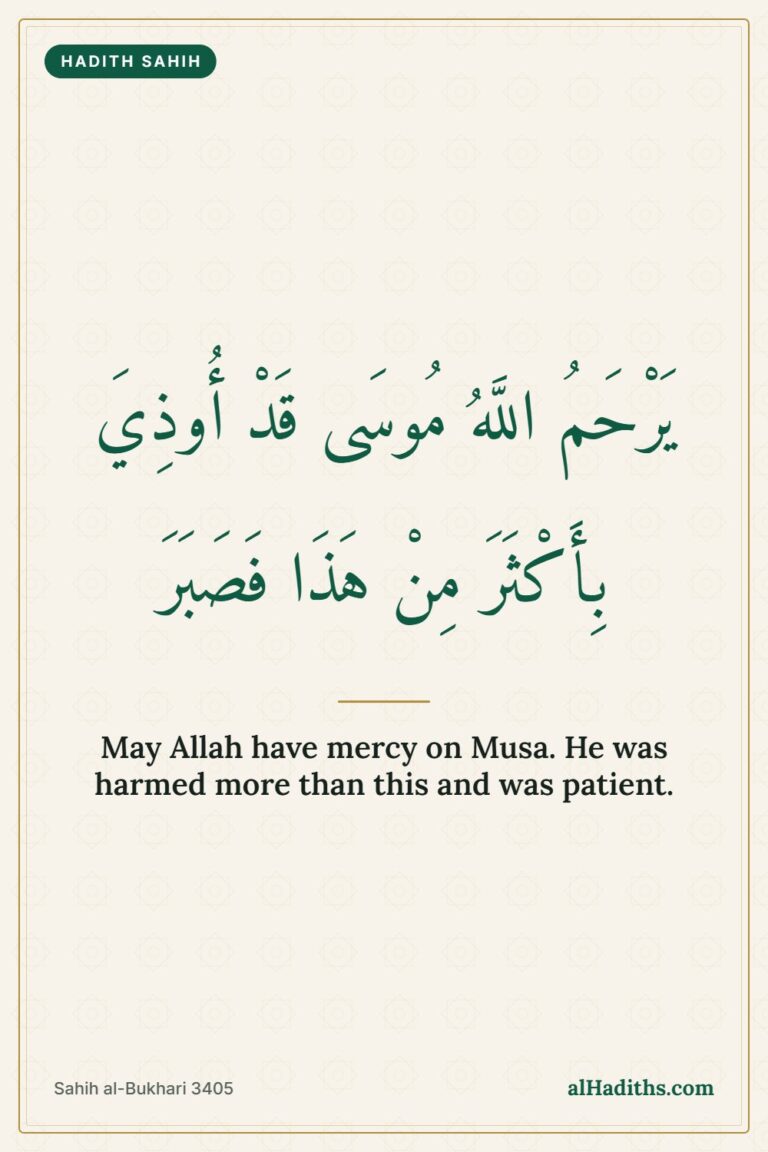
يَرْحَمُ اللَّهُ مُوسَى قَدْ أُوذِيَ بِأَكْثَرَ مِنْ هَذَا فَصَبَرَ
“May Allah bestow His mercy on Moses, for he was harmed more than this, yet he endured patiently.”
Sahih al-Bukhari 3405 · Narrated by ‘Abdullah ibn Mas‘ud · Translation adapted from Sunnah.com
The Prophet ﷺ answered an unfair remark by remembering a brother prophet who had faced worse. Musa’s patience with his own people was something he took comfort in.
Try this: the next time words hurt you, think of the prophets who were hurt more and stayed patient, before you reply.
5. Musa and the Angel of Death
In Sahih al-Bukhari this story is told by Abu Hurairah (may Allah be pleased with him), and it ends with the words of the Prophet ﷺ. Sahih Muslim 2372 has the same story.
أُرْسِلَ مَلَكُ الْمَوْتِ إِلَى مُوسَى ـ عَلَيْهِمَا السَّلاَمُ ـ فَلَمَّا جَاءَهُ صَكَّهُ، فَرَجَعَ إِلَى رَبِّهِ، فَقَالَ أَرْسَلْتَنِي إِلَى عَبْدٍ لاَ يُرِيدُ الْمَوْتَ. قَالَ ارْجِعْ إِلَيْهِ، فَقُلْ لَهُ يَضَعُ يَدَهُ عَلَى مَتْنِ ثَوْرٍ، فَلَهُ بِمَا غَطَّتْ يَدُهُ بِكُلِّ شَعَرَةٍ سَنَةٌ. قَالَ أَىْ رَبِّ، ثُمَّ مَاذَا قَالَ ثُمَّ الْمَوْتُ. قَالَ فَالآنَ. قَالَ فَسَأَلَ اللَّهَ أَنْ يُدْنِيَهُ مِنَ الأَرْضِ الْمُقَدَّسَةِ رَمْيَةً بِحَجَرٍ. قَالَ أَبُو هُرَيْرَةَ فَقَالَ رَسُولُ اللَّهِ صلى الله عليه وسلم لَوْ كُنْتُ ثَمَّ لأَرَيْتُكُمْ قَبْرَهُ إِلَى جَانِبِ الطَّرِيقِ تَحْتَ الْكَثِيبِ الأَحْمَرِ
“The Angel of Death was sent to Moses. When he came to him, Moses struck him. He returned to his Lord and said, ‘You have sent me to a slave who does not want to die.’ Allah said, ‘Go back to him and tell him to put his hand on the back of an ox: for every hair his hand covers, he will have one year.’ Moses said, ‘O my Lord, then what?’ He said, ‘Then death.’ Moses said, ‘Then let it be now.’ He asked Allah to bring him near the Holy Land, a stone’s throw away. The Messenger of Allah ﷺ said, ‘If I were there, I would show you his grave beside the road, below the red sand dune.’”
Sahih al-Bukhari 3407 · Narrated by Abu Hurairah · Translation adapted from Sunnah.com
People often find this hadith strange. Malaysia’s Federal Territories Mufti office explains in Irsyad al-Hadith 293 that the hadith is authentic, that Musa struck the angel without knowing who he was, and that it is not a story about Musa refusing to die. When the choice came to him clearly, he said: then let it be now.
Try this: ask Allah today for a good ending, as Musa asked to be near the Holy Land at his death.
6. Holding the Throne on the Day of Judgment
Abu Hurairah (may Allah be pleased with him) reported that a Muslim and a Jewish man argued over which prophet Allah had preferred, and the Muslim struck the other man. When the Prophet ﷺ heard of it, he said:
لاَ تُخَيِّرُونِي عَلَى مُوسَى، فَإِنَّ النَّاسَ يَصْعَقُونَ فَأَكُونُ أَوَّلَ مَنْ يُفِيقُ، فَإِذَا مُوسَى بَاطِشٌ بِجَانِبِ الْعَرْشِ، فَلاَ أَدْرِي أَكَانَ فِيمَنْ صَعِقَ فَأَفَاقَ قَبْلِي أَوْ كَانَ مِمَّنِ اسْتَثْنَى اللَّهُ
“Do not give me superiority over Moses, for the people will fall unconscious, and I will be the first to regain consciousness, and there will be Moses holding a side of the Throne. I will not know whether he was among those who fell unconscious and recovered before me, or among those whom Allah exempted.”
Sahih al-Bukhari 3408 · Narrated by Abu Hurairah · Translation adapted from Sunnah.com
The Prophet ﷺ would not let his own rank be used to belittle Musa or to hurt another person. Instead he told them of an honor Allah will give Musa on that Day.
Try this: speak of every prophet with respect, and never let an argument about religion turn into harm.
7. Praying in his grave
Anas ibn Malik (may Allah be pleased with him) reported that the Messenger of Allah ﷺ said:
عَلَى مُوسَى لَيْلَةَ أُسْرِيَ بِي عِنْدَ الْكَثِيبِ الأَحْمَرِ وَهُوَ قَائِمٌ يُصَلِّي فِي قَبْرِهِ
“I passed by Moses on the night of my Night Journey, by the red sand dune, and he was standing, praying in his grave.”
Sahih Muslim 2375a · Narrated by Anas ibn Malik · Translation adapted from Sunnah.com (the Sunnah.com English starts mid-sentence, so it is completed here)
This is a matter of the unseen. We believe it as the Prophet ﷺ told it, without asking how. It also matches the place in the previous hadith: the red sand dune near the Holy Land.
Try this: make salah the one habit you never drop. It is what the Prophet ﷺ saw Musa doing.
Bringing it together: what the Prophet Musa hadith teach
The Quran names a gift that set Musa apart among the messengers:
وَرُسُلًا قَدْ قَصَصْنَـٰهُمْ عَلَيْكَ مِن قَبْلُ وَرُسُلًا لَّمْ نَقْصُصْهُمْ عَلَيْكَ ۚ وَكَلَّمَ ٱللَّهُ مُوسَىٰ تَكْلِيمًا
“And [We sent] messengers about whom We have related [their stories] to you before and messengers about whom We have not related to you. And Allāh spoke to Moses with [direct] speech.”
Surah An-Nisa 4:164 · Translation: Saheeh International, from Quran.com
Reflection: what moves me in these hadith is how personally the Prophet ﷺ spoke of Musa. He saw him, took his advice, fasted on the day of his rescue, comforted himself with his patience and defended his honor. Loving the prophets is part of our faith, and these hadith show what that love looks like in practice.
Questions people ask
What did Prophet Musa look like according to hadith?
Sahih al-Bukhari 3394 says he was slim, with lank hair, like the men of the Shanu’ah tribe. The Prophet ﷺ saw him on the night of the Night Journey.
Where is Prophet Musa buried?
Sahih al-Bukhari 3407 says he asked to die within a stone’s throw of the Holy Land, and the Prophet ﷺ said his grave is beside the road, below the red sand dune. The Prophet ﷺ did not point out the exact spot.
Why did Prophet Musa slap the Angel of Death?
The hadith is authentic (Bukhari 3407, Muslim 2372). The Federal Territories Mufti office explains that Musa did not know the man was the Angel of Death and struck him as an intruder. When the choice was made clear, he said: then let it be now.
Key lessons
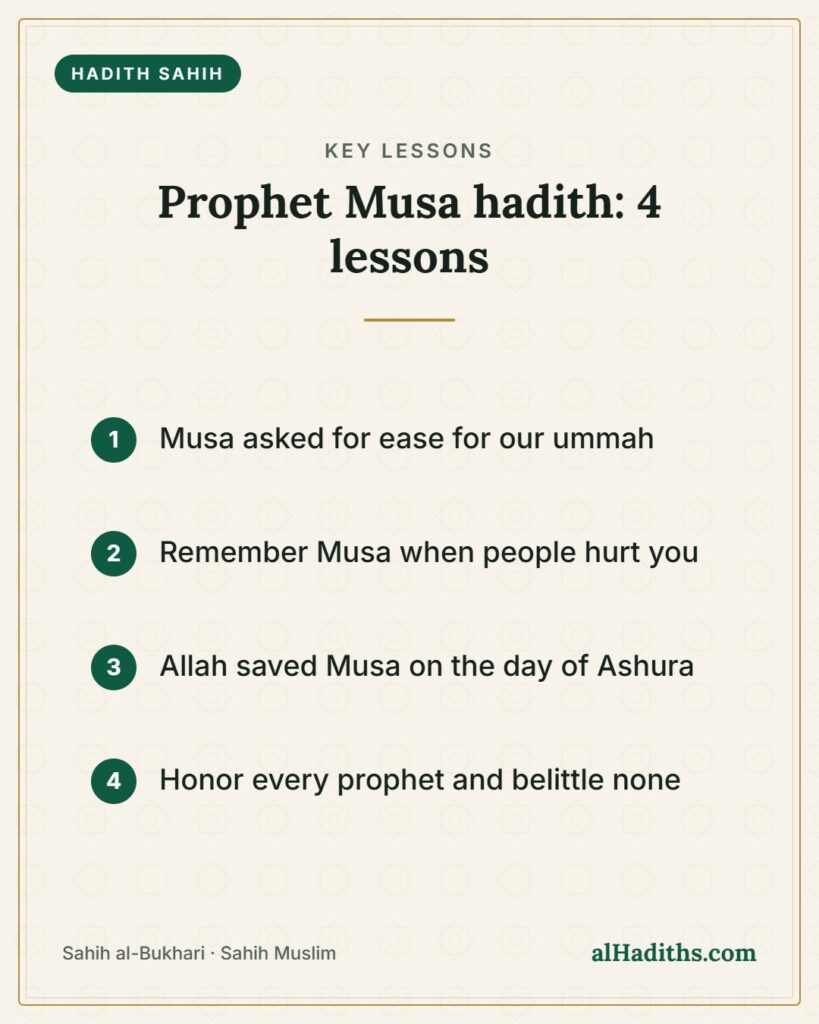
- Musa’s advice brought fifty prayers down to five.
- The Prophet ﷺ took comfort in Musa’s patience when he was hurt.
- Fasting ‘Ashura’ follows Musa’s thanks for his rescue.
- We honor every prophet and never use one to belittle another.
Part of our Prophets in the Hadith series: see all our articles on the prophets in one place.
Which of these seven moments of Musa’s life will you carry with you this week?
Save this to Pinterest so you can remember Musa’s patience on a hard day
Share the reward. Send this article to someone who needs it today — teaching a hadith or dua can become a lasting good deed for you, in shaa Allah.