Dua for Wearing New Clothes: Authentic Arabic and Meaning
Contents
A new shirt for work, a baju for Eid, a school uniform for the new term: each one is a small gift. The Prophet ﷺ met these moments with a short dua for wearing new clothes, thanking Allah and asking for the good of the garment. Here it is in Arabic, transliteration and English, with a second short dua you can say for any clothes.
At a glance
- Source: Sunan Abi Dawud 4020 (also Jami‘ at-Tirmidhi 1767)
- Narrated by: Abu Sa‘id al-Khudri
- Grade: Sahih (al-Albani)
- Topic: Clothing and gratitude
- Practise it: Say it the next time you put on something new, Eid clothes included
The dua for wearing new clothes
Abu Sa‘id al-Khudri (may Allah be pleased with him) described what the Prophet ﷺ did when he put on a new garment: he would mention it by name, such as a turban or a shirt, and then say:
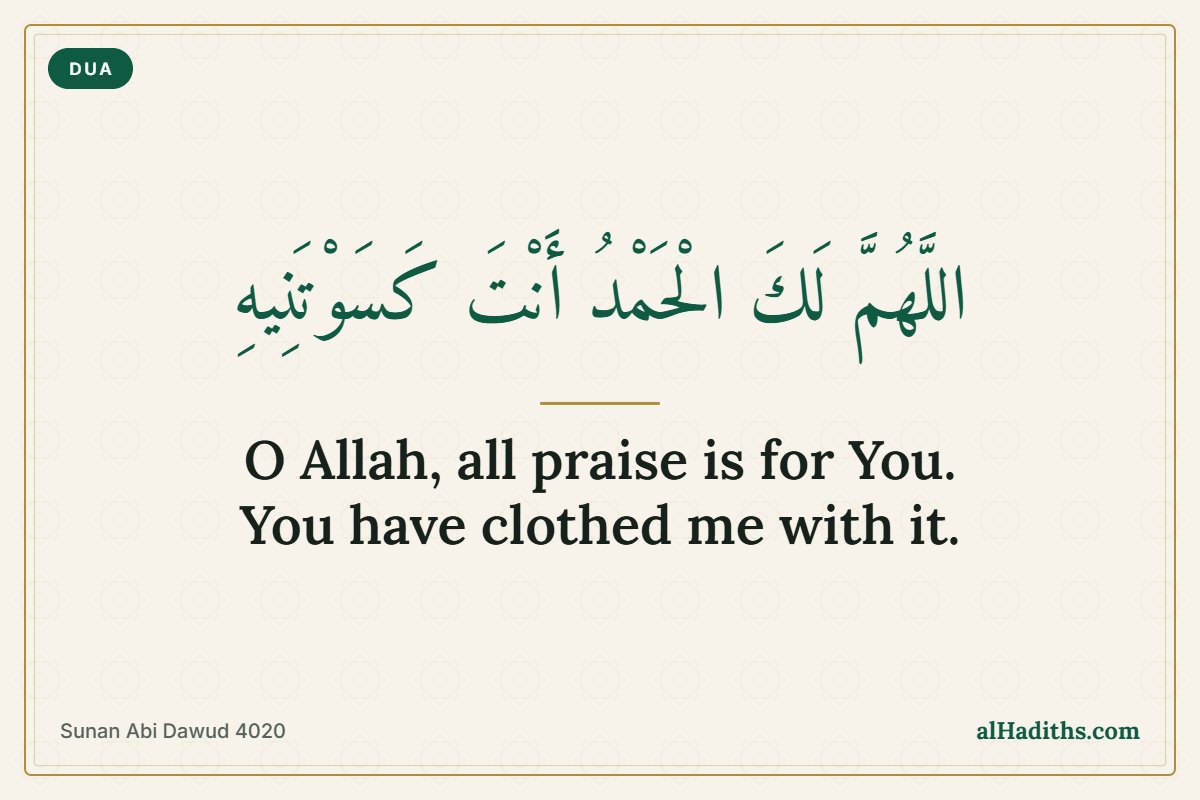
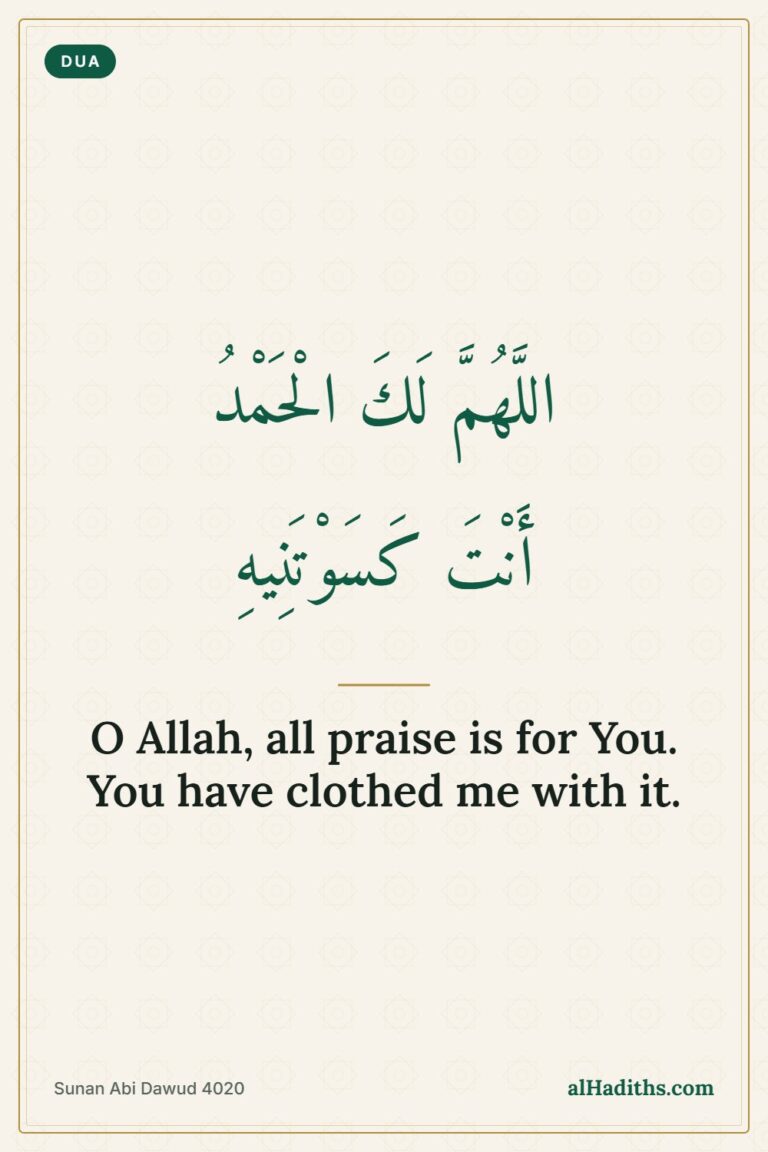
اللَّهُمَّ لَكَ الْحَمْدُ أَنْتَ كَسَوْتَنِيهِ أَسْأَلُكَ مِنْ خَيْرِهِ وَخَيْرِ مَا صُنِعَ لَهُ وَأَعُوذُ بِكَ مِنْ شَرِّهِ وَشَرِّ مَا صُنِعَ لَهُ
Allahumma lakal-hamd, anta kasawtanih, as’aluka min khairihi wa khairi ma suni‘a lah, wa a‘udhu bika min sharrihi wa sharri ma suni‘a lah
“O Allah, all praise is for You. You have clothed me with it. I ask You for its good and the good of what it was made for, and I seek refuge in You from its evil and the evil of what it was made for.”
Sunan Abi Dawud 4020 · Sahih (al-Albani) · Narrated by Abu Sa‘id al-Khudri · Translation adapted from Sunnah.com
The same dua, through the same Companion, is in Jami‘ at-Tirmidhi 1767, graded Hasan (Darussalam). That narration names a third garment, the cloak (rida’), alongside the turban and the shirt.
Context: what the Companions said
At the end of the same hadith, the Successor Abu Nadrah adds what the Companions used to say. When one of them put on a new garment, the others would tell him: “Tubli wa yukhlifullah”, meaning “May you wear it out, and may Allah give you another in its place.” It is a warm, simple way to share a friend’s happiness and wish them a long life.
A short dua for any clothes
Mu‘adh ibn Anas (may Allah be pleased with him) narrated a second dua from the Prophet ﷺ, for whenever we put on a garment, new or not:
الْحَمْدُ لِلَّهِ الَّذِي كَسَانِي هَذَا الثَّوْبَ وَرَزَقَنِيهِ مِنْ غَيْرِ حَوْلٍ مِنِّي وَلاَ قُوَّةٍ
Al-hamdu lillahil-ladhi kasani hadhath-thawba wa razaqanihi min ghairi hawlin minni wa la quwwah
“All praise is for Allah who clothed me with this garment and provided it for me, without any power or strength on my part.”
Sunan Abi Dawud 4023 · Hasan, without the words “and later sins” (al-Albani) · Narrated by Mu‘adh ibn Anas · Translation adapted from Sunnah.com
In this hadith the Prophet ﷺ said that whoever says it will be forgiven his past sins. A note on its grading: the narration ends “his former and later sins”, but al-Albani graded the hadith Hasan without the words “and later sins”, as Sunnah.com shows, so we mention only the forgiveness of past sins. The same hadith begins with a dua after eating, which we cover in our dua before and after eating.
What it means
The first dua starts with praise, not a request. Before we enjoy the garment, we admit who gave it. “You have clothed me with it” reminds us that cloth, money and even the taste to choose it come from Allah. The second dua says the same thing plainly: “without any power or strength on my part.”
Then the Prophet ﷺ asks for the good of the garment and of “what it was made for”, and seeks refuge from its harm. A note on Sunnah.com’s Shama’il 61 explains this as the garment’s purpose, such as warmth in winter, coolness in summer, and looking presentable.
Reflection: I think the second half of the dua is the part we forget. A garment can be used for good, such as covering ourselves and looking clean for salah, or it can feed pride. Asking Allah for its good and protection from its harm turns a shopping moment into a small act of worship.
How to practise it
- When you put on something new, name it first, as the Prophet ﷺ did: “a new shirt”, “a new scarf”, then say the dua.
- Keep the short dua (Abu Dawud 4023) for everyday dressing, morning or evening.
- When a friend or child wears something new, tell them “Tubli wa yukhlifullah”.
- On Eid, say the same dua when you put on your Eid clothes; there is no separate authentic Eid dua for clothes.
- Teach children the first line, “Allahumma lakal-hamd, anta kasawtanih”, and add the rest as they grow.
Questions people ask
Is there a special dua for wearing new clothes on Eid?
We found no authentic dua that is only for Eid clothes. The dua for wearing new clothes in this article is the one to say for any new garment, on Eid or any other day. For the Eid day itself, see our article on the Eid prayer.
What do you say to someone wearing new clothes?
Abu Nadrah reported that the Companions would say “Tubli wa yukhlifullah”: “May you wear it out, and may Allah give you another in its place” (Sunan Abi Dawud 4020).
Is the dua “kasani ma uwari bihi ‘awrati” authentic?
It is reported from ‘Umar in Sunan Ibn Majah 3557, graded Da’if (Darussalam), so we do not use it. The two duas above are the authentic ones.
Key lessons
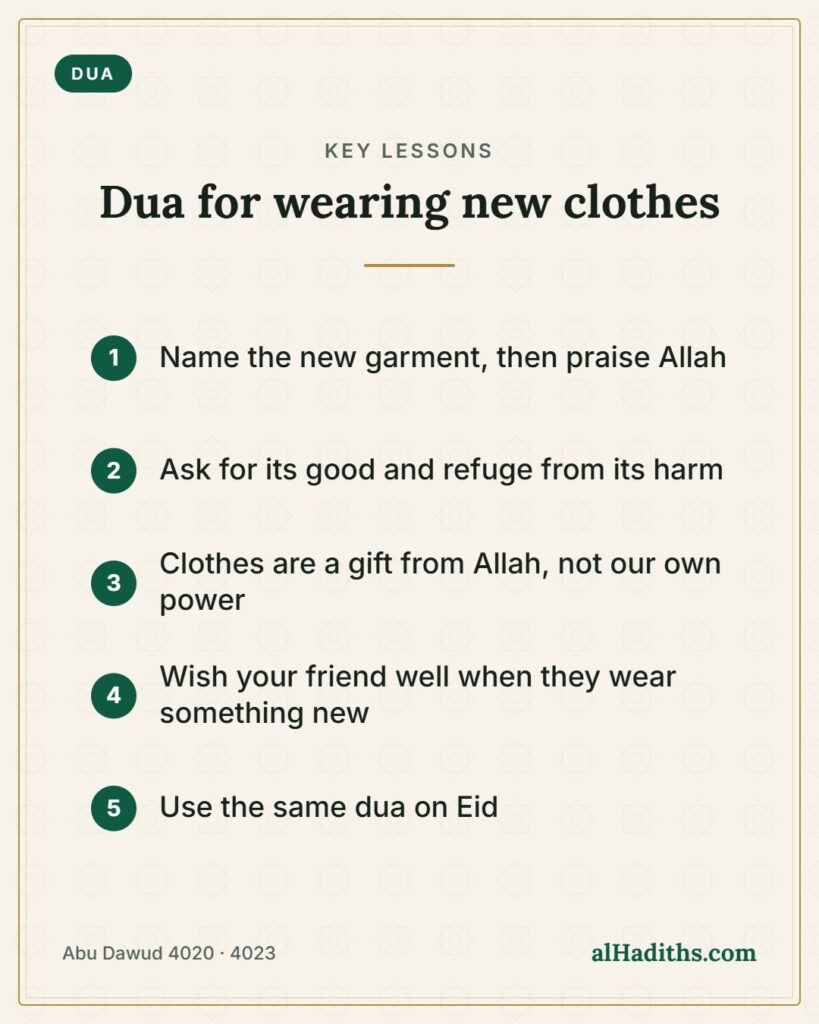
- The dua for wearing new clothes begins with praise: Allah is the One who clothed us.
- We ask for the good of the garment and seek refuge from its harm.
- A short dua thanks Allah for any clothes, without power or strength of our own.
- The Companions wished each other well when one wore something new.
- The same dua is said on Eid; there is no separate authentic Eid dua.
Part of our Dua series: see all our dua articles in one place.
May Allah bless every garment you wear, and clothe us all in what pleases Him. Save the dua now, so it is ready for your next new outfit.
Save this to Pinterest so you have the dua ready for your next new outfit or Eid.
Share the reward. Send this article to someone who needs it today — teaching a hadith or dua can become a lasting good deed for you, in shaa Allah.