How Did Prophet Muhammad ﷺ Pray? 5 Authentic Hadith
Contents
How did Prophet Muhammad pray? Every Muslim asks this at some point, and the Prophet ﷺ answered it himself: pray as you have seen me praying. The Companions who watched him closely then described what they saw, from the first takbir to the final salam. Here are five authentic hadith from Sahih al-Bukhari and Sahih Muslim that show it, step by step.
At a glance
- Hadith: 5
- Collections: Sahih al-Bukhari (3), Sahih Muslim (2)
- Grade: Sahih (all from Bukhari and Muslim)
- Topic: The Prophet’s prayer, from takbir to taslim
- Today: In your next prayer, stand fully upright after ruku and sit fully upright between the two sujud before moving on.
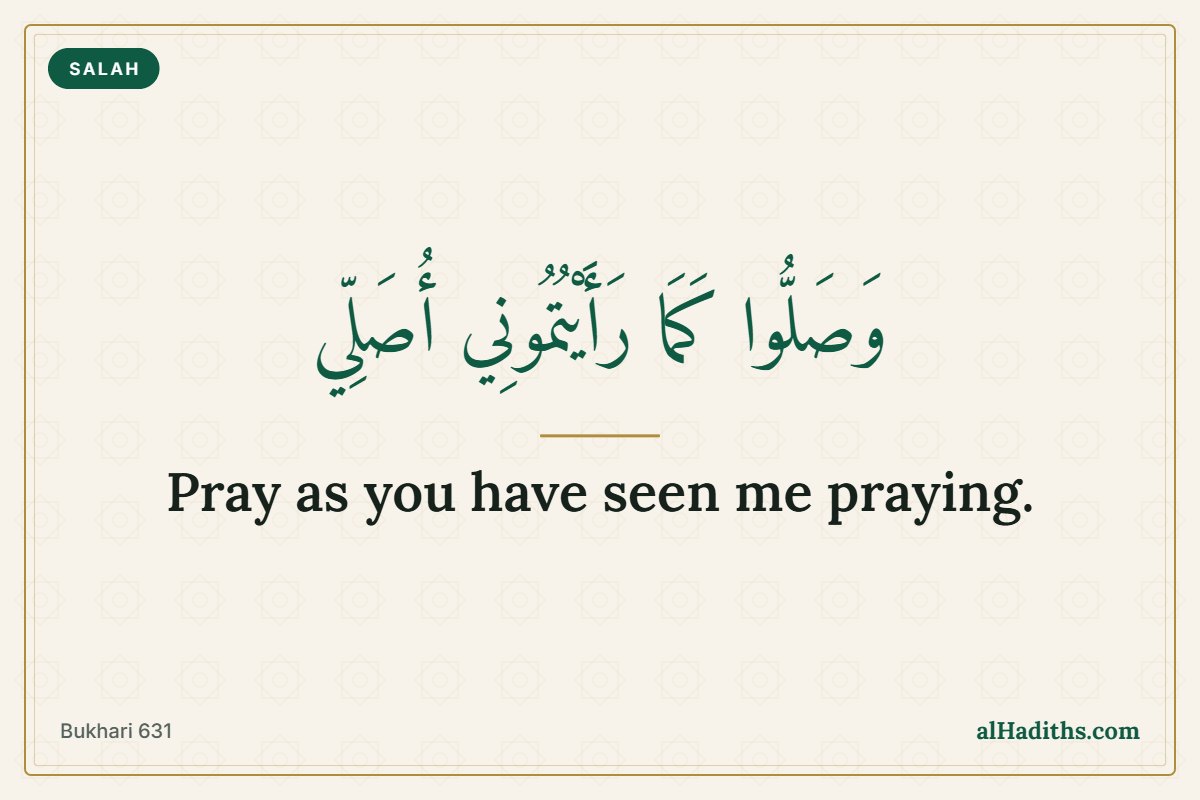
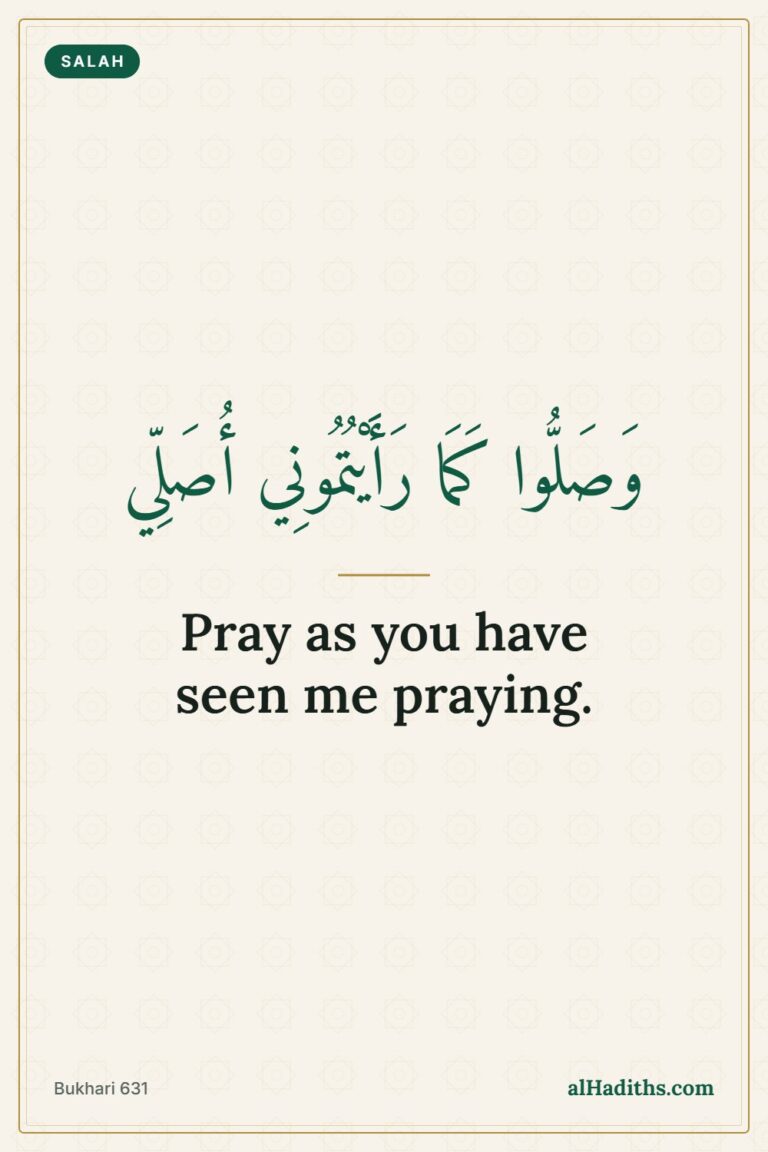
1. “Pray as you have seen me praying”
Malik ibn al-Huwayrith (may Allah be pleased with him) came to Madinah with a group of young men and stayed with the Prophet ﷺ for twenty days. When they were sent home to teach their families, this was part of the parting advice:
وَصَلُّوا كَمَا رَأَيْتُمُونِي أُصَلِّي، فَإِذَا حَضَرَتِ الصَّلاَةُ فَلْيُؤَذِّنْ لَكُمْ أَحَدُكُمْ وَلْيَؤُمَّكُمْ أَكْبَرُكُمْ
“Pray as you have seen me praying, and when the time for the prayer comes, one of you should pronounce the adhan and the oldest of you should lead the prayer.”
Bukhari 631 · Narrated by Malik ibn al-Huwayrith · Translation adapted from Sunnah.com
This short line is the foundation for everything below. The Prophet ﷺ did not hand these young men a written manual; he told them to copy what they had seen. That is why the Companions took such care to describe his prayer, and why their descriptions still matter.
Malik later did exactly that: he came to a mosque in Basra and prayed in front of people, saying he was not leading the prayer for its own sake but to show them how he had seen the Prophet ﷺ pray (Bukhari 677; see HadeethEnc 5391).
Try this: pick one part of your prayer this week, such as ruku or the sitting, and compare it with the descriptions below.
2. Aishah’s description, from takbir to taslim
Aishah (may Allah be pleased with her) gives one of the fullest summaries of how the Prophet ﷺ prayed:
يَسْتَفْتِحُ الصَّلاَةَ بِالتَّكْبِيرِ وَالْقِرَاءَةَ بِـ { الْحَمْدُ لِلَّهِ رَبِّ الْعَالَمِينَ} وَكَانَ إِذَا رَكَعَ لَمْ يُشْخِصْ رَأْسَهُ وَلَمْ يُصَوِّبْهُ وَلِكَنْ بَيْنَ ذَلِكَ وَكَانَ إِذَا رَفَعَ رَأْسَهُ مِنَ الرُّكُوعِ لَمْ يَسْجُدْ حَتَّى يَسْتَوِيَ قَائِمًا وَكَانَ إِذَا رَفَعَ رَأْسَهُ مِنَ السَّجْدَةِ لَمْ يَسْجُدْ حَتَّى يَسْتَوِيَ جَالِسًا وَكَانَ يَقُولُ فِي كُلِّ رَكْعَتَيْنِ التَّحِيَّةَ وَكَانَ يَفْرِشُ رِجْلَهُ الْيُسْرَى وَيَنْصِبُ رِجْلَهُ الْيُمْنَى وَكَانَ يَنْهَى عَنْ عُقْبَةِ الشَّيْطَانِ وَيَنْهَى أَنْ يَفْتَرِشَ الرَّجُلُ ذِرَاعَيْهِ افْتِرَاشَ السَّبُعِ وَكَانَ يَخْتِمُ الصَّلاَةَ بِالتَّسْلِيمِ
The Messenger of Allah ﷺ used to begin the prayer with the takbir, and the recitation with “Praise be to Allah, the Lord of the Universe.” When he bowed he neither kept his head up nor bent it down, but kept it between these extremes. When he raised his head after bowing he did not prostrate till he had stood erect, and when he raised his head after prostration he did not prostrate again till he had sat up. At the end of every two rak’ahs he recited the tahiyyah. He used to place his left foot flat and raise up the right. He prohibited the devil’s way of sitting on the heels, and he forbade people to spread out their arms like a wild beast. And he used to finish the prayer with the taslim.
Muslim 498 · Narrated by Aishah · Translation adapted from Sunnah.com
Notice how much of this is about stillness. He did not go down to sujud until he had stood up straight, and he did not go into the second sujud until he had sat up. The Encyclopedia of Translated Prophetic Hadiths explains that the tashahhud here is the “At-tahiyyatu lillah…” greeting, and that the taslim is the salam said once to the right and once to the left (HadeethEnc 10906).
Try this: after ruku, let your back settle completely before you go down. The same after the first sujud.
3. Abu Humaid: “I remember his prayer best”
Muhammad ibn ‘Amr ibn ‘Ata’ was sitting with a group of Companions when they started talking about the Prophet’s prayer. Abu Humaid as-Sa‘idi (may Allah be pleased with him) spoke up:
أَنَا كُنْتُ أَحْفَظَكُمْ لِصَلاَةِ رَسُولِ اللَّهِ صلى الله عليه وسلم رَأَيْتُهُ إِذَا كَبَّرَ جَعَلَ يَدَيْهِ حِذَاءَ مَنْكِبَيْهِ، وَإِذَا رَكَعَ أَمْكَنَ يَدَيْهِ مِنْ رُكْبَتَيْهِ، ثُمَّ هَصَرَ ظَهْرَهُ، فَإِذَا رَفَعَ رَأْسَهُ اسْتَوَى حَتَّى يَعُودَ كُلُّ فَقَارٍ مَكَانَهُ، فَإِذَا سَجَدَ وَضَعَ يَدَيْهِ غَيْرَ مُفْتَرِشٍ وَلاَ قَابِضِهِمَا، وَاسْتَقْبَلَ بِأَطْرَافِ أَصَابِعِ رِجْلَيْهِ الْقِبْلَةَ، فَإِذَا جَلَسَ فِي الرَّكْعَتَيْنِ جَلَسَ عَلَى رِجْلِهِ الْيُسْرَى وَنَصَبَ الْيُمْنَى، وَإِذَا جَلَسَ فِي الرَّكْعَةِ الآخِرَةِ قَدَّمَ رِجْلَهُ الْيُسْرَى وَنَصَبَ الأُخْرَى وَقَعَدَ عَلَى مَقْعَدَتِهِ
“I remember the prayer of Allah’s Messenger ﷺ better than any one of you. I saw him raising both his hands up to the level of the shoulders on saying the takbir; and on bowing he placed his hands on both knees and bent his back straight. Then he stood up straight from bowing till all the vertebrae took their normal positions. In prostration, he placed both his hands on the ground, neither spreading his forearms nor holding them in to his body, and his toes were facing the qiblah. On sitting in the second rak’ah he sat on his left foot and propped up the right one; and in the last rak’ah he pushed his left foot forward, kept the other foot propped up and sat on his seat.”
Bukhari 828 · Narrated by Abu Humaid as-Sa‘idi · Translation adapted from Sunnah.com
This narration adds detail Aishah’s summary leaves out: the hands firmly on the knees in ruku, the toes facing the qiblah in sujud, and two different ways of sitting. In the middle tashahhud he sat on his left foot; in the last one he brought the left foot forward and sat on the ground.
Try this: in your next sujud, check that your toes point towards the qiblah and your forearms are lifted off the ground.
4. Raising the hands
‘Abdullah ibn ‘Umar (may Allah be pleased with him and his father) described when the Prophet ﷺ raised his hands. His son Salim narrates it from him:
كَانَ يَرْفَعُ يَدَيْهِ حَذْوَ مَنْكِبَيْهِ إِذَا افْتَتَحَ الصَّلاَةَ، وَإِذَا كَبَّرَ لِلرُّكُوعِ، وَإِذَا رَفَعَ رَأْسَهُ مِنَ الرُّكُوعِ رَفَعَهُمَا كَذَلِكَ أَيْضًا
Allah’s Messenger ﷺ used to raise both his hands up to the level of his shoulders when opening the prayer, and on saying the takbir for bowing, and on raising his head from bowing he raised them in the same way.
Bukhari 735 · Narrated by ‘Abdullah ibn ‘Umar · Translation adapted from Sunnah.com
In the same narration Ibn ‘Umar adds that the Prophet ﷺ did not do this in the prostrations. HadeethEnc notes two more authentic details: Abu Humaid also reported raising the hands when standing up after the first tashahhud, and Malik ibn al-Huwayrith reported raising them to the level of the ears, in Bukhari and Muslim (HadeethEnc 3095). Practice on raising the hands differs between the schools of fiqh, and scholars differ on it, so ask a qualified local scholar about what you follow.
Try this: make the opening takbir slowly and deliberately, with the hands raised, as the start of a conversation with Allah.
5. Placing the right hand over the left
Wa’il ibn Hujr (may Allah be pleased with him) watched the Prophet ﷺ begin the prayer:
رَفَعَ يَدَيْهِ حِينَ دَخَلَ فِي الصَّلاَةِ كَبَّرَ - وَصَفَ هَمَّامٌ حِيَالَ أُذُنَيْهِ - ثُمَّ الْتَحَفَ بِثَوْبِهِ ثُمَّ وَضَعَ يَدَهُ الْيُمْنَى عَلَى الْيُسْرَى
He saw the Messenger of Allah ﷺ raise his hands when he began the prayer and said the takbir (Hammam, one of the narrators, described them as level with his ears). Then he wrapped his hands in his cloth and placed his right hand over his left hand.
Muslim 401 · Narrated by Wa’il ibn Hujr · Translation adapted from Sunnah.com
Sahl ibn Sa‘d (may Allah be pleased with him) also said that people were commanded to place the right hand on the left forearm in the prayer, and the narrator Abu Hazim understood this command to come from the Prophet ﷺ (Bukhari 740). Where exactly the hands rest is another point the schools of fiqh discuss; we do not give a ruling here.
Try this: notice your hands while you recite al-Fatihah: resting, still, and not fidgeting.
How did Prophet Muhammad pray? Bringing it together
Put these five hadith side by side and a clear picture appears: the takbir with raised hands, the right hand over the left, al-Fatihah, a level back in ruku, standing straight, calm sujud with the toes towards the qiblah, sitting upright, the tashahhud, and the taslim. Prayer starts even before this, with wudu made the way the Prophet ﷺ made it, and what he said in each position is covered in what to say in ruku and sujud.
لَّقَدْ كَانَ لَكُمْ فِى رَسُولِ ٱللَّهِ أُسْوَةٌ حَسَنَةٌ لِّمَن كَانَ يَرْجُوا۟ ٱللَّهَ وَٱلْيَوْمَ ٱلْـَٔاخِرَ وَذَكَرَ ٱللَّهَ كَثِيرًا
There has certainly been for you in the Messenger of Allāh an excellent pattern for anyone whose hope is in Allāh and the Last Day and [who] remembers Allāh often.
Surah al-Ahzab 33:21 · Translation: Saheeh International, from Quran.com
Reflection: the Companions did not just admire the Prophet’s prayer; they memorized it closely enough to argue about who remembered it best. That care is a gift to us. Learning his prayer is not about getting every detail perfect overnight, but about bringing our salah a little closer to his, one position at a time.
Video: how to pray step by step
Questions people ask
Did Prophet Muhammad ﷺ pray with his hands down?
The authentic hadith in this article describe him placing his right hand over his left: Wa’il ibn Hujr saw it (Muslim 401), and Sahl ibn Sa‘d said people were commanded to do so (Bukhari 740). The schools of fiqh have different positions on how the hands are held, and scholars differ, so we do not give a ruling here. Ask a qualified local scholar about what your school follows.
Did the Prophet ﷺ raise his hands at every takbir?
In Ibn ‘Umar’s narration (Bukhari 735) he raised them at the opening takbir, before ruku and when rising from it, and not in the prostrations. HadeethEnc mentions a fourth place reported by Abu Humaid: when standing up after the first tashahhud. Practice differs between the schools of fiqh.
Did he raise his hands to his shoulders or to his ears?
Both are reported in authentic hadith. Ibn ‘Umar and Abu Humaid mention the shoulders (Bukhari 735, 828), while Malik ibn al-Huwayrith and Wa’il ibn Hujr mention the ears (HadeethEnc 3095; Muslim 401).
Key lessons
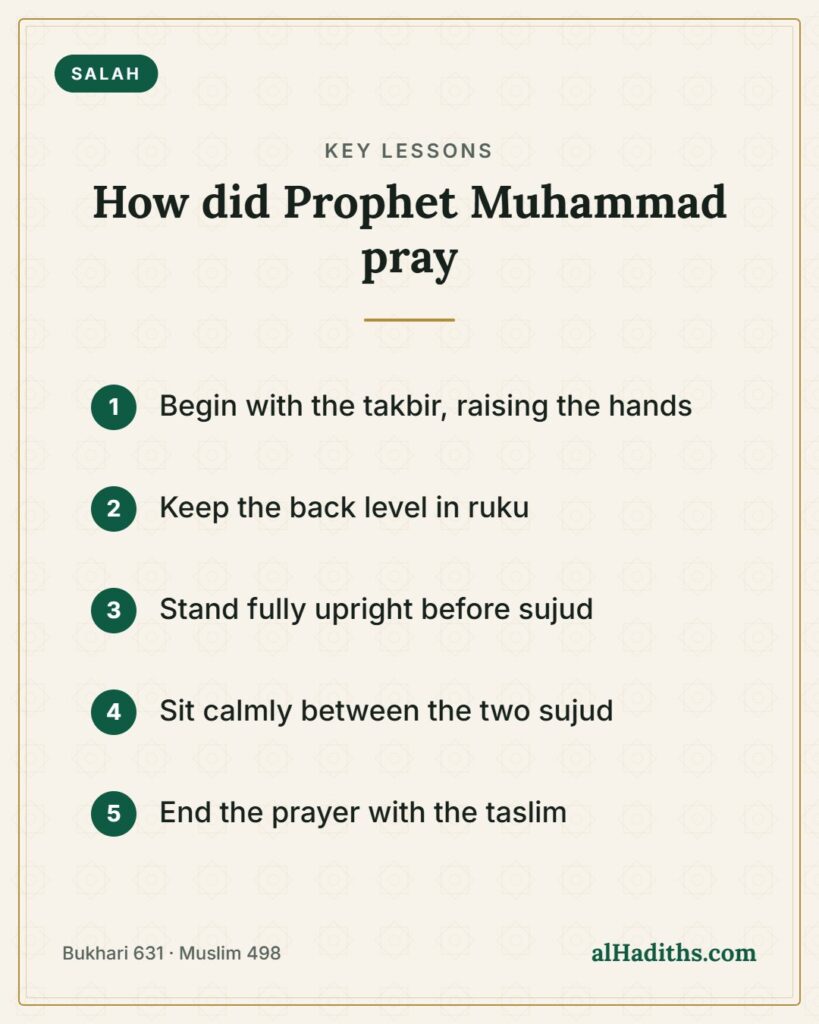
- The Prophet ﷺ told us to pray as we have seen him pray (Bukhari 631).
- He began with the takbir and ended with the taslim (Muslim 498).
- He kept his back level in ruku and stood fully upright after it.
- He was calm in sujud and sat upright between the two prostrations.
- Details such as raising and placing the hands are discussed by the schools of fiqh; ask a local scholar.
Choose one detail from these hadith and bring it into your next prayer. Small, steady changes add up.
Save this to Pinterest so you can pray the way the Prophet ﷺ prayed
Share the reward. Send this article to someone who needs it today — teaching a hadith or dua can become a lasting good deed for you, in shaa Allah.