70,000 Who Enter Jannah Without Reckoning: The Hadith
Most people will stand for their reckoning on the Day of Judgment. But the Prophet ﷺ described a group from his Ummah who will walk into Paradise without any account at all. This article looks at the authentic hadith of the 70,000 who enter Jannah without reckoning, the traits that describe them, and the Companion who asked to be one of them.
At a glance
- Source: Sahih al-Bukhari 6472 (also Sahih Muslim 218a)
- Narrated by: Ibn ‘Abbas
- Grade: Sahih (al-Bukhari and Muslim)
- Topic: Those who enter Paradise without reckoning
- Practise it: Rely on Allah in one decision today, and ask Him to make you one of them
The hadith
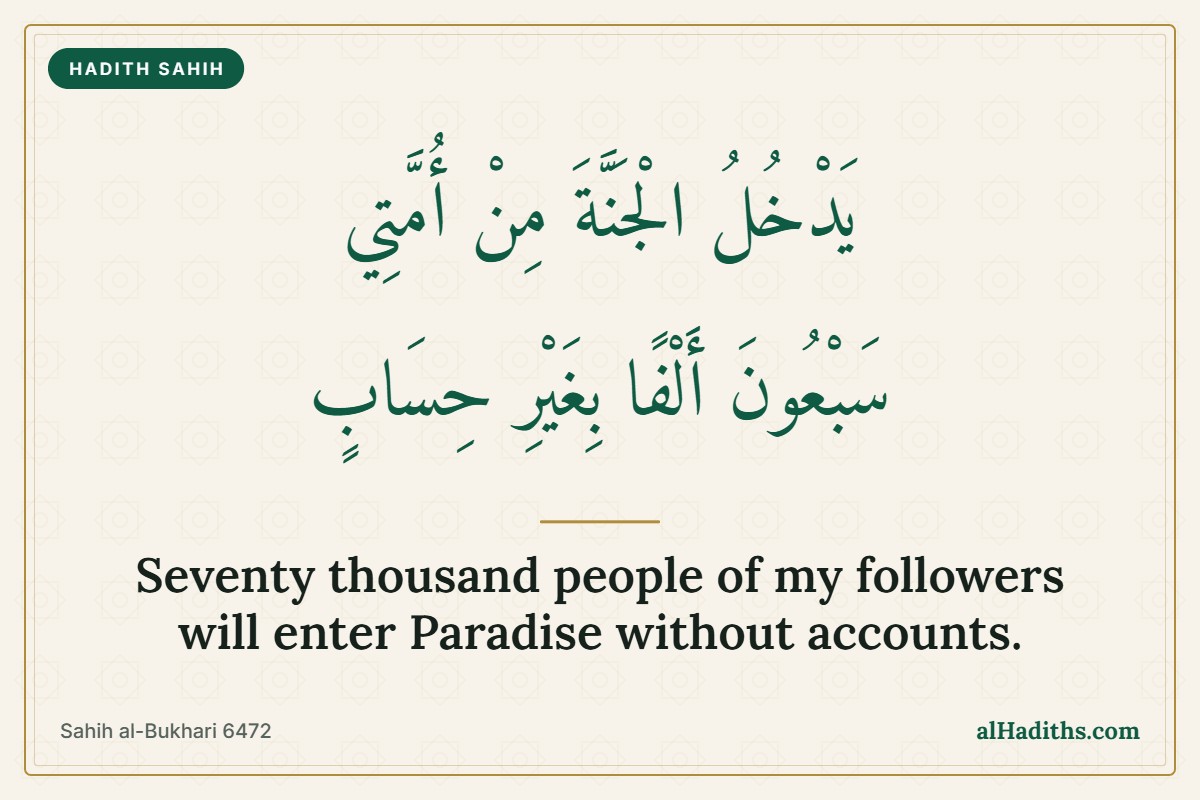
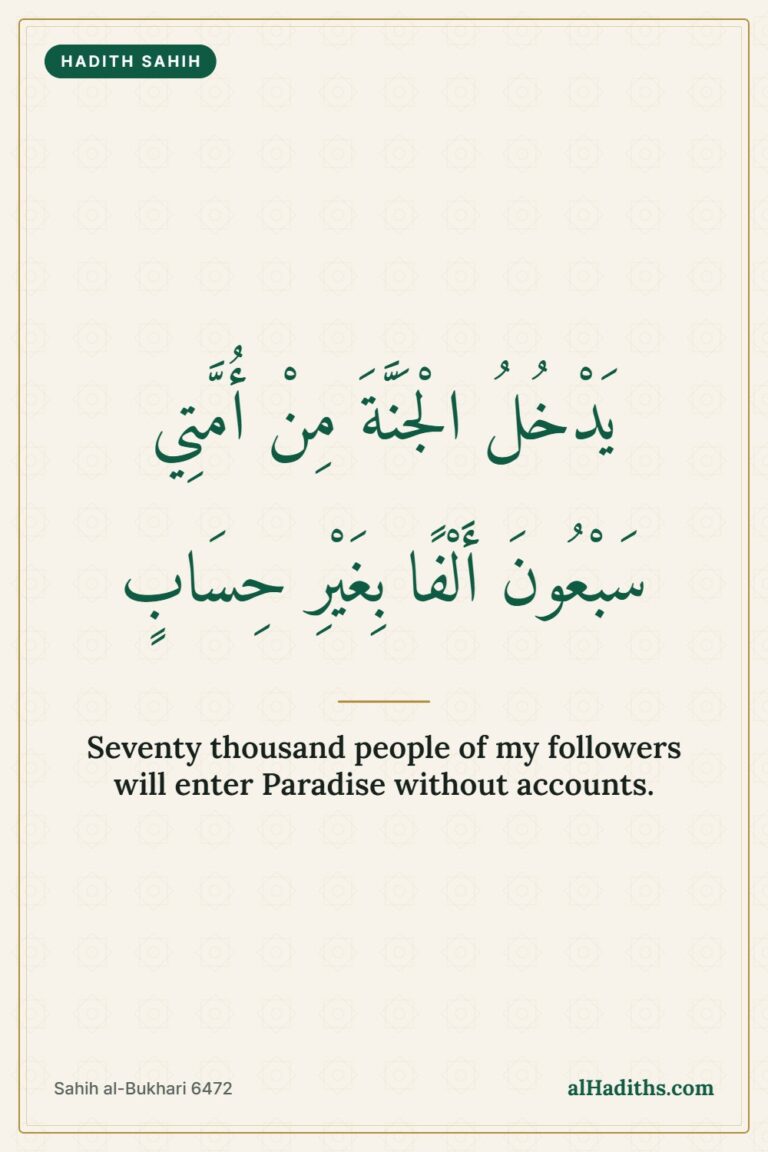
يَدْخُلُ الْجَنَّةَ مِنْ أُمَّتِي سَبْعُونَ أَلْفًا بِغَيْرِ حِسَابٍ، هُمُ الَّذِينَ لاَ يَسْتَرْقُونَ، وَلاَ يَتَطَيَّرُونَ، وَعَلَى رَبِّهِمْ يَتَوَكَّلُونَ
“Seventy thousand people of my followers will enter Paradise without accounts, and they are those who do not practice Ar-Ruqya and do not see an evil omen in things, and put their trust in their Lord.”
Sahih al-Bukhari 6472 · Narrated by Ibn ‘Abbas · Translation adapted from Sunnah.com
Ibn ‘Abbas (may Allah be pleased with them both) narrates this. In longer narrations of the same hadith, Sahih al-Bukhari 5705 and 6541, the Prophet ﷺ describes the nations being shown to him, some prophets with many followers and some with none, until he saw a multitude filling the horizon and was told it was his Ummah, and that seventy thousand of them would enter Paradise without reckoning.
Context: “‘Ukkashah has preceded you”
يَدْخُلُ الْجَنَّةَ مِنْ أُمَّتِي سَبْعُونَ أَلْفًا بِغَيْرِ حِسَابٍ . قَالُوا وَمَنْ هُمْ يَا رَسُولَ اللَّهِ قَالَ هُمُ الَّذِينَ لاَ يَكْتَوُونَ وَلاَ يَسْتَرْقُونَ وَعَلَى رَبِّهِمْ يَتَوَكَّلُونَ . فَقَامَ عُكَّاشَةُ فَقَالَ ادْعُ اللَّهَ أَنْ يَجْعَلَنِي مِنْهُمْ . قَالَ أَنْتَ مِنْهُمْ . قَالَ فَقَامَ رَجُلٌ فَقَالَ يَا نَبِيَّ اللَّهِ ادْعُ اللَّهَ أَنْ يَجْعَلَنِي مِنْهُمْ . قَالَ سَبَقَكَ بِهَا عُكَّاشَةُ
“Seventy thousand people of my Ummah would be admitted into Paradise without rendering any account.” They (the Companions) said: Who would be of those (fortunate persons)? He said: “Those who do not cauterise and practise charm, but repose trust in their Lord.” ‘Ukkasha then stood up and said: Supplicate (before) Allah that He should make me one among them. He said: “Thou art one among them.” A man stood up and said: Apostle of Allah, supplicate (before) Allah that He should make me one among them. He said: “‘Ukkasha has preceded you (in this matter).”
Sahih Muslim 218a · Narrated by ‘Imran ibn Husain · Translation adapted from Sunnah.com
‘Imran ibn Husain (may Allah be pleased with him) narrates this version. ‘Ukkashah ibn Mihsan (may Allah be pleased with him) did not waste the moment: he stood up at once and asked. When a second man asked the same, the Prophet ﷺ answered gently that ‘Ukkashah had gone before him.
What it means
The Encyclopedia of Translated Prophetic Hadiths explains a fuller narration of this hadith, Sahih Muslim 220, which names four traits: they do not ask others to perform ruqyah for them, they do not use cauterization, they do not believe in bad omens, and they rely on their Lord. The explanation presents reliance on Allah (tawakkul) as the root of the other three (HadeethEnc 3396).
Does this mean ruqyah is forbidden? The same explanation says no. In that narration, a student had treated a scorpion sting with ruqyah, based on a hadith that allows it for the evil eye and stings, and he was praised for acting on what he had heard. The hadith of the 70,000 praises a higher level: not asking others for it, out of full reliance on Allah. For rulings on ruqyah, cauterization or treatment, ask a qualified local scholar; we do not draw rulings from this hadith here.
The Quran puts the same promise simply:
وَيَرْزُقْهُ مِنْ حَيْثُ لَا يَحْتَسِبُ ۚ وَمَن يَتَوَكَّلْ عَلَى ٱللَّهِ فَهُوَ حَسْبُهُۥٓ ۚ إِنَّ ٱللَّهَ بَـٰلِغُ أَمْرِهِۦ ۚ قَدْ جَعَلَ ٱللَّهُ لِكُلِّ شَىْءٍ قَدْرًا
“And will provide for him from where he does not expect. And whoever relies upon Allāh – then He is sufficient for him. Indeed, Allāh will accomplish His purpose. Allāh has already set for everything a [decreed] extent.”
Surah At-Talaq 65:3 · Translation: Saheeh International, from Quran.com
The first at the gate of Paradise
Who goes first of all? Another authentic hadith answers:
آتِي بَابَ الْجَنَّةِ يَوْمَ الْقِيَامَةِ فَأَسْتَفْتِحُ فَيَقُولُ الْخَازِنُ مَنْ أَنْتَ فَأَقُولُ مُحَمَّدٌ . فَيَقُولُ بِكَ أُمِرْتُ لاَ أَفْتَحُ لأَحَدٍ قَبْلَكَ
“I will come to the gate of Paradise on the Day of Resurrection and would seek its opening, and the keeper would say: Who art thou? I would say: Muhammad. He would then say: It is for thee that I have been ordered, and not to open it for anyone before thee.”
Sahih Muslim 197 · Narrated by Anas ibn Malik · Translation adapted from Sunnah.com
Anas ibn Malik (may Allah be pleased with him) narrates this. The gate of Paradise opens first for the Prophet ﷺ; no one enters before him. For the gates themselves, see The 8 Gates of Jannah.
How to practise it
- Rely on Allah in one decision today. Do what you can, then leave the outcome to Him, and notice the worry you let go of.
- Drop superstitions about luck. A date, a number, a bird or a sound does not decide what happens; Allah does.
- Ask Allah directly. When you need something, turn to Him first, before asking people.
- Make the dua ‘Ukkashah made. Ask Allah to make you one of those who enter Paradise without reckoning.
What it takes
The hadith does not describe the seventy thousand by their wealth, their rank or even the number of their prayers, but by the state of their hearts: complete trust in Allah. That trust grows from knowing Allah and obeying Him, the path described in Deeds That Lead to Jannah.
Reflection: ‘Ukkashah’s question is a lesson in itself. He heard of a great reward and asked for it on the spot. When good is mentioned, the believer does not only admire it; he asks Allah for it.
Questions people ask
Who are the 70,000 who enter Jannah without reckoning?
In Sahih al-Bukhari 6472 the Prophet ﷺ said they are those who do not ask for ruqyah, do not see evil omens in things, and put their trust in their Lord. Sahih Muslim 218a also mentions that they do not use cauterization.
Who was ‘Ukkashah?
‘Ukkashah ibn Mihsan was a Companion who, on hearing this hadith, asked the Prophet ﷺ to pray that he be one of them. The Prophet ﷺ said he was one of them (Sahih Muslim 218a).
Is ruqyah forbidden because of this hadith?
The Encyclopedia of Translated Prophetic Hadiths explains that ruqyah is permissible for the evil eye and stings, and that this hadith praises the higher level of not asking others for it out of reliance on Allah (HadeethEnc 3396). For rulings, ask a qualified scholar.
Who will be the first to enter Jannah?
In Sahih Muslim 197 the Prophet ﷺ said he will be the first for whom the gate of Paradise is opened; the keeper was ordered not to open it for anyone before him.
Key lessons
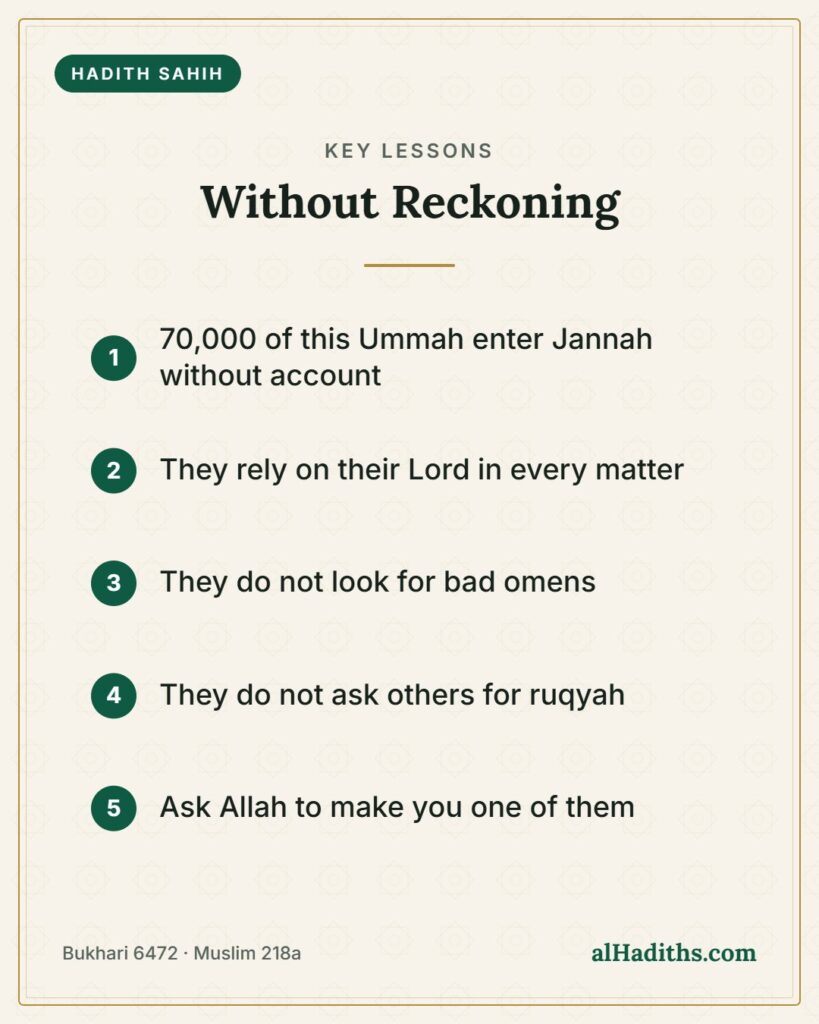
- Seventy thousand of this Ummah will enter Paradise without reckoning (Bukhari 6472).
- They are described by tawakkul: complete reliance on their Lord.
- They do not ask others for ruqyah, do not believe in bad omens and do not use cauterization (Muslim 218a).
- ‘Ukkashah asked to be among them and was told he was; we can ask Allah too.
- The gate of Paradise opens first for the Prophet ﷺ (Muslim 197).
O Allah, make us among those who enter Paradise without reckoning. Like ‘Ukkashah, we ask; and Allah is the Most Generous.
Save this to Pinterest so you can remember the traits of the 70,000 and share them
Share the reward. Send this article to someone who needs it today — teaching a hadith or dua can become a lasting good deed for you, in shaa Allah.