Wealth Distribution in Islam: Sa’d’s Will and the One-Third Rule
Sa’d ibn Abi Waqqas (may Allah be pleased with him) was lying ill in Makkah, so sick that he thought he might die. He was a wealthy man with only one daughter to inherit from him, and he wanted to give his wealth away for Allah. The Prophet ﷺ came to visit him, and their short conversation became one of the clearest lessons on wealth distribution in Islam: how much to give, and why our families matter in that decision.
At a glance
- Source: Sahih al-Bukhari 2742 and Sahih Muslim 1628a
- Narrated by: Sa’d ibn Abi Waqqas (may Allah be pleased with him)
- Grade: Sahih (Bukhari and Muslim)
- Topic: Charity, wills and providing for heirs
- Practise it: Give in your lifetime, and leave your family provided for
The hadith: Sa’d asks to give away his wealth
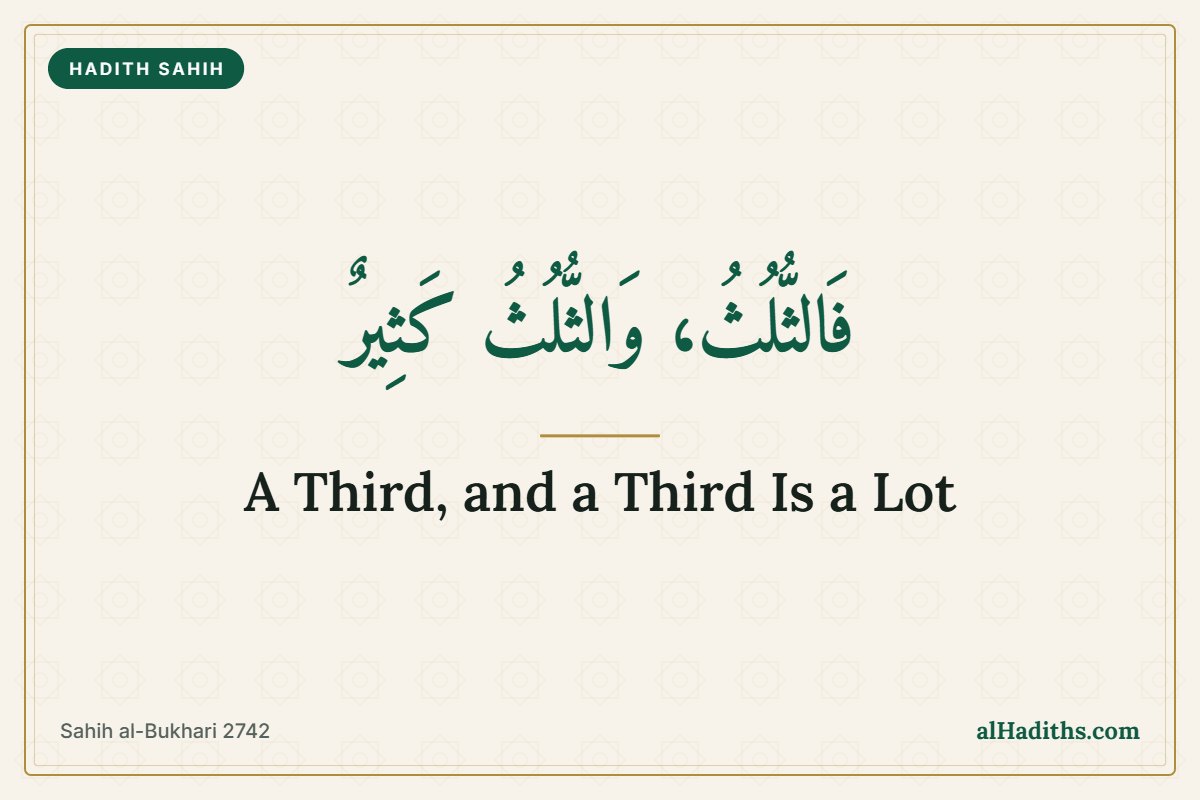
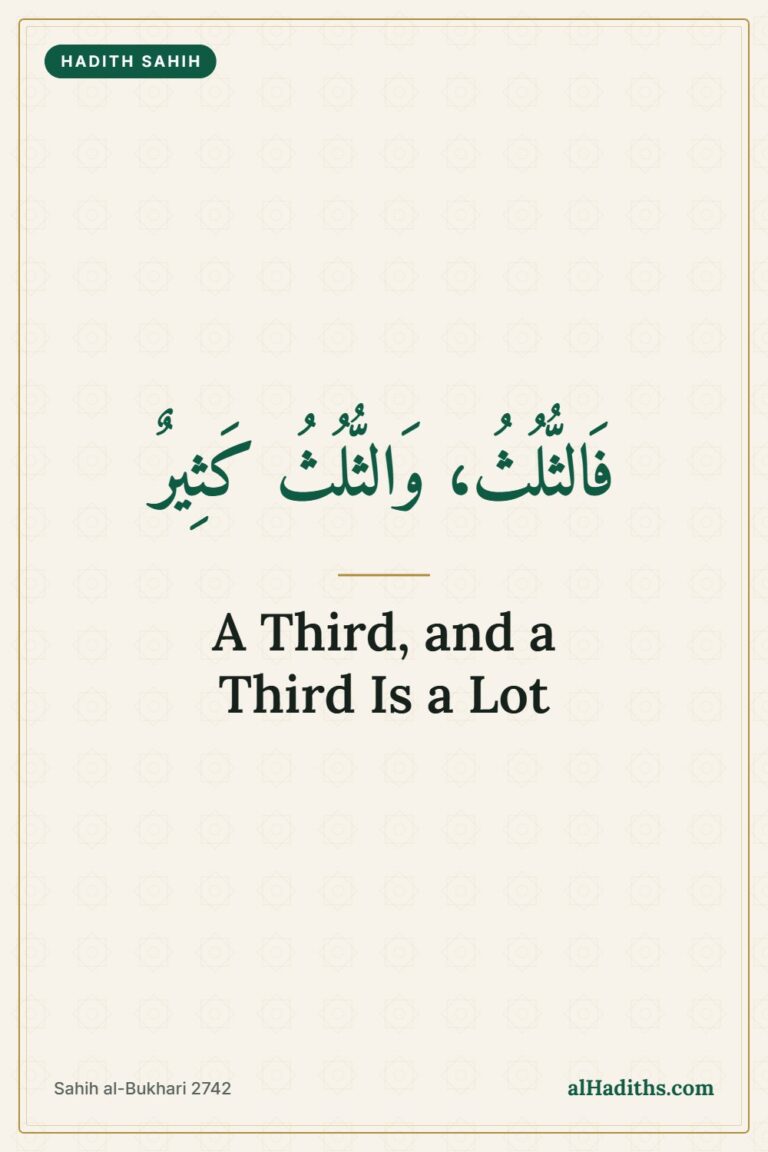
Sa’d asked whether he could will all his property to charity. The Prophet ﷺ said no. He asked about half, and again the answer was no. Then he asked about one third, and the Prophet ﷺ replied:
فَالثُّلُثُ، وَالثُّلُثُ كَثِيرٌ، إِنَّكَ أَنْ تَدَعَ وَرَثَتَكَ أَغْنِيَاءَ خَيْرٌ مِنْ أَنْ تَدَعَهُمْ عَالَةً يَتَكَفَّفُونَ النَّاسَ فِي أَيْدِيهِمْ، وَإِنَّكَ مَهْمَا أَنْفَقْتَ مِنْ نَفَقَةٍ فَإِنَّهَا صَدَقَةٌ، حَتَّى اللُّقْمَةُ الَّتِي تَرْفَعُهَا إِلَى فِي امْرَأَتِكَ، وَعَسَى اللَّهُ أَنْ يَرْفَعَكَ فَيَنْتَفِعَ بِكَ نَاسٌ وَيُضَرَّ بِكَ آخَرُونَ
“Yes, one third, yet even one third is too much. It is better for you to leave your inheritors wealthy than to leave them poor begging others, and whatever you spend for Allah’s sake will be considered as a charitable deed even the handful of food you put in your wife’s mouth. Allah may lengthen your age so that some people may benefit by you, and some others be harmed by you.”
Sahih al-Bukhari 2742 · Narrated by Sa’d ibn Abi Waqqas · Translation from Sunnah.com
Other narrations say this happened during the Farewell Hajj (Sahih al-Bukhari 1295, Sahih Muslim 1628a). The story is also in Al-Adab al-Mufrad 520, the narration the older version of this article used.
What the hadith teaches about wealth
1. Generosity has limits. Sa’d’s wish was a good one, but the Prophet ﷺ stopped him at all, then at half, and allowed only a third, adding that even a third is a lot. Ibn ‘Abbas (may Allah be pleased with him) said he would like people to bring it down to a quarter because of these words of the Prophet ﷺ (Sahih al-Bukhari 2743).
2. Leaving heirs well off is better. The Prophet ﷺ compared two outcomes: heirs who are comfortable, and heirs who have to hold out their hands to people. He said the first is better. Looking after our family’s future is part of using wealth well, not a sign of being stingy.
3. Spending on family is charity too. Even the food a man puts in his wife’s mouth is rewarded when it is done for Allah. We looked at this part of the hadith closely in Providing for Your Family in Islam.
4. Life is a chance to do more good. Sa’d feared dying in Makkah, the city he had migrated from. The Prophet ﷺ told him Allah might lengthen his life so that people would benefit from him, and Sa’d recovered and lived on for many years.
Reflection: it is easy to read this hadith as a rule about numbers. Underneath the numbers is balance. Islam does not ask us to give away everything and leave our families struggling, and it does not let us hold on to everything either. We give generously in our lifetime, provide for the people we are responsible for, and leave them in a good state.
How to practise it
The details of wills and inheritance (faraid) depend on each family’s situation, so these are general suggestions, not rulings:
- Give while you are alive and well. The charity we give in our lifetime is ours to choose; the rest of our wealth will pass to our heirs.
- If you want to leave a bequest for charity, keep it within a third, and remember the Prophet ﷺ said even a third is a lot.
- Think about your heirs’ future. Leaving your family comfortable is something the Prophet ﷺ called better.
- Count your daily spending on family as sadaqah by making the intention for Allah.
- Get proper advice. Before writing a will, speak to a qualified scholar or a trusted Islamic estate planner near you.
Key lessons
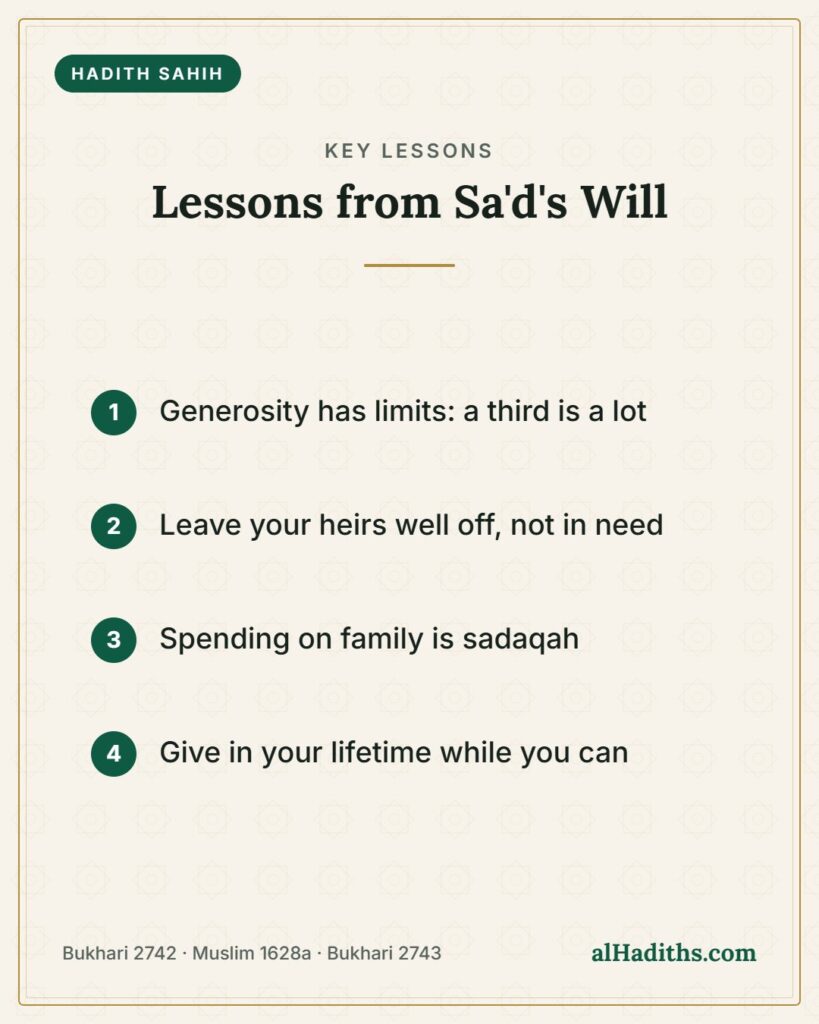
- The Prophet ﷺ allowed Sa’d to will a third of his wealth, and said even a third is a lot.
- Leaving heirs well off is better than leaving them in need.
- Whatever we spend for Allah, even on our own family, is rewarded as charity.
- A longer life is a chance to benefit more people.
Questions people ask
How much of my wealth can I leave in a will for charity in Islam?
When Sa’d asked, the Prophet ﷺ allowed one third and said that even a third is a lot (Sahih al-Bukhari 2742). Ibn ‘Abbas preferred less than a third because of this (Sahih al-Bukhari 2743). For your own will, ask a qualified scholar near you.
Why did the Prophet ﷺ stop Sa’d from giving away all his wealth?
Because it is better to leave one’s heirs wealthy than to leave them poor and having to ask people for help (Sahih al-Bukhari 2742).
Is spending on my family a form of charity?
Yes. In the same hadith the Prophet ﷺ said that whatever you spend for Allah’s sake is charity, even the food you put in your wife’s mouth (Sahih al-Bukhari 2742).
May Allah put barakah in what He has given us, help us give generously while we are able, and let us leave our families well provided for after we are gone.
Save this to Pinterest so you can think it through before writing your own will
Share the reward. Send this article to someone who needs it today — teaching a hadith or dua can become a lasting good deed for you, in shaa Allah.